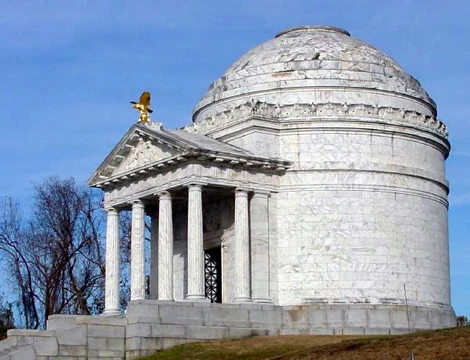
Antietam National Battlefield
Site of the bloodiest single day in United States history.
Last updated

via Wikipedia: Antietam National Battlefield · see source
Where it is
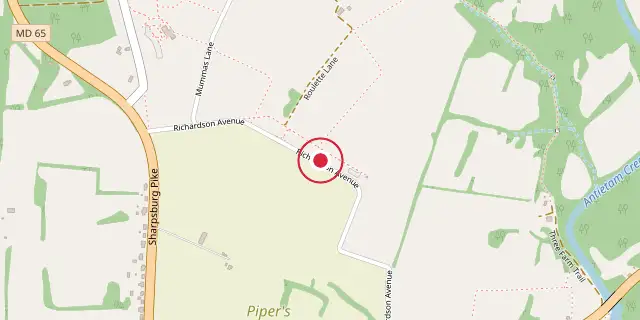
Coordinates: 39°28′12″N 77°44′17″W (39.4700, -77.7380) · Open in OpenStreetMap
Coordinates and connected clubs: the infobox of Wikipedia: Antietam National Battlefield (CC BY-SA 4.0). Map: drawn by Codexery from OpenStreetMap tiles.
In northwestern Maryland, near the Potomac River and Appalachian foothills, Antietam National Battlefield preserves the site of the September 17, 1862 Civil War battle. This National Park Service area includes the battlefield, a visitor center, a military cemetery, Burnside's Bridge, and a field hospital museum.
Did You Know?
- The Antietam Battlefield Illumination, started in 1989, uses 23,000 luminaries placed by over a thousand volunteers each year.
- The Pry House Field Hospital Museum is located in the house that served as Union Commander General George B. McClellan's headquarters during the battle.
Features
The Battle of Antietam, fought in 1862, marked the end of General Robert E. Lee’s first attempt to bring the Civil War into the North. This site became Antietam National Battlefield Site on August 30, 1890, and was moved from the War Department to the National Park Service on August 10, 1933, with a redesignation on November 10, 1978. It was added to the National Register of Historic Places on October 15, 1966, and the Park Service recorded further documentation on February 27, 2009.
Cemetery
Next to the battlefield lies Antietam National Cemetery, covering 11.36 acres with over 4,976 burials, including 1,836 unknown soldiers. The cemetery was authorized in 1865, with burials starting in 1867 after a difficult effort to identify remains that succeeded only about 40 percent of the time. Only Union soldiers from the Civil War are buried here; Confederate dead were taken to cemeteries in Hagerstown, Frederick, and Shepherdstown. The cemetery also contains graves from the Spanish-American War, both World Wars, and the Korean War, including veterans’ wives.
It closed to new burials in 1953, except for Congressman Goodloe Byron in 1978 and Navy Fireman Patrick Howard Roy, killed in the USS Cole attack, in 2000. The War Department took over the cemetery on July 14, 1870, and it transferred to the Park Service on August 10, 1933. The gatehouse at its entrance was the first building designed by Paul J. Pelz, who later designed the Library of Congress. The visitor center, built in 1962 under the Mission 66 plan, holds museum exhibits and shows a 26-minute film on the hour and half-hour.
Visitor Center
It is open daily from 9 a.m. to 5 p.m., closed on Thanksgiving, Christmas, and New Year’s Day. Rangers give talks, and an audio tour is sold for the self-guided 8.5-mile driving route with eleven stops. Park grounds are open during daylight hours.
Additional battlefield preservation
Antietam National Battlefield was listed as one of America's Most Endangered Places by the National Trust for Historic Preservation in 1988, 1989, 1990, and 1991. The listing responded to a flawed proposal to construct a shopping center and other buildings on battlefield land, which helped galvanize support and action by local, state, and federal agencies and non-profit organizations. By 2017, the battlefield was deemed a success story and included alongside ten other previously endangered sites that became the focus of successful preservation efforts.
The American Battlefield Trust and its partners, including the Save Historic Antietam Foundation, have acquired and preserved 468 acres of the overall battlefield through mid-2023. This includes the 44.4-acre epicenter tract, also known as the Wilson farm, located between Miller's Cornfield and the Dunker Church. Purchased by the Trust in 2015 for about $1 million, the postwar house and barn on the property along Hagerstown Pike were removed, and the land was returned to its wartime appearance.
Battle of Antietam
Around 1 p.m., they finally crossed Burnside's Bridge and took the heights. After a two-hour lull to reform the Union lines, they advanced up the hill, driving the Confederates back toward Sharpsburg.
The battle ended with the Union holding three sides, awaiting the next day. During the night of the 18th, General Lee withdrew his troops across the Potomac River, leaving the battle and town to General McClellan. It was the bloodiest day in United States history, with a combined tally of 22,717 dead, wounded, or missing.
More in National Battlefields and Military Parks of the United States
Sources
Compiled from Wikipedia and the sources listed below. Text from Wikipedia is available under CC BY-SA 4.0; this entry is adapted from it.
- Wikipedia: Antietam National Battlefield (CC BY-SA 4.0).
Spotted an error? Know more?
Reader corrections go straight into our review queue. Suggest an edit · How this site is sourced