
Adelaide 500
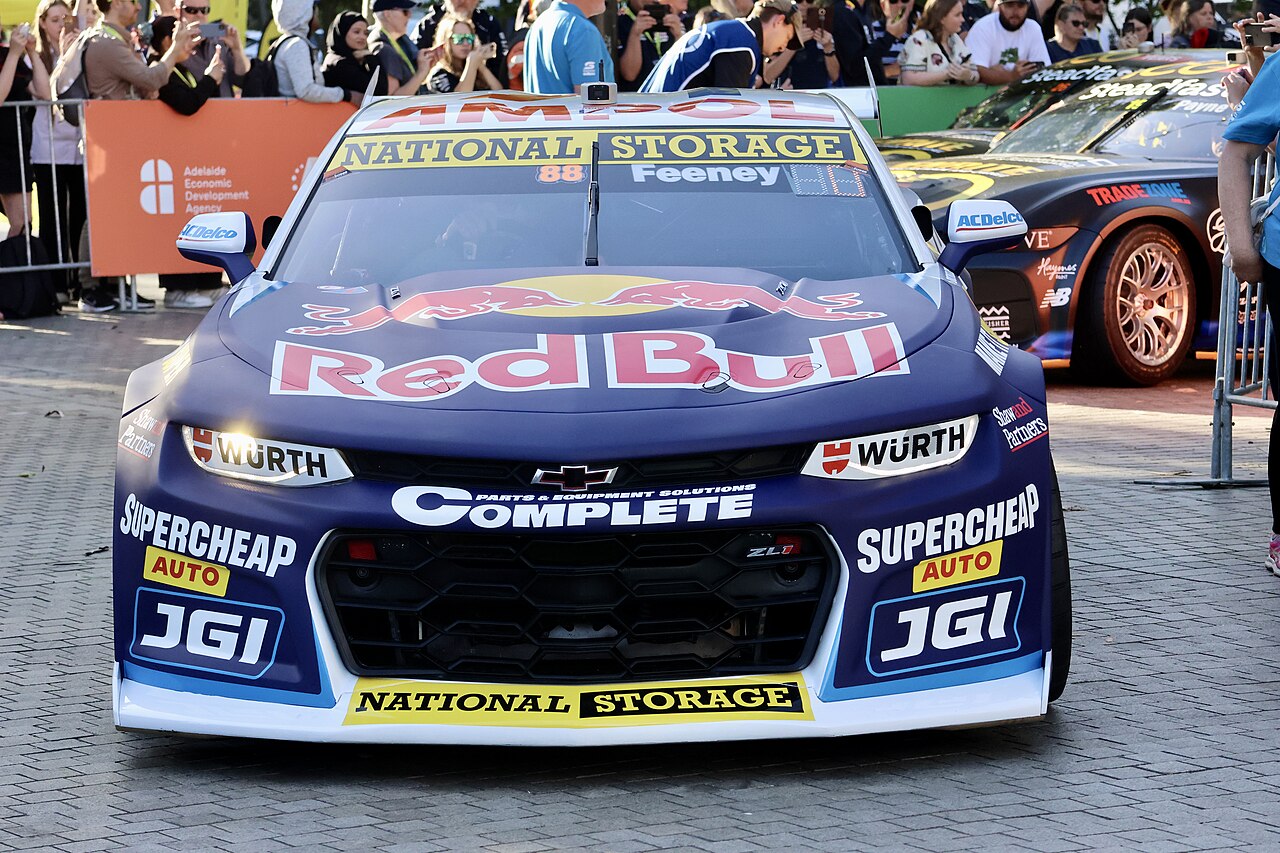
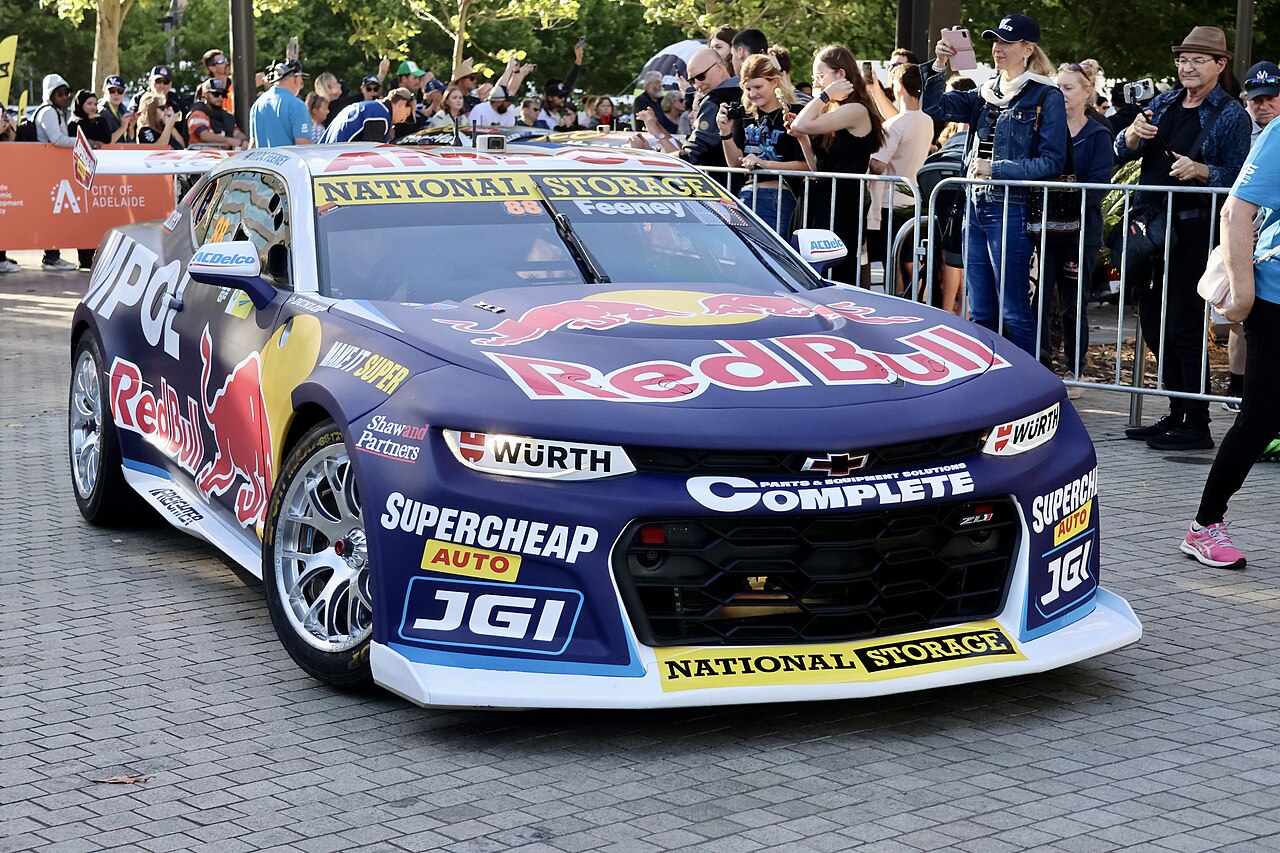
Annual Supercars street race in Adelaide, Australia.

Yu Chu Chin · CC BY-SA 4.0
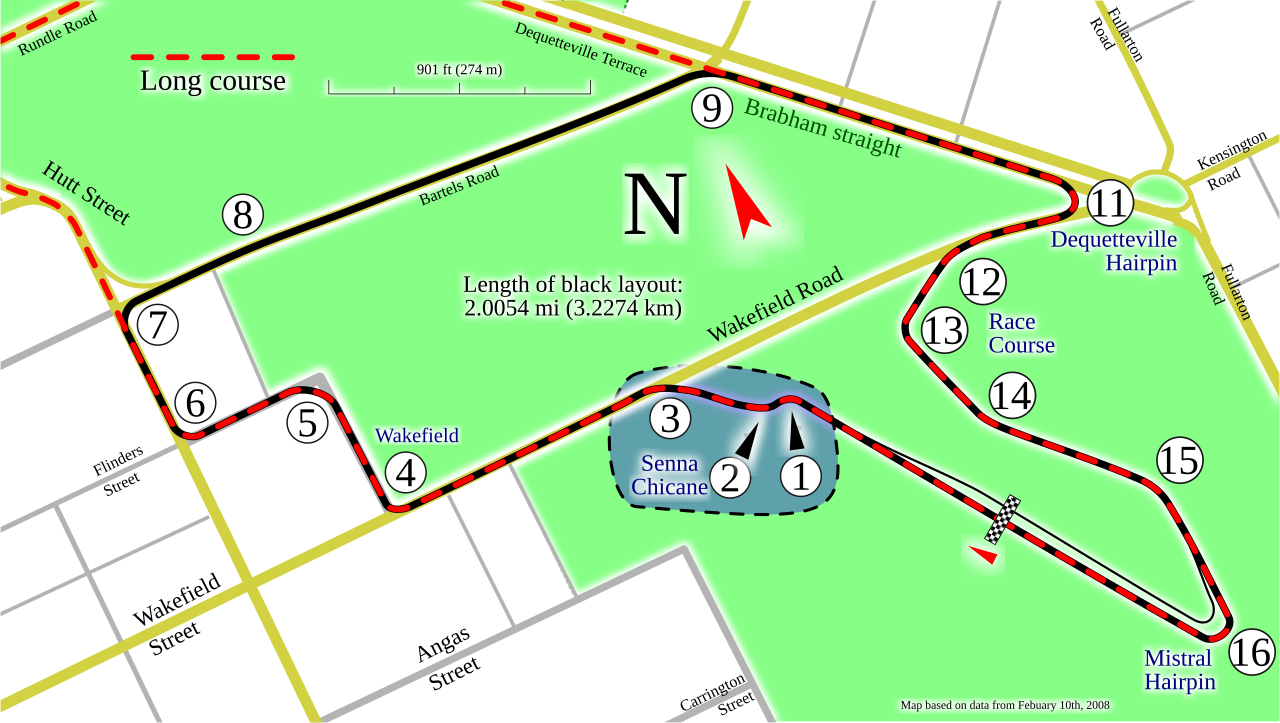
The Adelaide 500, now officially called the BP Adelaide Grand Final, is a yearly Supercars race held on a shortened version of the old Formula One track in Adelaide’s east end. It took place from 1999 to 2019, skipped 2020 and 2021, and returned in 2022. Many still call it the Clipsal 500 or just “Clipsal” after its long-time sponsor. In 2023, about 250,000 people attended, making it the most popular race on the Supercars calendar.
The race used to happen in February or March, part of what locals call “mad March” alongside the Adelaide Festival, Fringe, WOMADelaide, and Writers’ Week. After a break in 2020 and 2021, it came back in 2022 as the season’s final round in late November or early December.
The Adelaide Street Circuit hosted the Formula One Australian Grand Prix from 1985 to 1995. Supercars (then Group A and Group 3A Touring Cars) ran as support races there, but those didn’t count toward the championship. South Australia had also hosted touring car rounds at Mallala Motor Sport Park (1963, 1969–1998) and Adelaide International Raceway (1972–1988). On 1 September 1998, the state government announced a deal with AVESCO for a Supercars race on a shorter version of the Grand Prix track, replacing the Mallala round. The initial contract was for five years with a five-year option. After the 1999 race, Clipsal became the main sponsor, a deal lasting until 2017. The 2018 race had no naming sponsor, then Superloop took over for three years. The event was scheduled on the calendar through 2021.
In October 2020, the South Australian Tourism Commission stopped supporting the event, putting it on hold. It returned in 2022 as the season finale.
In 1999, Craig Lowndes won the Saturday race but was disqualified from Saturday qualifying for an accident with Danny Osborne, forcing him to start last on Sunday. He passed every car to win that race, becoming the first Adelaide 500 winner—his only event victory. His disqualification was not overturned; he started Sunday from the back. The race was also controversial: originally a single 500 km race with an overnight break at 250 km, the rules were changed overnight after many top cars retired in the first leg, letting them restart Sunday. Driver fitness was tested, with Paul Radisich and John Faulkner needing medical help for dehydration.
- First held
- 1999
- Last held before hiatus
- 2019
- Resumed
- 2022
- Location
- Adelaide, South Australia
- Circuit
- Adelaide Street Circuit (shortened version)
- Former title sponsor
- Clipsal
- Most successful driver
- Jamie Whincup (wins in 2006, 2008, 2009, 2011)
Lore & Background
The Adelaide Street Circuit was used for the Formula One Australian Grand Prix from 1985 to 1995, with Supercars competing in support races. On 1 September 1998, the Government of South Australia announced a deal with AVESCO for a Supercars race on a shortened version of the Grand Prix track, replacing the Mallala round. The initial contract was for five years with an option for five more. After the 1999 race, Clipsal became the major sponsor, a deal that continued until 2017. The event had an agreement to appear on the calendar until 2021.
Reader's Guide
The Adelaide 500 is significant as the most attended Supercars Championship race, drawing around 250,000 spectators in 2023. It originally took place in February and March as part of 'mad March' alongside the Adelaide Festival, Adelaide Fringe, WOMADelaide and Adelaide Writers' Week. After a hiatus in 2021, it returned in 2022 as the season finale in late November or early December. The event has seen notable moments, including Craig Lowndes' first win in 1999 after a disqualification was overturned, and Jamie Whincup becoming the most successful driver with four wins. The track layout was modified only once, in 2002, after Brad Jones's roll-over in 2000. The event has hosted multiple manufacturers, including Ford, Holden, Nissan, Mercedes-Benz, and Volvo, and has been a key round in the Supercars championship, often serving as the opening round from 2002 to 2009 and again from 2012.
Did You Know?
- The 1999 event saw Craig Lowndes win the Sunday race from the back of the grid after being disqualified from Saturday qualifying; the disqualification was not overturned, and he started Sunday from the back.
- The Turn 8 re-profiling to 'The Sweeper' occurred in 2001 after Brad Jones's 2000 crash.
From Grand Prix Streets to Supercars Dominance
The Adelaide Street Circuit was originally purpose-built for Formula One, hosting the Australian Grand Prix from 1985 through 1995. During those years, touring car races ran as support events, though they never counted toward the national championship. South Australia had also staged championship rounds at Mallala Motor Sport Park and Adelaide International Raceway over the decades. On September 1, 1998, the South Australian government confirmed that negotiations with AVESCO had succeeded in bringing a dedicated Supercars race to the shortened Grand Prix layout, effectively replacing the Mallala round. The initial deal covered five years with an option for another five. After the 1999 race, Clipsal became the major sponsor, a partnership that endured until 2017. In 2018 the event ran without a title sponsor before Superloop took over for three years, and the calendar agreement extended through 2021. Today the race carries the BP Adelaide Grand Final name, yet locals still call it "Clipsal" out of long-standing habit.
The Inaugural 1999 Race and Its Controversies
The first Adelaide 500 in 1999 delivered drama from the opening lap. Craig Lowndes took the Saturday race but was subsequently disqualified for his role in an incident with Danny Osborne, forcing him to start race two from the back of the grid. He then passed every single car in the field to claim the Sunday win, becoming the event's first overall victor—a feat that remains his only victory at this race. His disqualification was later overturned. The weekend also produced a regulatory scramble: the original format called for a single 500-kilometre race split by an overnight stop at the halfway mark, but when a significant number of high-profile cars retired during the first leg, officials changed the rules overnight to permit those cars to contest the Sunday race. The physical toll was equally notable, with both Paul Radisich and John Faulkner requiring medical attention for dehydration, underscoring how demanding the street circuit proved to be on drivers' bodies.
The Sweeper and the Making of an Infamous Corner
In 2002 the Adelaide Street Circuit received its only layout modification to date. Turn 8 was re-profiled into what quickly became known as "The Sweeper," a change prompted by Brad Jones's roll-over at the previous version of the corner during the 2000 event, among other incidents. The reworked corner immediately established itself as one of the most feared in Australian motorsport. In its first year alone, high-profile drivers including Paul Radisich and Glenn Seton fell victim to its treacherous geometry. The 2002 event also introduced a logistical workaround: a pre-qualifying session was staged at Mallala Motor Sport Park in the week before the race, a necessity born from capacity and scheduling constraints at the street circuit. Meanwhile, the manufacturer rivalry that had defined the early years—Holden's dominance from 1999 through 2003 with wins by Skaife, Bright, and Tander—gave way to Ford's resurgence, beginning with Marcos Ambrose's double in 2004 and his repeat in 2005, when Ford swept the top four in the Saturday race.
Mad March, Hiatus, and a New Chapter
For over two decades the Adelaide 500 anchored what locals affectionately call "mad March," sitting alongside the Adelaide Festival, Adelaide Fringe, WOMADelaide, and Adelaide Writers' Week in a packed spring calendar. The race typically fell in February or March and served as the championship's opening round from 2002 through 2009, before briefly losing that slot to the Yas V8 400 in the UAE in 2010 and 2011, then reclaiming it from 2012 onward. In October 2020, the South Australian Tourism Commission announced it would withdraw its support, plunging the event into a 2021 hiatus. When the race returned in 2022, it arrived in a fundamentally new role: the season finale, staged in late November or early December. The shift in timing and significance did not diminish its appeal. With attendance reaching approximately 250,000 in 2023, the Adelaide 500 stands as the most attended race in the Supercars Championship, a testament to the enduring pull of its street circuit and the community that has embraced it for more than two decades.
Gallery
More in Motorsport in Adelaide 1-20
Spotted an error? Know more?
Reader corrections go straight into our review queue. Suggest an edit · How this site is sourced