
1995 Australian Grand Prix
Hill wins by two laps; only eight cars finish.

Calistemon · CC BY-SA 3.0
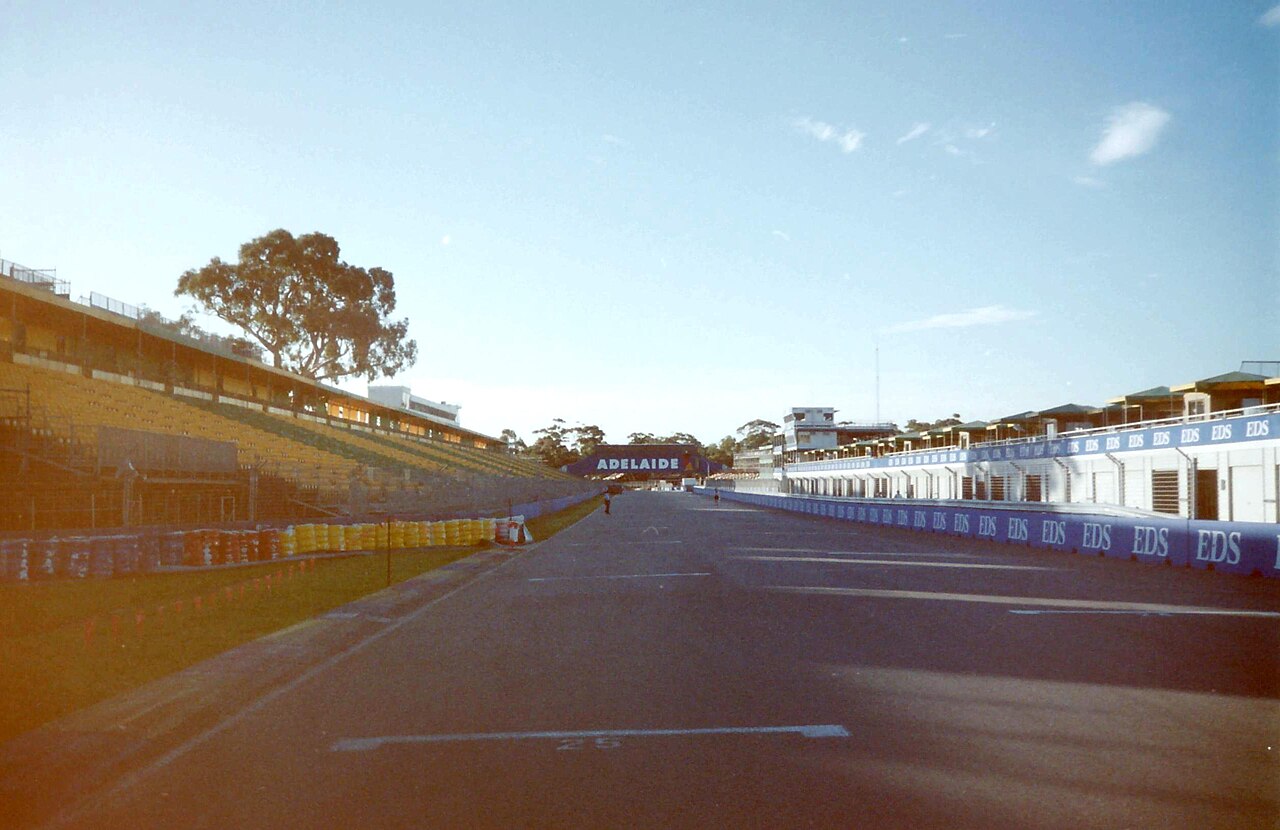
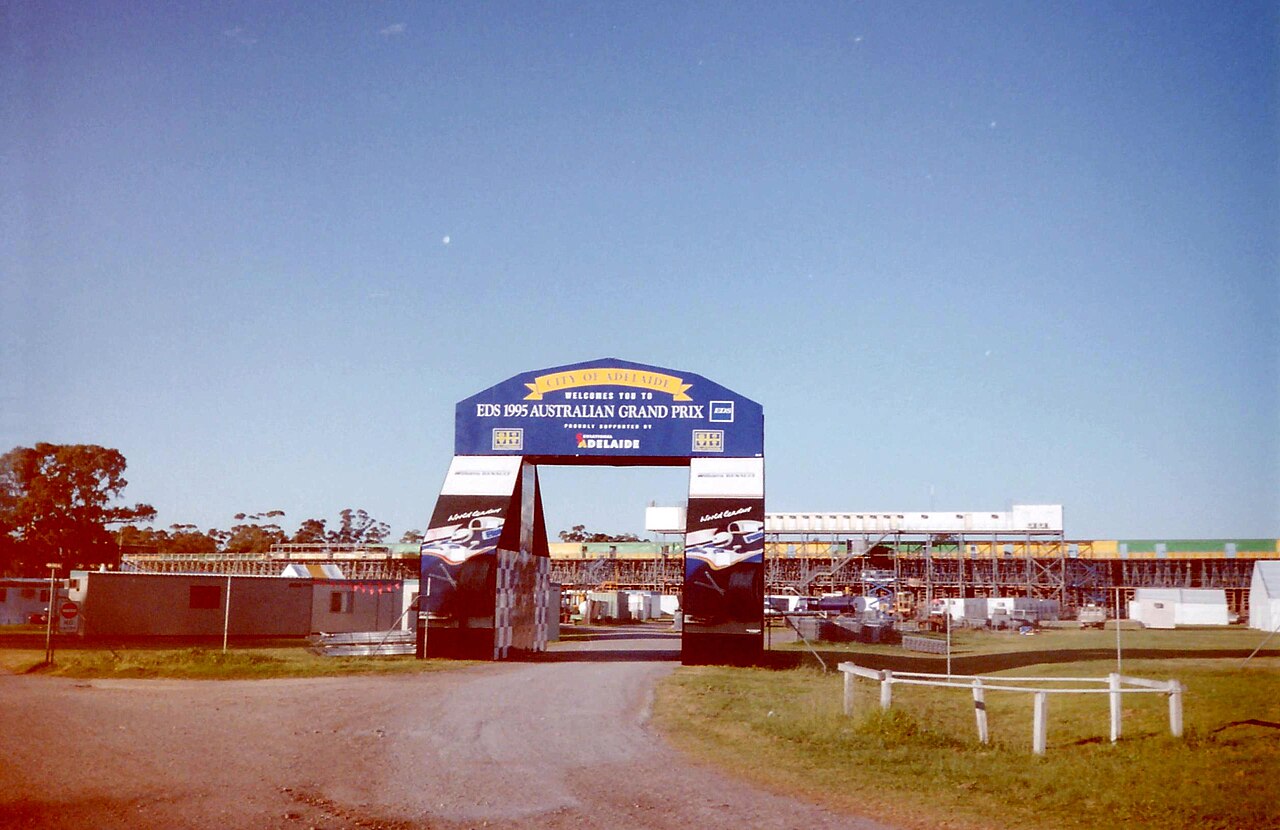
The 1995 Australian Grand Prix, officially the LX EDS Australian Grand Prix, took place on 12 November 1995 at the Adelaide Street Circuit. It was the 17th and final round of the 1995 Formula One season, and the 11th and last time the Australian Grand Prix was held in Adelaide before moving to Melbourne the following year. This race marked the final Formula One appearance for Mark Blundell, Bertrand Gachot, Roberto Moreno, Taki Inoue, and Karl Wendlinger, and was also the last event for the Pacific team, which folded at season's end.
A race of high attrition saw all front-running cars retire except for pole-sitter Damon Hill in his Williams-Renault. Hill won by two full laps, only the third time in Formula One history that a driver had lapped every other competitor. Olivier Panis finished second for Ligier-Mugen-Honda, while Gianni Morbidelli scored his best-ever result with third place for Footwork-Hart. Only eight of the 23 starters finished, the lowest total of the 1995 season. The race was also notable for using the traffic light system with red and green lights, a system in place since the 1975 British Grand Prix.
Weekend attendance reached a record 520,000, with 210,000 spectators on race day—a Formula One record until 2000, when 250,000 attended the United States Grand Prix at Indianapolis. This race was the last until the 1997 Australian Grand Prix to have 24 cars entered for a Grand Prix weekend, though only 22 started: Luca Badoer withdrew due to mechanical issues with his Minardi, and Mika Häkkinen was absent after sustaining serious injuries in a crash during first qualifying.
**Pre-race** Both the Drivers' and Constructors' Championships had already been decided before the final round. Michael Schumacher secured the Drivers' title two races earlier at the Pacific Grand Prix, and this was his last race for Benetton before moving to Ferrari in 1996. Benetton had clinched the Constructors' Championship at the previous event in Japan, as Williams was too far behind to catch them. It was announced that this would be the last Formula One race at Adelaide, with the Australian Grand Prix moving to the Melbourne Grand Prix Circuit from 1996.
In Friday qualifying, Mika Häkkinen's McLaren suffered a left-rear puncture approaching Brewery Bend.
Quick Facts
- Country
- Australia
- Grand Prix
- Australian
- Official Name
- LX EDS Australian Grand Prix
- Date
- 12 November
- Year
- 1995
- Race No
- 17
- Location
- Adelaide Street Circuit, Adelaide, Australia
- Course
- Temporary street circuit
- Course Mi
- 2.362
- Course Km
- 3.780
- Distance Laps
- 81
- Distance Mi
- 191.362
Facts from the source article.
Lore & Background
Heading into the final round, both the Drivers' and Constructors' Championships were already settled, with Michael Schumacher having claimed the Drivers' Championship two rounds earlier. It was Schumacher's last race with Benetton before his move to Ferrari. In Friday qualifying, Mika Häkkinen suffered a puncture, crashed heavily, and sustained a fractured skull; an emergency tracheotomy saved his life. Williams dominated qualifying, with Damon Hill on pole and David Coulthard alongside. Schumacher qualified third.
Reader's Guide
The race began with Coulthard taking the lead, but he retired after locking his tyres and hitting the pitwall. Schumacher and Jean Alesi collided and both retired. Johnny Herbert briefly held second but retired with a driveshaft failure. Hill led despite a 22-second botched pit stop, winning by two laps over Olivier Panis. Gianni Morbidelli finished third for his only career podium. Only eight of 23 starters finished. The race marked the end of Pacific Racing and the last use of the traffic light system with coloured lights at the start. As of 2026, this remains the last time the race winner lapped every other competitor.
Did You Know?
- Only eight of 23 starters finished, the lowest number in the 1995 season.
- Damon Hill won by two laps, only the third time in Formula One history a driver had lapped every other competitor.
- The race was not the last to use the traffic light system; it continued in use after 1995.
The Final Curtain: 1995 as Adelaide's Last F1 Season
The 1995 Australian Grand Prix marked the closing chapter of a decade-long era. Adelaide had been awarded a round of the Formula One World Championship in October 1984, and Macmahon Holdings undertook the construction of the temporary street circuit in the East Parklands. From that inaugural season—held as the final round of the 1985 championship—through to 1995, the 3.780-kilometre Grand Prix layout hosted eleven Australian Grand Prix events. Each year, all grandstands and support buildings were erected for the weekend and then dismantled, a reminder that the circuit existed only for the duration of the race. When the 1995 season concluded, Adelaide's tenure as an F1 host came to an end. The rights to the Australian Grand Prix were lost to Melbourne, and the championship event relocated to the newly built Albert Park Street Circuit. For the Adelaide Parklands, the roar of Formula One engines fell silent, and the circuit entered a new phase of motorsport history without the sport's pinnacle series.
A Circuit Built for Speed
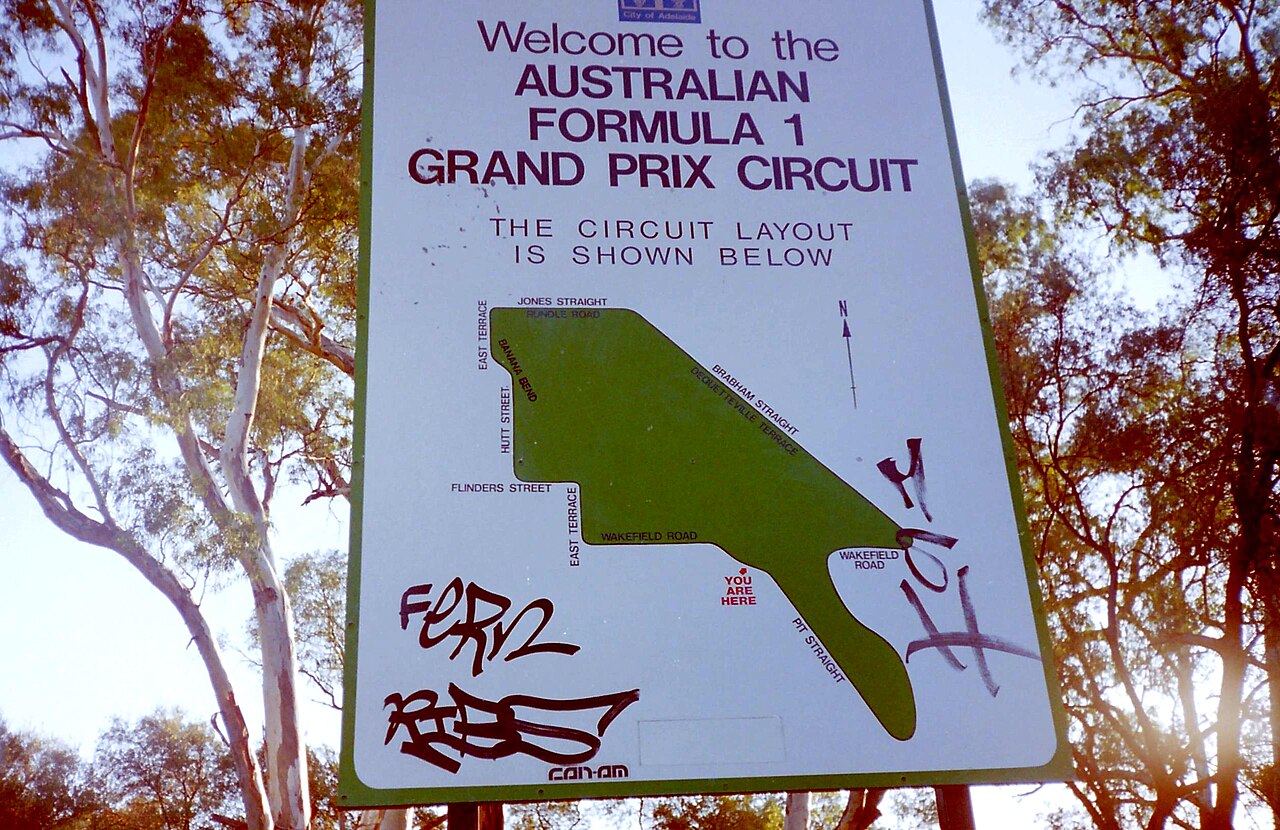
The Adelaide Street Circuit was engineered as much for raw velocity as for technical challenge. Its 900-metre Dequetteville Terrace straight—named in honour of Jack Brabham for Formula One and later Peter Brock for the touring car era—was the track's defining feature. During the turbocharged period from 1985 to 1988, cars producing over 1,000 horsepower were recorded exceeding 200 miles per hour down that stretch, a feat that made Adelaide the fastest street circuit on the global calendar. The only other street circuits in use at the time—Monaco, Detroit, and Phoenix—were far tighter and slower. The layout itself wove through the East Parklands: a 500-metre pit straight in Victoria Park, the Senna Chicane (renamed after Ayrton Senna's 1994 death at Imola), a series of 90-degree corners, the sweeping Banana Bend near the Adelaide Fruit Markets, and the 360-metre Rundle Road straight, christened for Alan Jones in 1987. Together these elements created a circuit that rewarded outright power as much as driver skill.
Life After Formula One: The Circuit's Enduring Legacy
Once Formula One departed for Melbourne, the Adelaide Parklands circuit did not fall into disuse. It simply found new purpose. In 2000, the full 3.780-kilometre layout hosted the Race of a Thousand Years, an American Le Mans Series event. More significantly, from 1999 through 2020—and again from 2022—a shortened 3.219-kilometre variant became the home of the Adelaide 500, a Supercars touring car race typically run as two 250-kilometre stints. The event grew into one of the most celebrated fixtures on the Supercars calendar and earned the distinction of being the only race inducted into the Supercars Hall of Fame. In 2007, a section of track was renamed Brock Straight in tribute to touring car legend Peter Brock. The circuit also served as the venue for the Adelaide Motorsport Festival. Looking ahead, a heavily modified version of the original Formula One layout is slated to host the Australian Motorcycle Grand Prix from 2027, when the MotoGP round relocates from Phillip Island.
Green Controversy: The Circuit's Environmental Toll
The prospect of bringing MotoGP to Adelaide's East Parklands from 2027 has ignited fierce debate over the environmental cost of the project. When South Australian Premier Peter Malinauskas announced the plan in February 2026, he stated that approximately forty-five trees would be removed and that the century-old Glover East Playspace would be relocated. However, the Adelaide Parklands Association publicly challenged this framing, arguing the true impact was far greater, with estimates of up to two hundred trees needing to be felled. The controversy deepened given the area's ecological sensitivity: the small copper butterfly, absent from Adelaide plains for sixty years, was rediscovered in Victoria Park in 2011, and the City of Adelaide subsequently protected a vulnerable colony of the chequered copper butterfly in the adjacent Pakapakanthi grassland, which the proposed circuit would abut. Residents, ecologists, historians, and conservationists—led by the South East City Residents Association—sent a formal letter to FIM president Jorge Viegas demanding an independent environmental impact assessment. Adelaide Lord Mayor Jane Lomax-Smith and other councillors voiced opposition, suggesting The Bend at Tailem Bend as a more suitable alternative venue.
Gallery
More in Motorsport in Adelaide 1-20
Spotted an error? Know more?
Reader corrections go straight into our review queue. Suggest an edit · How this site is sourced