Honda Super Cub
The most produced motor vehicle in history.

via Wikipedia: Honda Super Cub · see source
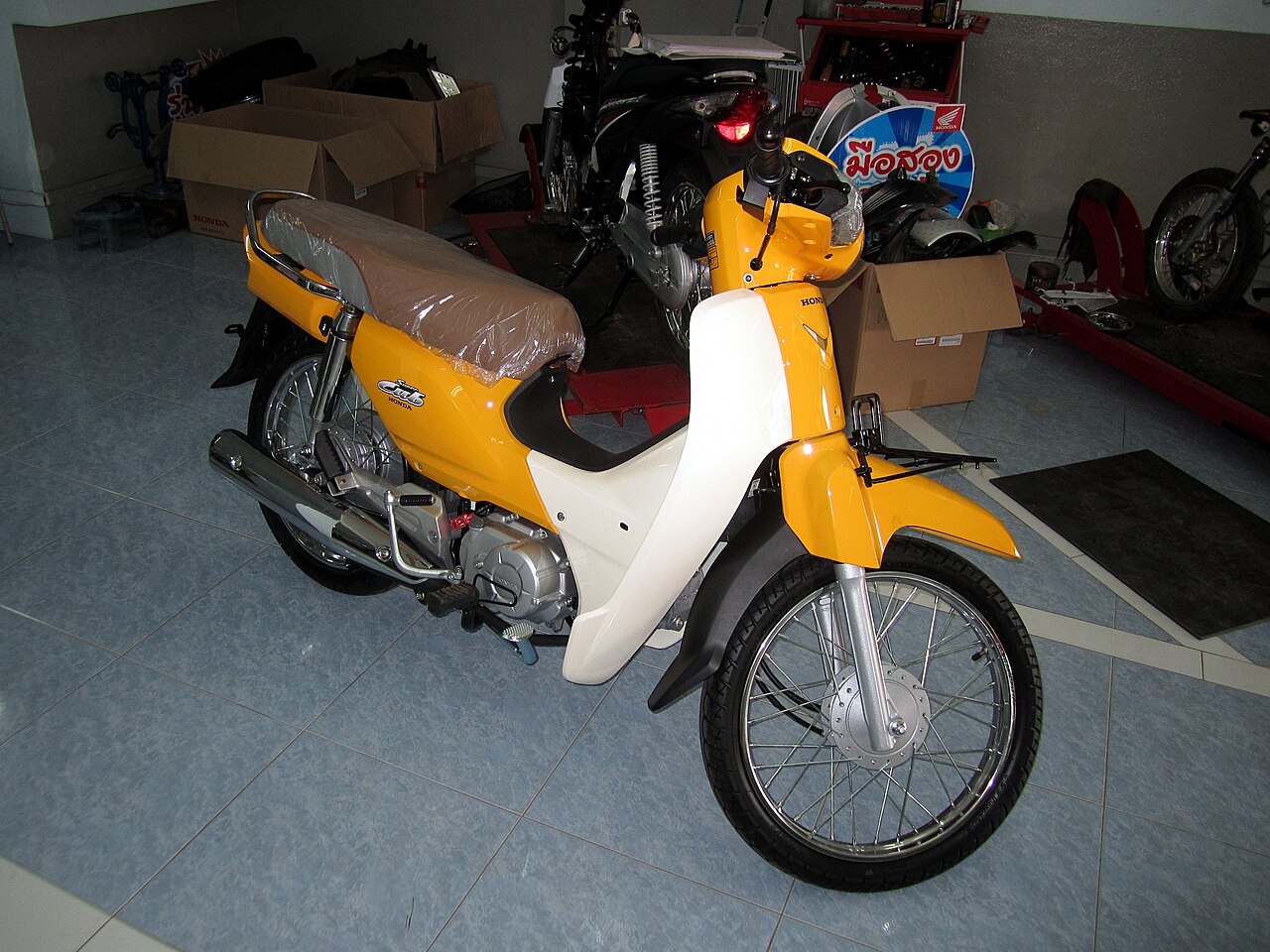
The Honda Super Cub, also called the Honda Cub, is an underbone motorcycle with a four-stroke single-cylinder engine that has been offered in displacements from 49 cc to 124 cc. Honda has built it continuously since 1958, and by 2017 total production had reached 100 million units, making it the highest-volume motor vehicle ever made. Variants include the C50, C65, C70 (sold in some markets as the Passport), C90, and C100 (including the EX model), and it shared its basic engine with the Sports Cub C110, C111, C114, and C115, as well as the Honda Trail series. The “You meet the nicest people on a Honda” advertising campaign in the United States changed how Americans viewed motorcycles and reshaped Honda’s public image; it is frequently cited in marketing textbooks.
The idea for a new kind of motorcycle came in 1956, when Soichiro Honda and Takeo Fujisawa toured Germany and saw how popular mopeds and lightweight bikes were there. Honda focused on engineering and racing, while Fujisawa handled finance and sales, aiming to dominate markets and crush competitors. Fujisawa had been planning a long-term expansion that did not rely on simply increasing production to profit from Japan’s postwar boom. He wanted a small, high-performance motorcycle that could change the typical European progression from bicycle to clip-on engine to scooter to bubble car to small car—a pattern that left out motorcycles for ordinary people. Honda, however, was in Europe to win the Isle of Man TT and was tired of hearing about Fujisawa’s idea.
At Kreidler and Lambretta showrooms, Fujisawa and Honda studied the kind of bike Fujisawa envisioned. He dismissed those designs as having “no future” and unlikely to sell. His concept was a two-wheeler for everyone, suitable for both rich and poor countries, cities and farms. It had to be simple enough to be maintained without advanced tools or reliable spare parts, and it had to solve common complaints about noise, poor reliability (especially electrical), and difficulty of use. Because Honda was a large and growing company, it needed a mass-appeal product that could be built in huge numbers, and the design had to be finalized before production started to avoid costly fixes later. A scooter was close but too complex for developing countries, and its small wheels struggled on bad roads. Fujisawa also insisted the bike could be ridden one-handed while carrying a tray of soba noodles, telling Honda, “If you can design a small motorcycle, say 50 cc with a cover to hide the engine and hoses and wires inside, I can sell it. I don’t know how many soba noodle shops there are in Japan, but I bet you that every shop will want one for deliveries.”
Once interested, Soichiro Honda began developing the Super Cub after returning to Japan. The next year he showed Fujisawa a mockup that matched the vision, and Fujisawa predicted monthly sales of 30,000—half again as many as the entire Japanese two-wheeler market at the time. His goal was to export motorcycles on a scale unseen in postwar Japan, where most companies relied on foreign trading houses. Honda would need its own overseas subsidiary to provide service and spare parts, especially in a large country like the United States. American Honda Motor Company was founded in 1959, followed by sales networks in Germany (1961), Belgium and the UK (1962), and France (1964).
Earlier, the Honda Juno had been the first scooter to use fiberglass-reinforced plastic bodywork, but its production ended in 1954 due to financial and labor problems. Fujisawa kept pushing research into polyester resin casting, and that work paid off for the Super Cub. The new bike’s fairing was made of polyethylene—the most common plastic—which was lighter than fiberglass. Honda’s supplier had never made such a large die cast before, so Honda provided the die. The Super Cub became the first motorcycle ever to use a plastic fairing. Motorcycling historian Clement Salvadori noted that the plastic front fender and leg shields were “perhaps the Cub’s greatest contribution; plastic did the job just as well as metal at a considerably lower cost.” Technology from Honda’s Isle of Man TT racing program was also vital, allowing a 50 cc four-stroke engine to produce 4.5 horsepower—a huge leap from the company’s first engine a decade earlier, a copy of a 50 cc two-stroke war-surplus Tohatsu that made only 1 horsepower. Honda’s first four-stroke, the 1951 E-type, had just 5.5 horsepower from nearly three times the displacement.
To build the Super Cub, Honda constructed a new factory in Suzuka, Mie, designed to produce 30,000 units per month (or 50,000 with two shifts). The factory was modeled on the Volkswagen Beetle production line in Germany.
- manufacturer
- Honda
- production_start
- 1958
- engine
- Four-stroke single-cylinder, 49–124 cc
- peak_power
- 3.4 kW (4.5 hp) at 9,500 rpm (50 cc version)
- top_speed
- 69 km/h (43 mph) under favorable conditions
- total_production
- Over 100 million by 2017
- notable_variants
- C50, C65, C70, C90, C100, Sports Cub C110, C111, C114, C115, Honda Trail series
Verified Timeline
Quick Facts
- Aka
- Honda C series (codename), C50, Passport, Econo Power, EX5, Dream 100, EX5 Dream, C100EX, Super Cub 50, Super Cub 110, Press Cub.
- Production
- 1958–present
- Assembly
- 15 countries worldwide
- Class
- Underbone
- Engine
- Horizontal 49 – 4-stroke air-cooled single
- Transmission
- 3- or 4-speed semi-automatic transmission with wet multi-plate centrifugal clutch
- Frame
- Step through pressed steel monocoque underbone
- Suspension
- Front: Leading link (early), telescopic fork (late) / Rear: Swingarm
- Brakes
- Front: drum latest model disk brakes / Rear: drum
- Dry Weight
- 55 –
- Related
- Honda Wave (Southeast Asia) / Honda Biz
Facts from the source article.
Lore & Background
The idea for a 50 cc motorcycle was conceived in 1956 when Soichiro Honda and Takeo Fujisawa toured Germany and witnessed the popularity of mopeds and lightweight motorcycles. Fujisawa, the business and finance leader, envisioned a simple, mass-appeal two-wheeler for everyman, one that could be ridden with one hand while carrying a tray of soba noodles. Fujisawa declared annual sales would be 30,000 per month, half again as many as the entire monthly two-wheeler market in Japan. To manufacture the Super Cub, Honda built a ¥10 billion factory in Suzuka, Mie, modeled on the Volkswagen Beetle production line in Wolfsburg, Germany. Completed in 1960, it was the largest motorcycle factory in the world. The Super Cub was the first motorcycle ever to use a plastic fairing—polyethylene for the front fender and leg shields—which reduced weight and cost. Its pressed steel monocoque chassis and horizontal engine created the 'underbone' configuration. The 17-inch wheels provided stability on rough roads, and the engine's low compression ratio allowed use of inexpensive low-octane fuel.
Reader's Guide
The Honda Super Cub's significance lies in its unprecedented production scale and its role in transforming motorcycling from a niche activity into mainstream transportation. Its design—combining scooter-like leg protection with motorcycle-like wheels and engine placement—created a versatile vehicle that appealed to both developed and developing countries. The 'You meet the nicest people on a Honda' campaign reshaped American perceptions, associating motorcycling with respectability rather than rebellion. The Super Cub's continuous manufacture since 1958, with over 100 million units produced by 2017, demonstrates its enduring utility and adaptability. Its legacy includes influencing the underbone motorcycle category and serving as a case study in mass production and marketing. The economies of scale achieved at the Suzuka factory cut production costs by 18% when run at full capacity, though initial excess inventory occurred before the full sales and distribution network was in place. The Super Cub remains an icon of 20th-century industry and transport, compared to the Ford Model T, Volkswagen Beetle, and the Jeep.
Did You Know?
- The Super Cub was the first motorcycle ever to use a plastic fairing—polyethylene for the front fender and leg shields.
- Takeo Fujisawa famously challenged Soichiro Honda to design a 50 cc motorcycle that could be ridden with one hand while carrying a tray of soba noodles.
- The Suzuka factory, completed in 1960, was the largest motorcycle factory in the world and modeled on the Volkswagen Beetle production line in Wolfsburg, Germany.
- The Super Cub's engine produced 3.4 kW (4.5 hp) from 50 cc, compared to Honda's first engine a decade earlier which managed only 0.37–0.75 kW from a 50 cc two-stroke.
- By 2017, total Super Cub production had surpassed 100 million units, making it the most produced motor vehicle in history.
The Vision Behind the Machine
The Super Cub was born from a 1956 trip to Germany, where Soichiro Honda and his business partner Takeo Fujisawa observed how mopeds and lightweight bikes dominated European streets. Fujisawa, who handled finance and market strategy, had been planning a long-term expansion that went beyond simply riding Japan's postwar economic boom. He noticed that in postwar Europe, consumers typically progressed from bicycles to clip-on engines, then scooters, then small cars—but a motorcycle didn't fit naturally into that ladder. He saw an opening to change that. His requirements were specific: a two-wheeler for everyone, urban or rural, in developed or developing nations. It had to be simple enough to maintain without advanced tools or reliable parts supply. He famously told Honda that if the bike could be ridden one-handed while carrying a tray of soba noodles, he could sell it to every noodle shop in Japan. Honda, initially focused on winning the Isle of Man TT, was tired of listening to Fujisawa talk about his new motorcycle idea, but eventually embraced the project.
Engineering Firsts and the Suzuka Gamble
The Super Cub broke new ground in motorcycle construction. It was the first motorcycle ever fitted with a plastic fairing—specifically polyethylene for the front fender and leg shields. Honda's supplier had never made such a large die cast before, so the die had to be provided by Honda. Motorcycling historian Clement Salvadori wrote that the plastic front fender and leg shields were 'perhaps the Cub's greatest contribution; plastic did the job just as well as metal at a considerably lower cost.' The engine was equally remarkable: a 50 cc four-stroke producing 3.4 kilowatts (4.5 hp) at 9,500 rpm, a figure that would have been unthinkable a decade earlier when Honda's first engine, a copy of a war-surplus Tohatsu two-stroke, managed only 0.37 to 0.75 kW. To build the bike at the scale Fujisawa demanded—30,000 to 50,000 units monthly—Honda invested ¥10 billion in a new Suzuka factory modeled on the Volkswagen Beetle line in Wolfsburg. At the time, Honda's top models sold merely 2,000 to 3,000 per month, and industry observers like BSA's Edward Turner called such an investment 'extremely dangerous' because the US motorcycle market was already saturated.
A Record Written in Numbers
Few products in industrial history can claim the kind of longevity and volume the Super Cub has achieved. In continuous production since 1958, it surpassed 60 million units by 2008, crossed 87 million in 2014, and hit the 100-million mark in 2017, making it the most-produced motor vehicle in history. The family has grown over the decades through variants including the C50, C65, C70 (which included the Passport), C90, and C100 (including the EX). The same engine architecture also powered the Sports Cub C110, C111, C114, and C115, as well as the Honda Trail series. What began as a 50 cc underbone with a four-stroke single-cylinder engine has expanded its displacement range to 49 to 124 cc (3.0 to 7.6 cu in) while retaining the fundamental design philosophy that made it a global phenomenon. No other motorcycle, or indeed any motor vehicle, has matched that combination of unbroken production and cumulative volume.
Rewriting the Rules of Global Marketing
The Super Cub did more than move units; it reshaped how a motorcycle brand could enter and dominate foreign markets. Fujisawa understood that exporting on the scale he envisioned required Honda to build its own overseas infrastructure rather than rely on foreign trading companies, as was common in postwar Japan. American Honda Motor Company was founded in 1959, followed by sales networks in Germany in 1961, Belgium and the UK in 1962, and France in 1964. In the United States, the advertising campaign 'You meet the nicest people on a Honda' had a lasting impact not only on Honda's image but on American attitudes to motorcycling more broadly. The campaign is frequently cited as a marketing case study. It reframed the motorcycle from a symbol of rebellion into a tool for friendly, everyday connection—a shift that aligned perfectly with Fujisawa's original vision of a two-wheeler for everyman, in every country, on every road.
Common Misconceptions (Editorial)
1. Many assume the Super Cub was the first 50cc motorcycle Honda ever built. In fact, the Sorichiro Honda-designed engine a decade earlier also produced a 50 cc two-stroke, though it managed only 0.37–0.75 kW compared to the Super Cub’s 3.4 kW. 2. Some believe the Super Cub was an entirely new concept without any production influence. However, its Suzuka factory was modeled directly on the Volkswagen Beetle production line in Wolfsburg, Germany.
Why It Matters (Editorial)
The Super Cub’s enduring legacy is not just one of record-breaking numbers—it is a case study in how thoughtful design can reshape culture. By creating a motorcycle light enough to hold a tray of noodles and quiet enough to “meet the nicest people,” Honda transformed motorcycling from a niche hobby into a global symbol of practical, everyday freedom. That the same basic platform has remained in production for over 65 years, becoming the most-produced motor vehicle ever, proves that simplicity and reliability can, in fact, change the world.
Gallery
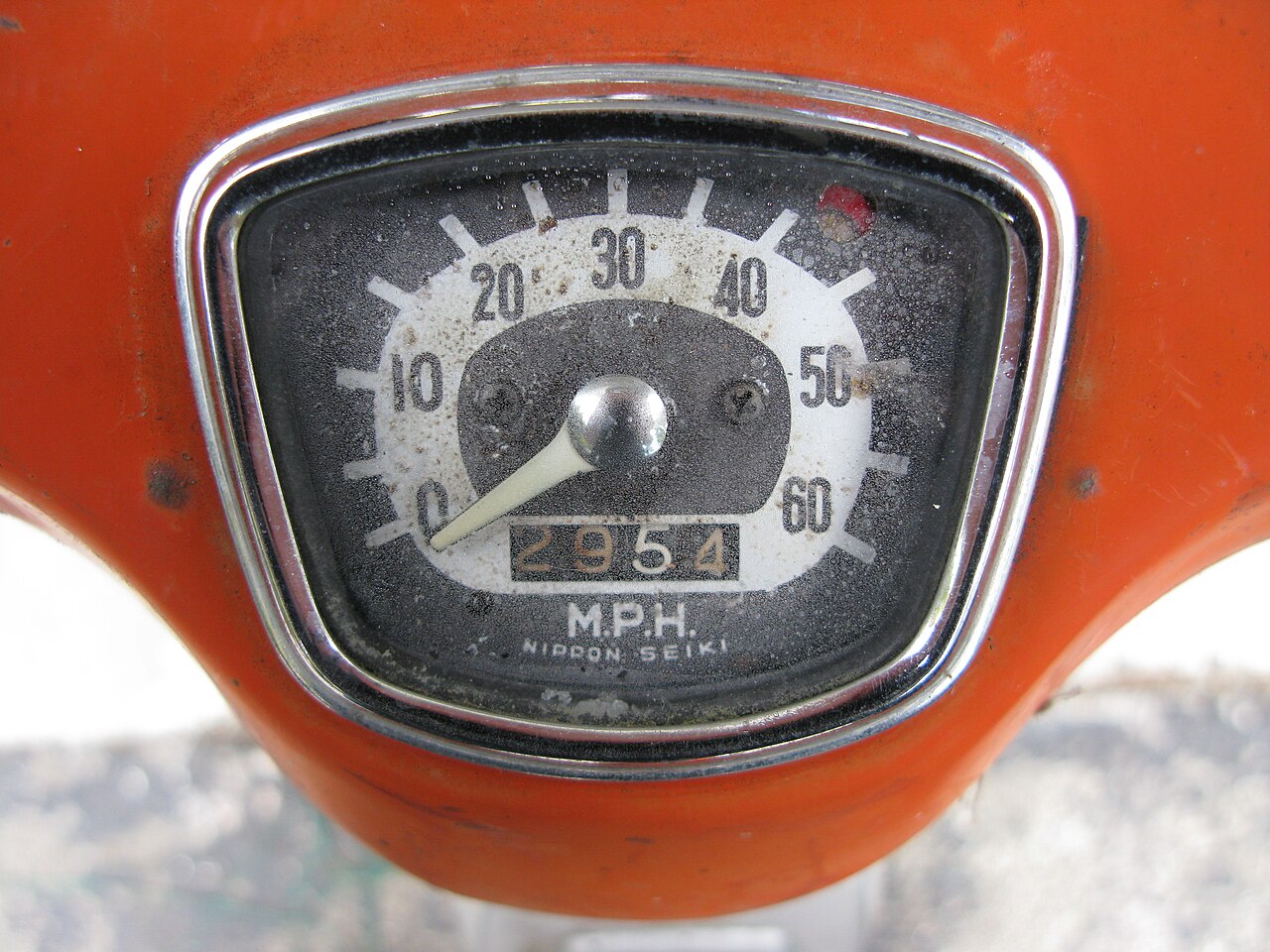
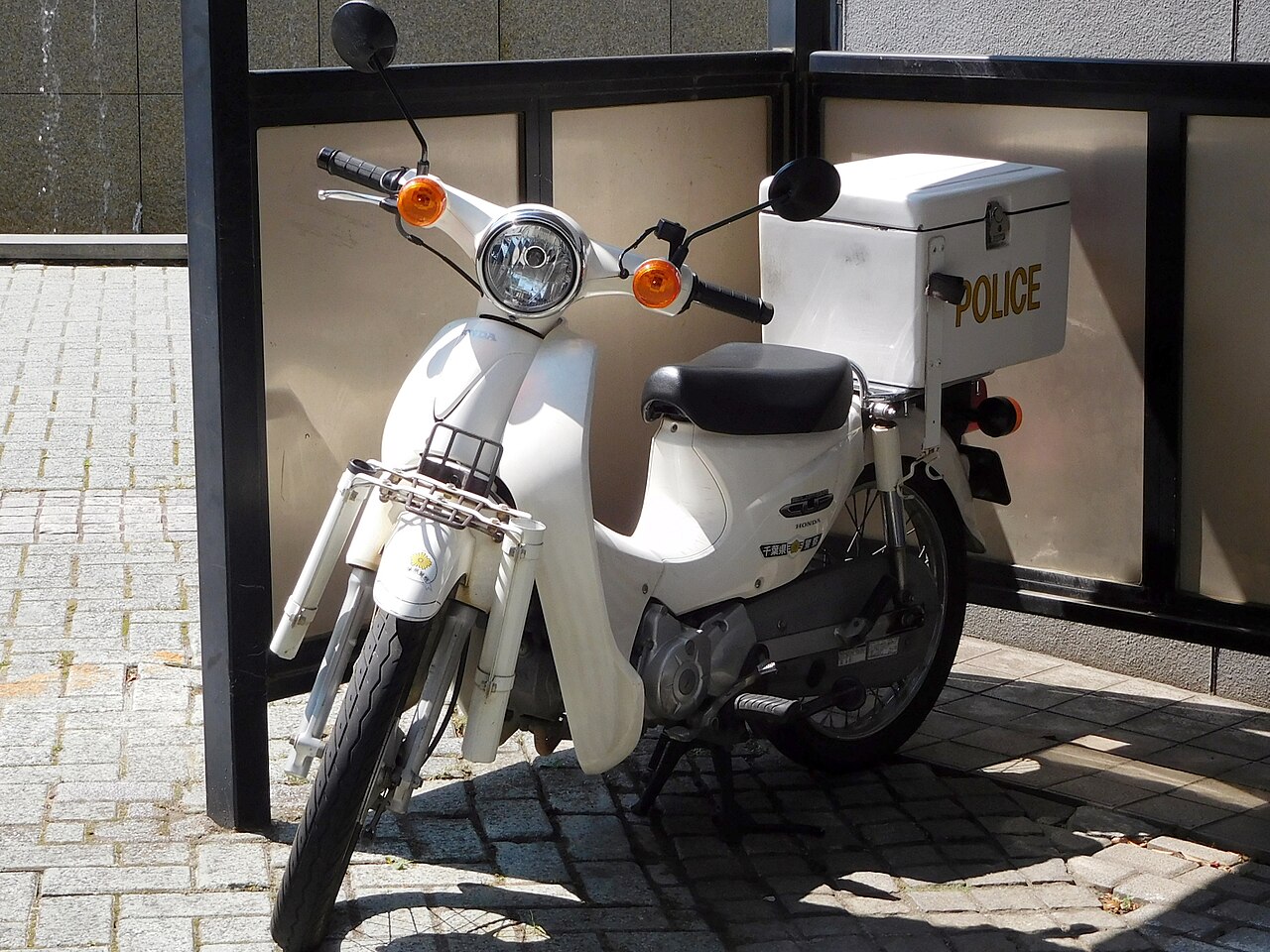
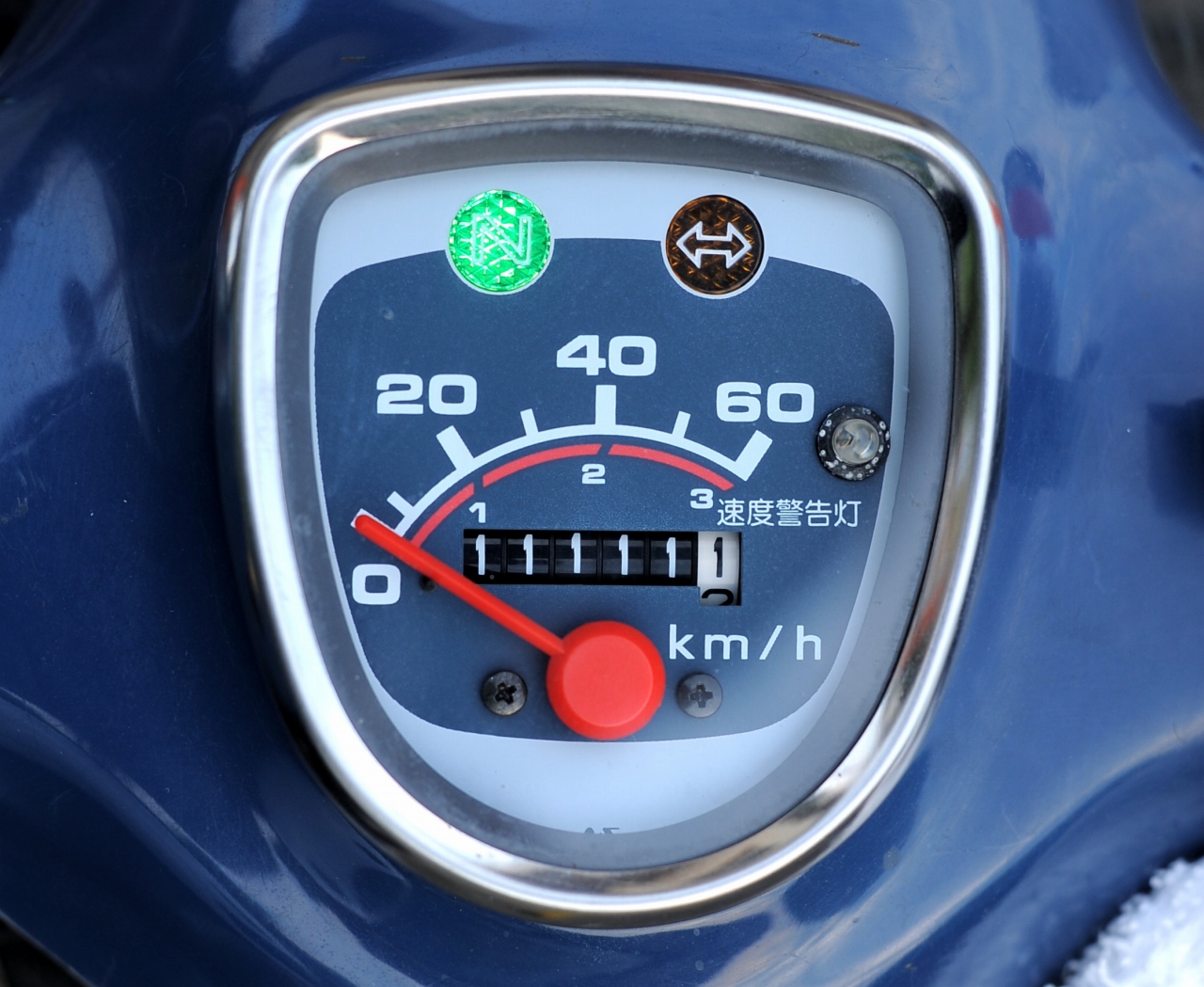
Frequently Asked Questions
What is the Honda Super Cub?
It is an underbone-style motorcycle built by Honda, powered by a small four-stroke single-cylinder engine ranging from 49 to 124 cc. Designed as a practical daily commuter, it has been in continuous production since 1958.
How many Honda Super Cubs have been made in total?
Cumulative production crossed the 100-million-unit threshold by 2017, making it the most-produced motor vehicle of any kind in history. No other motorcycle or automobile has reached that figure.
How fast can a Honda Super Cub go?
The 50 cc version delivers roughly 3.4 kW (about 4.5 hp) at 9,500 rpm and can hit around 69 km/h (43 mph) under ideal conditions. Speed was never the design goal; the bike prioritizes fuel efficiency and effortless daily transport.
How long has the Super Cub been in production?
Honda launched the model in 1958 and has never discontinued it, meaning it has been on the market for over six decades without a gap. That makes it the longest-running motorcycle in continuous production.
Why did the Super Cub change American attitudes toward motorcycles?
Honda's 1960s television campaign built around the line 'You meet the nicest people on a Honda' reframed motorcycling as a family-friendly, everyday activity rather than a biker subculture. The ad helped position Honda as an accessible mainstream brand in the U.S. market.
More in Iconic Motorcycles 1-20
Spotted an error? Know more?
This is a living reference — every entry is fact-audited, and reader corrections feed straight into our audit queue. Suggest an edit · See this site's audit record