Cuernavaca
Capital of Morelos, likely origin of Mesoamerican civilization, known for eternal spring.

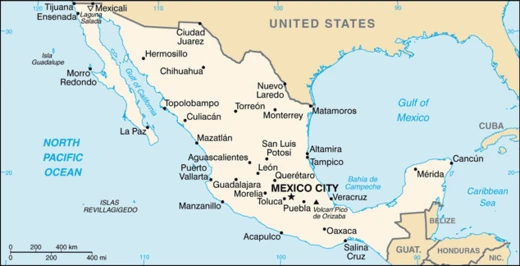
Cuernavaca, the capital and largest city of the Mexican state of Morelos, is considered, alongside Chalcatzingo, a probable birthplace of Mesoamerican civilization. Olmec artifacts unearthed at the Gualupita III archaeological site now reside in Mexico City’s Museum of Anthropology. The city sits south of the capital, a 90-minute drive via Federal Highway 95D.
Its name is a Spanish adaptation of the Nahuatl toponym *Cuauhnāhuac*, meaning “surrounded by or close to trees.” Hernán Cortés referred to it as Coadnabaced in his letters to Emperor Charles V, while Bernal Díaz del Castillo called it Cuautlavaca. The municipal coat of arms derives from a pre-Columbian pictograph: a tree trunk (*cuahuitl*) with three leafy branches and four red roots, featuring a cut shaped like a mouth from which a speech scroll emerges—likely symbolizing the Nahuatl language and the locative suffix *-nāhuac* (“near”).
Cuernavaca has long served as a retreat for Mexico City residents and international visitors, thanks to its steady warmth and lush vegetation. In 1937, President Lázaro Cárdenas designated the municipality a Forest Protection Zone to safeguard aquifers, plant life, and the quality of life for locals and capital dwellers alike. The 19th-century naturalist Alexander von Humboldt nicknamed it the “City of Eternal Spring.”
Aztec emperors maintained summer residences here, and today, many Mexico City families own second homes in the city, just a 1.5-hour drive away. A sizable foreign community also resides in Cuernavaca, including numerous students studying Spanish.
Humboldt’s writings describe the region as a “temperate region” of perpetual spring. The city lies on the southern slope of the Sierra de Chichinautzin mountains, with temperatures consistently between 21 and 26 °C (70–79 °F). Morning warmth rises from the valley, while cooler air descends in the late afternoon. Bougainvillea blooms ubiquitously. This climate has drawn royalty and nobility since Aztec times—foreign princes, archdukes, and others attracted by its flowers, sun, fruit, springs, and waterfalls. Emperor Maximilian I built a country residence here. Philanthropist Barbara Hutton owned a home on the outskirts. Princess Maria Beatrice of Savoy lived in the city from 1971 to 1999. Following the Iranian Revolution, the Shah of Iran, Mohammad Reza Pahlavi, resided in exile in Cuernavaca. Bauhaus designer Michael van Beuren, a U.S. native, settled in a family hacienda while fleeing Nazi Germany, and a colony of Bauhaus designers grew in the city during World War II.
Population growth in the urban area began in 1940, though the metropolitan area was not formally recognized until the 1960s. Between 1960 and 1980, the population jumped from 85,620 to 368,166. Since the 1980s, the municipalities of Emiliano Zapata, Jiutepec, Temixco, Tepoztlán, and Xochitepec have been added to the metro area, though population and economic activity remain concentrated in Cuernavaca proper. As of 2015, the metropolitan area had 912,024 inhabitants; the municipality itself had 366,321. Since the 1970s, the metro area has grown more economically and socially integrated with Mexico City. Many capital residents own weekend homes there for the climate and infrastructure. Permanent migration from Mexico City began in the 1980s, driven by pollution and crime, and accelerated after the 1985 earthquake, which pushed many affluent families to relocate, often with the main breadwinner commuting daily. This influx spurred housing developments on the outskirts, especially in the late 1990s and 2000s, bringing economic benefits but straining infrastructure. About 85% of the city is residential, much of it in middle-class developments like Rancho Cortés, Rancho Tetela, and Colonia del Bosque on the outskirts, while lower-income housing is concentrated in the city center.
Burials dating to around 1000 BCE have been uncovered in Gualupita, Morelos.
- location
- South of Mexico City, reachable via a 90-minute drive along Federal Highway 95D
- nickname
- City of Eternal Spring
- climate
- Fairly constant at 21–26 °C (70–79 °F)
- founded_or_inhabited_since
- At least the 12th century by the Tlahuica people
Lore & Background
Cuernavaca's name is a euphonism derived from the Nahuatl toponym Cuauhnāhuac, meaning 'surrounded by or close to trees'. Hernán Cortés called it Coadnabaced in his letters to Charles V, Holy Roman Emperor, and Bernal Díaz del Castillo used the name Cuautlavaca. The coat-of-arms is based on a pre-Columbian pictograph depicting a tree trunk with three branches, foliage, and four red roots, with a cut in the trunk forming a mouth from which emerges a speech scroll, likely representing the Nahuatl language. Aztec emperors had summer residences there. The city was nicknamed 'City of Eternal Spring' by Alexander von Humboldt in the 19th century. Emperor Maximilian I of Mexico set up a country residence in the city. The Shah of Iran, Mohammad Reza Pahlavi, lived in exile in the city following the Iranian Revolution. Bauhaus designer Michael van Beuren established his residence in a family hacienda in Cuernavaca while fleeing the rise of the Nazi regime, and a colony of Bauhaus designers grew there during World War II.
Reader's Guide
Cuernavaca holds significance as a likely origin point of Mesoamerican civilization, with Olmec works of art found at the Gualupita III archaeological site. Its stable, warm climate and abundant vegetation have attracted royalty, nobles, and foreign residents since Aztec times, including Emperor Maximilian I and the Shah of Iran. This influx has had positive economic benefits but also put pressure on infrastructure. The city remains a center for Spanish language study and a retreat for both domestic and international visitors.
Did You Know?
- Olmec works of art found in the Gualupita III archaeological site are displayed in the Museum of Anthropology in Mexico City.
- The name Cuernavaca is a euphonism derived from the Nahuatl toponym Cuauhnāhuac, meaning 'surrounded by or close to trees'.
- Alexander von Humboldt nicknamed Cuernavaca the 'City of Eternal Spring' in the 19th century.
- The Shah of Iran, Mohammad Reza Pahlavi, lived in exile in Cuernavaca following the Iranian Revolution.
Ancient Roots and Indigenous Inhabitants
Cuernavaca's claim to deep prehistory is remarkable. Together with Chalcatzingo, Cuernavaca is considered a likely cradle of Mesoamerican civilization. The Tlahuica, a Nahua-speaking people, established their principal settlement on the very ground where the city stands today, with a presence stretching back at least to the 12th century. Matlatzincas also inhabited the broader region, persisting as late as the nineteenth century. The first recorded incursions from the Valley of Mexico into this southern territory came in the 12th century, led by a lord known as King Xolotl. The city's very name preserves this Nahuatl heritage: Cuauhnāhuac, meaning 'surrounded by or close to trees,' was Hispanicized into Cuernavaca over the colonial period. Even the municipal coat-of-arms draws on a pre-Columbian pictograph showing a tree trunk with three leafy branches, four red roots, and a speech scroll emerging from a mouth-shaped cut in the trunk—likely a visual reference to the Nahuatl locative suffix -nāhuac, meaning 'near.'
Climate and the Eternal Spring
Alexander von Humboldt, writing in the 19th century, described the region around Cuernavaca as a 'temperate region' where 'perpetual spring' reigns, and the city has carried that 'City of Eternal Spring' moniker ever since. The explanation is geographic: the city sits on the southern slope of the Sierra de Chichinautzin mountains, where warm air rises from the valley in the morning and cooler air descends from higher elevations in the late afternoon. This daily cycle keeps temperatures remarkably steady between 21 and 26 degrees Celsius year-round, despite the tropical latitude. The result is a landscape lush with vegetation, where bougainvillea blooms as a ubiquitous sight. The stable, mild climate has made Cuernavaca a natural retreat destination for centuries, drawing people who seek relief from the more extreme conditions of the capital to the north.
A Magnet for Royalty and Exiles
The same climate that earned Cuernavaca its springtime nickname has also drawn an extraordinary roster of foreign dignitaries, aristocrats, and political exiles over the centuries. Aztec emperors maintained summer residences in the area before European contact. In the modern era, Emperor Maximilian I of Mexico established a country residence in the city. The American philanthropist Barbara Hutton, who held multiple aristocratic titles through her marriages, kept a home on the city's outskirts. After the Iranian Revolution, Shah Mohammad Reza Pahlavi found refuge in the city. The city had also attracted a notable artistic community: Bauhaus designer Michael van Beuren, an American who had studied and worked in Germany, fled the rise of the Nazi regime and settled in a family hacienda in Cuernavaca. During World War II, a colony of Bauhaus designers grew around him. Today, the city continues to host a large foreign resident population, including significant numbers of international students who come specifically to study Spanish, underscoring how the blend of climate, culture, and accessibility keeps drawing outsiders to its streets.
Metropolitan Growth and the Mexico City Tie
Just a 90-minute drive south of Mexico City along Federal Highway 95D, Cuernavaca has evolved from a weekend escape into a full-fledged metropolitan area. Since the 1980s, the municipalities of Emiliano Zapata, Jiutepec, Temixco, Tepoztlán, and Xochitepec have been incorporated into the metropolitan area, though the city of Cuernavaca proper still concentrates the bulk of economic activity. Many of those newcomers commute daily to Mexico City for work, fueling a boom in housing developments on the city's outskirts, particularly in the late 1990s and 2000s. Today, 85 percent of Cuernavaca's land is devoted to housing, with middle-class complexes like Rancho Cortés, Rancho Tetela, and Colonia del Bosque sprawling across the periphery, while lower-income neighborhoods cluster in the city center.
Frequently Asked Questions
Who is Cuernavaca?
Cuernavaca is the capital and most populous city of the state of Morelos in southern Mexico. It is widely nicknamed the "City of Eternal Spring" because of its consistently mild, pleasant weather throughout the year.
What makes Cuernavaca's climate special?
Temperatures in the city hover in a narrow band of roughly 21 to 26 degrees Celsius no matter the season, giving it a perpetually spring-like feel. This stable, comfortable weather is a primary reason both Mexico City residents and foreign tourists flock there as a getaway.
How old is Cuernavaca?
The area has been continuously inhabited since at least the 12th century, when the Tlahuica people established their settlements there. Together with the nearby site of Chalcatzingo, the region is considered one of the probable cradles of broader Mesoamerican civilization.
Why is Cuernavaca important in Mexican history?
Beyond its role as a state capital, Cuernavaca is regarded as a foundational origin point of Mesoamerican culture, placing it among the oldest continuously significant urban centers in the region. That deep archaeological heritage makes it far more than just a scenic weekend destination.
How do you get to Cuernavaca from Mexico City?
The city sits directly south of the capital and is roughly a 90-minute drive along Federal Highway 95D. That short commute is a big part of why it became such a beloved escape spot for people living in the capital over the decades.
More in Mexican Cities 1-20
Spotted an error? Know more?
This is a living reference — every entry is fact-audited, and reader corrections feed straight into our audit queue. Suggest an edit · See this site's audit record