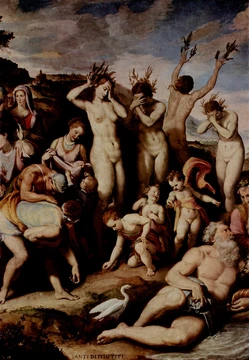
Cycnus (son of Poseidon)
King of Kolonai, son of Poseidon, changed into a swan.
Cycnus, whose name means 'swan' in Ancient Greek, was a king of the town of Kolonai in the southern Troad. He was a son of the god Poseidon and fought in the Trojan War. After his death, he was transformed into a swan.
Quick Facts
- Name
- Cycnus (Cygnus)
- Meaning
- swan
- Kingdom
- Kolonai in the southern Troad
- Father
- Poseidon
- Mother
- Calyce
- Harpale
- or Scamandrodice
- Spouse
- Procleia, then Philonome
- Children
- Tenes
- Hemithea
- Cobis
- Corianus
- Glauce
Facts from the source article.
Family
Cycnus was the son of Poseidon by Calyce, Harpale, or Scamandrodice. According to one account, his mother Scamandrodice abandoned him on the seashore, but fishermen rescued him and named him Cycnus after a swan they saw flying over him. Another tradition says his name came from his womanly white skin and fair hair. He married first Procleia, daughter of King Laomedon of Troy or of Clytius, and had children Tenes and Hemithea. Dictys Cretensis also lists sons Cobis and Corianus and a daughter Glauce.
Mythology
Philonome fell in love with her stepson Tenes, but he rejected her. She falsely accused him of rape, and Cycnus placed both Tenes and Hemithea in a chest and cast it into the sea. Later discovering the truth, Cycnus had Philonome buried alive. Finding his children alive and ruling Tenedos, he sailed to reconcile, but Tenes cut his ship's anchor rope. Cycnus later fought for Troy in the Trojan War, killing a thousand opponents according to Ovid, and possibly the Greek hero Protesilaus. As Poseidon's son, he was invulnerable to spear and sword, so Achilles crushed and suffocated him. After death, Cycnus became a swan. The Greek army later spared Colonae on condition that Cobis, Corianus, and Glauce be handed over; according to Tzetzes, Diomedes killed the two sons. Cycnus's armor was awarded to King Agapenor for winning the long jump at Achilles's funeral games.
More in Metamorphoses Into Birds in Greek Mythology
Spotted an error? Know more?
Reader corrections go straight into our review queue. Suggest an edit · How this site is sourced