Antigone (daughter of Laomedon)
Trojan princess turned into a stork by Hera.
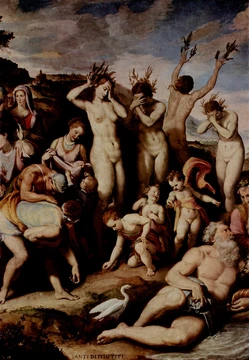
Antigone of Troy is a minor figure in Greek and Roman mythology, known as a Trojan princess and daughter of King Laomedon. She is notable for a myth in which she provoked the goddess Hera and was transformed into a stork.
Quick Facts
- Origin
- Troy
- Father
- King Laomedon
- Siblings
- Priam
- Lampus
- Clytius
- Hicetaon
- Bucolion
- Tithonus
- Hesione
- Cilla
- Astyoche
- Aethilla
- Medesicaste
- Proclia
- Metamorphosis
- Stork
- Deity involved
- Hera
Facts from the source article.
Did You Know?
- Antigone's name derives from Greek words meaning 'opposite' or 'in place of' and 'birth' or 'descent', possibly meaning 'in place of a mother'.
- Her story follows themes from Boios' crane myth, where a woman compares herself to Hera and is turned into a bird.
- Antigone's snake hair is modeled after the myths of Medusa and Scylla.
Mythology
The earliest known version of Antigone's story appears in Ovid's Metamorphoses, where Athena weaves a tapestry depicting the punishment of the Trojan princess Antigone, daughter of King Laomedon, who was turned into a white stork by Hera for trying to compete with her. In a later account by the Vatican Mythographers, Antigone considered herself better and prettier than Hera, who then changed her into a stork; alternatively, Hera first turned her hair into snakes, and later the gods took pity and transformed her into a stork, which thereafter preyed on snakes but remained hostile to Zeus. The Thebaid scholiast Lactantius Placidus wrote that Hera transformed Antigone into a stork for sleeping with Zeus.
More in Metamorphoses Into Birds in Greek Mythology
Spotted an error? Know more?
Reader corrections go straight into our review queue. Suggest an edit · How this site is sourced