Messier 41
An open cluster near Sirius, resembling the Beehive Cluster.

Messier 41, also cataloged as NGC 2287, is an open star cluster found in Canis Major. It sits about four degrees south of Sirius and, together with Sirius and Nu2 Canis Majoris, creates a roughly equilateral triangle that binoculars can easily pick out. The cluster covers an area about as wide as the full moon and holds roughly one hundred stars, among them several red giants and white dwarfs. Giovanni Batista Hodierna first spotted M41 before 1654, though Aristotle may have seen it as early as 325 BC. Because it resembles the Beehive Cluster (M44), it’s sometimes called the Little Beehive Cluster. At the cluster’s heart lies a red giant of spectral type K3, its apparent magnitude 6.3 making it the brightest member. M41 spans 25 to 26 light-years (7.7 to 8.0 parsecs) and is moving away from Earth at 23.3 kilometers per second. Its estimated age is 190 million years, and it’s expected to break apart after about 500 million years. Walter Scott Houston noted that in small telescopes, many observers see curved lines of stars within M41. These curves, he wrote, are faint in photographs but stand out clearly in his 10-inch reflector, with the bright red star near the center especially prominent. That star, HIP 32406, is a K2-type giant of magnitude 6.9, located roughly 1,500 light-years away.
- Designations
- M41, NGC 2287
- Constellation
- Canis Major
- Distance
- ~1,500 light-years (for central star HIP 32406)
- Diameter
- 25–26 light-years (7.7–8.0 pc)
- Number of stars
- About 100
- Brightest star magnitude
- 6.3 (red giant, spectral type K3)
- Age
- 190 million years
- Recession speed
- 23.3 km/s
Lore & Background
Discovered by Giovanni Batista Hodierna before 1654, M41 may have been observed by Aristotle as early as 325 BC. It is sometimes called the Little Beehive Cluster due to its resemblance to the Beehive Cluster (M44). The brightest star in M41 is a red giant of spectral type K3 with an apparent magnitude of 6.3 near the cluster's center. The cluster has a diameter of 25–26 light-years (7.7–8.0 pc) and is receding from Earth at 23.3 km/s. Estimates suggest an age of 190 million years, with a predicted lifespan of 500 million years before disintegration. Walter Scott Houston noted its appearance in small telescopes: 'Many visual observers speak of seeing curved lines of stars in M41. Although they seem inconspicuous on photographs, the curves stand out strongly in my 10-inch [reflecting telescope], and the bright red star near the center of the cluster is prominent.' The prominent red-orange central star, HIP 32406, is a K2-type giant of magnitude 6.9, located ~1,500 light-years away.
Reader's Guide
Messier 41 is significant as an open cluster easily located near Sirius, making it a popular target for binocular and small telescope observers. Its nickname, the Little Beehive Cluster, highlights its visual similarity to the more famous Beehive Cluster (M44). The cluster's curved lines of stars, noted by Walter Scott Houston, are a distinctive feature that stands out visually despite being inconspicuous in photographs. The presence of a bright red giant near its center adds to its appeal. With an estimated age of 190 million years and a predicted lifespan of 500 million years before disintegration, M41 represents a relatively young stellar grouping that will eventually disperse. Its discovery history, possibly dating back to Aristotle in 325 BC and confirmed by Giovanni Batista Hodierna before 1654, gives it a long observational legacy. The cluster's recession speed of 23.3 km/s and its diameter of 25–26 light-years provide key physical parameters for understanding open cluster evolution.
Born from Comet-Hunting Frustration
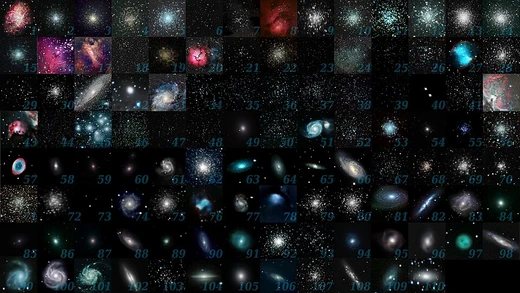
M41 is one of 110 deep-sky objects preserved in a catalogue that originated from an astronomer's irritation. Charles Messier, a French stargazer based in Paris, spent his nights searching for comets. Time and again, he would sweep his telescope across the sky and stumble upon a glowing patch or a tight knot of stars that was decidedly not a comet. To spare himself the confusion in future sessions, he began jotting down every such object he encountered. Working alongside his assistant Pierre Méchain, Messier compiled what would become one of the most celebrated lists in all of astronomy. M41 was part of the very first edition, which appeared in 1774 in the Memoirs of the French Academy of Sciences. That initial release contained 45 entries, numbered M1 through M45, and M41 sat comfortably within that original set. Of those 45, eighteen were Messier's own discoveries; the remainder had already been recorded by earlier observers. What began as a practical anti-comet checklist has since become a cornerstone of deep-sky astronomy.
A Number That Endured
Today, when astronomers or enthusiasts refer to M41, they are invoking a naming convention that has survived more than two centuries. The Messier catalogue remains one of the most widely recognized compilations in the history of astronomy, and a great many of its entries are still cited by their M-numbers in both professional literature and casual conversation. The list grew steadily after its 1774 debut: by 1780 it held 70 objects, and the final version Messier himself published in 1781 contained 103. That edition appeared in the Connaissance des Temps, the French government's official annual almanac of astronomical ephemerides. For a long time the count was believed to be 102, because of a disputed entry called M102 that Méchain had reported but later dismissed as a duplicate of M101. Subsequent scholars, poring over marginal notes in Messier's and Méchain's manuscripts, gradually restored the missing entries. Nicolas Camille Flammarion added M104 in 1921, Helen Sawyer Hogg contributed M105 through M107 in 1947, Owen Gingerich appended M108 and M109 in 1960, and Kenneth Glyn Jones closed the roster with M110 in 1967. M41, however, has kept its original number from the very first list.
A Target for Every Sky-Watcher
Because Messier observed from the Hôtel de Cluny in Paris, his catalogue is biased toward the northern sky, covering objects visible from the north celestial pole down to roughly 35.7 degrees south celestial latitude. M41 falls squarely within that observable zone, and like most of its catalogue siblings, it is bright enough to be resolved by a modest refracting telescope of about 100 millimetres aperture—the kind Messier himself used from the streets of downtown Paris. That very accessibility is what makes objects like M41 perennial favourites among amateur astronomers. Whether peering through a backyard telescope on a clear evening or capturing long-exposure photographs with modern equipment, sky-watchers consistently rank these bright, nearby deep-sky objects among the most rewarding targets. In early spring, a special tradition takes hold: the so-called Messier marathon, in which dedicated observers attempt to sweep through every entry in the catalogue over a single night. M41, sitting in the first 45 objects, is typically one of the earlier stops on that ambitious journey.
Among the Closest and Most Studied
The Messier catalogue is not merely a historical curiosity; it represents a cross-section of the most spectacular examples of every major class of deep-sky object visible from European latitudes. The five categories span diffuse nebulae, planetary nebulae, open clusters, globular clusters, and galaxies, and M41 belongs to this richly diverse collection. Crucially, almost every object in the catalogue is among the nearest members of its particular class as seen from Earth. That proximity means they have been scrutinized with professional-grade instruments for generations, and modern telescopes can now resolve fine structural details that were invisible to Messier's small refractor. The astrophysical story of each Messier object, including M41, is summarized in the Concise Catalog of Deep-sky Objects, a reference that distills decades of research into accessible overviews. From the supernova remnant known as the Crab Nebula (M1) to the great spiral Andromeda Galaxy (M31), the catalogue spans an extraordinary range of cosmic phenomena, and M41 occupies its place within that spectrum of the closest, brightest, and most thoroughly investigated deep-sky targets known to humanity.
Frequently Asked Questions
What is Messier 41?
Messier 41, also cataloged as NGC 2287, is an open star cluster in the constellation Canis Major. It holds roughly one hundred stars—including several red giants and white dwarfs—spread across a patch of sky about the apparent width of the full Moon.
Where is Messier 41 in the night sky?
It sits about four degrees south of Sirius in Canis Major. Along with Sirius and Nu2 Canis Majoris, the three form a roughly equilateral triangle that binoculars can pick out with ease.
Who first discovered Messier 41?
Giovanni Batista Hodierna is generally credited with spotting the cluster before 1654. Some historians speculate that Aristotle may have observed it as far back as 325 BC, though that claim remains uncertain.
How far away is Messier 41 and how large is it?
The central star HIP 32406 lies roughly 1,500 light-years from Earth, and the cluster's overall diameter spans about 25 to 26 light-years.
Why is Messier 41 nicknamed the Little Beehive?
Its loose, scattered grouping of stars closely mirrors the appearance of the Beehive Cluster (M44), so observers often draw the visual comparison. The nickname stuck because both objects share that similar open, hazy look through small telescopes.
More in Messier Objects, Part 2 1-24
Spotted an error? Know more?
Reader corrections go straight into our review queue. Suggest an edit · How this site is sourced