Western Hemisphere
U.S. Department of Defense school for Latin American security personnel, formerly the School of the Americas.
Last updated
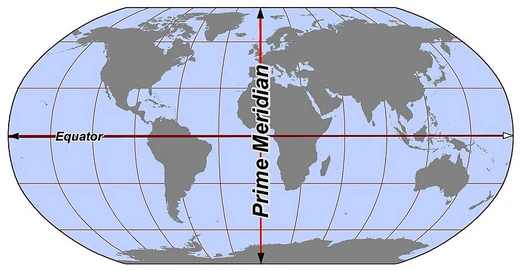
The Western Hemisphere is the half of Earth located west of the Prime Meridian and east of the 180th meridian, with the Eastern Hemisphere constituting the other half. Geographically, it includes the Americas, except for some Aleutian Islands southwest of mainland Alaska; the westernmost parts of Europe and Africa, including their islands; the extreme eastern tip of Russia and its islands; many territories in Oceania; and a large portion of Antarctica. The center of this hemisphere lies in the Pacific Ocean at the intersection of the 90th meridian west and the Equator, near the Galápagos Islands, with Genovesa Island being the nearest land. Canada is the largest country entirely within the hemisphere, covering 9,984,670 square kilometers.
Fifteen independent island nations have no land borders: Antigua and Barbuda, the Bahamas, Barbados, Cape Verde, Cuba, Dominica, Grenada, Iceland, Jamaica, Saint Kitts and Nevis, Saint Lucia, Saint Vincent and the Grenadines, Samoa, Tonga, and Trinidad and Tobago. Ten African countries are entirely within the hemisphere, with Mauritania being the largest at 1,030,000 square kilometers; five more African countries are partially included. Portugal is the only mainland European country entirely within the hemisphere, while Spain has the most mainland European land in it, though a moderate portion of Spain’s population lives east of the prime meridian. The highest mountain is Aconcagua in Argentina at 6,960.8 meters.
Temperature records
The tallest freestanding structure is the CN Tower in Toronto at 553.3 meters, and the tallest building is One World Trade Center in New York City at 541.3 meters. Some sources use alternative definitions, such as the 20th meridian west and the 160th meridian east, to exclude European and African mainlands while still including some associated islands, but no hemisphere can include all of the Americas while excluding all land outside them. The lowest temperature recorded outside Antarctica in the hemisphere was −69.6°C in Greenland on December 22, 1991, which is also the Northern Hemisphere’s lowest. The highest temperature recorded in the hemisphere was 56.7°C in Death Valley, California, on July 10, 1913, which is the highest ever recorded on Earth.
Quick Facts
- Definition
- Half of Earth west of Prime Meridian and east of 180th meridian
- Highest mountain
- Aconcagua (6,960.8 m)
- Center point
- Intersection of 90th meridian west and Equator, near Galápagos Islands
Facts from the source article.
Did You Know?
- The school was located in the Panama Canal Zone until its expulsion in 1984.
- By the year 2000, more than 60,000 Latin American military, law enforcement, and security personnel had attended the school.
- The school's 'Hall of Fame' included Bolivian dictator Gen. Hugo Banzer Suárez, drug lord Manuel Noriega, and Guatemalan General Manuel Antonio Callejas y Callejas.
- In 1966, 103 students completed a 9-day, 55-mile jungle crossing from the Pacific to the Caribbean, symbolically following Spanish explorers.
- The school's counterinsurgency manuals were produced under the Army's Project X, which relied on knowledge from the CIA's Phoenix Program.
Frequently Asked Questions
What exactly is the Western Hemisphere?
It is the half of Earth's surface bounded on the east by the Prime Meridian (0° longitude) and on the west by the 180th meridian. In everyday American usage the term often stands in for the entire Americas, but the geographic definition is strictly meridian-based.
Where is the exact center point of the Western Hemisphere?
The midpoint falls at the intersection of the 90th meridian west and the Equator, a spot in the Pacific Ocean just off the Galápagos Islands. No landmass sits at that coordinate, making it a purely oceanic reference point.
Which country is the largest to lie entirely within the Western Hemisphere?
Canada holds that distinction at roughly 9,984,670 square kilometres. Because the hemisphere's western boundary is the 180th meridian, any territory crossing into the Eastern Hemisphere disqualifies a country from the 'entirely within' category.
Does the Western Hemisphere include land outside the Americas?
Yes—because the dividing lines are the Prime Meridian and the 180th meridian, portions of western Europe, western Africa, parts of Oceania, and sections of Antarctica all fall on the western side of the globe. The popular shorthand 'the Americas' therefore understates the hemisphere's true geographic reach.
Also in the Codexery
More in Lines & Hemispheres
Sources
Compiled from Wikipedia and the sources listed below. Text from Wikipedia is available under CC BY-SA 4.0; this entry is adapted from it.
- Wikipedia: Western Hemisphere (CC BY-SA 4.0).
Spotted an error? Know more?
Reader corrections go straight into our review queue. Suggest an edit · How this site is sourced