Little People of the Pryor Mountains
Ferocious dwarfs of Crow lore, sacred and powerful.

Kappler, Charles J. · Public domain
The Crow Tribe, known in their own language as the Absaroke, tell of the Nirumbee or Awwakkulé—ferocious dwarf-like beings who inhabit the Pryor Mountains in Montana. These Little People stand no more than eighteen inches tall, with heads nearly fourteen inches high, incredibly strong but short limbs, and little to no neck. They are described as fierce warriors with many sharp, canine-like teeth who feed mainly on meat. According to Crow folklore, a Little Person once killed a full-grown bull elk and carried it off by tossing the elk’s head over its shoulder, giving rise to the Crow expression “strong as a dwarf.” The Little People are also said to have created the stone arrowheads the Crow used, as the Crow themselves only knew how to make bone arrowheads. Petroglyphs on rocks in the Pryor Mountains are attributed to these demon-like creatures, and the mountains are considered sacred because of them.
Beliefs in similar “Little People” are widespread among Western Native American tribes. The Umatilla of Oregon called them “Stick Indians,” while the Nez Perce knew them as Itśte-ya-ha. In 1804, the Lewis and Clark Expedition visited a “mountain of the Little People” near the Vermillion River in present-day South Dakota. Meriwether Lewis recorded that the local Sioux described the Little People as devils with very large heads, about eighteen inches tall, who carried sharp arrows that could strike from a great distance and killed anyone who approached their mound. The Maha (Omaha), Ottoes (Otoe), and Sioux avoided the place entirely. A Lakota story, no more than 250 years old, tells of a band of 350 warriors who approached the mound late at night and were nearly wiped out, with survivors crippled for life.
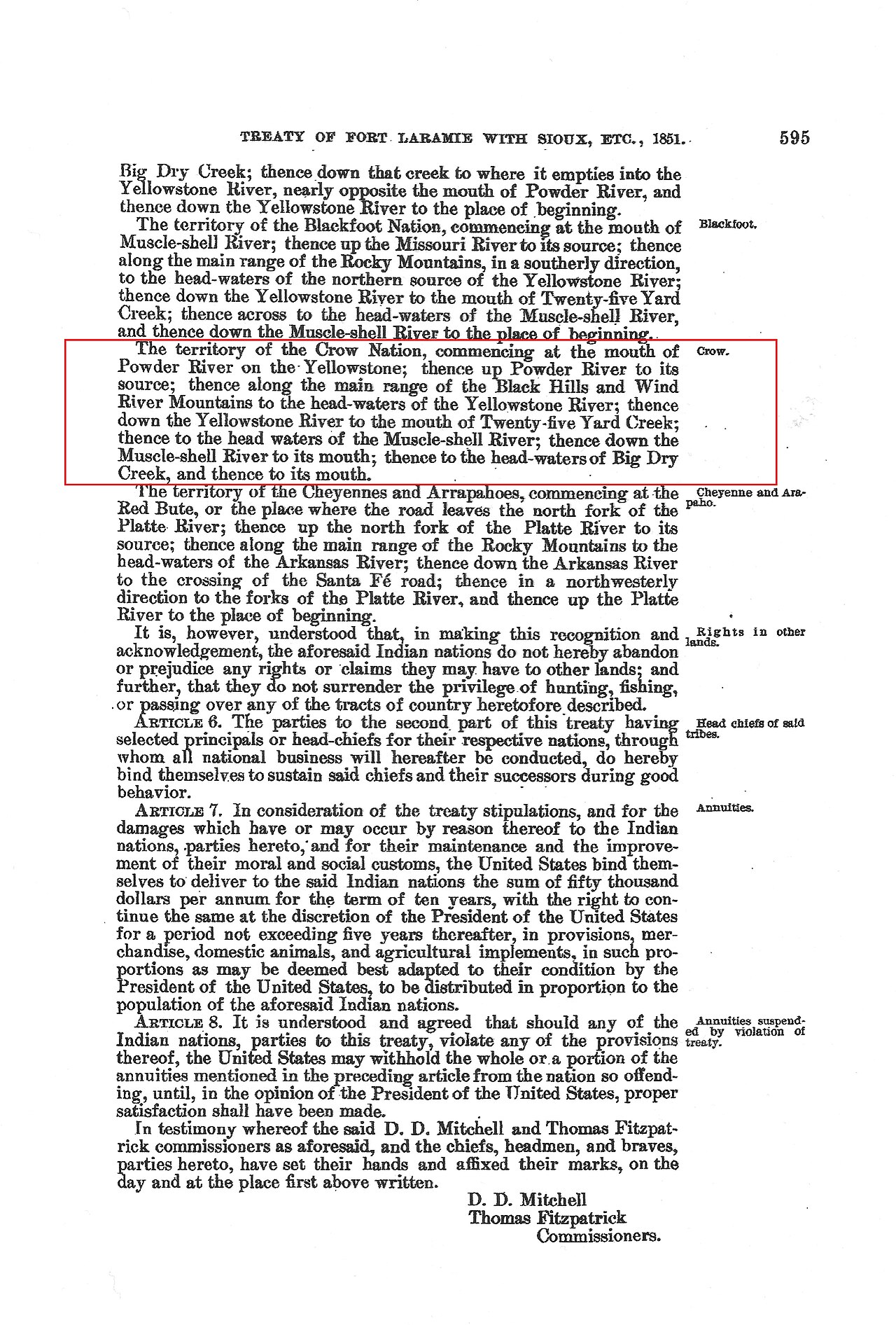
The Crow were originally part of the Hidatsa people, who lived a settled agricultural life along the Missouri River in what is now western North Dakota. Sometime before the mid-17th century, the Hidatsa leader No-Vitals led a large group west into the Yellowstone River valley of south-central Montana, where the tribe lived on the plains, by the river, and in the nearby Big Horn, Pryor, and Wolf Mountains. This move was driven by pressure from eastern and midwestern tribes displaced by white encroachment, and the Crow may have settled in the Yellowstone Valley only a few decades before Lewis and Clark arrived.
- Alternate names
- Nirumbee, Awwakkulé
- Height
- no more than 18 inches (46 cm) or knee high
- Head size
- large heads, nearly fourteen inches tall
- Location
- Pryor Mountains, Carbon County and Bighorn County, Montana
- Associated tribe
- Crow Tribe (Absaroke)
- Notable encounter
- Plenty Coups, Crow chief
Lore & Background
Crow folklore says the Little People live in the Pryor Mountains, a small mountain range in Carbon County, Montana and Bighorn County, Montana. Petroglyphs on rocks in the mountains, the Crow said, were made by these demon-like creatures. Because the Little People live there, the mountains are sacred to the Crow. The Little People are said to be no more than 18 inches (46 cm) (or knee) high. Crow folklore differs slightly from that of other tribes in describing the Little People of the Pryor Mountains as having large heads, nearly fourteen inches tall, and incredibly strong but short arms and legs; and little or no neck. In the story of 'Lost Boy', the Crow told of a Little Person who killed a full-grown bull elk and carried it off just by tossing the elk's head over its shoulder. The Crow expression, 'strong as a dwarf,' references the incredible strength of these Little People. However, they are incredibly fierce warriors, feed primarily on meat, and have many sharp, canine-like teeth in their mouths. Nearby tribes told stories of the Little People tearing the hearts out of their enemies' horses, stories which may have helped keep these tribes from making war on the Crow. Each year, the Crow made an offering to the Little People at Medicine Rocks (also known as 'Castle Rocks'), where they believed some Little People lived. The Pryor Mountains Little People were also known for stealing children, food, medicine, and tobacco. The Crow also believed that the Little People created stone arrowheads, for the Crow themselves only knew how to make bone arrowheads. Anyone who tried to play a trick on the Little People would incur their wrath, which usually destroyed him and his entire family.
Reader's Guide
The Little People of the Pryor Mountains are significant in Crow culture as both fearsome beings and sources of spiritual insight. They are integral to the Crow practice of the Sun Dance, being considered 'owners' of any Sun Dance lodge that is built. The Little People judge who among the participants is truly sincere, and confer only on them any visions or spiritual insight. A dancer's position in the Sun Dance could only be awarded by the Little People. Their most notable legacy is their role in the visions of the legendary Crow chief Plenty Coups. When he was nine years old, the chief of the Little People appeared to him in a vision, recounting two great deeds and prophesying that Plenty Coups would become chief if he used his wits. When Plenty Coups was 11, a second vision involving the Little People changed the fate of his tribe: the chief introduced him to a buffalo-man who showed him a vision of endless streams of bison disappearing and then a new stream of different-colored bison remaining, along with a vision of a vast forest felled by wind, with only a chickadee remaining. A voice told Plenty Coups that the day of the Plains Indian was ending and white men would swarm the land. These visions guided the Crow people's destiny. The Crow would generally refuse to enter the Pryor Mountains due to their belief in the Little People, but offerings such as arrows, beads, cloth, or tobacco could win safe passage.
Did You Know?
- The Little People were said to be 'owners' of any Sun Dance lodge that was built.
- The Crow believed the Little People created stone arrowheads, as the Crow themselves only knew how to make bone arrowheads.
- The pass through the Pryor Mountains used with offerings was called 'Hits With The Arrows' by the Crow.
Physical Form and Terrifying Power
The Little People of the Pryor Mountains are described in Crow oral tradition as standing no taller than knee height, roughly eighteen inches, yet possessing a disproportionately enormous head measuring close to fourteen inches. Their limbs are remarkably short and their necks nearly absent, giving them a compact, almost grotesque silhouette. Despite this diminutive frame, their physical power is legendary. In the tale of "Lost Boy," a single dwarf fells a full-grown bull elk and hoists the carcass over its shoulder as though it weighed nothing. The Crow even coined the expression "strong as a dwarf" to capture this impossible might. Their mouths bristle with numerous sharp, canine-like teeth, and their diet centers on meat. They are portrayed as ferocious warriors whose attacks could rip the hearts from enemy horses, a tale that reportedly deterred neighboring tribes from waging war against the Crow. Beyond combat, they are credited with crafting stone arrowheads, a skill the Crow themselves did not possess, knowing only how to fashion bone points. Any individual who attempted to deceive or trick them would face destruction not only for himself but for his entire family.
Sacred Mountains and Ritual Passage
The Pryor Mountains, straddling Carbon and Bighorn counties in Montana, hold sacred status in Crow spiritual life because the Little People dwell within them. Petroglyphs carved into the mountain rocks are attributed by the Crow to these dwarf-like beings. Each year, the tribe made offerings at a site called Medicine Rocks, also known as Castle Rocks, where certain Little People were believed to reside. The Crow generally avoided entering the range, but a solitary individual could travel to the Medicine Rocks, fast, and potentially receive a manifestation of a Little Person appearing as a lone animal to impart sacred insight, or maxpe. For those who needed to cross the mountains, folklore prescribed two methods of safe passage, both requiring offerings. A young Crow boy, befriended by the Little People, revealed a trail that required travelers to shoot arrows ahead of them as tribute. This route became known as Pryor Gap, or "Hits With The Arrows," and the nearby waterway was called Arrow Creek. The mountains themselves carried the Crow name Baahpuuo, meaning "Arrowhead Mountains." Alternatively, beads, cloth, or tobacco could be left as gifts to secure safe transit.
The Sun Dance and Spiritual Authority
In Crow religious practice, the Little People hold a position of ultimate spiritual authority over the Sun Dance. They are regarded as the true "owners" of any Sun Dance lodge that is erected, meaning the structure belongs to them rather than to the human participants. Their role extends to judging the sincerity of each dancer: only those whose devotion is genuine receive visions or spiritual insight from the dwarfs. A dancer's specific position within the ceremony could not be self-selected or arbitrarily assigned; it was granted exclusively by the Little People themselves. This framework places the dwarfs at the center of the most important ritual in Crow spiritual life, transforming the Sun Dance from a purely human endeavor into a collaborative act between the tribe and its unseen mountain guardians. The broader concept of maxpe, or "the sacred," was a fundamental tenet of Crow religion, and the Little People served as its primary earthly agents, channeling divine knowledge to chosen individuals who sought it through fasting, isolation, and devotion at sacred sites like the Medicine Rocks.
Plenty Coups and the Dream World
The most celebrated encounter between a Crow leader and the Little People belongs to Plenty Coups, whose full name in the Crow language was Aleek-chea-ahoosh. The defining trauma of his youth was the killing of his beloved older brother, a great warrior and a handsome man, by raiding Lakotas. With the tribe preparing to relocate, nine-year-old Plenty Coups undertook a rigorous spiritual preparation: he fasted for four days, entered the sweat lodge, and anointed his body with sage and cedar to erase any human scent. He then ventured into the nearby hills, where a vision overtook him. In that vision, the chief of the Little People took him into a spiritual realm. This encounter was part of a broader pattern in which the dwarfs conferred blessings and spiritual insight to select individuals, shaping the destiny of the entire Crow People through the dreams and visions of their most iconic leader. The Little People thus functioned not merely as terrifying mountain dwellers but as the principal architects of Crow spiritual heritage, their influence extending from the smallest ritual offering to the grandest prophetic dreams.
Gallery
Frequently Asked Questions
Who are the Little People of the Pryor Mountains?
In Absaroke (Crow) oral tradition, the Little People—also called Nirumbee or Awwakkulé—are a race of small, fierce beings who make their home in Montana's Pryor Mountains. They are regarded as sacred and formidable figures within the tribe's mythological framework.
What do the Little People look like?
They are described as standing no taller than eighteen inches, with oversized heads approaching fourteen inches in height, very short limbs, and almost no neck. Their faces feature numerous sharp, canine-like teeth, and their diet is said to consist primarily of meat.
What is the most famous story about the Little People?
Crow tradition holds that one of these beings once took down a full-grown bull elk and hauled it away by slinging the animal's head over its shoulder. This extraordinary display of strength is credited as the origin of a well-known Crow expression.
Where exactly do the Little People live?
Their territory is the Pryor Mountains, a range stretching across Carbon County and Bighorn County in southwestern Montana.
Why are the Little People significant in Crow culture?
They occupy a place of reverence and raw power in Absaroke cosmology, and their stories are linked to prominent figures such as Chief Plenty Coups. Their lore reinforces themes of ferocity, strength, and the sacred wildness of the land in Crow identity.
More in Legendary Creatures of the Indigenous Peoples of North America 1-24
Spotted an error? Know more?
Reader corrections go straight into our review queue. Suggest an edit · How this site is sourced