Anaye
Monsters of Navajo myth slain by the hero Nayenezgani.

Vdols · CC BY 2.5
The Anaye (also called Nayéé’, pronounced [nɑ̀jéːʔ]) were a group of monsters or evil gods in Navajo mythology. The hero Nayenezgani killed every one of them.
According to legend, the Anaye were created after a dispute caused men and women to separate. The women then had sexual intercourse with random objects they found, and each gave birth to a monster that resembled its "father." For instance, the giant Yeitso was born from a stone.
The Anaye included several distinct beings. The Binaye Ahani, or "Eye Killers," were limbless creatures that could kill by looking at something or by shooting lightning from their eyes. Nayenezgani defeated them by throwing salt in their eyes and shooting arrows; their remains became cacti. Sasnalkáhi, "The Bear That Pursues," was a giant bear that hid in a cave and killed anyone who came near. Nayenezgani waited until its head emerged, then chopped it off. He cut the head into three pieces, which turned into yucca. Teelget (sometimes called Delgeth) was a "Horned Monster" that mauled people with its thick antlers. It lived in a grassy field where Nayenezgani could not approach or sneak up on it, so he crawled through a gopher tunnel and stabbed the beast from underneath when it passed overhead. Tsé’nagahi, the "Traveling Stone," was a monstrous rock that rolled over and crushed passersby. Nayenezgani placed his knives point-up in the ground and let the stone impale itself while chasing him; its body became Shining Rock. The Tsenahale were "Rock-Monster Eagles," a pair of enormous birds that fed humans to their hatchlings. Nayenezgani tricked them into carrying him to their nest, then held the babies hostage. After killing the parents, he spared the offspring on the condition they never kill humans again; they became the bald eagle and the owl. (In some versions, the Tsenahale are Thunderbirds.) Tsetahotsiltali, the "Cliff Dweller," used its massive legs to kick travelers off cliffs. It tried this on Nayenezgani, who survived by clinging to the cliffside but lost all his weapons. He grabbed the monster by its hair and pulled it down the mountain, where its children finished it off; they became buzzards. Yeitso, or "Big Monster," was the most powerful Anaye and the last to be killed. He was so large that one step covered the distance a man could travel from sunrise to sunset, and he could drain an entire lake in four gulps.
- Type
- Race of monsters or evil gods
- Origin
- Born from women who had sexual intercourse with random objects after a dispute between men and women
- Notable member
- Yeitso (Big Monster), considered the most powerful Anaye
- Killed by
- Nayenezgani
Lore & Background
According to the legend, the Anaye came about when men and women separated after a dispute. The women then had sexual intercourse with random objects they found, resulting in births of monsters that resembled their 'father.' For example, Yeitso was birthed from a stone. The Anaye included a variety of dangerous beings: Binaye Ahani (Eye Killers), limbless creatures that could kill by looking or shooting lightning from their eyes; Sasnalkáhi (The Bear That Pursues), a giant bear that killed anyone near its cave; Teelget (Horned Monster), a large creature that mauled people with thick antlers; Tsé’nagahi (Traveling Stone), a monstrous rock that rolled and crushed passersby; Tsenahale (Rock-Monster Eagles), enormous birds of prey that fed humans to their hatchlings; Tsetahotsiltali (Cliff Dweller), which kicked travellers down cliffs; and Yeitso (Big Monster), a giant so large it could walk as far as a man could travel from sunrise to sunset in a single step and drink an entire lake in four gulps.
Reader's Guide
The Anaye are notable as the primary adversaries overcome by the Navajo hero Nayenezgani, whose victories established order and transformed the monsters into natural features or animals. For instance, the remains of Binaye Ahani became cacti; Sasnalkáhi's head became yucca; Tsé’nagahi's body became Shining Rock; the Tsenahale offspring became the first bald eagle and owl (in some versions they are Thunderbirds); and Tsetahotsiltali's children became buzzards. Yeitso's scalp, thrown into a lake, created Cabezon Peak. The story of Yeitso also involves Changing Woman, who hid her sons and deceived Yeitso about small footprints in the snow. The Anaye thus serve as etiological figures, explaining the origins of certain landscapes and animals while reinforcing the hero's role in Navajo cosmology. The article notes that in some versions the Tsenahale are Thunderbirds, preserving an unresolved variation.
Did You Know?
- The Anaye were born after women had intercourse with random objects, such as a stone giving birth to Yeitso.
- Nayenezgani killed the Eye Killers by throwing salt in their eyes and shooting arrows.
- The remains of the Horned Monster's head became yucca after being cut into three pieces.
Origins: The Rupture and the Birth of Monsters
The Anaye emerged from a foundational rupture in Navajo cosmology. After a bitter dispute drove men and women apart, the women, in their isolation, engaged in sexual acts with whatever objects they encountered. Each union produced a monstrous offspring that physically mirrored its "father" object. A woman who mated with a stone, for instance, gave birth to Yeitso, the colossal Big Monster. This origin story positions the Anaye not as random evils but as direct consequences of social breakdown and transgressive unions. The creatures are, in essence, the physical embodiment of disorder—limbless eye-killers, rolling boulders, antlered beasts—each one a grotesque reflection of the inanimate world turned predatory. The Navajo pronunciation Nayéé' (nɑ̀jéːʔ) carries the weight of this origin, marking them as a distinct class of evil deities rather than mere beasts.
Nayenezgani's Campaign: A Catalogue of Inventions
Nayenezgani's campaign against the Anaye reads less like a single battle and more like a series of bespoke problem-solving exercises. Against the Binaye Ahani, the limbless Eye Killers who dispatched prey with a glance or a bolt of lightning, he simply threw salt into their eyes and loosed arrows. The Sasnalkáhi, a cave-dwelling bear that ambushed the curious, was dealt with by patience: he waited for its head to emerge and severed it, the three pieces of skull later becoming yucca. The Teelget, a horned mauler in open grassland, could not be approached head-on, so he burrowed beneath a gopher tunnel and stabbed upward when the beast passed overhead. Each Anaye demanded a different strategy, and Nayenezgani's ingenuity—salt, timing, concealment, misdirection—was the constant thread binding the saga together.
Transformation: Monsters Made Permanent
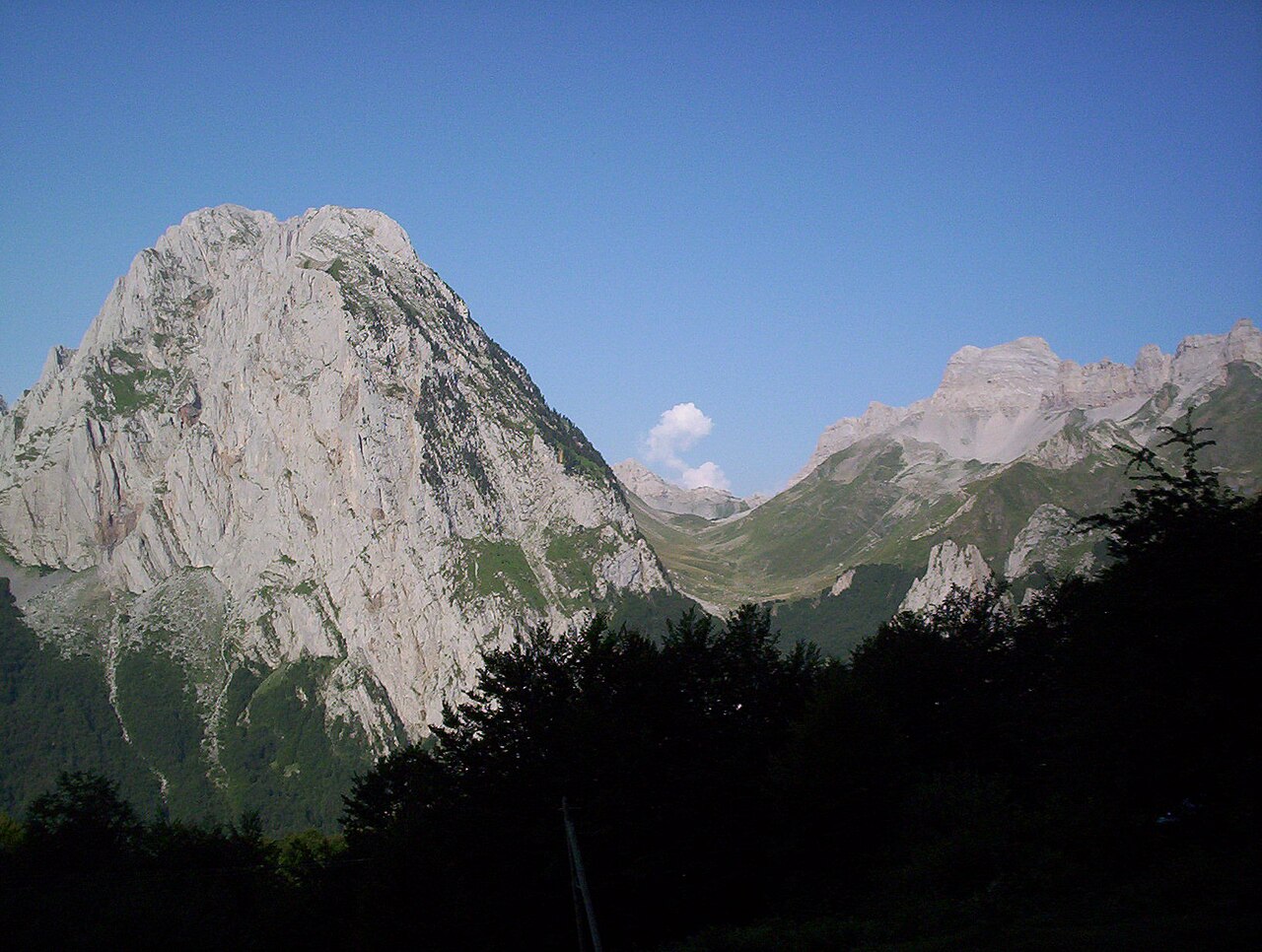
Perhaps the most striking feature of the Anaye cycle is that no monster simply vanishes. Each slain creature is transfigured into a permanent fixture of the natural landscape or animal kingdom. The Binaye Ahani's remains sprouted into cacti. The three fragments of the Sasnalkáhi's severed head became yucca. Tsé'nagahi, the rolling Traveling Stone, lies forever as Shining Rock. The Tsenahale eagle-monsters, after their offspring were spared on the condition they abandon their human diet, became the bald eagle and the owl (or, in some tellings, Thunderbirds). The Tsetahotsiltali cliff-dweller's children turned into buzzards. Even Yeitso, the greatest of them all, was cast into a lake by Nayenezgani, its body rising as Cabezon Peak. The Anaye thus persist as geography and fauna, a mythological explanation for why the world looks the way it does.
Yeitso: The Final Foe and the Closing of the Age
Yeitso, the Big Monster, stands as the apex of the Anaye threat and the narrative climax of the entire cycle. Its scale is almost incomprehensible: a single stride covered the distance a human could walk from dawn to dusk, and it drained an entire lake in four gulps. Its first encounter with Nayenezgani was an accident of geography—he stumbled upon Changing Woman, who concealed her sons and lied, claiming the small footprints in the snow were her own, made in loneliness to simulate companionship. Yeitso departed, and the twins grew to full strength. When they finally tracked the giant, they spotted it in the bushes, vanished, and taunted it four times before unleashing a single lightning bolt that killed it instantly. Nayenezgani then scalped the beast and hurled its body into a lake, birthing Cabezon Peak. The episode marks the final erasure of the Anaye and the restoration of order.
Gallery
Frequently Asked Questions
What are the Anaye?
The Anaye (also rendered Nayéé') are a race of monstrous beings or evil deities in Navajo mythology. They function as the principal antagonists that the culture hero Nayenezgani must defeat.
How were the Anaye created?
After a dispute drove men and women apart, the women each conceived with an inanimate object they happened to encounter. Every resulting child took on the shape of its object-'father,' producing a variety of grotesque monsters.
Who is the most powerful Anaye?
Yeitso, known as the Big Monster, is regarded as the strongest member of the group. He was born when a woman conceived with a stone, giving him an enormous, rock-like form.
Why are the Anaye important in Navajo mythology?
They serve as the ultimate adversaries whose defeat proves Nayenezgani's strength and heroism. Their destruction marks a pivotal moment in Navajo cosmology, restoring order after the separation of men and women.
More in Legendary Creatures of the Indigenous Peoples of North America 1-24
Spotted an error? Know more?
Reader corrections go straight into our review queue. Suggest an edit · How this site is sourced