Tort
Last updated
Tort law aims to compensate individuals who suffer harm, while criminal law aims to punish individuals who commit crimes.[1] A claimant who suffers loss or harm from a civil wrong that is not a breach of contract can hold the person who committed that wrong legally liable, as that wrong is defined as a tort.[2] Under tort law, plaintiffs are primarily entitled to compensation in the form of monetary damages.[3]
Quick Facts
- Field
- Law
- First legal use
- 1580s
- Key remedy
- Compensation in damages (money)
Facts from the source article.
Key facts and history
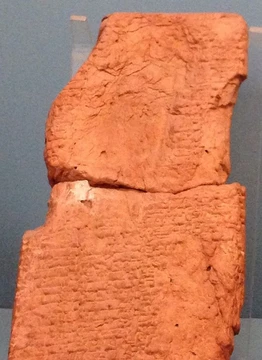
The common law's treatment of torts and crimes has its roots in the Germanic practice of imposing compensatory fines for various wrongs, a system where the line between criminal and non-criminal acts was not sharply drawn.[4] Alfred the Great's Doom Book created a distinction between harms that were intentional and those that were unintentional, and it set liability according to the wrongdoer's status, age, and gender.[5] The terms "tort" and "trespass" came to denote a wrong, and a separation emerged between civil pleas and those belonging to the crown.[5] In an early form of civil action known as trespass, the victim received damages; if the defendant failed to pay, imprisonment followed.[6]
By the 1250s, the writ of trespass had been established and made available as a matter of right (de cursu), though its use was limited to land interference and forcible violations of the king's peace.[6] The separate legal actions of trespass and trespass on the case were eliminated by the English Judicature Act, which was passed between 1873 and 1875.[6]
What the cited sources add
While individuals and corporations are typically only liable for their own actions, indirect liability for the tortious acts of others may arise by operation of law.[1][7] Under the law of agency, the doctrine of respondeat superior can make a person vicariously liable for the acts of an employee or child.[1][7] Scholars actively debate whether vicarious liability rests on nothing more substantial than the desire to find a defendant who can pay.[1][7]
References
- Wikipedia, "Tort" (CC BY-SA 4.0), which cites: Hughes-Davies and Nathan Tamblyn, "'Tort Law'", Routledge, 2020, p. 1–19 (we also read that source) en.wikipedia.org
- Wikipedia, "Tort" (CC BY-SA 4.0), which cites: Glanville Williams, ... providing grounds for lawsuit. Learning the Law. Eleventh Edition. Stevens. 1982. p. 9. (original not read by us) en.wikipedia.org
- Wikipedia, "Tort" (CC BY-SA 4.0), which cites: Currie, S., & Cameron, D. (2000), "Your Law", Nelson Thomson Learning, Melbourne, p. 225 (original not read by us) en.wikipedia.org
- Wikipedia, "Tort" (CC BY-SA 4.0), which cites: Malone WS. (1970). "Ruminations on the Role of Fault in the History of the Common Law of Torts" . Louisiana Law Review.; See Medieval Sourcebook: The Anglo-Saxon Dooms, 560–975 . Internet Medieval Source Book by Fordham University.; Malone WS. (1970). "Ruminations on the Role of Fault in the History of the Common Law of Torts" . Louisiana Law Review.; Bruce R. O'Brien, "Anglo-Saxon Law", in The Oxford International Encyclopedia of Legal History, vol. 1 (Oxford: Oxford UP, 2009), 179. (original not read by us) en.wikipedia.org
- Wikipedia, "Tort" (CC BY-SA 4.0), which cites: David Ibbetson, "Tort: English Common Law", in The Oxford International Encyclopedia of Legal History, vol. 5 (Oxford: Oxford UP, 2009), 467. (original not read by us) en.wikipedia.org
- Wikipedia, "Tort" (CC BY-SA 4.0), which cites: Malone WS. (1970). "Ruminations on the Role of Fault in the History of the Common Law of Torts" . Louisiana Law Review. (original not read by us) en.wikipedia.org
- Open Library record, ISBN 9781138554597 ("Tort Law"). CC0 (metadata); book content not read. openlibrary.org
- Open Library record, ISBN 9781107136991 ("Rights and Retrenchment"). CC0 (metadata); book content not read. openlibrary.org
Each numbered sentence above was checked against the source it cites before publication. Sentences citing Wikipedia adapt text from the English Wikipedia article Tort (contributors), used under CC BY-SA 4.0; this entry is available under the same licence. Other sources were used for facts only; no text or images are copied from them.
Also in the Codexery
More in Legal Systems & Concepts
Sources
Compiled from Wikipedia and the sources listed below. Text from Wikipedia is available under CC BY-SA 4.0; this entry is adapted from it.
- Wikipedia: Tort (CC BY-SA 4.0).
Spotted an error? Know more?
Reader corrections go straight into our review queue. Suggest an edit · How this site is sourced