Appeal
Last updated
An appeal is a process where a higher authority reviews a lower court's decision, allowing parties to request a formal change.[1] Correcting mistakes and providing legal clarification are two functions of appeals.[1]
Quick Facts
- Field
- Law
- Earliest example
- First dynasty of Babylon (Hammurabi and his governors)
- Common law right established
- 19th century
Facts from the source article.
Key facts and history
Ancient Roman law recognized a right to appeal under the Valerian and Porcian laws from 509 BC.[2] Early English courts had no concept of an appeal from one court to another, as distinct from a direct appeal to the Crown.[3] English common law developed writs of error and certiorari as limited routes to appellate relief.[3] Writs of error were originally not available as a matter of right and required the attorney general's recommendation.[3]
Certiorari was initially only available for summary offences, later extended to indictable offences in the early 19th century.[3] The notion of a right to appeal is a recent addition to common law jurisdictions.[4] American and British English differ in appellate terminology, such as "appeals from" versus "appeals against" a judgment.[5] An American court disposes of an appeal with "judgment affirmed" or "judgment reversed," while a British court uses "appeal dismissed" or "appeal allowed".[5]
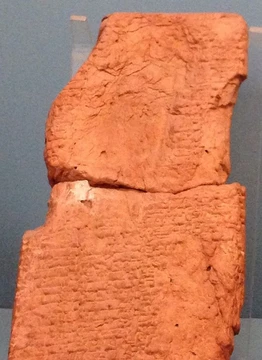
During Babylon's first dynasty, the highest appellate courts were Hammurabi and his governors.[2] The Kamakura shogunate (1185–1333) in Japan had appellate courts, and it created the hikitsuke as a high appellate court.[2][6]
What the cited sources add
The Dutch civil law guide states that a party appealing a District Court judgment must be represented by a Dutch solicitor, even if they acted without help in the lower court.[7] The Dutch Supreme Court may refer a case back to another Court of Appeal if its conclusion requires new fact-finding.[7] The Cornell source also provides an example where the U.S. Supreme Court reversed a Ninth Circuit ruling because the appellate court applied the wrong legal principles.[8]
References
- Wikipedia, "Appeal" (CC BY-SA 4.0), which cites: See generally, Keenan D. Kmiec, The Origin & Current Meanings of "Judicial Activism", 92 1441, 1442 (2004) (discussing contemporary discourse regarding judicial; Stan Keillor, Should Minnesota Recognize A State Constitutional Right to A Criminal Appeal?, 36 399, 402 (2013). (original not read by us) en.wikipedia.org
- Wikipedia, "Appeal" (CC BY-SA 4.0), which cites: Joseph W. Dellapenna & Joyeeta Gupta, 29 (2009).; Paul Du Plessis, 82 (2015). (original not read by us) en.wikipedia.org
- Wikipedia, "Appeal" (CC BY-SA 4.0), which cites: Orfield, "History of Criminal Appeal in England", Missouri Law Review, 1936, p. 326–338; Orfield, "History of Criminal Appeal in England", Missouri Law Review, 1936, p. 326–338; Orfield, "History of Criminal Appeal in England", Missouri Law Review, 1936, p. 326–338; Orfield, "History of Criminal Appeal in England", Missouri Law Review, 1936, p. 326–338; Orfield, "History of Criminal Appeal in England", Missouri Law Review, 1936, p. 326–338 (original not read by us) en.wikipedia.org
- Wikipedia, "Appeal" (CC BY-SA 4.0), which cites: Gary Stein, Expanding as per the Process Rights of Indigent Litigants: Will Texaco Trickle Down?, 61 463, 487-88 (1986) (internal quotation marks omitted).; See Peter D. Marshall, A Comparative Analysis of the Right to Appeal, 22 1, 1 (2011) ("The right to appeal is a comparatively recent addition to the common law ; Stan Keillor, Should Minnesota Recognize A State Constitutional Right to A Criminal Appeal?, 36 399, 402 (2013) (original not read by us) en.wikipedia.org
- Wikipedia, "Appeal" (CC BY-SA 4.0), which cites: Garner, "Garner's Dictionary of Legal Usage", Oxford University Press, 2011, p. 67; Garner, "Garner's Dictionary of Legal Usage", Oxford University Press, 2011, p. 67; Garner, "Garner's Dictionary of Legal Usage", Oxford University Press, 2011, p. 67 (we also read that source) en.wikipedia.org
- Wikipedia, "Appeal" (CC BY-SA 4.0), which cites: John Stewart Bowman, 133 (2013). (original not read by us) en.wikipedia.org
- DCL Dutch Civil Law (Uitgeverij Althea B.V.), Legal proceedings in Dutch civil law, http://www.dutchcivillaw.com/jurisdiction/legalsystem011.htm. facts only, no text reused. dutchcivillaw.com
- "reversal", cornell.edu. facts only, no text reused. law.cornell.edu
Each numbered sentence above was checked against the source it cites before publication. Sentences citing Wikipedia adapt text from the English Wikipedia article Appeal (contributors), used under CC BY-SA 4.0; this entry is available under the same licence. Other sources were used for facts only; no text or images are copied from them.
Also in the Codexery
More in Legal Systems & Concepts
Sources
Compiled from Wikipedia and the sources listed below. Text from Wikipedia is available under CC BY-SA 4.0; this entry is adapted from it.
- Wikipedia: Appeal (CC BY-SA 4.0).
Spotted an error? Know more?
Reader corrections go straight into our review queue. Suggest an edit · How this site is sourced