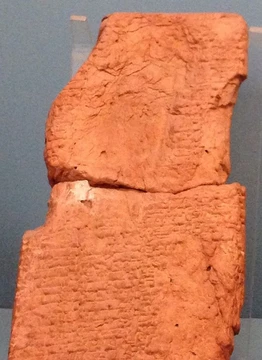
Breach of contract
Understanding breach of contract: actual failure, anticipatory breach, and the remedies available.
Last updated
Breach of contract is a legal cause of action and a type of civil wrong, in which a binding agreement or bargained-for exchange is not honored by one or more of the parties to the contract by non-performance or interference with the other party's performance. Breach occurs when a party to a contract fails to fulfill its obligation(s), whether partially or wholly, as described in the contract, or communicates an intent to fail the obligation or otherwise appears not to be able to perform its obligation under the contract. Where there is breach of contract, the resulting damages have to be paid to the aggrieved party by the party breaching the contract.
Quick Facts
- Field
- Contract law
- Known for
- Legal cause of action for failure to honor a binding agreement
- Types of breach
- Actual breach, renunciatory (anticipatory) breach
- Categories by seriousness
- Breach of warranty
- breach of condition
- breach of innominate term
- Remedies
- Damages (compensatory or punitive)
- specific performance
- rescission
- restitution
Facts from the source article.
Lore & Background
There exist two elementary forms of breach of contract. The first is actual failure to perform the contract as and when specified. A further form of breach of contract is conduct indicating an unwillingness or inability to perform an obligation arising from that contract.
These forms overlap, and an actual failure to perform may manifest an unwillingness or inability to perform. The first type is an actual breach of contract. The two other types are breaches as to the future performance of the contract and are technically known as renunciatory breaches, more commonly known as anticipatory breach.
The general law has three categories of breaches of contract, which measure the seriousness of the breach: breach of warranty, breach of condition, or breach of an innominate term (intermediate term). Any breach of contract is of one of these categories. A term of a contract is an innominate term unless it is clear that it is intended to be a condition or a warranty.
Reader's Guide
Any breach of contract gives rise to a right in the hands of the innocent party to recover damages caused by the breach. Damages in the UK are the only remedy available for breach of a warranty. Damages are classified as compensatory or punitive.
Compensatory damages attempt to place the innocent party in the position that would have been occupied 'but for' the breach. Punitive damages are given to punish a wrongdoer who has acted willfully, maliciously or fraudulently, and are awarded only in extreme cases. A right to terminate a contract arises for: breach of a condition (no matter how trivial); repudiatory breach (actual breach of an innominate term where the consequence is sufficiently serious); or renunciatory breach (anticipatory breach) where the other party makes clear it will not perform at all, or will commit a breach of a condition, or will commit a breach of an innominate term with serious consequences. To terminate for repudiatory breach, the innocent party must tell the defaulting party.
Conduct is repudiatory if it deprives the innocent party of substantially the whole of the benefit intended. Conduct is renunciatory if it shows an intention to commit a repudiatory breach. In the event of a renunciatory breach, the innocent party may choose to accept the breach at once and terminate, or wait for the time for performance.
Did You Know?
- Damages for distress or disappointment are not generally allowed by the courts, but cases where such damages have been considered and agreed include Jarvis v Swans Tours Ltd (1972) and Farley v Skinner (2001).
- The classifications of breach describe how a contract can be breached, not how serious the breach is; a judge decides based on the claims of both parties.
More in Legal Systems & Concepts
Sources
Compiled from Wikipedia and the sources listed below. Text from Wikipedia is available under CC BY-SA 4.0; this entry is adapted from it.
- Wikipedia: Breach of contract (CC BY-SA 4.0).
Spotted an error? Know more?
Reader corrections go straight into our review queue. Suggest an edit · How this site is sourced