Criminal law
Last updated
Criminal law is a body of rules that prohibits undesirable acts and carries uniquely serious potential consequences for violations.[1][2] Proof of a crime generally requires both a prohibited act (actus reus) and a guilty mind (mens rea), though some strict liability offenses do not require intent.[2] A court's authority to prosecute is determined by criminal law jurisdiction, which can be based on territorial, extraterritorial, or universal principles, with territorial jurisdiction granting a court authority over proceedings in a specific geographical area.[3][4][5]
Quick Facts
- Field
- Law
Facts from the source article.
Key facts and history
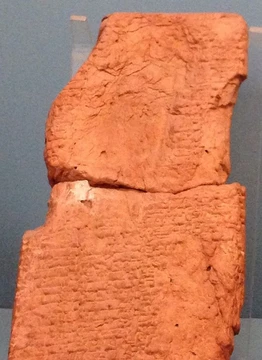
The special notion of criminal penalty in Europe arose in Spanish Late Scholasticism, notably through Alfonso de Castro.[6] Early modern criminal law was shaped by German jurist Benedikt Carpzov and Italians Prospero Farinacci and Giulio Claro.[6] The Nuremberg trials after World War II marked the beginning of individual criminal fault under international law.[7] The Sumerians created the first written legal codes, and early civilizations like theirs did not separate civil law from criminal law.[8]
Books 47–48 of the Digest contain the collected criminal law of imperial Rome.[9]
What the cited sources add
The Rome Statute of the International Criminal Court establishes a permanent institution with power over the most serious international crimes, complementary to national jurisdictions.[10] Under the Rome Statute, a person is criminally responsible if they commit, order, or assist a crime within the Court's jurisdiction.[10] Official capacity as a head of state does not exempt a person from criminal responsibility under the Rome Statute.[10] The Rome Statute requires that material elements be committed with intent and knowledge, unless otherwise provided.[10]
Grounds for excluding criminal responsibility under the Rome Statute include duress from threat of imminent death or serious bodily harm.[10] A mistake of fact may exclude criminal responsibility if it negates the mental element required by the crime.[10]
References
- Wikipedia, "Criminal law" (CC BY-SA 4.0), which cites: Dennis J. Baker, "The Right Not to be Criminalized: Demarcating Criminal Law's Authority", Ashgate, 2011 (original not read by us) en.wikipedia.org
- Wikipedia, "Criminal law" (CC BY-SA 4.0), which cites: This is demonstrated by R v. Church [1966] 1 QB 59. Mr. Church had a fight with a woman which rendered her unconscious. He attempted to revive her, but gave up, (original not read by us) en.wikipedia.org
- Wikipedia, "Criminal law" (CC BY-SA 4.0), which cites: "The National and International Law of Criminal Jurisdiction: Structure and Sources | International Criminal Jurisdiction: Whose Law Must We Obey? | Oxford Academic" (original not read by us) en.wikipedia.org
- Wikipedia, "Criminal law" (CC BY-SA 4.0), which cites: "territorial jurisdiction", LII / Legal Information Institute (we also read that source) en.wikipedia.org
- "territorial jurisdiction", LII / Legal Information Institute. facts only, no text reused. law.cornell.edu
- Wikipedia, "Criminal law" (CC BY-SA 4.0), which cites: see, Pennington, Kenneth (1993) The Prince and the Law, 1200–1600: Sovereignty and Rights in the Western Legal Tradition, University of California Press; Harald Maihold, Strafe für fremde Schuld? Die Systematisierung des Strafbegriffs in der Spanischen Spätscholastik und Naturrechtslehre, Köln u.a. 2005; Pennington, Kenneth, "Canon Law in the Late Middle Ages: The Need and the Opportunity", in Proceedings of the eleventh International Congress of Medieval Canon (original not read by us) en.wikipedia.org
- Wikipedia, "Criminal law" (CC BY-SA 4.0), which cites: "Rome Statute of the International Criminal Court" (we also read that source) en.wikipedia.org
- Wikipedia, "Criminal law" (CC BY-SA 4.0), which cites: Kramer, Samuel Noah. (1971) The Sumerians: Their History, Culture, and Character, p.4, University of Chicago (original not read by us) en.wikipedia.org
- Wikipedia, "Criminal law" (CC BY-SA 4.0), which cites: ; "Law, Criminal Procedure", Dictionary of the Middle Ages: Supplement 1, New York: Charles Scribner's Sons-Thompson-Gale, 2004: 309–320 (original not read by us) en.wikipedia.org
- "Rome Statute of the International Criminal Court". facts only, no text reused. legal.un.org
Each numbered sentence above was checked against the source it cites before publication. Sentences citing Wikipedia adapt text from the English Wikipedia article Criminal law (contributors), used under CC BY-SA 4.0; this entry is available under the same licence. Other sources were used for facts only; no text or images are copied from them.
Also in the Codexery
More in Legal Systems & Concepts
Sources
Compiled from Wikipedia and the sources listed below. Text from Wikipedia is available under CC BY-SA 4.0; this entry is adapted from it.
- Wikipedia: Criminal law (CC BY-SA 4.0).
Spotted an error? Know more?
Reader corrections go straight into our review queue. Suggest an edit · How this site is sourced