Burglary
Last updated
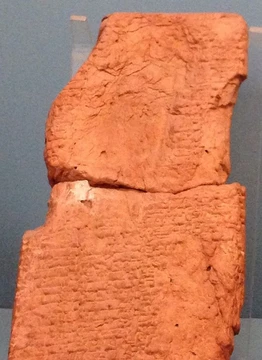
Burglary is a property crime involving illegal entry into a building or area without permission, typically to commit a further criminal offence such as theft or murder.[1][2] The verbs "burgle" and "burglarize" both describe the act of committing burglary, with "burgle" being a back-formation from the noun "burglar".[2] Breaking into a house is referenced in both the Code of Hammurabi (law number 21) and the Torah at Exodus 22:2.[3]
Quick Facts
- Common law definition
- Breaking and entering the house of another in the night time, with intent to commit a felony therein
Facts from the source article.
Key facts and history
Another suggested etymology is from the Latin burgare ("to break open") and burgus ("fortress"), passing through French and Middle English.[4] At common law, burglary was defined by Sir Matthew Hale.[5] In most jurisdictions, the definition has expanded so the building need not be a dwelling, physical breaking is not required, entry need not occur at night, and intent may be to commit any felony or theft.[6] During the 19th century, English politicians worked to codify English law.[7]
Canada, India, New Zealand, and various Australian states codified their criminal law during the 1880s.[8] The International Classification of Crime for Statistical Purposes classifies burglary under section 0501, a subsection of "Act against property only".[9] One proposed origin for "burglar" combines the German words "burg" (house) and "laron" (thief), yielding the meaning "house thief".[10] The specific elements that constitute burglary under common law are not uniform across different legal jurisdictions.[6]
Sir Robert Peel's 1826 reforms codified offenses related to larceny and other property crimes.[7] English reforms were generally adopted by colonial legislatures.[8]
What the cited sources add
The Shouse Law Group article states that in California, the crime of burglary is complete once a person enters a structure with criminal intent, even if the intended crime is never committed.[11] First-degree burglary in California is residential and always a felony, while second-degree burglary is commercial or auto burglary and can be a felony or misdemeanor.[11] The Shouse Law Group article notes that first-degree burglary counts as a "strike" under California's Three Strikes law.[11] The Bible Hub account of Exodus 22:2 states that if a thief is caught breaking in at night and is struck a fatal blow, the defender is not guilty of bloodshed.[12]
Nighttime burglary placed a household in immediate danger because the intruder's intentions could not be known.[12]
References
- Wikipedia, "Burglary" (CC BY-SA 4.0), which cites: Cromwell, "Breaking and entering : an ethnographic analysis of burglary", Sage Publications, 1991; Hunter, "Burglary, Housebreaking, and Unlawful Entry", The JAG Journal, 1956, p. 11; "Index of legal terms and offences libelled". National Archives of Scotland. Retrieved 7 August 2010. (we also read that source) en.wikipedia.org
- Wikipedia, "Burglary" (CC BY-SA 4.0), which cites: "Do Burglars 'Burgle' or 'Burglarize'?", www.merriam-webster.com; Garner, "A dictionary of modern legal usage", Oxford University Press, 1995, p. 122; "Do Burglars 'Burgle' or 'Burglarize'?", www.merriam-webster.com (we also read that source) en.wikipedia.org
- Wikipedia, "Burglary" (CC BY-SA 4.0), which cites: Wikisource.org, "Codex Hammurabi (King translation)", en.wikisource.org; "Bible Hub: Exodus 22:2", biblehub.com (we also read that source) en.wikipedia.org
- Wikipedia, "Burglary" (CC BY-SA 4.0), which cites: "Online Etymology Dictionary", www.etymonline.com; "Online Etymology Dictionary", www.etymonline.com (original not read by us) en.wikipedia.org
- Wikipedia, "Burglary" (CC BY-SA 4.0), which cites: "Historia placitorum coronæ = The history of the pleas of the crown : Hale, Matthew, Sir, 1609-1676 : Free Download, Borrow, and Streaming", Internet Archive (original not read by us) en.wikipedia.org
- Wikipedia, "Burglary" (CC BY-SA 4.0), which cites: Anderson, "From the Thief in the Night to the Guest Who Stayed Too Long: The Evolution of Burglary in the Shadow of the Common Law", Indiana Law Review, 2011, p. 643 (original not read by us) en.wikipedia.org
- Wikipedia, "Burglary" (CC BY-SA 4.0), which cites: "The Challenge of Codification in English Legal History", www.rieti.go.jp/; Lieberman, "The Challenge of Codification in English Legal History", www.rieti.go.jp, 12 July 2009 (original not read by us) en.wikipedia.org
- Wikipedia, "Burglary" (CC BY-SA 4.0), which cites: Finn, "Codification of the Criminal Law: the Australasian parliamentary experience.", ir.canterbury.ac.nz, September 2003 (original not read by us) en.wikipedia.org
- Wikipedia, "Burglary" (CC BY-SA 4.0), which cites: United Nations Office on Drugs and Crime (UNODC), "International Classification of Crime for Statistical Purposes (ICCS) Version 1.0", unodc.org, March 2015 (original not read by us) en.wikipedia.org
- Wikipedia, "Burglary" (CC BY-SA 4.0), which cites: Glick, "Criminology", Pearson College Division, October 1994, p. 280 (we also read that source) en.wikipedia.org
- "§ 459 PC - Burglary - Law & Penalties in California", Shouse Law Group - Criminal, Immigration, Injury & Employment Lawyers, 2026-01-27. facts only, no text reused. shouselaw.com
- "Bible Hub: Exodus 22:2", biblehub.com. facts only, no text reused. biblehub.com
Each numbered sentence above was checked against the source it cites before publication. Sentences citing Wikipedia adapt text from the English Wikipedia article Burglary (contributors), used under CC BY-SA 4.0; this entry is available under the same licence. Other sources were used for facts only; no text or images are copied from them.
More in Legal Systems & Concepts
Sources
Compiled from Wikipedia and the sources listed below. Text from Wikipedia is available under CC BY-SA 4.0; this entry is adapted from it.
- Wikipedia: Burglary (CC BY-SA 4.0).
Spotted an error? Know more?
Reader corrections go straight into our review queue. Suggest an edit · How this site is sourced