
Curandero
Traditional healer blending indigenous and Catholic practices.

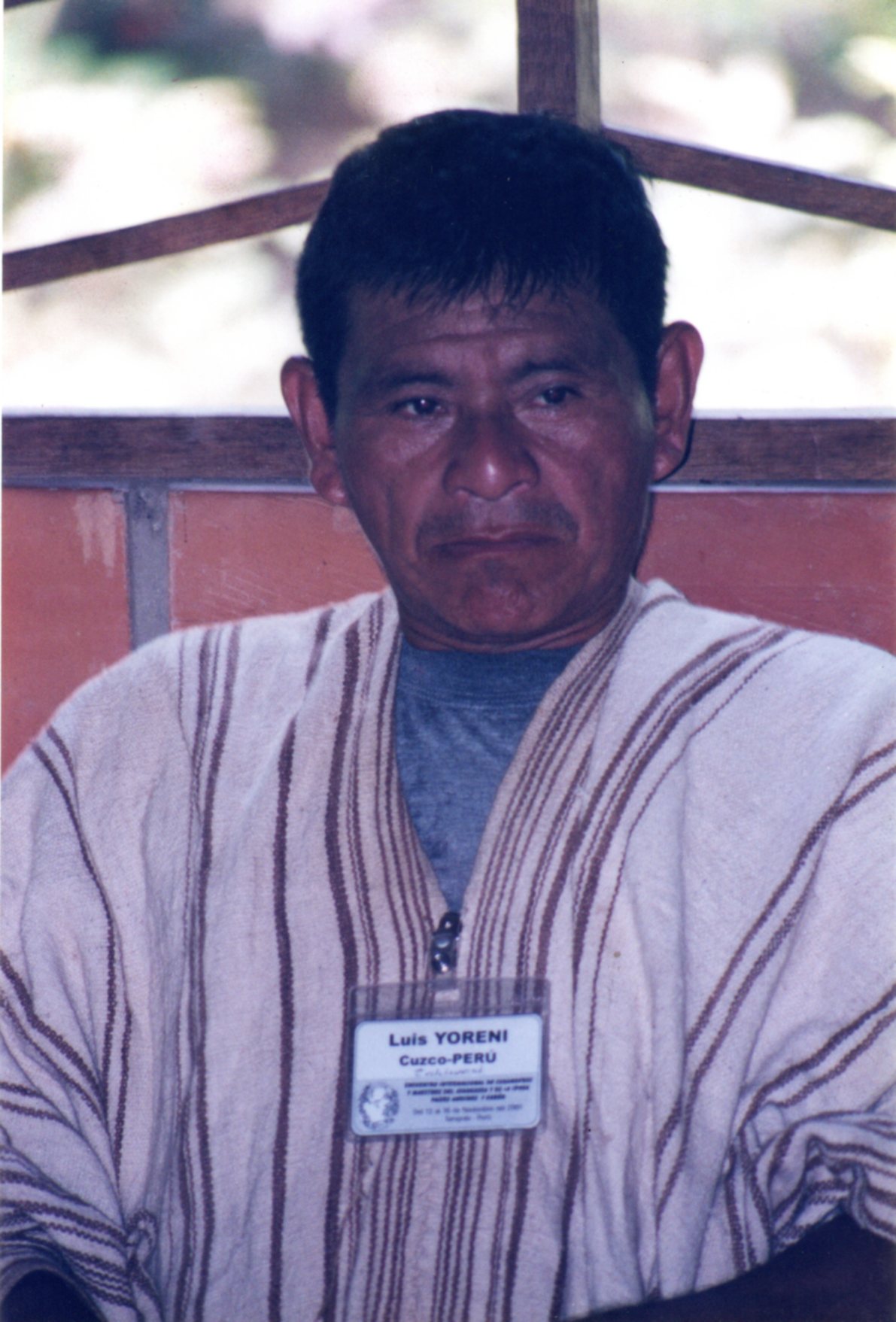
Martín Huamán /Archivo Centro Takiwasi · CC BY-SA 4.0
A curandero (pronounced koo-rahn-DEH-roh; feminine: curandera) is a traditional healer or shaman common in Latin America and also found in the United States. The term comes from the Spanish verb *curar*, meaning "to cure," so a curandero is literally a healer. These practitioners specialize in folk medicine, and their methods may either differ from or work alongside Western medical treatments. They are said to use shamanistic and spirit-based remedies to address mental, emotional, physical, and spiritual problems. Some healers, like Don Pedrito of Los Olmos, rely on simple herbs, water, or mud. Others, such as those in Peruvian curanderismo, incorporate Catholic elements like holy water and images of saints—San Martín de Porres is a common figure. Catholic prayers and other borrowed practices often mix with native religious traditions. Many curanderos emphasize their indigenous spirituality while still practicing Catholicism. Others, like María Sabina, use hallucinogenic substances, and many combine several approaches. Most terms related to curanderismo (the practice of curanderos) are Spanish words, often with medieval, everyday meanings.
The term *curandero* dates back to the Spanish colonization of Latin America, emerging from a blend of Indigenous medicinal traditions and Catholic rituals. Understandings of medicine and healing in Spanish America drew from Mesoamerican, European, and African cultures. Because hospitals and licensed doctors were scarce, people relied on local ideas about illness and cures. Seeking a curandero was common across Latin American society, even though the Inquisition closely monitored medical practitioners. Men and women of various economic and ethnic backgrounds all consulted curanderos.
The main role of a curandero is to treat illnesses that Western biological medicine does not directly address. These conditions are rooted in the cultural and religious beliefs of Mexico’s Indigenous peoples and modern Latin America. Treatments focus on cleansing or restoring a person’s spiritual and physical energy, combining Catholic elements, spiritual rituals, and medicinal herbs to target emotional, spiritual, and physical ailments. Curanderos treat blindness, stomach problems, toothaches, dropsy (hidropesia), and supernatural illnesses. A male healer is a curandero; a female is a curandera.
- Field
- Traditional medicine / shamanism
- Nationality
- Latin American and United States
- Known for
- Treating illnesses Western medicine does not address, using herbs, prayers, and spiritual rituals
- Types
- Yerberos, hueseros, parteras, oracionistas, sobadors, brujos/brujas, tabaqueros, ayahuasqueros, peyoteros
Lore & Background
The term curandero traces back to the Spanish colonization of Latin America, arising from the mixture of traditional Indigenous medicinal practices and Catholic rituals. Curandero comes from the Spanish root 'curar,' meaning to cure. Understandings of medicine and curing in Spanish America came from Mesoamerican, European, and African cultures. As access to hospitals and licensed doctors was rare, populations relied on local ideas about illness and cure. The Inquisition kept a close eye on medical practitioners, but people of all genders, economic statuses, and ethnic backgrounds employed curanderos.
Reader's Guide
Curanderos matter because they represent a persistent, syncretic healing tradition that addresses illnesses embedded in cultural and religious belief systems, particularly in Latin America and among Hispanic communities in the United States. Their practices—ranging from herbalism (yerberos) to bone-setting (hueseros), midwifery (parteras), and prayer (oracionistas)—offer accessible, affordable care to populations facing language barriers, immigration concerns, or the high cost of Western medicine. Historically, curanderos were also subject to scrutiny by the Inquisition, which conflated female healers with witches (brujas) and relied on community gossip to investigate them. Despite this, curanderismo has persisted and spread, with documented practice in areas such as Northeastern Tennessee in the 1880s and increasing visibility in northern-tier U.S. cities since the 1990s. Their legacy lies in providing culturally congruent healing that integrates spiritual, emotional, and physical dimensions.
Did You Know?
- Curanderos may use hallucinogenic media, such as peyote or ayahuasca, in their healing practices.
- The Inquisition was mostly concerned with the supernatural aspect of healers rather than their botanical remedies.
- Some curanderos, like Don Pedrito, used simple herbs, waters, or mud to allegedly effect cures.
- Community gossip served as a double-edged sword for curanderas, legitimizing their power while also providing basis for arrest.
Roots in Conquest and Synthesis
The word curandero carries the imprint of Spanish colonization, derived from the verb curar, meaning to cure. Yet the practice it names is far older than the language that labels it. The healers emerged from a complex blending of Mesoamerican, European, and African understandings of medicine, a convergence that took shape as Indigenous communities and colonizers occupied the same territory. In an era when hospitals and licensed physicians were scarce across Latin America, ordinary people—regardless of gender, wealth, or ethnicity—turned to local healers for relief. The Inquisition watched these practitioners closely, yet seeking a curandero's help remained a normal part of daily life. What made the role distinctive was its syncretic nature: Catholic prayers and imagery sat comfortably alongside native spiritual elements, and healers in Peru, for instance, invoked San Martin de Porres while maintaining their own cosmological frameworks. The result was a medical tradition that belonged fully to neither the Church nor any single Indigenous group, but to the hybrid culture born from their collision.
Gossip, Power, and the Inquisition's Gaze
For female curanderas in colonial Latin America, reputation was both currency and vulnerability. Healers like María García of Guatemala built their standing through word of mouth, public demonstrations of cures, and a recognized specialty in particular ailments such as those attributed to spellcasting. This community validation was essential; without it, a healer had no practice. Yet the very gossip that elevated a curandera's status also placed her in the crosshairs of colonial authority. The Inquisition routinely used informal community chatter as grounds for investigation, dispatching officials to collect testimony and file formal court records. The tribunal's interest lay less in the botanical remedies a healer administered and more in the supernatural dimensions of her work—accusations of sorcery and spirit contact were what triggered criminal proceedings. In María García's case, it was fellow women in her town who raised the alarm. Gossip thus operated as a double-edged instrument: it affirmed a woman's healing power in the eyes of her neighbors while simultaneously furnishing the evidence that could lead to her arrest.
A Framework Beyond the Biological
Curanderos operate within a diagnostic system that Western biomedicine does not recognize. Mesoamerican thought classified illness along a binary axis—natural or supernatural—and the supernatural category encompassed fright (susto), malevolent winds (mal aire), and deliberate sorcery. A curandero's treatment aims to cleanse or retrieve a patient's spiritual and physical energy, drawing on a toolkit that varies widely among practitioners. Some, like Don Pedrito of Los Olmos, rely on simple herbs, waters, or mud. Others weave in Catholic elements such as holy water and saint imagery. Still others, including the well-known Maria Sabina, incorporate hallucinogenic substances. The range of ailments addressed spans the mundane—blindness, toothaches, stomach complaints, dropsy—to the explicitly spiritual. The tradition also produced specialized roles: yerberos focused on herbalism, while hueseros attended to bone and muscle concerns. Most of the vocabulary surrounding curanderismo remains in Spanish, often carrying medieval or vernacular definitions that resist easy translation into modern medical language.
From the Southwest to the Northern Tier
For much of American history, curanderos were assumed to be confined to the Southwest, particularly New Mexico and the Mexico–United States border region, where concentrated Indigenous populations maintained the tradition. Recent historical research has complicated that narrow picture, revealing that curanderismo was already active in Northeastern Tennessee by the 1880s—a geographic spread that challenges the assumption the practice was purely a borderland phenomenon. A second wave of expansion arrived in the mid-to-late 1970s, when growing ethnic minority and immigrant communities carried traditional healing practices into regions that had never hosted large Indigenous populations. By the 1990s, encountering a curandero in a northern-tier American city had become unremarkable. The practice thus mirrors broader patterns of cultural migration: rooted in specific places and peoples, yet adaptable enough to travel with communities as they disperse, finding new audiences in urban centers far from the landscapes where the tradition first took root.
Gallery
Frequently Asked Questions
What is a Curandero?
A curandero is a traditional healer or shaman rooted in Latin American folk tradition, with the title itself coming from the Spanish word meaning 'to cure.' They function as holistic practitioners who weave together indigenous knowledge and Catholic spiritual elements to treat the whole person.
What types of Curanderos are there?
The tradition encompasses several specialized roles, including yerberos (herb specialists), hueseros (bone-setters), parteras (midwives), oracionistas (prayer healers), sobadors, brujos/brujas, tabaqueros, ayahuasqueros, and peyoteros. Each focuses on a distinct healing modality within the broader folk-medicine framework.
What methods do Curanderos use to heal?
Practitioners draw on herbs, prayers, spiritual rituals, and spirit-based remedies to address mental, emotional, physical, and spiritual ailments. Some well-known healers, such as Don Pedrito of Los Olmos, work with remarkably simple tools like plain water, mud, or a handful of herbs.
How does a Curandero's practice relate to Western medicine?
A curandero's treatments either complement or diverge from conventional medical approaches, often targeting conditions that Western medicine simply does not address. They operate within a shamanistic framework that treats body, mind, and spirit as an interconnected whole rather than isolating a single symptom.
Where are Curanderos found and why do they matter culturally?
These healers are common throughout Latin America and also present in the United States, reflecting the migration of folk traditions across borders. They hold deep cultural significance as living bridges between pre-Columbian indigenous practices and Catholic influence, preserving a holistic healing philosophy passed down through generations.
More in Latin American folklore 1-24
Spotted an error? Know more?
Reader corrections go straight into our review queue. Suggest an edit · How this site is sourced