
Chacarera
Argentine folk dance and music from Santiago del Estero.

Jail ibañez · CC BY-SA 4.0
The Chacarera is a folk dance and music style from Santiago del Estero, Argentina. For many Argentines, it represents the rural side of the country, in contrast to the urban image of Tango. Today, musicians perform it as soloists or in small groups featuring voice, guitar, violin, and bombo drum, and its remote provincial origin often gives it an air of authenticity.
Much of the Chacarera repertoire can be traced to sheet music published by Andrés Chazarreta in the 1920s, but the modern style was standardized by the 1950s recordings of the folk group Los Hermanos Ábalos. This style is now common across Argentina, with notable variations in Santiago del Estero and Salta.
Melodically, contemporary Chacareras usually move in descending minor-mode lines within an octave. Harmonically, they are simple, relying mainly on tonic and dominant chords, with occasional shifts to the relative major. Some modern players add major-seventh and other altered chords.
Rhythmically, the Chacarera is defined by a hemiola syncopation. Melodies often start in triple meter (3/4) and end in duple meter (6/8). Accompaniment parts—on guitar, piano, bandoneón, or drum—keep a constant compound meter of 6/8 and 3/4, with accents on the second dotted quarter and the third quarter note. The downbeat is usually delayed until cadences, a feature especially clear in the “Chacarera Trunca” style, which cadences on the third beat.
The structure is binary. The A section (6 or 8 bars) serves as both introduction and interlude. The B section (8 bars) returns twice before a final repetition. The whole form repeats two times: A B A B A B B.
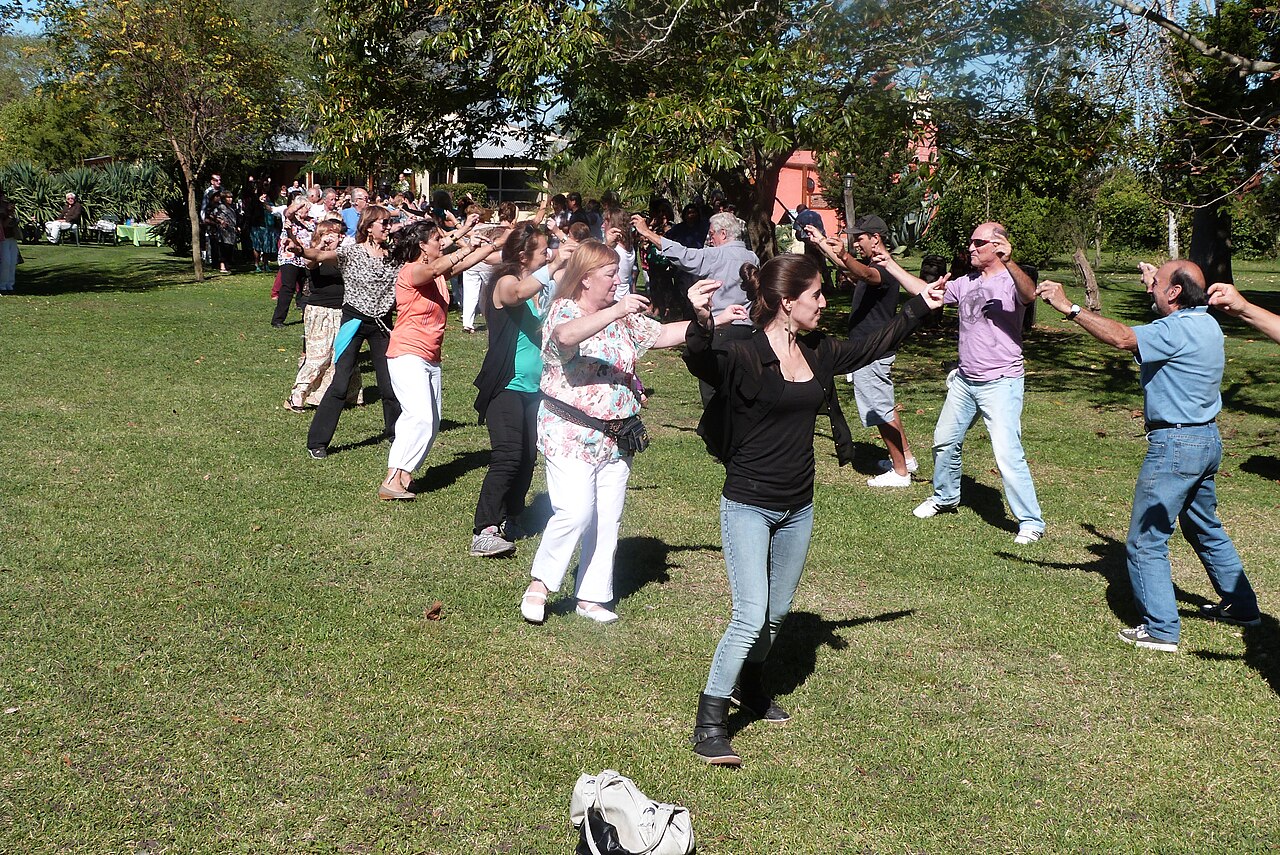
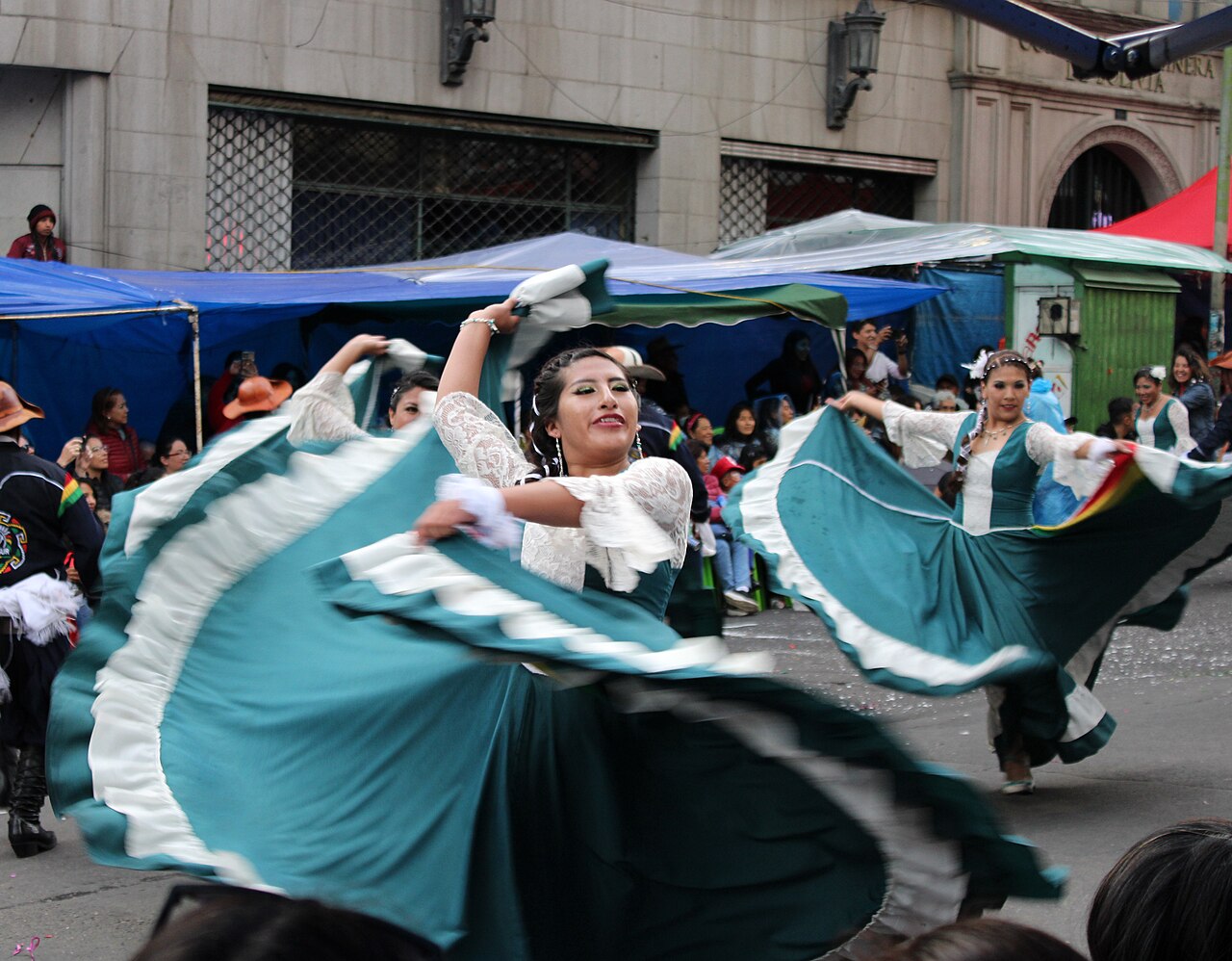
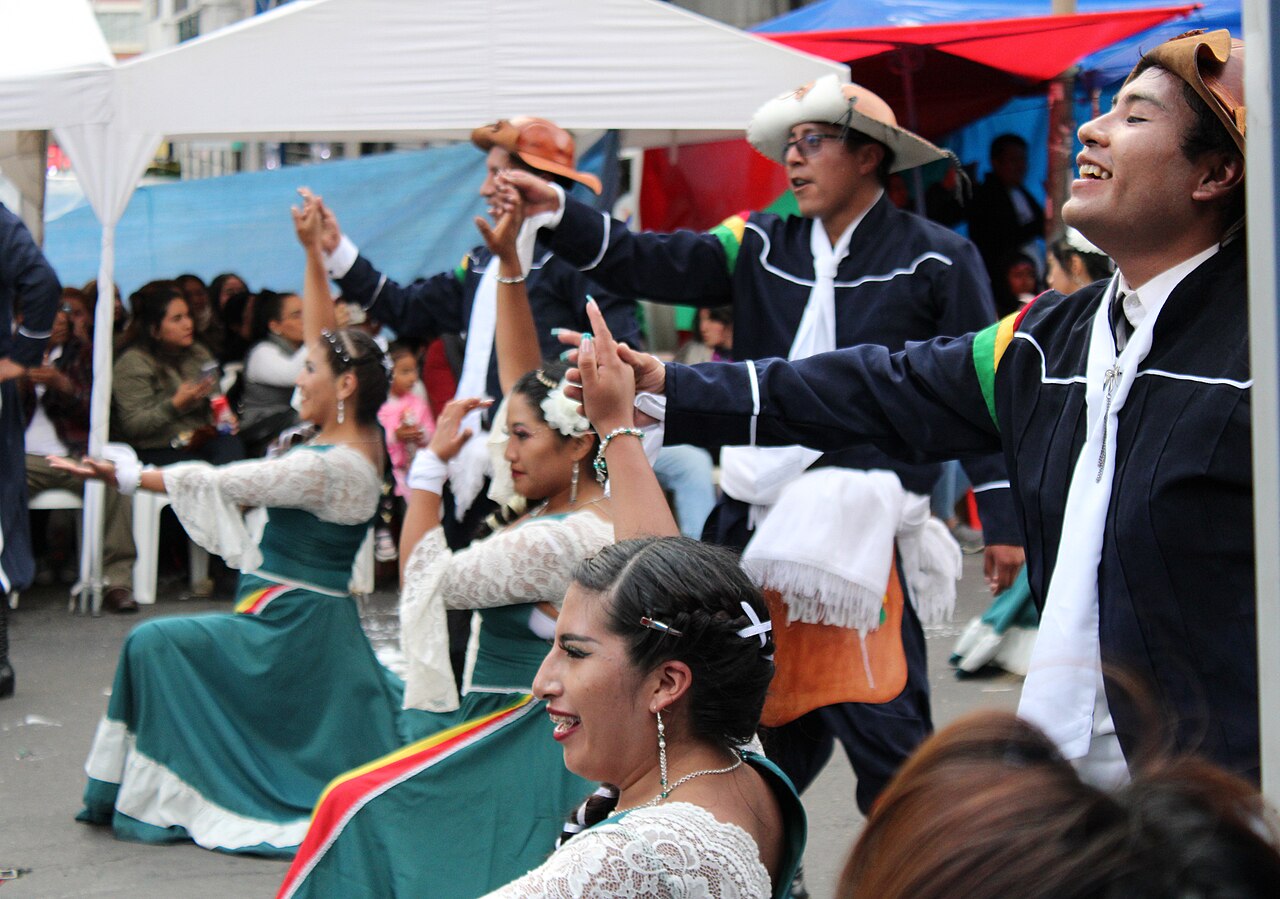
Choreographically, the Chacarera is a partner dance influenced by the Contradance, similar to the Chilean cueca and the Peruvian marinera. During the A sections, male dancers circle their partners, using foot stomping (zapateo) and handkerchief waving to court them. In the final B section, they “coronate,” or embrace, their partners.
According to musicologist Carlos Vega, the Chacarera belongs to a family of Ibero-American dances derived from baroque Contradance choreography. However, Vega admits there is no documentation of the Chacarera before the recording industry. The first mention of it as a musical genre appears in early twentieth-century publications by band leader Andrés Chazarreta, suggesting its “origin” may be modern.
- Origin
- Santiago del Estero, Argentina
- Genre
- Folk music and dance
- First mentioned in publications
- Early twentieth century by Andrés Chazarreta
- Standardized by recordings
- 1950s folk group Los Hermanos Ábalos
- Key musical features
- Descending minor-mode melodies, hemiola syncopation, binary form
- Related dances
- Chilean Zama cueca, Peruvian Marinera
Lore & Background
The Chacarera belongs to a family of Ibero-American dances derived from baroque Contradance choreography, according to musicologist Carlos Vega, though Vega admits there is no documentation of the Chacarera before the recording industry. The first mention of the Chacarera as a musical genre appears in early twentieth century publications of Santiagueñan band leader Andrés Chazarreta, who also presented the nation's first folk music ballet in 1921. Some scholars credit Chazarreta and pianist Manuel Gómez Carrillo with establishing the form and choreography of the dance.
The contemporary Chacarera style was standardized by the recordings of the 1950s folk group Los Hermanos Ábalos.
Reader's Guide
The Chacarera holds significance as a rural counterpart to the Tango and as a symbol of Argentine nativism, a nationalist movement that sought authentic culture in the province of Santiago del Estero. Its modern form was shaped by early twentieth-century figures like Andrés Chazarreta and Manuel Gómez Carrillo, whose publications and recordings provided a foundation for later artists such as Atahualpa Yupanqui and Los Hermanos Ábalos. The distribution of recordings via record and radio established local, national, and international audiences, with the genre known in neighboring countries including Uruguay, Perú, Brazil, Bolivia, and Chile. The Chacarera also inspired art music composers like Alberto Ginastera, who used its syncopations in his work. Today, the style is ubiquitous throughout Argentina, with important variants in Santiago del Estero and Salta. Musicians gather in Peñas (small folkloric clubs) to sing and dance Chacareras with regional flare. The genre's legacy includes a repertoire traceable to the 1920s sheet music of Chazarreta, though its origin is debated due to lack of earlier documentation.
Did You Know?
- The Chacarera's first mention as a musical genre appears in early twentieth century publications of Andrés Chazarreta.
- Contemporary Chacarera music is distinguished by hemiola syncopation, with melody lines beginning in 6/8 and concluding in 3/4.
- The Chacarera is a binary form that repeats two times, with an A section doubling as introduction and interlude.
- Male dancers use foot stomping (zapateo) and handkerchief waving during A sections, and embrace partners in the final B section.
Roots in Nativism and the Birth of a Genre
The Chacarera did not simply emerge from the soil of Santiago del Estero; it was actively constructed during Argentina's early twentieth-century nativist movement. As urbanization swept the country and romantic European philosophy filtered into intellectual circles, a back-to-the-roots sentiment took hold, and the remote province of Santiago del Estero was cast as the wellspring of authentic Argentine identity. In that climate, band leader Andrés Chazarreta founded the nation's first folk-music ballet company in 1911, and in 1917 the Universidad de Tucumán dispatched pianist Manuel Gómez Carrillo to conduct ethnomusicological fieldwork in the province. Their respective publications mark the first documented references to the Chacarera as a named musical genre. Musicologist Carlos Vega acknowledged that no written record of the dance predates the arrival of the recording industry, and several scholars go further, crediting Chazarreta and Carrillo not merely with documenting a pre-existing tradition but with codifying its very form and choreography. For many Argentines, the Chacarera thus functions as the rural mirror to the cosmopolitan glamour of the Tango, its legitimacy anchored in that Santiagueño origin.
Rhythm, Melody, and Binary Architecture
The contemporary Chacarera sound was crystallized by the 1952 recordings of Los Hermanos Ábalos, building on repertoire that can be traced back to the 1920s sheet music of Andrés Chazarreta. Melodically, the genre favors descending lines in minor mode, typically confined to a single octave. Harmonically it remains relatively spare, leaning on tonic and dominant chords with an occasional excursion to the relative major, though some modern arrangers introduce major-seventh and other altered voicings. The rhythmic signature is what truly sets the Chacarera apart: a hemiola syncopation in which melody lines open in duple meter (6/8) and close in triple meter (3/4), while accompaniment instruments—guitar, piano, bandoneón, bombo drum—maintain a steady compound pulse with accents falling on the second dotted quarter and the third quarter note. The downbeat is characteristically elided until cadential moments, a trait especially pronounced in the Chacarera Trunca variant, which resolves on the third beat. Structurally, the piece follows a binary pattern: an A section of six or eight bars that doubles as both introduction and interlude, followed by an eight-bar B section. The full cycle repeats twice, yielding the sequence A-B-A-B-A-B-B.
The Dance: Seduction, Stomping, and Coronation
Rooted in the baroque Contradance tradition that shaped Ibero-American folk dancing, the Chacarera is a partner dance with clear kinship to the Chilean cueca and the Peruvian marinera. In practice, the choreography unfolds as a courtship narrative. During the A sections, the male dancer circles his partner, wooing her through rhythmic foot stomping—known as zapateo—and the fluttering of a handkerchief. The tension builds until the final B section, where the courtship culminates in what is called coronating: the two dancers embrace, sealing the dance's emotional arc. The music is typically performed by a soloist or a small ensemble featuring voice, guitar, violin, and the bombo drum, giving the dance a warm, intimate acoustic foundation. Musicologist Carlos Vega placed the Chacarera within a broader family of Ibero-American dances descended from Contradance choreography, though he candidly noted the lack of documentation from before the recording era. For Argentines, the Chacarera occupies a cultural space that the Tango does not: it is the rural, earthy counterpart to the Tango's cosmopolitan sophistication, and its identity is inseparable from the province of Santiago del Estero.
Legacy: From Peñas to the Concert Hall
The recordings and compositions of Gómez Carrillo and Chazarreta laid a foundation that artists across the twentieth century have built upon. Atahualpa Yupanqui, Los Hermanos Ábalos, Dúo Coplanacu, Peteco Carabajal, and La Chacarerata Santiagueña all drew on that lineage, and the distribution of their work through records and radio created audiences at local, national, and international levels. In Santiago del Estero, Mendoza, and Buenos Aires, musicians and dancers gather in peñas—small folkloric clubs—to perform their favorite Chacareras with regional flair. The genre's reach extends beyond Argentina's borders: in Uruguay, Perú, Brazil, Bolivia, and Chile, recordings by artists such as Yupanqui are well known and frequently woven into local repertoires. The Chacarera also crossed into the art-music world. Alberto Ginastera incorporated the genre's distinctive syncopations into his compositions, and Gómez Carrillo himself, a conservatory-trained pianist, set a precedent for academic arrangements by writing solo-piano versions of Chacarera material. Important regional variants continue to flourish in Santiago del Estero and Salta, while beloved pieces like La Olvidada, Chacarera de las Piedras, and La Vieja remain staples of the repertoire.
Gallery


Frequently Asked Questions
What is Chacarera?
Chacarera is a traditional folk dance and music genre that grew out of the province of Santiago del Estero in northwestern Argentina. It is often described as the countryside counterpart to Tango, carrying a distinctly rural identity rather than an urban one.
Where does Chacarera come from?
The dance and its accompanying music originated in Santiago del Estero, a province in the Argentine interior. That remote, provincial lineage is a major reason listeners associate the genre with a strong sense of authenticity.
What instruments and musical features define Chacarera?
Performers typically play as soloists or in small groups built around voice, guitar, violin, and the bombo drum. The melodies characteristically descend in a minor mode and rely on hemiola syncopation within a binary (two-part) form.
Who shaped the modern Chacarera sound?
Andrés Chazarreta published much of the earliest written repertoire in the 1920s, giving the genre a documented foundation. The style as most people know it today, however, was locked in by the 1950s recordings of the folk group Los Hermanos Ábalos, whose versions became the standard reference.
How does Chacarera relate to other Latin American dances?
Musicians and folklorists point to clear rhythmic and structural kinship between Chacarera and the Chilean zamacueca as well as the Peruvian marinera. These shared traits suggest the dance traditions developed in parallel across the Andean and Pampas regions.
More in Latin American folklore 1-24
Spotted an error? Know more?
Reader corrections go straight into our review queue. Suggest an edit · How this site is sourced