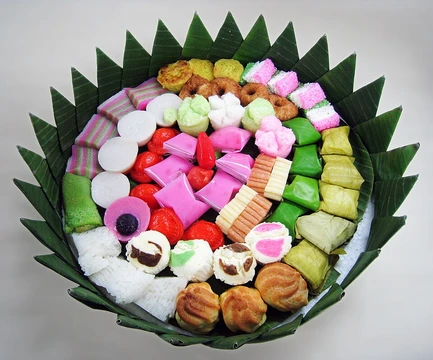
Kue putu
A green rice cake steamed in bamboo tubes with palm sugar.
Kue putu, also known as putu bambu, is a traditional bite-sized rice cake found in maritime Southeast Asia, particularly in Indonesia, Malaysia, and the Philippines. It is made from rice flour colored green with pandan leaves, filled with palm sugar, steamed in bamboo tubes, and served with desiccated coconut. The snack is commonly sold by street vendors and in traditional markets, and is also found in the Netherlands due to colonial ties with the Dutch East Indies.
Quick Facts
- Country
- Indonesia, Malaysia, Philippines
- Region
- East Java, Johor
- Course
- Dessert, snack
- Served
- Warm or room temperature
- Main ingredients
- Rice flour
- palm sugar
- coconut
- Similar dish
- Puttu
- puto
- puto bumbong
- kueh tutu
- mache
Facts from the source article.
Did You Know?
- The cooked tubular cakes are pushed out of the bamboo tube container and served with grated coconut.
- The word putu is believed to be derived from Tamil puttu.
Etymology and variations
In Javanese, bumbung means "bamboo" or "a hollow cylindrical object; a tube," and as the dish spread, the name was translated to Indonesian putu bambu (bambu: "bamboo"). Variations exist in shape or filling: putu piring is a flatter disc-shaped version common in Malaysia, Kerala, and Sri Lanka; putu mangkok is thicker and rounder, found more in Indonesia, while in Singapore it is called kueh tutu. Traditionally filled with palm sugar, newer variations use chocolate or abon (beef floss). In Indonesia, a backronym for putu is "pencari uang tenaga uap."
Similar dishes
In the Philippines, puto is a broad term for steamed rice pastries. One variety, puto bumbóng, is cooked inside bamboo tubes like kue putu, but it skips pandan and uses whole grains instead of rice flour. Its deep purple color traditionally comes from a special glutinous rice called pirurutóng, though food coloring is now common. Across southern India and Sri Lanka, a similar dish is called puttu or pittu, but only in Tamil Nadu is it typically a dessert.
More in Kue
Spotted an error? Know more?
Reader corrections go straight into our review queue. Suggest an edit · How this site is sourced