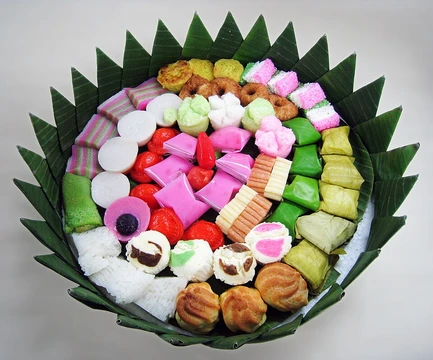
Kue bolu
Indonesian sponge cakes, tarts, and cupcakes, steamed or baked.
Kue bolu, often simply called bolu, is an Indonesian term for a broad range of sponge cakes, tarts, and cupcakes. These confections may be steamed or baked and are known for their soft, fluffy texture, similar to sponge cake or chiffon cake.
Quick Facts
- Country
- Indonesia
- Course
- Snack, dessert
- Served
- room temperature
- Main ingredients
- Wheat flour
- eggs
- sugar
- butter or margarine
- yeast or baking powder
Facts from the source article.
Ingredients
Kue bolu ingredients can include wheat flour, rice flour, sugar, milk, coconut milk, egg, and butter or margarine. Flavourings such as vanilla, chocolate, or pandan are common. Its soft, fluffy texture is achieved through a leavening agent; traditionally yeast was used, but today baking powder or baking soda is more common. In modern Indonesia, bolu typically refers to a bare sponge cake without frosting, while frosted cakes are called keik.
Etymology and history
The term bolu entered Indonesian from Portuguese bolo, meaning cake or sponge cake, a legacy of Portuguese colonial influence. Dutch colonization later introduced the word taart, which is used interchangeably with bolu or tar for cakes or tarts. European baking techniques, especially in pastry and cake making, were brought by Portuguese and Dutch colonists over centuries of colonization.
Variations
Kue bolu serves as an umbrella term for many Indonesian cakes and tarts. Varieties include bolu bahari, a small cupcake from Kalimantan; bolu bruder (also spelled brudel or bluder), a soft bolu from Manado named after a Dutch dish; bolu emprit, small bite-sized bolu from Yogyakarta; bolu gulung, a rolled cake like a Swiss roll; bolu klemben, a dry elliptical bolu from Banyuwangi similar to kue bahulu; bolu kukus, a steamed cupcake sold in traditional markets; bolu macan or bolu marmer, marbled with chocolate; bolu lapis mandarin, a two-layered square bolu; bolu pandan, green and pandan-flavoured; bolu pisang, banana-flavoured; bolu tape keju, made with fermented cassava and cheese; and kue bahulu or bolu kering, bite-sized bolu from Malay cuisine found in the Malay Peninsula, Sumatra, and Borneo.
More in Kue
Spotted an error? Know more?
Reader corrections go straight into our review queue. Suggest an edit · How this site is sourced