
Maccabi București
Jewish Romanian club that had a goalkeeper selected for the 1930 World Cup.

Anonymous ( writer ) Unknown author · Public domain
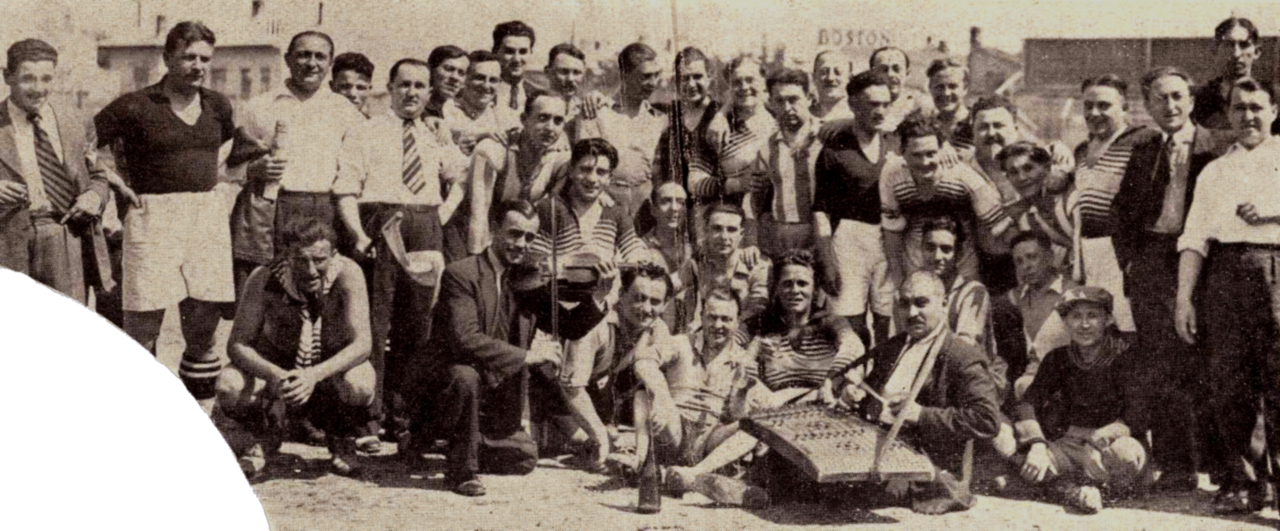
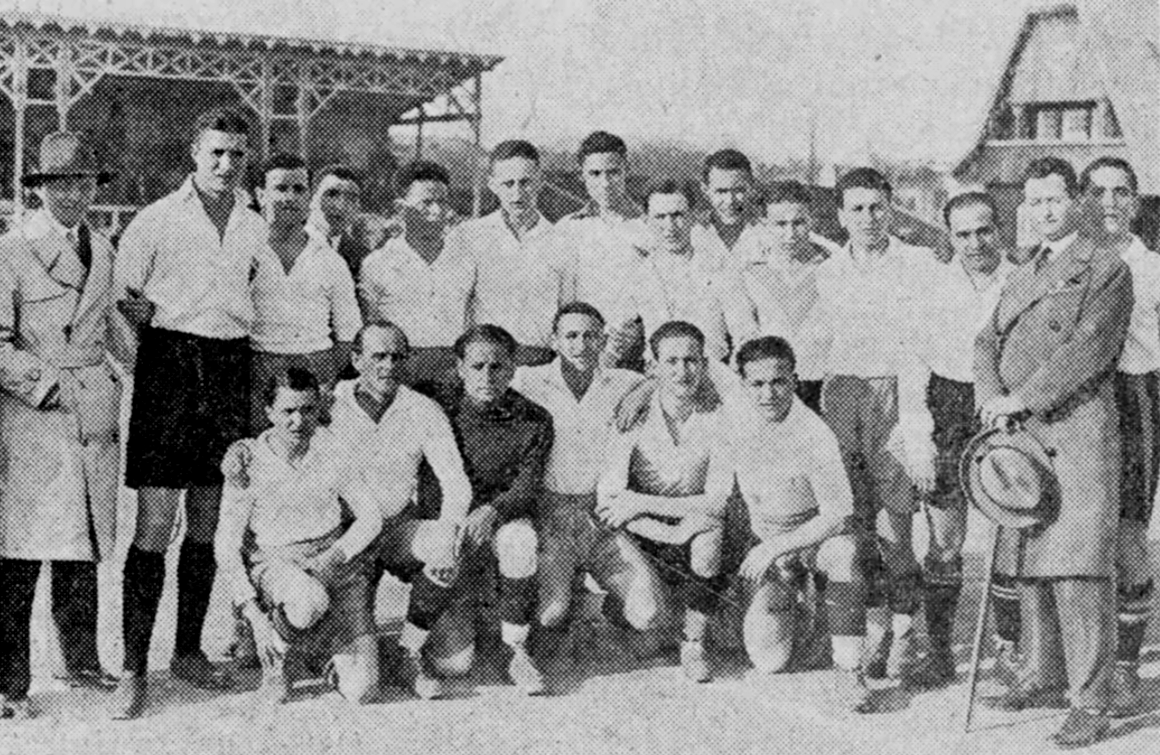
Maccabi București, also spelled Macabi București, was a Romanian sports club founded in 1919 by a Jewish entrepreneur. It represented the country’s Jewish community, much like the well-known Hakoah Vienna, and took its name from the Maccabees. The club focused on football and made history as the first Jewish side to have a player—goalkeeper Samuel Zauber—selected for the FIFA World Cup, which he attended in 1930 in Uruguay, though he did not actually play.
The club was established during a period when ethnic minorities in Greater Romania were forming their own football teams, such as Elpis Constanța, owned by a Greek-Romanian businessman. In 1925, Maccabi added a women’s seven-a-side handball team, but like all Romanian women’s teams at the time, it only played exhibition matches, often as a warm-up to football games. Following the adoption of antisemitic policies in Romania, the club was forced to cease operations before the 1940–1941 season. It was reestablished in 1945 after World War II, keeping its original name, and soon merged with another club in 1947 to form Ciocanul București.
For the 1946 season, Hungarian coach Béla Guttmann managed the team. Due to food shortages, he insisted his salary be paid in vegetables. He left the club after a director tried to interfere with team selection; journalist Hardy Grune suggested Guttmann was frustrated by corruption in Romanian soccer. As Ciocanul, the club played two seasons in Divizia A. In May 1948, it merged with Unirea Tricolor București to form the major Romanian club Dinamo, which was run by the Ministry of the Interior. During the 1947–1948 season, the two sides remained separate as Dinamo A (Ciocanul) and Dinamo B (Unirea-Tricolor).
In terms of honors, Maccabi București never played in Liga I; its best finish in the top division came after the merger as Ciocanul, which placed 7th in 1946–47. The club won the Liga II once, in 1934–35, and was runner-up in 1938–39.
- known_for
- First Jewish club to have a player selected for the FIFA World Cup; later merged into Dinamo București
- best_finish_in_Liga_I
- N/A (Maccabi never played in Liga I; as Ciocanul, 7th in 1946–47)
Quick Facts
- Clubname
- Maccabi București / Ciocanul / Dinamo A
- Fullname
- Maccabi București
- Shortname
- Maccabi
- Founded
- 15 May 1919
- Dissolved
- 1948
- Ground
- Calea Dudeşti
Facts from the source article.
Lore & Background
Maccabi București was founded in 1919 by a Jewish entrepreneur at a time when representatives of the ethnic minorities of Greater Romania established distinctive football sides. In 1925, a women's seven-a-side handball team was inaugurated as a branch of the Maccabi club, but, like all Romanian teams of the time, only played exhibition games, usually as a prelude to competitive football matches. Before the 1940–1941 season, at a time when Romania adopted antisemitic policies, the club was forced to cease operations. It was reestablished in 1945 at the end of World War II and kept its name before merging with another club in 1947 to form Ciocanul București.
Reader's Guide
Maccabi București holds a unique place in football history as the first Jewish club to have a player, goalkeeper Samuel Zauber, appear in a FIFA World Cup, at the 1930 edition in Uruguay. The club's trajectory reflects the broader experience of Jewish communities in Romania: founded during a period of minority-led club formation, it was expelled from competitions under antisemitic policies before the 1940–1941 season, then revived after World War II. Its post-war period included a brief coaching stint by Béla Guttmann, who insisted on being paid in vegetables due to food shortages and later left after a dispute over team selection. The club eventually merged to become Ciocanul, which played two seasons in Divizia A, and in May 1948 merged with Unirea Tricolor București to create the present-day major Romanian club Dinamo, administered by the Ministry of the Interior. This lineage ties a small Jewish community club to one of Romania's most prominent football institutions.
Did You Know?
- Maccabi București was the first Jewish side to have a player, goalkeeper Samuel Zauber, selected for the FIFA World Cup (1930 edition in Uruguay), though he did not actually play.
- In 1925, the club inaugurated a women's seven-a-side handball team that only played exhibition games.
- Before the 1940–1941 season, the club was forced to cease operations due to Romania's antisemitic policies.
- In 1946, the club was coached by Béla Guttmann, who insisted his salary be paid in vegetables due to food shortages.
Founding & Communal Identity
Maccabi București was established in 1919 by a Jewish entrepreneur, emerging during a period when ethnic minority communities across Greater Romania were forming their own distinctive football organizations. The club drew its name from the Maccabees and served as a sporting home for the Jewish community, occupying a similar cultural niche to the well-known Hakoah Vienna. Its founding was part of a broader pattern of minority representation in Romanian sport; for instance, the Greek-Romanian businessman behind Elpis Constanța had created a parallel institution for that community. Beyond football, the club expanded its reach in 1925 by launching a women's seven-a-side handball team. However, as was standard across Romanian football at the time, this handball side was limited to exhibition matches, typically serving as entertainment before competitive football fixtures rather than competing in formal league structures. The club thus represented both athletic ambition and a broader assertion of communal identity within the Romanian sporting landscape.
World Cup Milestone & Competitive Record
The club's most celebrated achievement on the international stage came in 1930, when goalkeeper Samuel Zauber became the first player of Jewish origin to feature at a FIFA World Cup, representing Romania at the inaugural tournament in Uruguay. This landmark moment placed Maccabi București in a unique position in football history, connecting a community-based club to the sport's grandest competition. Domestically, the side's competitive record reflected a club that consistently punched above its weight in the second tier. It claimed the Liga II title in the 1934–35 season and finished as runners-up in 1938–39, demonstrating sustained quality across the interwar period. In the top flight, the club's best campaign came in 1946–47, when it secured seventh place in Divizia A. As Ciocanul, the rebranded club competed in two seasons at the highest level before its eventual absorption into a larger entity. These results, while modest by the standards of Romania's elite, underscored the club's role as a credible competitive force within the national football hierarchy.
The Béla Guttmann Episode
The 1946 season at Maccabi București attracted attention for the involvement of Hungarian coach Béla Guttmann, a figure who would go on to manage numerous prominent clubs across Europe and South America throughout the 1940s and 1950s. His tenure in Bucharest was marked by unusual circumstances: amid severe post-war food shortages, Guttmann reportedly insisted that his compensation be settled in vegetables rather than currency. The arrangement, while pragmatic, highlighted the economic devastation gripping Romania at the time. Guttmann's stay was cut short when a club director attempted to interfere with his team selection decisions, prompting the coach to walk out entirely. German journalist Hardy Grune later suggested that Guttmann's frustration extended beyond a single incident, pointing instead to a broader perception of corruption permeating Romanian football. Whether or not that interpretation fully captures the situation, the episode cemented Guttmann's reputation as a coach unwilling to compromise his authority, a trait that would define his later career at clubs of far greater stature.
Persecution, Resilience & the Road to Dinamo
The interwar and wartime years brought existential threats to Maccabi București. Before the 1940–41 season, Romania's adoption of antisemitic policies led to the club's expulsion from official competitions, effectively erasing it from the football landscape for several years. The club survived this period of forced inactivity and reemerged in 1945, at the close of World War II, retaining its original name before eventually merging with another club to form Ciocanul. This new identity lasted only briefly. In May 1948, Ciocanul was absorbed into Unirea Tricolor București, and together they created Dinamo, a major Romanian club placed under the administrative control of the Ministry of the Interior. Notably, during the 1947–48 season, the two entities still existed as separate sides, designated Dinamo A (the Ciocanul lineage) and Dinamo B (the Unirea-Tricolor lineage). The transformation from a community-driven Jewish club to a state-administered institution represented a profound shift in both identity and purpose, marking the end of an era for Romania's minority sporting organizations.
Gallery
Frequently Asked Questions
What was Maccabi București?
Maccabi București (also spelled Macabi) was a Romanian football club founded in 1919 by a Jewish entrepreneur. It acted as a sporting representative for the country's Jewish community and drew its name from the biblical Maccabees.
What is Maccabi București most famous for?
The club is credited with fielding the first Jewish footballer ever named to a FIFA World Cup squad. Goalkeeper Samuel Zauber was included in Romania's 1930 Uruguay World Cup roster, although he never actually featured in a match.
How did Maccabi București's story end?
The club ultimately folded into Dinamo București, losing its independent identity. Its dissolution mirrors the fate of many minority-affiliated teams in Romania during the mid-twentieth century.
Did Maccabi București ever play in Romania's top division?
No, Maccabi itself never competed in Liga I. A later iteration operating under the name Ciocanul reached a seventh-place finish in the 1946–47 season, but the original Maccabi brand did not reach the top tier.
Why is Maccabi București significant in Jewish football history?
Alongside clubs like Hakoah Vienna, it was part of a broader early-twentieth-century wave of Jewish communities establishing their own sporting institutions in Europe. Its World Cup connection remains a rare and celebrated milestone for Jewish football on the international stage.
More in Jewish football clubs 1-24
Spotted an error? Know more?
This is a living reference — every entry is fact-audited, and reader corrections feed straight into our audit queue. Suggest an edit · See this site's audit record