
Hakoah Vienna
Jewish sports club known for its all-Jewish football team.

nieznany/unknown · Public domain
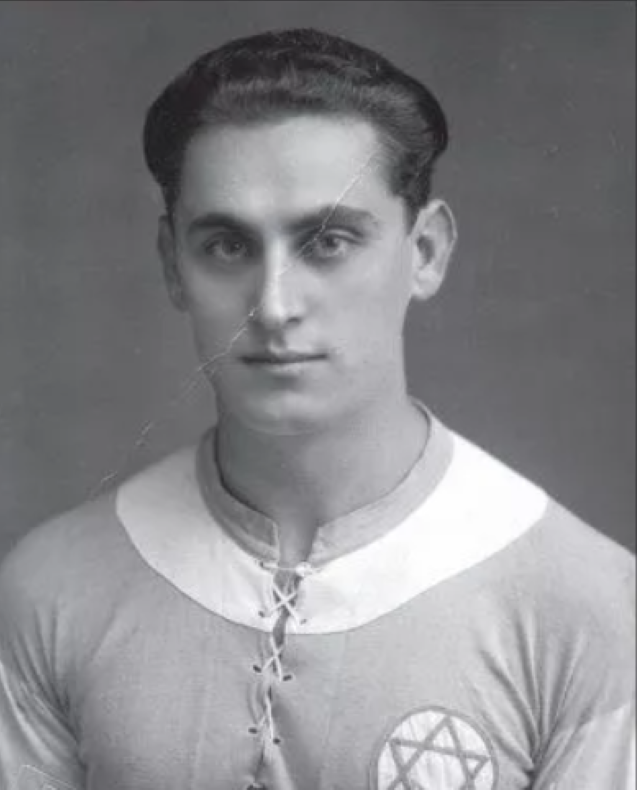
Sport Club Hakoah Wien, whose name comes from the Hebrew word for "strength," was a Jewish sports club based in Vienna, Austria. It was founded in 1909 by a group that included Austrian Zionists, such as the cabaret writer Fritz "Beda" Löhner and the dentist Ignaz Herman Körner. The founders were inspired by Max Nordau's concept of "Muscular Judaism," and from its first year, the club offered competition in fencing, football, field hockey, track and field, wrestling, and swimming.
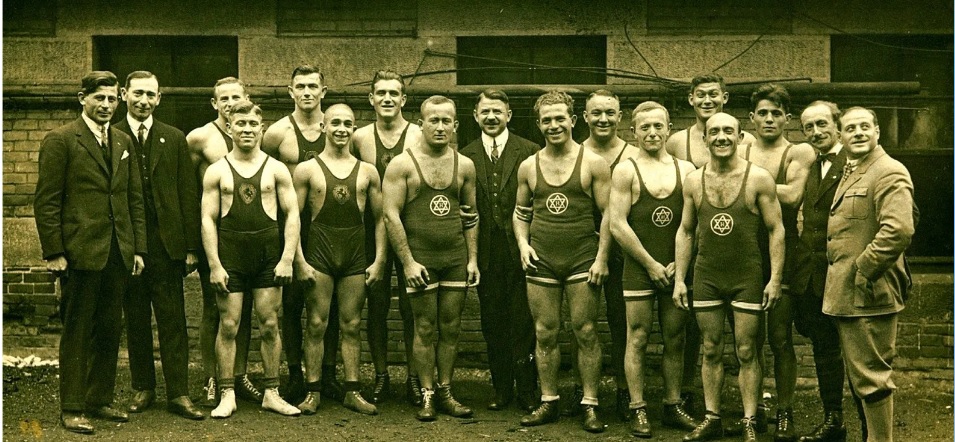
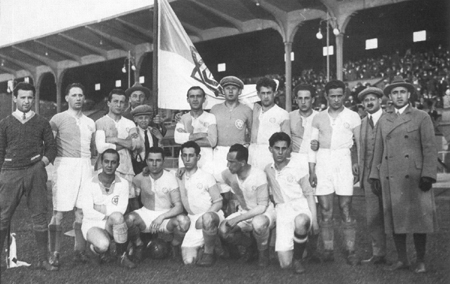
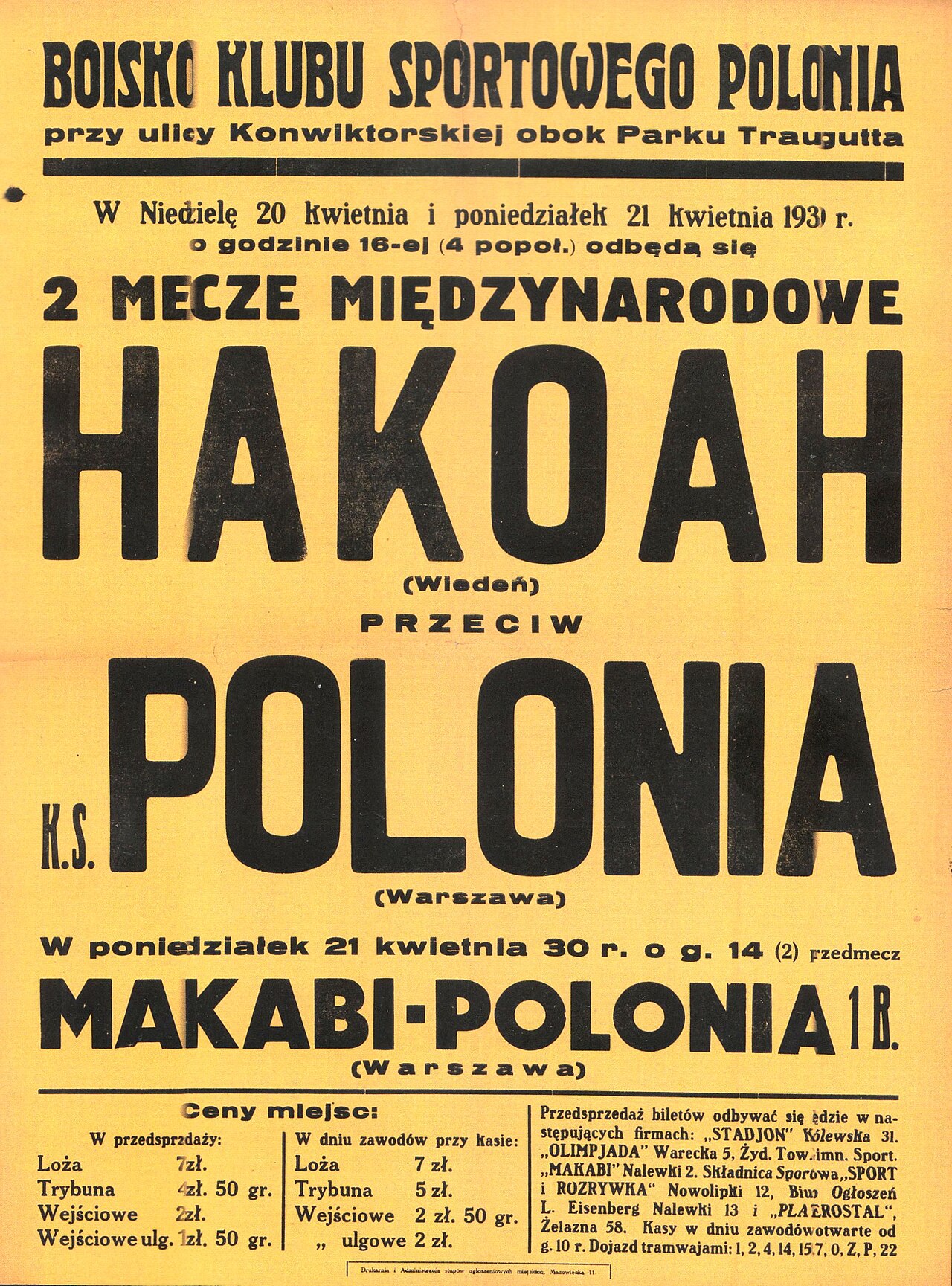
Hakoah was one of the first football clubs to market itself globally through frequent tours, drawing thousands of Jewish fans to matches in cities like London and New York. Support spread across Europe and as far as Russia and the United States. The team sent promoters ahead of their visits to generate excitement, and they attracted attention from prominent Jewish figures, including writer Franz Kafka. Because the team and its fans regularly faced anti-Semitism, the club's wrestlers often accompanied the footballers as bodyguards.
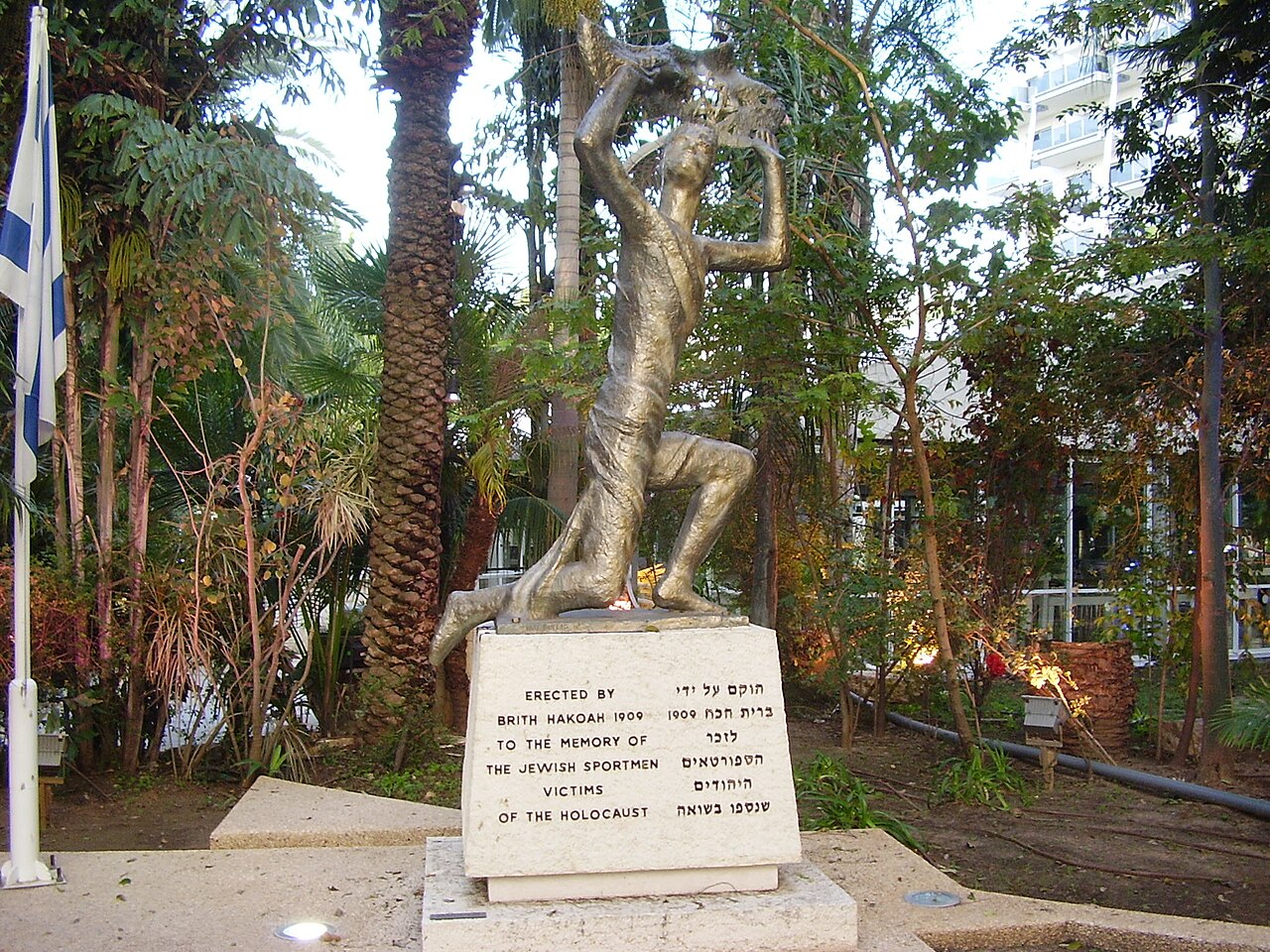
In 1922, Hakoah leased a sports ground in Vienna's Prater park, which included a stadium seating 25,000, along with tennis courts, a hockey field, and other facilities. That same year, the club finished second in the Austrian League. Béla Guttmann, the club's most famous player, played as centre back from 1922 to 1926 and again in 1933. After a tour of the United States, Guttmann and several teammates chose to stay in America. Max Scheuer captained the team and won the Austrian championship in the 1924–25 season, the first professional Austrian football title. In 1927, Scheuer and the team traveled to the United States to play Bethlehem Steel Football Club. During the Holocaust, Scheuer was sent to Auschwitz and killed in the early 1940s. He was one of at least seven Hakoah footballers who died in the Holocaust, including Josef Kolisch, Ali Schönfeld, Oskar Grasgrün, Ernst Horowitz, and brothers Erwin and Oskar Pollak.
During a 1923 trip to London, Hakoah defeated West Ham United 5–1, becoming the first continental club to beat an English team in England. In the 1924–25 season, goalkeeper Alexander Fabian broke his arm during a crucial game. Since substitutions were not allowed, he put his arm in a sling and switched positions with a forward, then scored the winning goal seven minutes later to clinch the league title. In 1926, a highly successful U.S.
- founded
- 1909
- closed
- 1938 (re-formed 1945)
- field
- Vienna, Austria
- nationality
- Austrian
- known_for
- Entirely Jewish football team; Olympic athletes; global tours
Quick Facts
- Clubname
- Hakoah Vienna
- Fullname
- Sport Club Hakoah Wien
- Founded
- df=yes · 1909 / df=yes · 1945
- Dissolved
- df=yes · 1938 / df=yes · 1949 (football)
Facts from the source article.
Lore & Background
The club was founded by Fritz 'Beda' Löhner and Ignaz Herman Körner, influenced by Max Nordau's doctrine of 'Muscular Judaism.' In its first year, athletes competed in fencing, football, field hockey, track and field, wrestling, and swimming. Hakoah was one of the first football teams to market globally, traveling frequently and attracting thousands of Jewish fans. They sent promoters ahead to generate buzz, and their wrestling team acted as bodyguards against anti-Semitism.
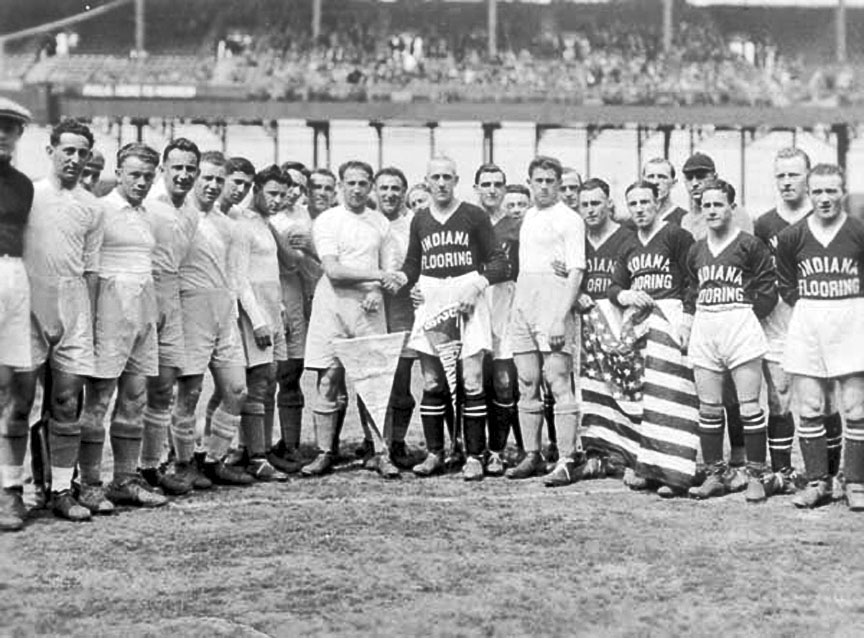
In the 1920s, Hakoah leased a sports ground in the Vienna Prater park with facilities for 25,000 spectators. They finished second in the Austrian League in 1922 and won the Austrian championship in 1924–25. Notable players included Béla Guttmann and Max Scheuer. In 1923, they defeated West Ham United 5–1, becoming the first continental club to beat an English team in England. In 1926, a US tour drew 46,000 spectators at the Polo Grounds; several players stayed in America, forming New York Hakoah.
Reader's Guide
Hakoah Vienna's significance lies in its role as a symbol of Jewish athletic pride and resistance to anti-Semitism in early 20th-century Europe. The club embodied Max Nordau's concept of 'Muscular Judaism,' promoting physical strength among Jews. Its football team's global tours and victories, including the first continental win over an English team in England, demonstrated Jewish sporting achievement. The club's success extended beyond football to wrestling, fencing, swimming, and other sports, producing Olympic athletes. After the Anschluss in 1938, the Nazis closed the club, seized its assets, and killed at least 38 athletes in the Holocaust. The club re-formed in 1945 and continues today, with its football team playing in Austria's minor leagues as SC Maccabi Wien. Its legacy includes the founding of Hakoah Tel Aviv and New York Hakoah, and the 2004 documentary 'Watermarks' about its women's swim team.
Did You Know?
- Hakoah means 'the strength' in Hebrew.
- In 1923, Hakoah became the first continental club to defeat an English team in England, beating West Ham United 5–1.
- At least 38 Hakoah athletes were killed in the Holocaust.
- The club's 1926 US tour game at the Polo Grounds attracted 46,000 spectators, a record at the time.
Founding & the Philosophy of Muscular Judaism
In 1909, two Austrian Zionists—cabaret librettist Fritz "Beda" Löhner and dentist Ignaz Herman Körner—along with a small circle of like-minded individuals, established a sports club in Vienna that would become a landmark in Jewish communal life. Drawing on Max Nordau's concept of "Muscular Judaism," they chose the Hebrew name "Hakoah," meaning "the strength" or "the power." From its very first season the club embraced a remarkably broad athletic program, fielding competitors in fencing, football, field hockey, track and field, wrestling, and swimming. This was not merely a football outfit; it was a comprehensive athletic institution rooted in the conviction that physical vigor was inseparable from cultural identity. That founding vision would later be echoed by club president Dezsö Herbst, who in a 1934 anniversary brochure lamented that earlier generations had neglected the principle of a sound mind in a sound body, focusing on intellectual education while ignoring the strengthening of the physical form.
Global Pioneers on the Football Pitch
Hakoah Vienna distinguished itself as one of the earliest football clubs to treat international touring as a deliberate strategy for building a worldwide audience. In the 1920s the team dispatched promoters ahead of visits to cities such as London and New York, generating enormous crowds of Jewish supporters who packed local venues. Their 1923 trip to England produced a historic milestone: a 5–1 victory over West Ham United (albeit against a largely reserve side), making Hakoah the first continental club to defeat an English team on English soil. The 1924–25 season delivered the club's most dramatic narrative. Goalkeeper Alexander Fabian shattered his arm mid-match, and because substitutions were not yet permitted, he donned a sling and swapped positions with a forward. Seven minutes later he scored the winning goal that sealed the Austrian championship. The following year's American tour drew 46,000 spectators to New York's Polo Grounds—a record at the time—and so many players were struck by the relative freedom from anti-Semitism that they stayed, eventually forming the New York Hakoah club, which captured the 1929 National Challenge Cup.
Persecution, Liquidation, and the Loss of a Generation
The Nazi seizure of power in Austria in March 1938 brought a swift and devastating end to Hakoah's existence. Just three days after the Anschluss, the shared club headquarters at the Viennese Cafe Atlashof—home to the sports club, the tourism and ski club, and the swimming club—was shut down, and all assets and the stadium were confiscated. The formal dissolution was carried out by the Nazi party's Liquidation Commissioner, with whom club president Dezsö Herbst was forced to conduct the administrative proceedings. On 31 March 1938 the liquidator ordered the club to declare and transfer its property, and by November of that year a police raid was authorized. The human cost was catastrophic. At least seven Hakoah footballers perished in the Holocaust, including captain Max Scheuer, who was murdered at Auschwitz in the early 1940s, along with Josef Kolisch, Ali Schönfeld, Oskar Grasgrün, Ernst Horowitz, and the Pollak brothers, Erwin and Oskar. The loss of so many talented players had already crippled the team's competitiveness in the 1930s as others emigrated, but the genocide erased an entire generation of the club's sporting community.
Legacy, Diaspora, and Life Beyond the Pitch
Hakoah Vienna's influence extended far beyond a single football pitch. At its pre-war peak the club boasted more than 8,000 members and maintained highly successful sections in wrestling, fencing, water polo, athletics, and swimming, producing several Olympic athletes—particularly in women's swimming. The club also served as a cultural hub, maintaining its own orchestra and hosting balls and social gatherings. The 2004 documentary Watermarks preserves the story of the women's swim team through 1930s archival footage and interviews with surviving members. The club's diaspora legacy is equally significant: players who emigrated to Mandate Palestine founded the Hakoah Tel Aviv football club, while those who settled in the United States after the 1926 tour built the New York Hakoah institution. Even in the 1930s, as anti-Semitic hostility intensified, the club's wrestlers doubled as personal bodyguards for visiting teams—a grim testament to the climate of fear that surrounded Jewish sporting life. After the war the club re-formed in 1945, carrying forward a name and a philosophy of physical and communal strength forged nearly four decades earlier.
Gallery
Frequently Asked Questions
What was Hakoah Vienna?
Hakoah Vienna was an Austrian Jewish sports club based in Vienna that operated from 1909 until it was forcibly shut down in 1938. The name 'Hakoah' is the Hebrew word for 'strength,' and the club offered a wide range of athletic disciplines including football, fencing, wrestling, swimming, and track and field.
Who founded Hakoah Vienna and what inspired them?
The club was established in 1909 by a group of Austrian Zionists, among them cabaret writer Fritz 'Beda' Löhner and dentist Ignaz Herman Körner. Their vision was rooted in Max Nordau's 'Muscular Judaism' idea, which urged the Jewish community to embrace physical fitness and competitive sport as a source of pride.
What made Hakoah Vienna's football team stand out?
Hakoah fielded a fully Jewish football squad and became one of the earliest clubs to market itself on an international scale through frequent touring matches. Those tours attracted thousands of spectators and helped put Jewish football on the world stage well before the 1930s.
What happened to Hakoah Vienna in 1938?
Under Nazi persecution the club was forced to cease operations in 1938, effectively ending its pre-war era. It was re-formed in 1945 after the war, though it never recovered the prominence and global recognition it had enjoyed in the 1920s and early 1930s.
Why is Hakoah Vienna important in football and sporting history?
The club is remembered as a pioneering all-Jewish football team that competed at a high level and toured internationally before the Holocaust destroyed its community. It also produced Olympic-calibre athletes across several sports, making it a landmark in both Jewish sporting culture and the broader story of early football.
More in Jewish football clubs 1-24
Spotted an error? Know more?
This is a living reference — every entry is fact-audited, and reader corrections feed straight into our audit queue. Suggest an edit · See this site's audit record