
Judah Loew ben Bezalel
Talmudic scholar, mystic, and subject of the Golem legend.

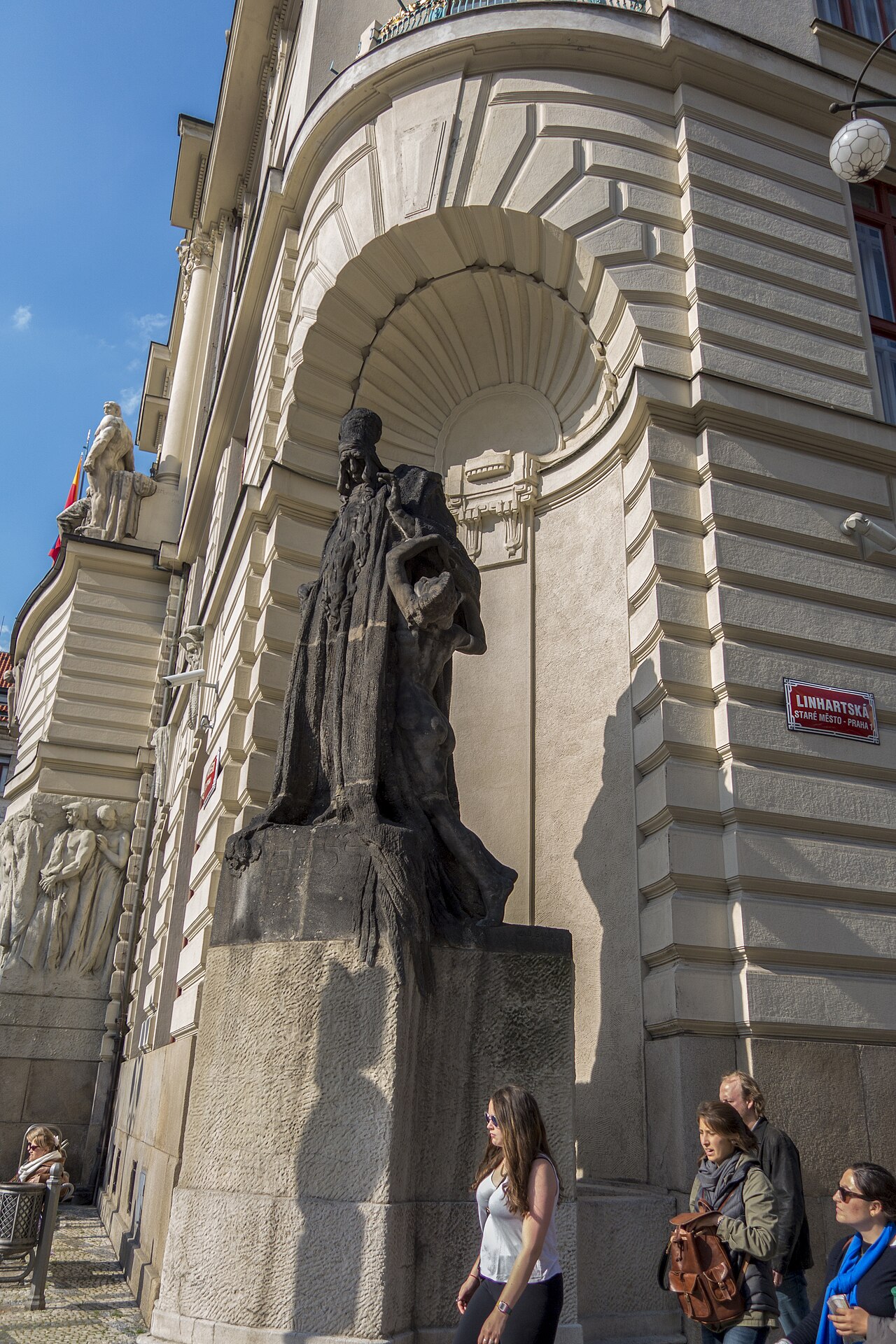
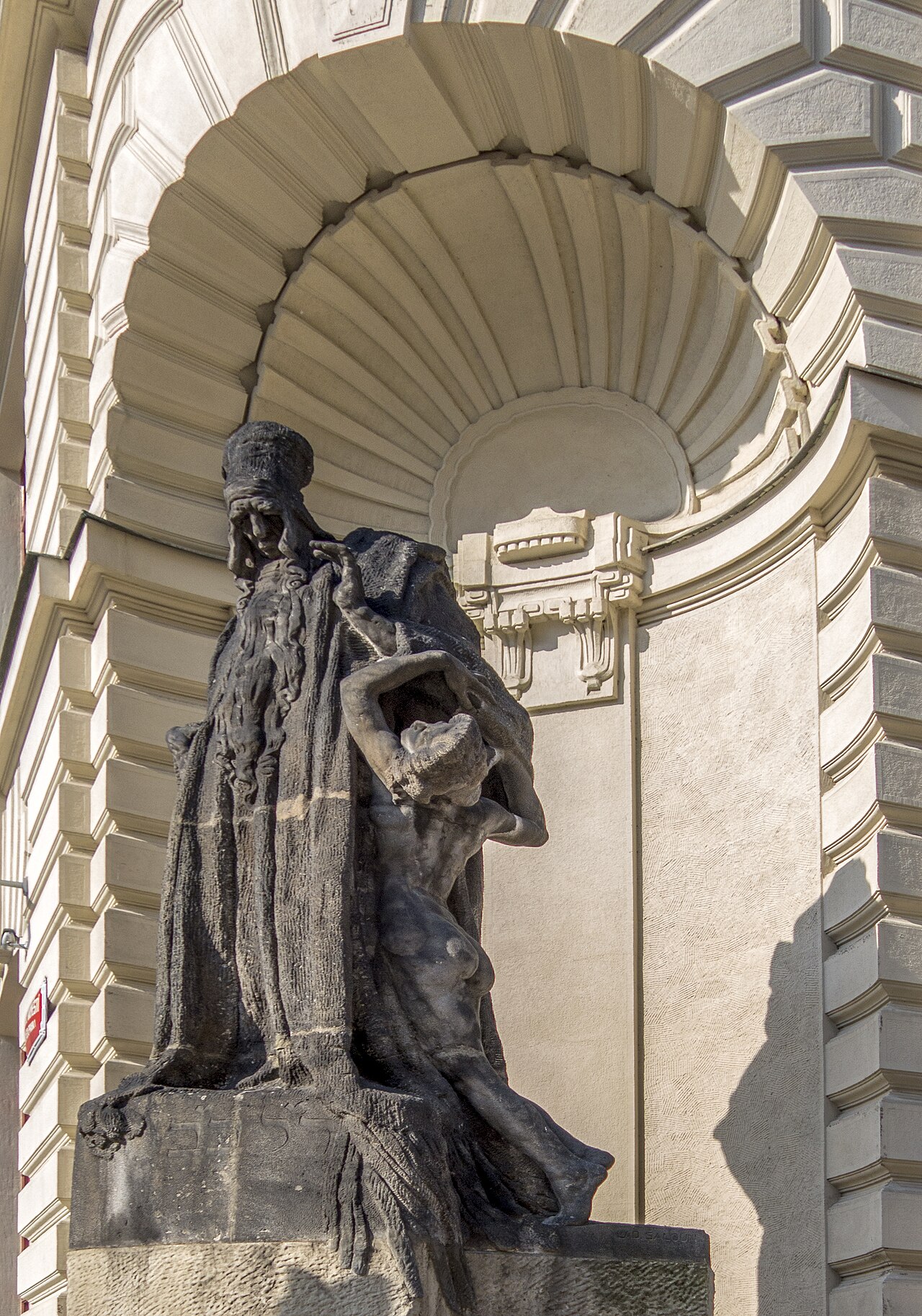
Vitold Muratov · CC BY-SA 4.0
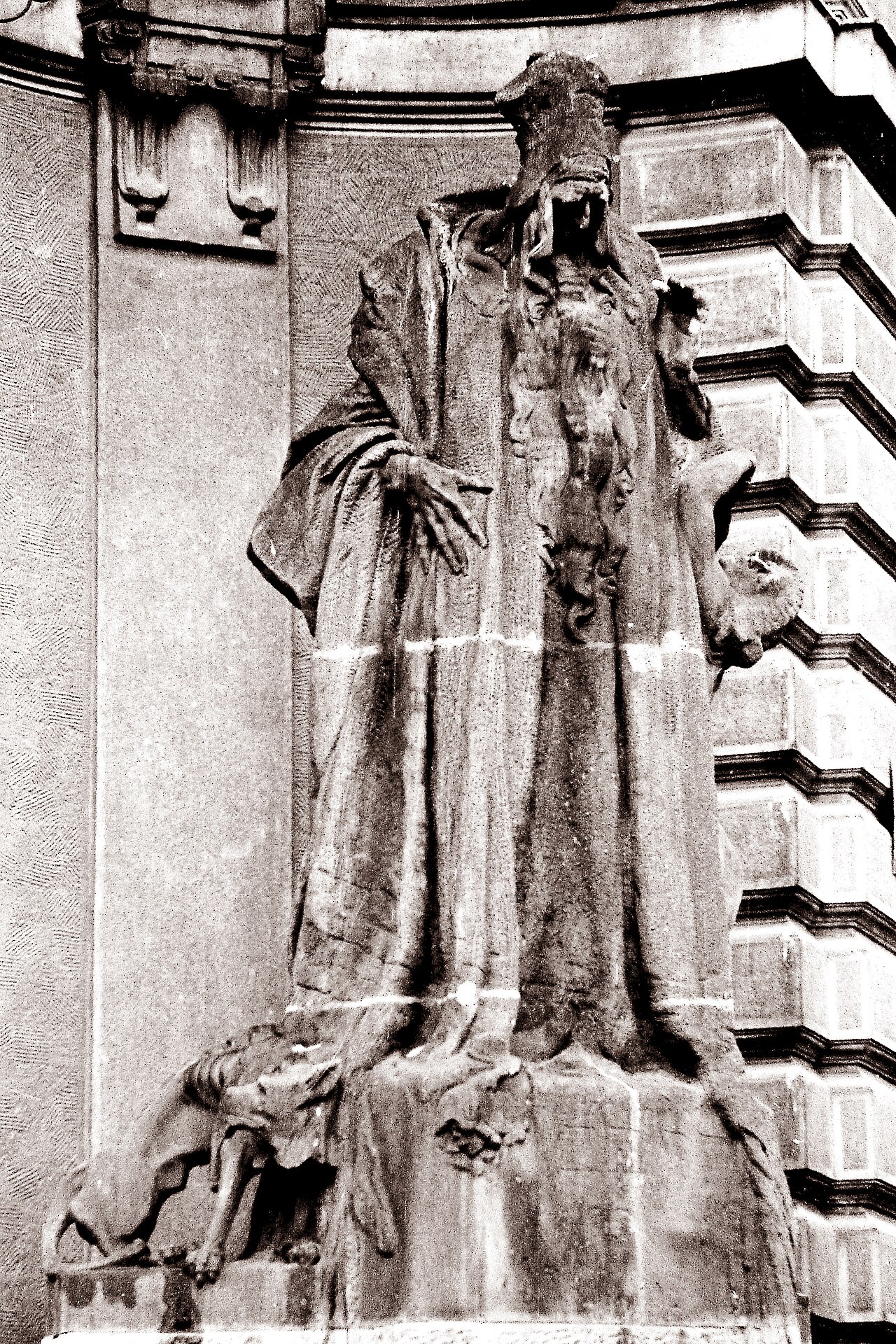
Judah Loew ben Bezalel (c. 1524 – 17 September 1609), known as the Maharal of Prague, was a Talmudic scholar, Jewish mystic, mathematician, astronomer, and philosopher. He served as a leading rabbi in Mikulov and Prague, and his philosophical works became cornerstones of Jewish thought. He is also the subject of the later legend that he created the Golem of Prague.
Quick Facts
- Religion
- Judaism
- Honorific Prefix
- Rabbi
- Birth Date
- c. 1524
- Birth Place
- Poznań, Poland
- Death Date
- 17 September 1609 · 1524
- Death Place
- Prague, Bohemia, Holy Roman Empire
- Burial Place
- Old Jewish Cemetery, Prague
- Father
- Bezalel
Facts from the source article.
Lore & Background
Judah Loew ben Bezalel was probably born in Poznań, Poland, though some sources mistakenly list Worms. His birth year is uncertain, with different sources listing 1512, 1520, and 1526. He studied in yeshivahs in Poland, including under Rabbi Yaakov Pollak and Rabbi Yitzchak Clover, and spent 20 years studying before marrying. His older brother Chaim of Friedberg was a noted rabbinical scholar.
Loew accepted a rabbinical position in 1553 as Landesrabbiner of Moravia at Mikulov, directing community affairs and revising election and taxation statutes. He moved to Prague in 1573, replacing the retired Isaac Hayoth. In 1592, he had an audience with Emperor Rudolf II, likely discussing Kabbalah. He later moved to Poznań as Chief Rabbi of Poland, where he composed Netivoth Olam and part of Derech Chaim. He died in Prague in 1609 and is buried in the Old Jewish Cemetery.
Loew's family included his wife Perel, six daughters, and a son Bezalel, who became a rabbi but died early in 1600. His granddaughter Eva Bachrach was known for scholarship. His elder brother Hayim ben Bezalel authored a work challenging the rulings of Moshe Isserles.
Reader's Guide
Judah Loew ben Bezalel's significance lies in his creative and original philosophical system, which became a cornerstone of Jewish thought. He employed rationalist terminology and classical philosophical ideas, supporting scientific research as long as it did not contradict divine revelation. His work was a reaction to medieval rationalist Jewish thought, aiming to demonstrate that earlier rabbinic commentary contained deep insights into humanity, nature, and holiness. He developed a comprehensive system using terms such as 'seder and nivdal' (order and transcendence), 'guf, nefesh, sechel' (body, life-force, intellect), and 'yesodot, taarovot, tarkovot' (bases, mixtures, combinations). His supercommentary on Rashi, Gur Aryeh al HaTorah, remains influential. Loew's legacy also includes the later legend of the Golem of Prague, an animate being he supposedly fashioned from clay. His approach to resolving contradictions between rabbinic literature and historical sources emphasized allegorization, preserving the integrity of rabbinic texts while addressing historical challenges creatively.
Did You Know?
- His name 'Loew' is derived from the German Löwe, meaning 'lion', and is a substitute for the Hebrew name Judah.
- He had an audience with Emperor Rudolf II on 23 February 1592, likely discussing Kabbalah.
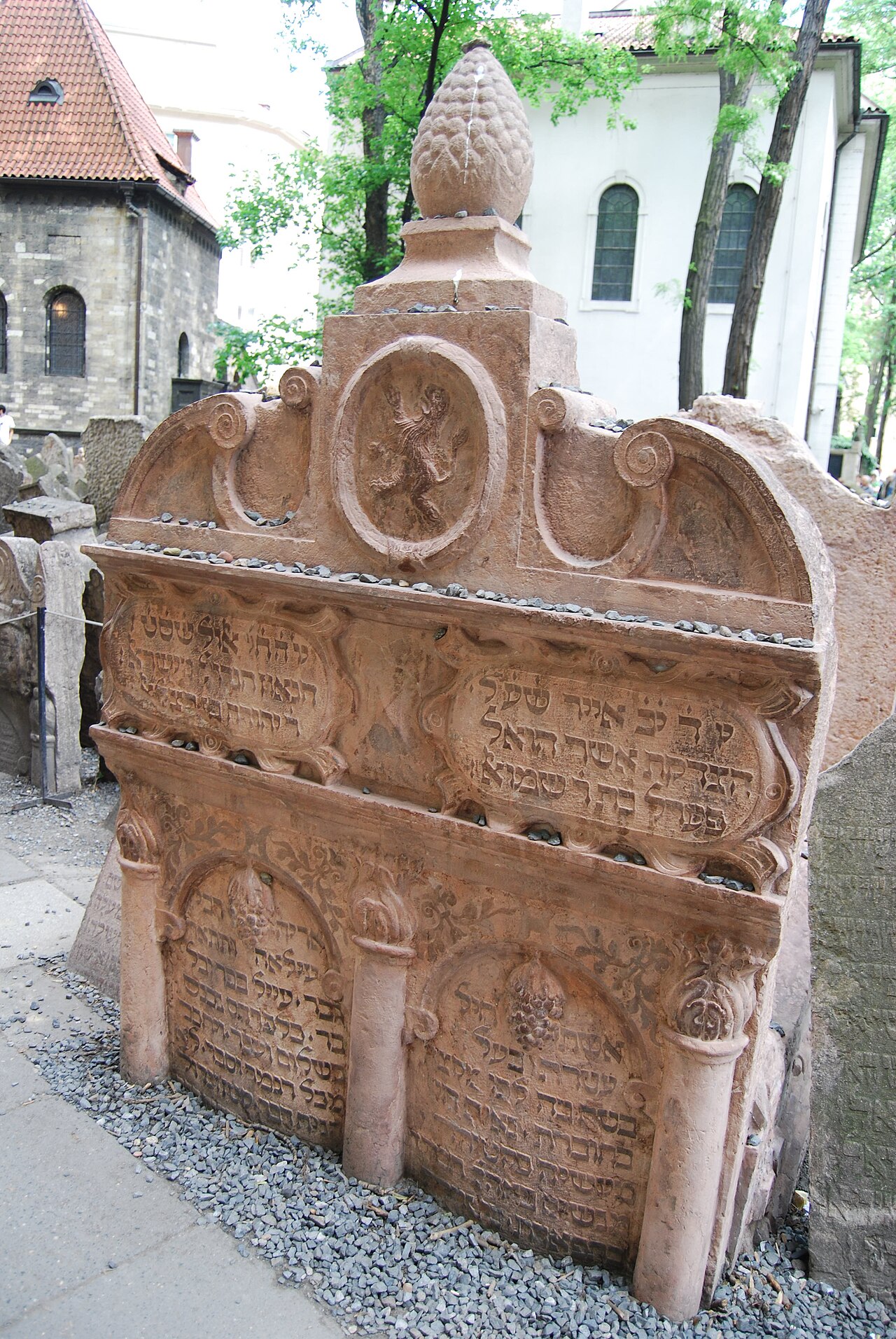
- His tomb in Prague features a heraldic shield with a lion with two intertwined tails, alluding to his name and to Bohemia.
- His birth year is uncertain, with sources listing 1512, 1520, and 1526.
Scholarly Legacy & Philosophical Methodology
Loew's intellectual output placed him among the most original thinkers in East European Jewish history. His writings employed rationalist terminology and drew on classical philosophical ideas, yet he insisted that scientific inquiry remained legitimate only so long as it did not clash with divine revelation. Crucially, his project was not simply to replicate the medieval rationalist tradition that favored systematic conceptual analysis. Instead, he sought to rescue the vivid, ad-hoc imagery of earlier rabbinic commentary, arguing that those seemingly disconnected opinions were in fact dense with insight into humanity, nature, and holiness. His supercommentary Gur Aryeh al HaTorah, whose title translates as 'Young Lion commenting upon the Torah,' layered his own exegesis over Rashi's Torah notes. Later in life, while in Poznań, he composed Netivoth Olam and portions of Derech Chaim, works that further cemented his reputation as a thinker who wove mysticism, philosophy, and practical ethics into a cohesive vision.
Rabbinical Career & Community Leadership
From 1553, Loew served as Landesrabbiner of Moravia in Mikulov, where his duties extended well beyond spiritual guidance. He directed community affairs, determined which Talmudic tractate each community in the province would study, and revised statutes governing elections and taxation. Even after retiring from Moravia in 1573, the communities continued to regard him as an authority. In 1573 he relocated to Prague, replacing the retired Isaac Hayoth, and immediately resumed his campaign against the Nadler phenomenon—slanderous accusations of illegitimacy that could destroy a family's prospects for marriage. He used one of his two annual grand sermons between Rosh Hashanah and Yom Kippur in 1583 to publicly denounce the practice. In 1592 he was elected Chief Rabbi of Poland and moved to Poznań. That same year, he attended an audience with Emperor Rudolf II alongside his brother Sinai and son-in-law Isaac Cohen, a meeting that appears to have centered on Kabbalah, a subject of deep fascination to the emperor.
Name, Identity & Symbolism
The name 'Loew' or 'Löw' is a kinnui—a substitute name—drawn from the German word for lion, echoing the Biblical verse in Genesis 49:9 that likens Judah to a lion. In Jewish naming tradition, the Hebrew name and its symbolic counterpart are often paired, yielding the combined form Judah Loew. When he authored his Torah supercommentary, he titled it Gur Aryeh al HaTorah, 'Young Lion upon the Torah,' reinforcing the motif. His tomb in Prague's Old Jewish Cemetery in Josefov bears a heraldic shield depicting a lion with two intertwined tails, a design that simultaneously references his name and the arms of Bohemia, whose coat of features a two-tailed lion. The title 'Maharal' is itself a Hebrew acronym for Moreinu ha-Rav Loew, meaning 'Our Teacher, Rabbi Loew,' a designation that has endured far beyond his lifetime and remains the primary way scholars and communities refer to him.
Personal Life, Family & Enduring Legend
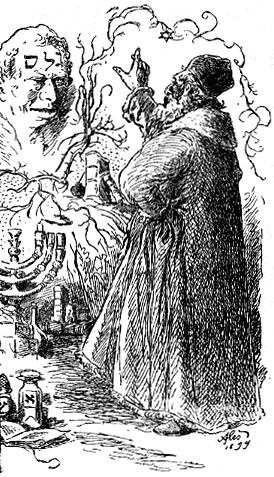
Loew married Perel, daughter of a wealthy merchant, a union that afforded him the financial security to devote himself fully to scholarship. Their family included six daughters and a son, Bezalel, who became a rabbi in Kolín but died young in 1600. His elder brother Hayim ben Bezalel was a prominent legal scholar whose work Vikuach Mayim Chaim challenged the rulings of the Krakow legalist Moshe Isserles. Loew's granddaughter Eva Bachrach was herself noted for her learning, and her grandson Yair Bachrach authored the book Havvot Yair. Loew returned to Prague toward the end of his life and died there on 17 September 1609. He is buried in the Old Jewish Cemetery in Josefov, where his grave and tombstone remain intact. Beyond the historical record, Loew has become the subject of a later legend claiming he created the Golem of Prague, an animate being fashioned from clay—a story that, while not part of his documented life, has cemented his popular image in Jewish and world folklore.
Gallery
Frequently Asked Questions
Who is Judah Loew ben Bezalel?
He was a sixteenth-century Talmudic scholar, mystic, and philosopher who served as the chief rabbi of Prague. In Jewish folklore, he is best remembered as the legendary creator of the Golem of Prague.
What powers or role does Judah Loew ben Bezalel have in the folklore?
In the Golem legend he is portrayed as a master of Kabbalistic mysticism who can animate clay into a protective giant using sacred Hebrew letters. His role is that of a wise rabbi who wields divine language to bring the creature to life for his community's defense.
Why is Judah Loew ben Bezalel important in Jewish folklore?
He bridges real historical scholarship and myth, having been a genuinely influential rabbi and author whose later legend turned him into the archetypal Jewish sage. His story endures as a parable about intellectual power, moral responsibility, and the limits of human creation.
Did Judah Loew ben Bezalel actually create a Golem?
No historical record confirms he ever built or animated such a creature; the Golem tale is a later folk legend that grew around his reputation as a mystic. What is documented is his real work as a rabbi, philosopher, and author of texts such as Gur Aryeh al HaTorah.
More in Jewish folklore 1-24
Spotted an error? Know more?
Reader corrections go straight into our review queue. Suggest an edit · How this site is sourced