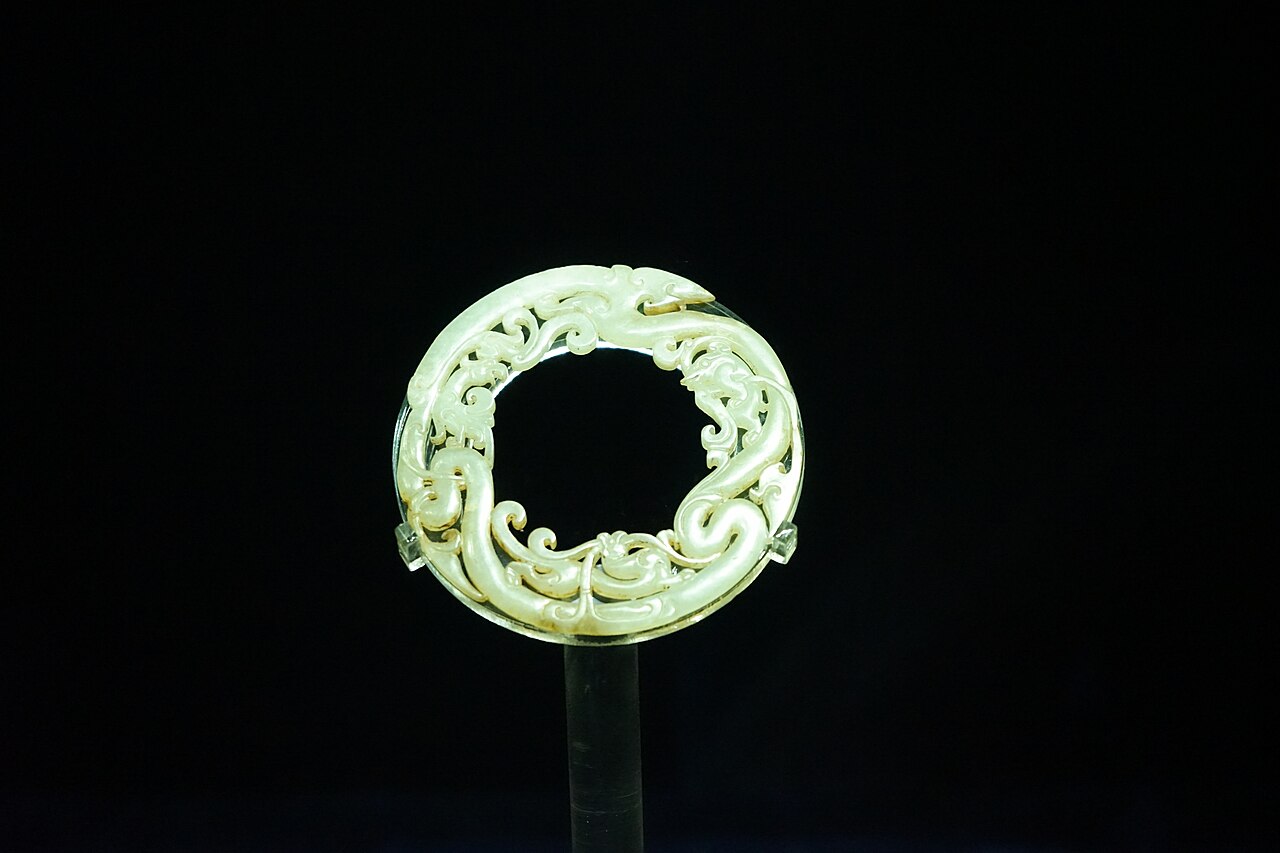
The Dragon Ring
An Italian fantasy miniseries about a princess and a dragon ring.

Matt from Melbourne, Australia · CC BY 2.0
The Dragon Ring (original Italian title: Desideria e l'Anello del Drago) is an Italian fantasy television miniseries directed by Lamberto Bava and starring Anna Falchi. The story follows Princess Desideria, the eldest daughter of the Dragon King, who is destined to inherit the Dragon Ring—the kingdom's highest symbol of power—once she chooses a husband. The miniseries is noted for its stylistic and narrative similarities to Bava's more successful Fantaghirò series.
- title
- Desideria e l'Anello del Drago (The Dragon Ring)
- director
- Lamberto Bava
- starring
- Anna Falchi
- genre
- Fantasy television miniseries
- country
- Italy
- similar_to
- Fantaghirò series
Lore & Background
The Dragon King and Queen rule a powerful kingdom and have two daughters: Desideria, the eldest, and Selvaggia, an adopted sorceress. Selvaggia constantly plays tricks to get Desideria in trouble and is praised as the smarter and better daughter. Desideria is due to inherit the Dragon Ring but must first choose a husband. She falls for Prince Victor, a rebel prince sentenced to death for fighting against her father. Desideria helps Victor escape but is caught and punished. The Dragon King then holds a tournament for her hand, but Desideria flees when she sees the princes are selfish and cruel. The king declares Desideria has forfeited her throne and makes Selvaggia the new prize. Selvaggia, jealous, seeks to destroy her sister.
Reader's Guide
The Dragon Ring received generally favorable reviews from critics. Its significance lies in its connection to Lamberto Bava's Fantaghirò franchise, sharing filming style, special effects, and plot elements. In both works, the male lead falls in love without seeing the heroine's face—Victor recognizes Desideria by her voice, while Romualdo recognizes Fantaghirò by her eyes. Both stories feature a wicked woman casting a love spell to hurt the heroine, and both heroines disguise themselves as men to fight in tournaments. The miniseries stands as a lesser-known but comparable entry in Bava's fantasy television work, offering a similar romantic and adventurous tone.
Did You Know?
- The miniseries is also known as Desideria e l'Anello del Drago.
- Anna Falchi plays the lead role of Desideria.
- Prince Victor falls in love with Desideria without ever seeing her face, recognizing her only by her voice.
- The wicked Selvaggia casts a spell to make Victor fall in love with her, similar to a plot in Fantaghirò 2.
Creative Origins & Wagnerian Roots
The Dragon's Blood, known in its original Italian title as Sigfrido, is a 1957 fantasy film whose narrative DNA is drawn directly from Richard Wagner's monumental opera cycle Der Ring des Nibelungen. Giacomo Gentilomo took on the dual responsibilities of co-writing and directing the project, giving the adaptation a singular creative voice that shaped how Wagner's mythological world was translated onto the silver screen. As an Italian production, the film brings a distinctly European cinematic sensibility to material that originated in German Romantic stage tradition. The project stands as a notable example of mid-century European cinema engaging with classical mythological source material, bridging the gap between operatic storytelling and the visual language of 1950s filmmaking. Gentilomo's combined writer-director role allowed the Wagnerian themes of power, betrayal, and inescapable fate to be rendered through a cohesive artistic vision rather than a fragmented collaborative process, lending the film a unified tone from its opening image to its tragic close.
The Epic Narrative Arc
The story traces Sigfried's life from vulnerable infancy to violent death. His dying mother Siegland delivers the baby to the dwarf Mime, entrusting him with both the child and the sword belonging to Sigfried's late father. Grown to manhood, Sigfried sets out to claim the Nibelung treasure, slays a great dragon with that inherited blade, and bathes in its blood to gain near-total invulnerability. He uncovers a magic ring and seizes Alberich's hat of invisibility. At the court of King Gunther of Burgund, Sigfried wins a tournament for the hand of princess Kriemhild yet earns the bitter enmity of Hagen von Tronje, whom he defeats in single combat. Employing his hat, Sigfried assists Gunther in subduing Queen Brunhild of Iceland into marriage. Once Brunhild discovers the deception, she vows vengeance. Hagen, now aligned with her, extracts from Kriemhild the secret of Sigfried's one vulnerable spot on his shoulder. He strikes the fatal blow during a hunting excursion, only to die himself in a collapsing grotto while clutching at the treasure. Learning of her unwitting complicity in his murder, Brunhild ends her own life.
Rambaldi's Dragon & a Special Effects Legacy
Among the most significant production achievements of The Dragon's Blood is its giant dragon, crafted by the young special effects artist Carlo Rambaldi. The creature represented one of the earliest practical effects works in Rambaldi's career, a formative exercise in bringing a fantastical beast to life through physical craftsmanship, articulated animation, and meticulous hand-built detail. In a 1957 Italian fantasy, this dragon served as both a narrative centerpiece and a technical showcase, demonstrating what a small European production could accomplish with dedicated artisanal skill. Years later, Rambaldi would achieve global acclaim for his groundbreaking creature work on King Kong (1976) and E.T. the Extra-Terrestrial (1982), films that redefined audience expectations for practical effects in mainstream cinema. The Dragon's Blood thus occupies a quietly important position in film history, functioning as a precursor that connects a modest Italian production to the broader evolution of Hollywood spectacle and the craft of creature design that would dominate the late twentieth century.
Release & International Distribution
The Dragon's Blood reached theatrical audiences in 1957, entering a period when European fantasy cinema was carving out its own identity alongside the overwhelming dominance of Hollywood productions. The film's path to international markets carried a notable distinction: the version shown in the United States ran to a longer 97-minute runtime, indicating that the American cut differed in length from the original Italian presentation. This extended duration suggests that additional material—whether supplementary scenes, expanded sequences, or an alternative editorial structure—was incorporated specifically for the U.S. audience, a practice not uncommon in the era of cross-border film distribution when cuts were frequently adjusted to suit local exhibition standards and cultural expectations. The film's continued presence on reference platforms such as IMDb testifies to its enduring accessibility, allowing modern viewers to encounter this mid-century Italian fantasy and its Wagnerian foundations decades after its initial theatrical run, preserving a piece of European cinematic heritage that might otherwise have faded from public memory.
Gallery




More in Italian fantasy films 1-24
Spotted an error? Know more?
This is a living reference — every entry is fact-audited, and reader corrections feed straight into our audit queue. Suggest an edit · See this site's audit record