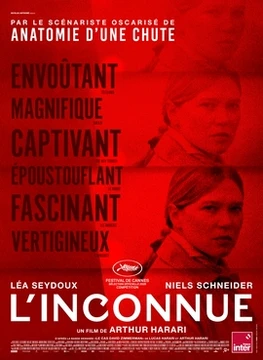
Dog's Heart
1976 Italian-German comedy film based on Bulgakov's novel.

Museum of Veterinary Anatomy FMVZ USP / Wagner Souza e Silva · CC BY-SA 4.0
Dog's Heart (Italian: Cuore di cane, German: Warum bellt Herr Bobikow?) is a 1976 Italian-language comedy film directed by Alberto Lattuada. It is an adaptation of Russian author Mikhail Bulgakov's novel Heart of a Dog, with a screenplay by Lattuada and Viveca Melander, and an adaptation by Mario Gallo. The film is a joint Italian-German production, distributed by Constantin Film.
- director
- Alberto Lattuada
- year
- 1976
- language
- Italian
- country
- Italy / Germany
- runtime
- 113 minutes
- based_on
- Heart of a Dog by Mikhail Bulgakov
- composer
- Piero Piccioni
Lore & Background
The film stars Max von Sydow as Professor Filipp Filippovich Preobrazenski, with Eleonora Giorgi as Zina, Mario Adorf as Dr. Bormenthàl, and Cochi Ponzoni as Poligràph Poligràphovic Bobikow. Other cast members include Gina Rovere, Vadim Glowna, Rena Niehaus, and Ilona Staller. The cinematography was by Lamberto Caimi, editing by Sergio Montanari, and music by Piero Piccioni.
Reader's Guide
Dog's Heart is significant as an Italian-language adaptation of Mikhail Bulgakov's satirical novel, directed by Alberto Lattuada, a noted Italian filmmaker. The film features an international cast led by Max von Sydow, and its production involved Italian and German companies (Corona Filmproduktion, Filmalpha). Its legacy includes being one of several adaptations of Bulgakov's work, with a later Russian TV adaptation in 1988 also listed in the article's 'See also' section. The film's runtime of 113 minutes and its distribution by Constantin Film place it within the context of European co-productions of the 1970s.
Did You Know?
- The film's German title is 'Warum bellt Herr Bobikow?'.
- The screenplay was written by Alberto Lattuada with Viveca Melander.
- The cast includes Ilona Staller, known as Cicciolina, in the role of Natasa.
- The film is based on Mikhail Bulgakov's novel 'Heart of a Dog'.
Production & International Collaboration
The 1976 film Cuore di cane, known internationally as Dog's Heart and in German as Warum bellt Herr Bobikow?, stands as a notable example of cross-border European filmmaking. This Italian-language comedy was produced as a joint venture between Italy and Germany, with Corona Filmproduktion and Filmalpha serving as the production companies. The picture found its theatrical audience through Constantin Film for distribution. At 113 minutes in runtime, the film carried the weight of a substantial feature-length narrative. The trilingual titling—Italian, German, and English—reflects the project's ambition to reach audiences across multiple European markets. The collaboration between Italian and German production entities gave the film a distinctly transnational character, even as the spoken dialogue remained firmly in Italian. This international framework positioned the production within a broader tradition of European co-productions that sought to blend creative traditions while maintaining commercial viability across borders.
Creative Team & Literary Adaptation
At the helm of Dog's Heart was director Alberto Lattuada, who also co-wrote the screenplay alongside Viveca Melander. The film's narrative roots trace back to Mikhail Bulgakov's celebrated Russian novel Heart of a Dog, which was brought to the screen through an adaptation by Mario Gallo. This transformation from Russian literary classic to Italian-German cinematic comedy required significant creative translation, bridging cultural and linguistic divides. The musical score was composed by Piero Piccioni, the visual language was shaped by cinematographer Lamberto Caimi, and the editing was handled by Sergio Montanari. Together, this creative team worked to translate Bulgakov's satirical vision into a comedic framework suited to a 1976 European audience. The involvement of multiple creative voices—from the original novel's author to the adapter, director, screenwriter, composer, and cinematographer—gives the film a layered authorship that reflects the collaborative nature of international co-productions.
Cast & Ensemble
The ensemble cast of Dog's Heart brings together a remarkable array of European talent. Max von Sydow, the Swedish actor, takes on the role of Professor Filipp Filippovich Preobrazenski, while Eleonora Giorgi portrays Zina. Mario Adorf, the German actor, plays Dr. Bormenthàl, and Cochi Ponzoni appears as Poligràph Poligràphovic Bobikow. The cast also includes Ilona Staller as Natasa, Gina Rovere as Darja, and Vadim Glowna as Schwonder. Supporting roles are filled by a diverse group of performers including Enzo Robutti as the commissario, Violetta Chiarini as Vjazemskaja, Amerigo Tot as the portiere, and Maria Pia Attanasio as Pelageja. Additional cast members such as Giuliano Petrelli, Jean-Claude Vernè, Piero Tordi, and Howard Nelson Rubien round out the ensemble. The breadth of the cast, spanning Italian, German, and other European performers, mirrors the film's own international production identity and suggests a richly populated world within the narrative.
Legacy & Adaptations
Dog's Heart occupies a particular place in the broader landscape of screen adaptations of Mikhail Bulgakov's Heart of a Dog. The 1976 Italian-German comedy is not the only cinematic interpretation of the novel; a 1988 film adaptation also brought the story to audiences, as did a Russian television adaptation. This succession of screen versions underscores the enduring appeal of Bulgakov's satirical tale across different national and media contexts. The 1976 version, with its Italian-language dialogue and European co-production structure, represents one particular cultural lens through which the novel's themes were refracted. The existence of multiple adaptations, spanning Italian cinema, German distribution, Russian television, and a later film, suggests that the source material resonates across linguistic and cultural boundaries. For fans of the novel, Cuore di cane offers a distinctly European comedic take, distinguishable from the Russian television version and the 1988 film, each bringing its own interpretive choices to Bulgakov's original vision.
Gallery
More in Italian fantasy films 1-24
Spotted an error? Know more?
This is a living reference — every entry is fact-audited, and reader corrections feed straight into our audit queue. Suggest an edit · See this site's audit record