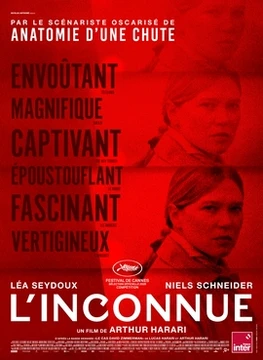
Goliath and the Dragon
A 1960 sword-and-sandal film retitled for North American release.

Didier Descouens · Public domain
In 1960, the Italian sword-and-sandal film *La vendetta di Ercole*—literally "Revenge of Hercules"—was directed by Vittorio Cottafavi and starred Mark Forest and Broderick Crawford. For its North American release, American International Pictures bought the rights to this already-completed Italian movie and retitled it *Goliath and the Dragon*. This was done to market it as a sequel to the studio's earlier *Goliath and the Barbarians* (1959). The studio had previously announced a planned sequel called *Goliath and the Dragon* based on a script by Lou Rusoff for Debra Paget, but that project fell through. To fill the gap, they purchased the Italian film and altered it. The American English-dubbed version includes a stop-motion animation sequence by Wah Ming Chang that inserts a dragon sub-plot; this dragon sequence does not appear in the original Italian print.
The plot loosely adapts the twelfth Labor of Hercules. The hero (renamed Emilius, but called Goliath in the American version) enters the underworld, defeats monsters including Cerberus, and retrieves the blood diamond of the goddess of vengeance. King Eurystheus sent him on this mission hoping Hercules would die, which would allow Eurystheus to gain allies for an attack on Thebes. Hercules returns to his wife Deianira and finds that his teenaged son Hyllus (his brother in the American version) loves Thea, the daughter of a king Hercules believes murdered his family. Enraged, Hercules forbids the relationship. Eurystheus schemes to convince Hyllus that Thea actually loves Hercules, hoping a jealous Hyllus will kill his own brother. A slave girl named Alcinoe gives Hyllus poison, claiming it is a potion to make Hercules fall out of love with Thea. Eurystheus himself wants to marry Thea and make her his queen. The plan is thwarted by a sympathetic goddess of the Wind who relays Thea's warning. Hyllus tries to rescue Thea but is captured. When Hercules rides to save him, he rescues Alcinoe from a bear. Hyllus is sentenced to be executed by being crushed by an elephant in an arena, but Hercules saves him. Afterward, a prophecy warns that Hyllus will become a king, but at the cost of the life of the woman who loves Hercules. To avert this, Hercules destroys his home and leaves with his family. Deianira offers her life to the gods to fulfill the prophecy for Hyllus. She is carried off by a centaur (correspond
- director
- Vittorio Cottafavi
- starring
- Mark Forest, Broderick Crawford
- release_year_Italy
- 12 August 1960
- release_year_US
- November 1960
- original_title
- La vendetta di Ercole
- US_title
- Goliath and the Dragon
- genre
- sword-and-sandal
Lore & Background
The film begins with Hercules/Goliath entering the underworld to retrieve the blood diamond of the goddess of vengeance, defeating monsters including Cerberus. King Eurystheus sends Hercules on this task to ensure his death, hoping to gain allies for an attack on Thebes. The episode is loosely based on the twelfth of the Labours of Hercules. Hercules returns to his wife Deianira and finds his teenaged son Hyllus (his brother in the American version) in love with Thea, daughter of a king Hercules believes murdered his family. Eurystheus schemes to make Hyllus jealous, leading to a plot involving poison, a rescue, and a prophecy that Hyllus will become a king at the cost of the life of the woman who loves Hercules.
Reader's Guide
Goliath and the Dragon is notable as an example of the practice by American International Pictures of acquiring and retitling Italian sword-and-sandal films for the U.S. market, often changing character names to capitalize on existing franchises. The film's main character was renamed from Hercules to Emilius (known in the film as Goliath) to sell it as a sequel to Goliath and the Barbarians. The addition of a stop-motion dragon sequence by Wah Ming Chang, present only in the American print, represents a distinctive alteration of the original Italian work. The film is listed in Golden Raspberry Award founder John Wilson's book The Official Razzie Movie Guide as one of the 100 Most Enjoyably Bad Movies Ever Made, reflecting its cult status among fans of low-budget genre cinema. Its plot, loosely based on the Labours of Hercules, and its cast including Mark Forest and Broderick Crawford, contribute to its place in the history of 1960s Italian peplum films.
Did You Know?
- The film's main character was renamed from Hercules to Emilius (called Goliath in the film) for North American release to sell it as a sequel to Goliath and the Barbarians.
- American International Pictures added a stop-motion animation dragon sequence by Wah Ming Chang only in the American English-dubbed print; the original Italian version lacks this sub-plot.
- The film is listed in John Wilson's The Official Razzie Movie Guide as one of the 100 Most Enjoyably Bad Movies Ever Made.
- The American version had new music by Les Baxter and was edited by Salvatore Billitteri and Maurizio Lucidi.
Production & the AIP Rebranding
Behind the familiar American title lies a story of studio opportunism. The film was originally produced in Italy in 1960 under the name La vendetta di Ercole, with Vittorio Cottafavi at the helm. American International Pictures had initially envisioned a proper sequel to their 1959 hit Goliath and the Barbarians, commissioning a script from Lou Rusoff and lining up Debra Paget for the lead. That project collapsed before production began, leaving AIP with a marketing gap they needed to fill. Rather than develop new material, the studio purchased the rights to the already-completed Italian picture and rebranded it as Goliath and the Dragon, renaming the protagonist from Hercules to Emilius—marketed simply as Goliath—to position it as a follow-up. To justify the title, AIP commissioned a stop-motion animation sequence featuring a dragon, created by Wah Ming Chang, which was spliced into the English-dubbed print. The American release also received new editing by Salvatore Billitteri and Maurizio Lucidi, along with an original score composed by Les Baxter. None of these additions appear in the original Italian cut.
Plot & Mythological Framework
The narrative opens with the hero descending into the underworld, battling monsters including Cerberus to seize the blood diamond of the goddess of vengeance. This quest draws loosely on the twelfth of the Labours of Hercules, but the film reframes it as a trap: King Eurystheus sends the hero on this suicidal errand to eliminate him, hoping his death will rally allies for an assault on Thebes. Back home, conflict erupts when the hero's teenaged son Hyllus (reimagined as his brother in the American cut) falls for Thea, daughter of a king the hero believes murdered his family. Eurystheus stokes Hyllus's jealousy, and a slave girl, Alcinoe, hands him poison disguised as a potion to dull his love. A sympathetic goddess of the Wind relays Thea's warning, aborting the plot. Hyllus is captured and sentenced to be crushed by an elephant in a crowded arena; the hero rescues him. A prophecy then foretells that Hyllus will become king only at the cost of the woman who loves the hero. Deianira, his wife, offers her life to the gods to fulfil the prophecy and is carried off by a centaur corresponding to Nessus, who delivers her to Eurystheus as a hostage.
Cast & Creative Team
The Italian production assembled a substantial ensemble around its two leads. Mark Forest carries the title role as Hercules/Goliath, while Broderick Crawford brings gravitas as the scheming King Eurystheus. Sandro Moretti plays the young Hyllus, caught between loyalty and manipulated rage, and Leonora Ruffo portrays Deianira, the wife whose sacrifice drives the film's climax. Supporting roles include Wandisa Guida as the slave girl Alcinoe, Federica Ranchi as Thea, Gaby André as Ismene, Philippe Hersent as Androclo, Giancarlo Sbragia as Tindaro, Carla Calò as the Sibyl, Ugo Sasso as Timocleo, Claudio Undari as the centaur, and Salvatore Furnari as a midget character. Vittorio Cottafavi directed the Italian original. For the American release, the film was re-edited by Salvatore Billitteri and Maurizio Lucidi, and composer Les Baxter wrote a new score to replace the Italian soundtrack. The Wah Ming Chang stop-motion dragon sequence, exclusive to the English-dubbed print, added a fantastical element absent from the original cut, giving the American audience a creature feature they could latch onto.
Legacy & Reception
Released in Italy on 12 August 1960 under its original title La vendetta di Ercole, the film crossed the Atlantic three months later in November 1960, rebranded as Goliath and the Dragon for American audiences. Its place in cinema history is somewhat ironic: rather than being remembered as a serious mythological epic, it has found a second life as a celebrated example of camp. John Wilson, the founder of the Golden Raspberry Awards, included it in his book The Official Razzie Movie Guide as one of the 100 Most Enjoyably Bad Movies Ever Made—a distinction that, for a film of this era, functions less as an insult and more as a badge of affectionate notoriety. The film also appears in reference lists of movies featuring Hercules, anchoring it within the broader sword-and-sandal tradition of early-1960s European cinema. For fans of the genre, the film's dual existence—as an Italian production and as an Americanized re-cut with an added stop-motion dragon—makes it a fascinating case study in how distribution, dubbing, and studio branding can reshape a film's identity entirely.
Gallery

More in Italian fantasy films 1-24
Spotted an error? Know more?
This is a living reference — every entry is fact-audited, and reader corrections feed straight into our audit queue. Suggest an edit · See this site's audit record