Ibn Qayyim al-Jawziyya
Hanbali jurist, theologian, and spiritual writer.
Last updated

Threethalatha · CC0
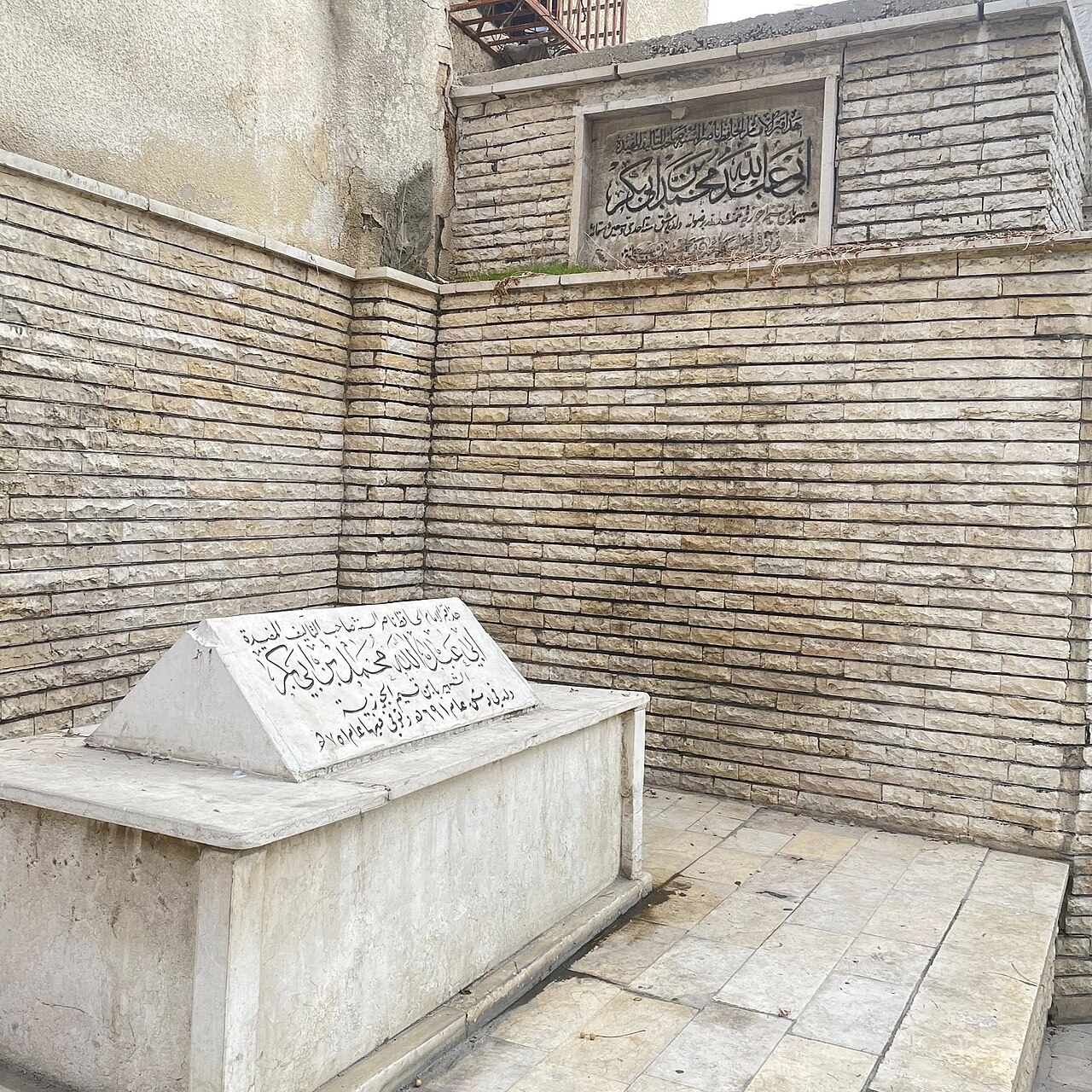
Ibn Qayyim al-Jawziyya was a medieval Syrian Arab Islamic jurist, theologian, and spiritual writer belonging to the Hanbali school of Fiqh.[1] He was the foremost disciple of Ibn Taymiyya and was imprisoned with him from 1326 until 1328.[1][2] On the 13th night of Rajab, 751 AH, which corresponds to September 15, 1350 CE, Ibn al-Qayyim passed away at 60 years, 5 months, and 5 days of age, and his burial site is next to his father's grave in Bab al-Saghīr Cemetery.[3]

Life and work
Ibn al-Qayyim began studying under Ibn Taymiyya at age 21 and remained his close companion until Ibn Taymiyya died in 1328.[4] His imprisonment was prompted by a sermon in Jerusalem decrying grave visitation and his agreement with Ibn Taymiyya on divorce matters.[2] While in prison, he busied himself with the Qur'an, experiencing mystical states described as dhawq and mawjud.[5] He supported broad powers for the state and prosecution, arguing it was often right to punish someone of lowly status who alleged improper behavior by someone more respectable.[6]

He formulated evidential theories that made judges less reliant on oral testimony, such as establishing paternity by scrutinizing facial similarities.[6] He believed testimony could be beaten out of "disreputable" suspects during interrogation.[7] The Jawziyyah Madrasah, a Hanbali law college in Damascus, had Ibn al-Qayyim's father as its principal (qayyim).[8][9] Among those from whom Ibn al-Qayyim received instruction were his father, Abu Bakr ibn Ayoub, Ibn 'Abd ad-Da'im, Shams ad-Dīn adh-Dhahabī, and Safi ad-Din al-Hindi.[4]

What the cited sources add
A 1971 article by John W. Livingston in the Journal of the American Oriental Society states Ibn Qayyim opposed alchemy and divination, particularly astrology.[10][11] The same source records his view that those influenced by heavenly bodies were "the most ignorant of people, the most in error and the furthest from humanity."[10][11]


References
- Wikipedia, "Ibn Qayyim al-Jawziyya" (CC BY-SA 4.0), which cites: Morrison, "The Defining Characteristics of Money in Islamic Law", p. 13; Lange, "Ibn Qayyim al-Jawziyya (d. 751/1350) on the Legal Status of the Senses", p. 553; ; Livingston, "Ibn Qayyim al-Jawziyyah: A Fourteenth Century Defense against Astrological Divination and Alchemical Transmutation", Journal of the American Oriental Society, 1971, p. 96–103; Hoover, Jon, "Ibn Qayyim al-Jawziyya", in: Christian-Muslim Relations 600 - 1500, General Editor David Thomas.; (we also read that source) en.wikipedia.org
- Wikipedia, "Ibn Qayyim al-Jawziyya" (CC BY-SA 4.0), which cites: Hoover, Jon, "Ibn Qayyim al-Jawziyya", in: Christian-Muslim Relations 600 - 1500, General Editor David Thomas.; Holtzman, "Ibn Qayyim al-Jawziyya", Essays in Arabic Literary Biography, January 2009, p. 211 (original not read by us) en.wikipedia.org
- Wikipedia, "Ibn Qayyim al-Jawziyya" (CC BY-SA 4.0), which cites: "Bab al-Saghir Cemetery (Goristan Ghariban)", Madain Project (original not read by us) en.wikipedia.org
- Wikipedia, "Ibn Qayyim al-Jawziyya" (CC BY-SA 4.0), which cites: Roger M. A. Allen, Joseph Edmund Lowry, Devin J. Stewart, Essays in Arabic Literary Biography: 1350-1850, p 211.; Josef W. Meri, Medieval Islamic Civilization: An Encyclopedia, p 362.; Josef W. Meri, Medieval Islamic Civilization: An Encyclopedia, p 363. (original not read by us) en.wikipedia.org
- Wikipedia, "Ibn Qayyim al-Jawziyya" (CC BY-SA 4.0), which cites: Holtzman, "Ibn Qayyim al-Jawziyya", Essays in Arabic Literary Biography, January 2009, p. 212 (original not read by us) en.wikipedia.org
- Wikipedia, "Ibn Qayyim al-Jawziyya" (CC BY-SA 4.0), which cites: Baber Johansen, "Signs as Evidence: The Doctrine of Ibn Taymiyya (1263-1328) and Ibn Qayyim al-Jawziyya (d.1351) on Proof", Islamic Law and Society, v.9, n.2 (2; Kadri, "Heaven on Earth: A Journey Through Shari'a Law from the Deserts of Ancient Arabia ...", macmillan, 2012, p. 140 (we also read that source) en.wikipedia.org
- Wikipedia, "Ibn Qayyim al-Jawziyya" (CC BY-SA 4.0), which cites: Baber Johansen, "Signs as Evidence: The Doctrine of Ibn Taymiyya 1263-1328) and Ibn Qayyim al-Jawziyya (d.1351) on Proof", Islamic Law and Society, v.9, n.2 (20; Reza, Sadiq, "Torture and Islamic Law", Chicago Journal of International Law, 8 (2007), pp.24-25; Baber Johansen, "Signs as Evidence: The Doctrine of Ibn Taymiyya 1263-1328) and Ibn Qayyim al-Jawziyya (d.1351) on Proof", Islamic Law and Society, v.9, n.2 (20; Kadri, "Heaven on Earth: A Journey Through Shari'a Law from the Deserts of Ancient Arabia ...", macmillan, 2012, en.wikipedia.org
- Wikipedia, "Ibn Qayyim al-Jawziyya" (CC BY-SA 4.0), which cites: ; (we also read that source) en.wikipedia.org
- Wikipedia, "Ibn Qayyim al-Jawziyya" (CC BY-SA 4.0), which cites: Holtzman, "Ibn Qayyim al-Jawziyyah", Essays in Arabic Literary Biography, January 2009, p. 208 (original not read by us) en.wikipedia.org
- Wikipedia, "Ibn Qayyim al-Jawziyya" (CC BY-SA 4.0), which cites: Livingston, "Ibn Qayyim al-Jawziyyah: A Fourteenth Century Defense against Astrological Divination and Alchemical Transmutation", Journal of the American Oriental Society, 1971, p. 96–103; Livingston, "Ibn Qayyim al-Jawziyyah: A Fourteenth Century Defense against Astrological Divination and Alchemical Transmutation", Journal of the American Oriental Society, 1971, p. 96–103 (we also read that source) en.wikipedia.org
- John W. Livingston, "Ibn Qayyim al-Jawziyyah: A Fourteenth Century Defense against Astrological Divination and Alchemical Transmutation", Journal of the American Oriental Society (1971), doi:10.2307/600445. OpenAlex metadata CC0; paper not read. doi.org
Each numbered sentence above was checked against the source it cites before publication. Sentences citing Wikipedia adapt text from the English Wikipedia article Ibn Qayyim al-Jawziyya (contributors), used under CC BY-SA 4.0; this entry is available under the same licence. Other sources were used for facts only; no text or images are copied from them.
Also in the Codexery
More in Islamic Scholars & Sages
Sources
Compiled from Wikipedia and the sources listed below. Text from Wikipedia is available under CC BY-SA 4.0; this entry is adapted from it.
- Wikipedia: Ibn Qayyim al-Jawziyya (CC BY-SA 4.0).
Spotted an error? Know more?
Reader corrections go straight into our review queue. Suggest an edit · How this site is sourced