
Ibn Qayyim al-Jawziyya
Hanbali jurist, theologian, and spiritual writer.
Last updated

Threethalatha · CC0
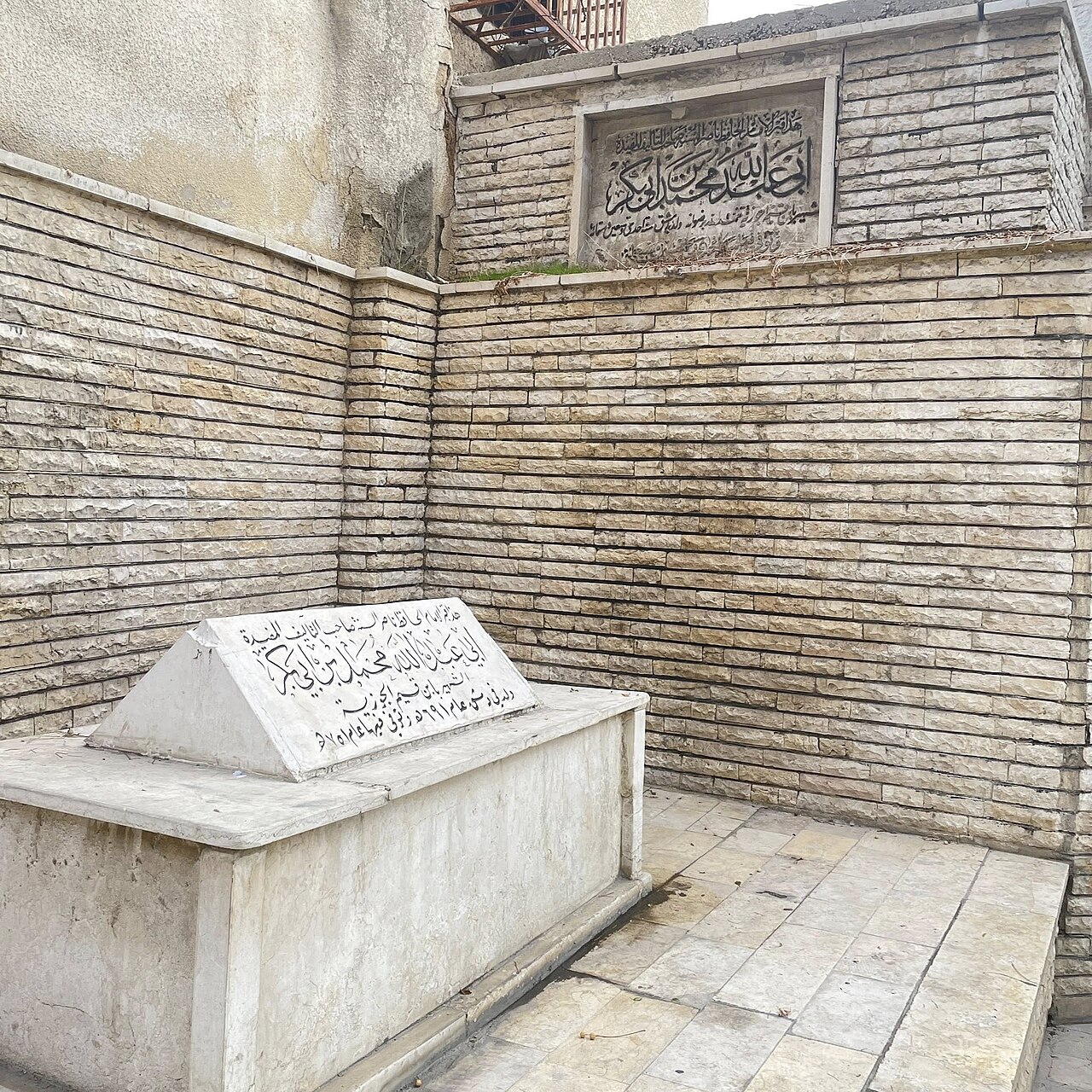
He was the foremost disciple of Ibn Taymiyya and was imprisoned with him from 1326 to 1328.[1][2] Because his father was the superintendent (qayyim) of the Jawziyyah Madrasah in Damascus, the scholar is commonly referred to as Ibn Qayyim al-Jawziyya.[3]

Life and work
He began studying under Ibn Taymiyya at age 21, after Ibn Taymiyya moved back to Damascus from Cairo, and remained his close companion until Ibn Taymiyya died in 1328.[4] His imprisonment was led by Shafi'i and Maliki scholars, joined by Hanbali and Hanafi judges, due to a sermon against grave visitation and his view on divorce.[2][5] While in prison, he busied himself with the Qur'an, experiencing mystical states described as dhawq and mawjud.[6] He supported broad powers for the state and prosecution, arguing it was often right to punish someone of lowly status who alleged improper behavior by a more respectable person.[7]

He formulated evidential theories that made judges less reliant on oral testimony, such as establishing paternity by experts scrutinizing facial similarities.[7] The work titled Madarij al-Salikin is an extensive spiritual commentary that Ibn Qayyim al-Jawziyyah composed on a treatise authored by the Hanbali Sufi Khwaja Abdullah Ansari.[8] Ibn Qayyim held the view that during interrogations, testimony could be extracted through beating from "disreputable" suspects, a position that diverged from the stance of most Islamic jurists.[9]

What the cited sources add
A 1971 article by John W. Livingston in the Journal of the American Oriental Society states that Ibn Qayyim opposed astrology, calling its practitioners "the most ignorant of people, the most in error and the furthest from humanity."[10][11] The same article notes he opposed alchemy and divination of all varieties.[10] A treatise on Arab archery from the 14th century is attributed to Ibn Qayyim al-Jawziyyah.[12]


References
- Wikipedia, "Ibn Qayyim al-Jawziyya" (CC BY-SA 4.0), which cites: Morrison, "The Defining Characteristics of Money in Islamic Law", p. 13; Lange, "Ibn Qayyim al-Jawziyya (d. 751/1350) on the Legal Status of the Senses", p. 553; ; Livingston, "Ibn Qayyim al-Jawziyyah: A Fourteenth Century Defense against Astrological Divination and Alchemical Transmutation", Journal of the American Oriental Society, 1971, p. 96–103; Hoover, Jon, "Ibn Qayyim al-Jawziyya", in: Christian-Muslim Relations 600 - 1500, General Editor David Thomas.; (we also read that source) en.wikipedia.org
- Wikipedia, "Ibn Qayyim al-Jawziyya" (CC BY-SA 4.0), which cites: Hoover, Jon, "Ibn Qayyim al-Jawziyya", in: Christian-Muslim Relations 600 - 1500, General Editor David Thomas.; Holtzman, "Ibn Qayyim al-Jawziyya", Essays in Arabic Literary Biography, January 2009, p. 211 (original not read by us) en.wikipedia.org
- Wikipedia, "Ibn Qayyim al-Jawziyya" (CC BY-SA 4.0), which cites: Holtzman, "Ibn Qayyim al-Jawziyyah", Essays in Arabic Literary Biography, January 2009, p. 208 (original not read by us) en.wikipedia.org
- Wikipedia, "Ibn Qayyim al-Jawziyya" (CC BY-SA 4.0), which cites: Roger M. A. Allen, Joseph Edmund Lowry, Devin J. Stewart, Essays in Arabic Literary Biography: 1350-1850, p 211.; Josef W. Meri, Medieval Islamic Civilization: An Encyclopedia, p 362.; Josef W. Meri, Medieval Islamic Civilization: An Encyclopedia, p 363. (original not read by us) en.wikipedia.org
- Wikipedia, "Ibn Qayyim al-Jawziyya" (CC BY-SA 4.0), which cites: Bori, "A Scholar in the Shadow", Oriente Moderno, January 2010, p. 19 (original not read by us) en.wikipedia.org
- Wikipedia, "Ibn Qayyim al-Jawziyya" (CC BY-SA 4.0), which cites: Holtzman, "Ibn Qayyim al-Jawziyya", Essays in Arabic Literary Biography, January 2009, p. 212 (original not read by us) en.wikipedia.org
- Wikipedia, "Ibn Qayyim al-Jawziyya" (CC BY-SA 4.0), which cites: Baber Johansen, "Signs as Evidence: The Doctrine of Ibn Taymiyya (1263-1328) and Ibn Qayyim al-Jawziyya (d.1351) on Proof", Islamic Law and Society, v.9, n.2 (2; Kadri, "Heaven on Earth: A Journey Through Shari'a Law from the Deserts of Ancient Arabia ...", macmillan, 2012, p. 140 (we also read that source) en.wikipedia.org
- Wikipedia, "Ibn Qayyim al-Jawziyya" (CC BY-SA 4.0), which cites: Holtzman, "Essay on Ibn Qayyim al-Jawziyya", Essays in Arabic Literary Biography, c. 2009, p. 219 (original not read by us) en.wikipedia.org
- Wikipedia, "Ibn Qayyim al-Jawziyya" (CC BY-SA 4.0), which cites: Baber Johansen, "Signs as Evidence: The Doctrine of Ibn Taymiyya 1263-1328) and Ibn Qayyim al-Jawziyya (d.1351) on Proof", Islamic Law and Society, v.9, n.2 (20; Reza, Sadiq, "Torture and Islamic Law", Chicago Journal of International Law, 8 (2007), pp.24-25; Baber Johansen, "Signs as Evidence: The Doctrine of Ibn Taymiyya 1263-1328) and Ibn Qayyim al-Jawziyya (d.1351) on Proof", Islamic Law and Society, v.9, n.2 (20; Kadri, "Heaven on Earth: A Journey Through Shari'a Law from the Deserts of Ancient Arabia ...", macmillan, 2012, en.wikipedia.org
- Wikipedia, "Ibn Qayyim al-Jawziyya" (CC BY-SA 4.0), which cites: Livingston, "Ibn Qayyim al-Jawziyyah: A Fourteenth Century Defense against Astrological Divination and Alchemical Transmutation", Journal of the American Oriental Society, 1971, p. 96–103; Livingston, "Ibn Qayyim al-Jawziyyah: A Fourteenth Century Defense against Astrological Divination and Alchemical Transmutation", Journal of the American Oriental Society, 1971, p. 96–103 (we also read that source) en.wikipedia.org
- John W. Livingston, "Ibn Qayyim al-Jawziyyah: A Fourteenth Century Defense against Astrological Divination and Alchemical Transmutation", Journal of the American Oriental Society (1971), doi:10.2307/600445. OpenAlex metadata CC0; paper not read. doi.org
- Wikipedia, "Ibn Qayyim al-Jawziyya" (CC BY-SA 4.0), which cites: ed. Nizam al-Din al-Fatih, Madinah al Munawara: Maktaba Dar al-Turath, 1990.; Ibn Qayyim al-Jawzīyah, Muḥammad ibn Abī Bakr. kitab ʻuniyat al-ṭullāb fī maʻrifat al-rāmī bil-nushshāb. [Cairo?]: [s.n.], 1932. OCLC: 643468400. (original not read by us) en.wikipedia.org
Each numbered sentence above was checked against the source it cites before publication. Sentences citing Wikipedia adapt text from the English Wikipedia article Ibn Qayyim al-Jawziyya (contributors), used under CC BY-SA 4.0; this entry is available under the same licence. Other sources were used for facts only; no text or images are copied from them.
Also in the Codexery
More in Islamic Scholars & Mystics
Sources
Compiled from Wikipedia and the sources listed below. Text from Wikipedia is available under CC BY-SA 4.0; this entry is adapted from it.
- Wikipedia: Ibn Qayyim al-Jawziyya (CC BY-SA 4.0).
Spotted an error? Know more?
Reader corrections go straight into our review queue. Suggest an edit · How this site is sourced