
Sharmila Tagore
Indian actress with six decades in Hindi and Bengali cinema.

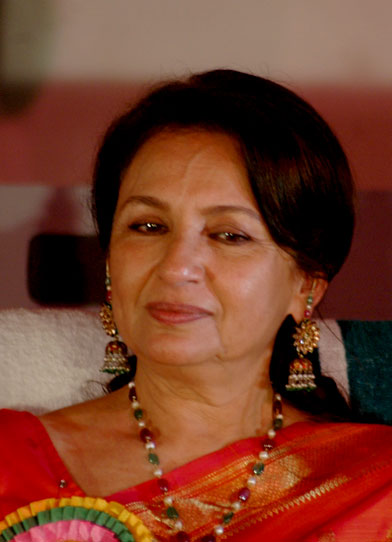
Shrinivaskulkarni1388 · CC BY-SA 3.0
Sharmila Tagore (born 8 December 1944), also known by her married name Begum Ayesha Sultana, is an Indian actress who has worked in Hindi and Bengali cinema for more than sixty years. She received the Commander of Order of Arts and Letters from the French government in 1999 and the Padma Bhushan, India’s third-highest civilian honor, in 2013. She has also won two National Film Awards and one Filmfare Award.
Tagore was born into the Tagore family of Cawnpore (now Kanpur), a prominent clan that helped shape the Bengali Renaissance. She made her screen debut at age fourteen in Satyajit Ray’s Bengali epic *The World of Apu* (1959). She later worked with Ray on several other films, including *Devi* (1960), *Nayak* (1966), *Aranyer Din Ratri* (1970), and *Seemabaddha* (1971). Her other Bengali films include *Barnali* (1963), *Shes Anko* (1963), *Nirjan Saikate* (1965), *Amanush* (1975), *Anand Ashram* (1977), and *Kalankini Kankabati* (1981), making her one of Bengali cinema’s most respected actresses.
She moved into Hindi films with Shakti Samanta’s romance *Kashmir Ki Kali* (1964). She became a leading Hindi film actress through movies such as *Waqt* (1965), *Anupama* (1966), *An Evening in Paris* (1967), *Aamne Saamne* (1967), *Mere Hamdam Mere Dost* (1968), *Satyakam* (1969), *Aradhana* (1969), *Safar* (1970), *Amar Prem* (1972), *Daag* (1973), *Aa Gale Lag Jaa* (1973), *Avishkaar* (1974), *Chupke Chupke* (1975), *Mausam* (1975), *Ek Mahal Ho Sapno Ka* (1975), and *Namkeen* (1982). She won the Filmfare Award for Best Actress for *Aradhana* and the National Film Award for Best Actress for *Mausam*. Later decades saw her appear in films like *Sunny* (1984), *Swati* (1986), *New Delhi Times* (1986), Mira Nair’s *Mississippi Masala* (1991), and Goutam Ghose’s *Abar Aranye* (2002), for which she won the National Film Award for Best Supporting Actress. She also appeared in *Shubho Mahurat* (2003), and the Hindi films *Aashik Awara* (1993), *Mann* (1999), *Viruddh* (2005), *Eklavya* (2007), and *Break Ke Baad* (2010). After a thirteen-year break, she returned to acting with *Gulmohar* (2023).
Tagore chaired the Central Board of Film Certification from October 2004 to March 2011. In December 2005, she was named a UNICEF Goodwill Ambassador.
She was born on 8 December 1944 in Cawnpore (now Kanpur), United Provinces.
Quick Facts
- Title
- Begum Mother of Pataudi
- Succession
- Begum Consort of Pataudi
- Predecessor
- Sajida Sultan
- Reign
- 1968–1971
- Reign Type
- Titular
- Birth Date
- 8 December 1944
- Birth Place
- Kanpur, Uttar Pradesh, (India)
Facts from the source article.
Reader's Guide
Sharmila Tagore's significance lies in her six-decade career bridging Bengali art cinema and mainstream Hindi films. She was a muse to Satyajit Ray, appearing in several of his acclaimed works, and simultaneously became a leading star in Hindi cinema, known for both commercial hits and critically praised performances. Her role in An Evening in Paris (1967) made her the first Indian actress to appear in a swimsuit on screen, a milestone that established her as a sex symbol while later, as chairperson of the Central Board of Film Certification, she expressed concerns about increased use of bikinis in Indian films. Tagore's legacy includes winning two National Film Awards and a Filmfare Award, and receiving the Padma Bhushan and the French Commander of Order of Arts and Letters. Her work with directors like Shakti Samanta and Gulzar, and her collaborations with actors Rajesh Khanna, Dharmendra, and Shashi Kapoor, defined an era of Indian cinema. Her later roles in films such as Abar Aranye (2002) and Shubho Mahurat (2003) continued to earn critical acclaim, and her return in Gulmohar (2023) demonstrated her enduring relevance.
Did You Know?
- Sharmila Tagore made her acting debut at age 14 in Satyajit Ray's The World of Apu (1959).
- She became the first Indian actress to appear in a swimsuit on screen in the film An Evening in Paris (1967).
- She was chosen as a UNICEF Goodwill Ambassador in December 2005.
A Career Spanning Six Decades
Sharmila Tagore's body of work stretches across more than sixty years of Indian cinema, a remarkable span encompassing both Bengali and Hindi film industries. She first stepped in front of a camera at just fourteen, playing an ill-fated bride in Satyajit Ray's 1959 epic. From that early start she built a reputation as one of Bengali cinema's most respected performers, appearing in Ray's Devi, Nayak, Aranyer Din Ratri, and Seemabaddha, as well as in titles like Barnali, Shes Anko, Nirjan Saikate, Amanush, Anand Ashram, and Kalankini Kankabati. Her transition into Hindi cinema in the mid-1960s proved equally transformative. Films such as Waqt, Anupama, Devar, Aradhana, Safar, Amar Prem, Daag, Chupke Chupke, and Mausam cemented her status as a leading lady of Bollywood. Her achievements are reflected in two National Film Awards, a Filmfare Best Actress trophy for Aradhana, the IFFI Best Actress honour for Nirjan Saikate, and a second National Award for Best Supporting Actress in Abar Aranye (2002). In 1999, France's government recognized her artistry with the Commander of the Order of Arts and Letters, and in 2013 India bestowed upon her the Padma Bhushan, its third-highest civilian honour.
Roots in the Tagore Legacy
Sharmila Tagore was born on 8 December 1944 in Cawnpore, present-day Kanpur, into one of Bengal's most storied families. Her father, Gitindranath Tagore, worked as a general manager at the British India Corporation, while her mother Ira came from the Assamese Barua family. The family tree connects her to Nobel laureate Rabindranath Tagore, the pioneering actress Devika Rani, and the celebrated painter Abanindranath Tagore. In fact, her maternal grandmother Latika Barua was the granddaughter of Dwijendranath Tagore, Rabindranath's brother, making the literary connection particularly close. Her parents were fourth cousins. Tagore was the eldest of three daughters; her younger sister Oindrila Kunda also entered acting as a child in Tapan Sinha's Kabuliwala before later becoming an international bridge player, while the third sister is Romila Sen. Tagore attended St. John's Diocesan Girls' Higher Secondary School and Loreto Convent in Asansol. When her film career began at thirteen, her academic performance slipped and she was seen as a bad influence on classmates. Faced with the choice between continuing her education or pursuing cinema, her father urged her to commit fully to the screen and give it her all.
Defining Moments on Screen
Several moments in Tagore's career stand out as defining. Her 1959 debut in Ray's Apur Sansar launched a long creative partnership with the director, and she has consistently cited her role in Devi (1960), a story set in 1860s Bengal exploring Hindu orthodoxy and rational reform, as her favourite performance. In Hindi cinema, her 1967 appearance in Shakti Samanta's An Evening in Paris made history: she became the first Indian actress to appear in a swimsuit on screen, a scene often called the bikini scene though her garment was actually a one-piece. That same year she posed in a bikini for the cover of Filmfare magazine, a moment that established her as a sex symbol in Bollywood. Her breakthrough Hindi role came in Anupama (1966) opposite Dharmendra. The 1970s brought her most sustained commercial success, with a string of hits alongside Rajesh Khanna including Aradhana, Safar, and Amar Prem, as well as Mausam, for which she won the National Film Award for Best Actress. After a thirteen-year gap from the screen, she returned with Gulmohar (2023) and followed it with a critically praised performance in Puratawn (2025).
Service, Recognition, and Life Beyond the Camera
Beyond her acting, Tagore has held significant public roles that reflect her standing in Indian cultural life. From October 2004 through March 2011, she served as chairperson of the Central Board of Film Certification, India's film censorship body. Interestingly, during that tenure she voiced concerns about the growing prevalence of bikinis in Indian cinema, a notable position given her own 1967 swimsuit appearance. In December 2005, she was appointed a UNICEF Goodwill Ambassador, extending her influence into global child welfare. Her later film work, though intermittent, included notable collaborations such as Mira Nair's Mississippi Masala (1991) and Goutam Ghose's Abar Aranye (2002), the latter earning her the National Film Award for Best Supporting Actress. She also appeared in Shubho Mahurat (2003), Aashik Awara (1993), Mann (1999), Viruddh (2005), Eklavya (2007), and Break Ke Baad (2010). Known by her married name Begum Ayesha Sultana, Tagore's career and public service together paint a portrait of an artist who has remained relevant across generations, bridging the Bengali Renaissance's cultural heritage with the evolving landscape of Indian and global cinema.
Gallery
Frequently Asked Questions
Who is Sharmila Tagore?
She is an Indian actress born on 8 December 1944 in Cawnpore (now Kanpur) who has performed in Hindi and Bengali films for over sixty years. She is also widely known by her married name, Begum Ayesha Sultana.
How did Sharmila Tagore start her acting career?
She stepped onto the screen at just fourteen years old in a film directed by Satyajit Ray, which immediately put her on the map in Indian cinema. That early debut set the tone for a career that would stretch across six decades.
What major awards has Sharmila Tagore won?
She has received two National Film Awards and one Filmfare Award for her on-screen work. Beyond India, the French government named her a Commander of the Order of Arts and Letters in 1999, and she was conferred the Padma Bhushan in 2013.
What is Sharmila Tagore's link to the famous Tagore family?
She belongs to the Tagore clan of Cawnpore, a lineage that helped shape the Bengali Renaissance in art, music, and literature. That cultural inheritance is often cited as a formative influence on her identity and artistic sensibility.
Why is Sharmila Tagore considered an icon of Indian cinema?
Her six-decade span across both Hindi and Bengali industries, combined with recognition from both the French and Indian governments, cements her status as a rare cross-cultural figure. Fans point to her longevity, versatility, and aristocratic heritage as the pillars of her iconic standing.
More in International Film Icons 1-19
Spotted an error? Know more?
Reader corrections go straight into our review queue. Suggest an edit · How this site is sourced