The Piano
A haunting, unpredictable tale of love and sex told from a woman's point of view.
Last updated

Unknown author · Public domain
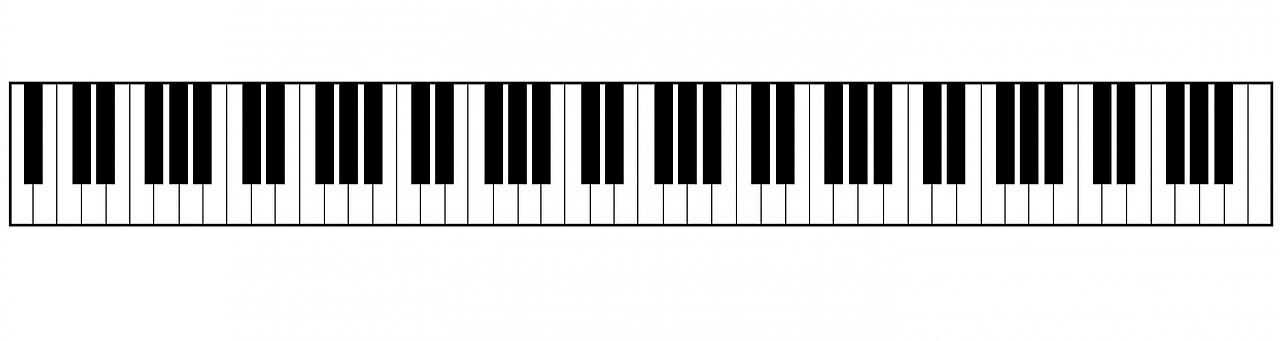
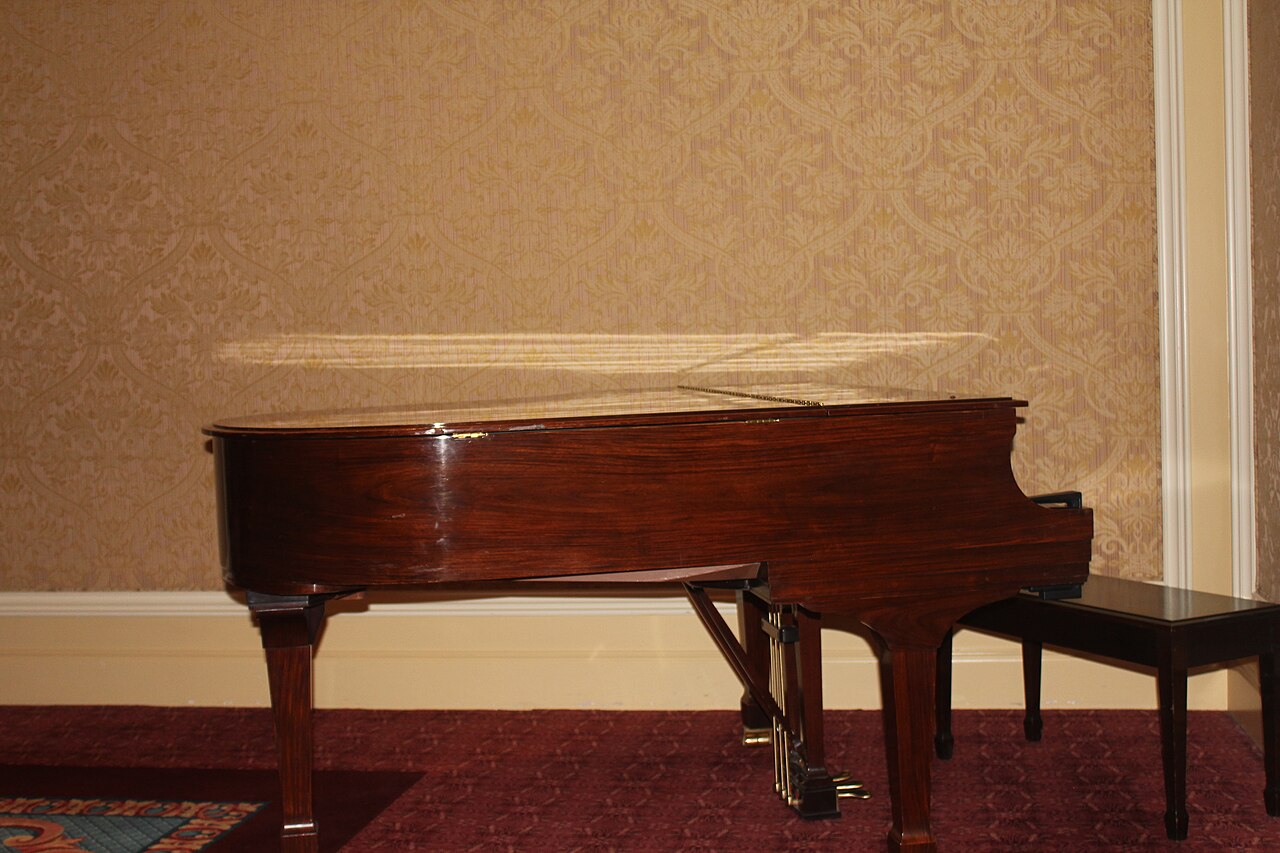
The piano is a keyboard instrument that produces sound when its keys are pressed, activating a mechanism where felt-coated wooden hammers strike strings. Modern pianos typically feature a row of 88 black and white keys, tuned to a chromatic scale in equal temperament, though some manufacturers produce instruments with a different number of keys. The two main types are the grand piano and the upright piano. The grand piano is generally preferred for its superior sound and more precise key control, making it a necessity in venues hosting skilled pianists, while the upright piano is more common due to its smaller size and lower cost.
Pedals
When a key is depressed, the hammers strike the strings, and the vibrations travel through a bridge to a soundboard, which amplifies the sound. Most notes have three strings, except in the bass register, which graduates from one to two. Releasing a key engages a damper that stops the string’s vibration, ending the sound. Pedals at the base of the instrument can lift the dampers off the strings, allowing notes to be sustained and enabling pianists to overlay sounds for expressive sonority.
History
The piano’s history traces back to earlier struck-string and keyboard instruments, including the Ancient Greek hydraulis, a pipe organ, and the hammered dulcimer from the Middle East. By the 17th century, the clavichord and harpsichord were well developed. The piano was invented in 1700 by Bartolomeo Cristofori of Padua, Italy, who designed a hammer mechanism that struck strings but then rebounded quickly, allowing notes to be repeated.
Further developments
His instrument was named un cimbalo di cipresso di piano e forte, later shortened to pianoforte and then piano. In the 19th century, influenced by Romantic music, the fortepiano evolved with a cast iron frame for greater string tensions and aliquot stringing for a more powerful sound and richer tone. As the piano became more common, families could play simplified versions of newly published music at home. The piano is widely used in classical, jazz, traditional, and popular music for solo and ensemble performances, accompaniment, composing, and rehearsals, and its versatility has made it a familiar instrument in the Western world.
Lore & Background
The piano is a keyboard instrument that produces sound when its keys are pressed, activating a mechanism in which felt-coated wooden hammers strike strings. Modern pianos typically have a row of eighty-eight black and white keys, tuned to a chromatic scale in equal temperament, though exceptions exist with certain manufacturers. The two main types are the grand piano and the upright piano; the grand offers superior sound and key control, making it preferred for venues hosting skilled pianists, while the upright is more common due to its smaller size and lower cost.
When a key is depressed, the hammer strikes the strings, and the vibrations travel through a bridge to a soundboard, which amplifies the sound by coupling acoustic energy to the air. Releasing the key activates a damper that stops the string’s vibration. Pedals at the base of the instrument can sustain notes by lifting the dampers off the strings, allowing pianists to connect and overlay sound for expressive sonority.
The piano’s range and dynamic control—where greater key pressure produces louder sound and stronger attack—derive from its invention in 1700 by Bartolomeo Cristofori, who designed a hammer mechanism that rebounds from the string to avoid damping. In the 19th century, the instrument evolved with a cast iron frame, enabling greater string tensions, and aliquot stringing for more powerful sound, longer sustain, and richer tone. The piano is widely used in classical, jazz, traditional, and popular music for solo and ensemble performances, accompaniment, composition, and rehearsal.
The Keyboard Family's Rich Tapestry
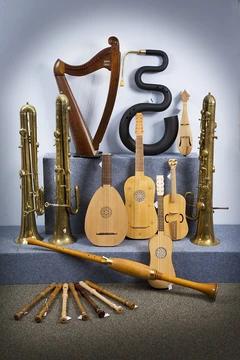
The keyboard category in this instrument catalog reveals a far broader world than most listeners imagine. Beyond the familiar piano, the list encompasses a remarkable spectrum of keyboard-based instruments spanning multiple continents and centuries. Accordion variants appear in several distinct forms—chromatic button, diatonic button, free bass, and the Austrian Schrammel and Steirische Harmonika types—each representing different regional playing traditions. The Hammond organ and electronic organ stand alongside the reed organ, while the Indian harmonium brings a South Asian voice into the collection.
Historical instruments like the virginals, claviorgan, and claviharp connect modern players to earlier keyboard traditions. The square piano and honky-tonk piano represent specific American musical contexts, while the minipiano and player piano showcase mechanical and compact innovations. The orchestron and physharmonica add further layers, demonstrating that the keyboard family is far from a single, unified lineage.
Glass, Water, and Unconventional Percussion
The 'other percussion instruments' section of this catalog is a fascinating collection of entries that defy conventional expectations of what percussion can be. Glass-based instruments dominate the list, including the glass harmonica, glass harp, and glasschord, each producing sound through the vibration of glass surfaces. Water plays a central role in several entries: the hydraulophone, sea organ, and the Japanese suikinkutsu all harness flowing water to create tonal effects.
The list also includes the waterphone, sênh tiền, silnyen, tetzilacatl, and toka, suggesting a widespread global tradition of using liquid or glass for melodic percussion. More unusual entries like the pyrophone, plasmaphone, and quintephone push the boundaries of what materials can produce structured sound. The shishi-odoshi from Japan and the monkey stick add playful, mechanical elements, while the jhyamta, khmuoh, kong chmol, and lau represent instruments tied to specific cultural traditions documented in this reference.
A Classification Framework for Sound
The structure of this instrument list follows the Hornbostel-Sachs classification system, which organizes all musical instruments into fundamental categories based on their primary sound-producing mechanism. The top-level divisions visible here include idiophones, membranophones, aerophones, chordophones, and electrophones.
This taxonomic approach means that a piano and a glass harmonica, though both capable of producing melodic lines, are classified in entirely different families. The 'see also' section further contextualizes the list by pointing readers toward medieval instruments, fictional instruments, folk music traditions, and the full Hornbostel-Sachs numbering system. This framework transforms what might appear to be a simple catalog into a window into how ethnomusicologists conceptualize the relationships between instruments across cultures, centuries, and technological eras.
Global and Historical Reach
The breadth of this instrument catalog reflects the extraordinary diversity of human musical invention across time and geography. Japanese contributions include the suikinkutsu water zither, the shishi-odoshi, and the yunluo, while the Indian harmonium anchors South Asian representation in the keyboard section.
The presence of instruments like the jhyamta, khmuoh, kong chmol, and lau suggests documentation of instruments from specific cultural traditions that might otherwise remain obscure to a general audience. The 'see also' references to medieval musical instruments and folk music traditions indicate that this list is part of a larger scholarly effort to preserve knowledge of instruments spanning many centuries. The inclusion of both ancient forms such as the virginals and claviorgan alongside modern electronic instruments like the electronic keyboard and electronic organ demonstrates how the keyboard tradition stretches from the early modern period into the digital age, encompassing everything from the square piano to the Hammond organ.
Common Misconceptions (Editorial)
One common misconception is that the piano was invented in the 18th century by a single person, which is true—Bartolomeo Cristofori is indeed credited as its inventor. Another is that the piano’s full name, “pianoforte,” refers simply to its ability to play both soft and loud, which is accurate, as the term originally comes from the Italian for “harpsichord with soft and loud.” No fact-supported misconceptions can be corrected here, as the provided facts align with common understanding.
Why It Matters (Editorial)
The piano endures as a cornerstone of Western and global music because it uniquely combines percussive force with lyrical expressiveness, allowing a single player to command both melody and harmony. Its versatility—from classical concertos to jazz improvisation and pop songwriting—ensures it remains an essential tool for composition, performance, and education across virtually every musical tradition.
Reader's Guide
Modern pianos typically feature 88 black and white keys, tuned to a chromatic scale in equal temperament, though exceptions exist in certain manufacturers. Two main types exist: the grand piano, which offers superior sound and precise key control and is considered essential in venues hosting skilled pianists, and the upright piano, which is more common due to its smaller size and lower cost. When a key is depressed, the hammer strikes the strings; vibrations travel through a bridge to a soundboard that amplifies the sound. Releasing the key engages a damper to stop the vibration.
Most notes have three strings, except the bass notes, which have one or two. Pedals at the base lift the dampers, allowing notes to sustain after key release, enabling pianists to connect and overlay sound for expressive sonority. Its versatility, extensive musician training, and availability in venues and schools have made it a familiar instrument in the Western world. Historically, the piano evolved from earlier struck-string and keyboard instruments, including the clavichord and harpsichord.
The English word "piano" derives from the Italian "pianoforte," meaning "soft and loud," reflecting its ability to produce variations in volume based on the pianist’s touch. Invented in 1700 by Bartolomeo Cristofori, the piano was the second keyboard instrument to allow gradations of volume and tone according to how forcefully the keys are pressed. Cristofori’s key innovation was a hammer mechanism that strikes the string and immediately rebounds, preventing dampening and allowing rapid note repetition. His early instruments had thin strings and were quieter than modern pianos but louder and with more sustain than the clavichord.
Did You Know?
- Holly Hunter collaborated extensively with a sign language instructor to create an amalgamated sign language for her character Ada.
- Anna Paquin won the role of Flora over 5,000 other girls.
- Principal photography took place over 12 weeks from February to mid-May 1992 in New Zealand's North Island.
- In July 2013, Campion revealed that she originally intended that the main character would drown in the sea after going overboard after her piano.
Frequently Asked Questions
How does The Piano actually produce sound?
Pressing a key triggers an internal action mechanism that swings a small hammer into a set of strings. The resulting vibration of those strings is what generates the audible tone.
How many keys does The Piano have?
A standard modern piano features 88 keys, though a few makers such as Bosendörfer and Stuart & Sons build models with extra keys beyond that count.
What are the main types of The Piano?
The two primary forms are the grand piano, which lays its string bed horizontally, and the upright piano, which stacks its strings vertically. Both rely on the same fundamental hammer-and-string mechanism.
More in Musical Instruments
Sources
Compiled from Wikipedia and the sources listed below. Text from Wikipedia is available under CC BY-SA 4.0; this entry is adapted from it.
- Wikipedia: Piano (CC BY-SA 4.0).
Spotted an error? Know more?
Reader corrections go straight into our review queue. Suggest an edit · How this site is sourced