The Violin
A 2005 Mexican drama film directed by Francisco Vargas.
Last updated

unknown, released with CC0 license by Smithsonian · CC0
The violin is a wooden chordophone, also commonly called a fiddle, and is the smallest and highest-pitched instrument, or soprano, regularly used within the violin family. While smaller variants like the violino piccolo and pochette exist, they are virtually never used.
Right hand and tone color
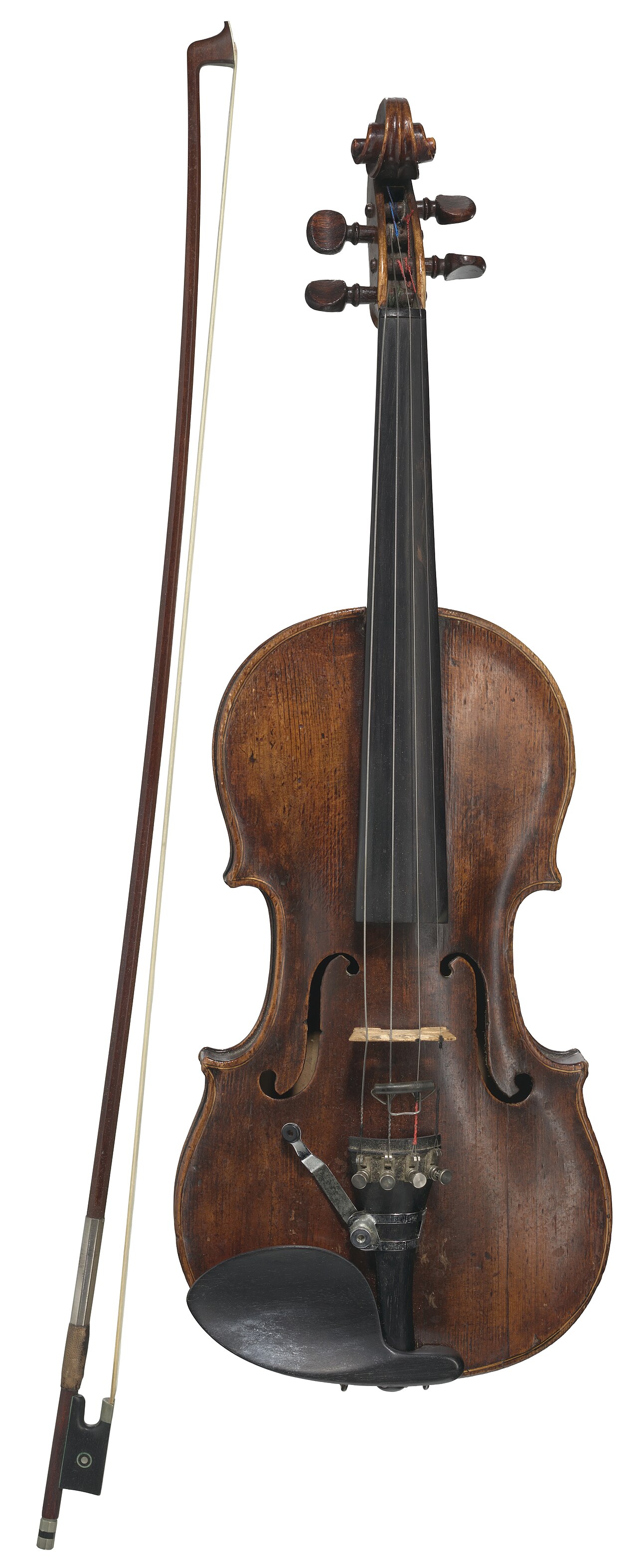
Most violins feature a hollow wooden body and typically have four strings, though some have five. These strings are usually tuned in perfect fifths to the notes G3, D4, A4, and E5. The instrument is most often played by drawing a bow across the strings, but it can also be played by plucking the strings with the fingers, a technique known as pizzicato, or, in specialized cases, by striking the strings with the wooden side of the bow, called col legno.
The violin holds a prominent place in a wide array of musical genres. It is especially central to the Western classical tradition, appearing in ensembles ranging from chamber music to full orchestras, as well as in solo performances. It is also vital in many folk music traditions, including country, bluegrass, and jazz.
Tuning
Electric violins, which have solid bodies and use piezoelectric pickups, are employed in some rock and jazz fusion music, with the pickups connected to amplifiers and speakers to produce sound. The instrument has also been adopted into many non-Western music cultures, such as those of India and Iran. The term "fiddle" is often used regardless of the musical style.
The violin first emerged in 16th-century Italy, with further modifications in the 18th and 19th centuries to enhance its power and projection. In Europe, it served as the basis for developing other Western classical string instruments, like the viola.
History
Violinists and collectors highly prize historical instruments made by the Stradivari, Guarneri, Guadagnini, and Amati families from the 16th to 18th centuries in Brescia and Cremona, Italy, as well as those by Jacob Stainer in Austria. The quality of sound from these instruments is reputed to defy explanation, though this belief is disputed. Many instruments also come from less famous makers, and a vast number of mass-produced "trade violins" originated from cottage industries in places like Saxony, Bohemia, and Mirecourt, formerly sold by mass merchandisers like Sears, Roebuck and Co.
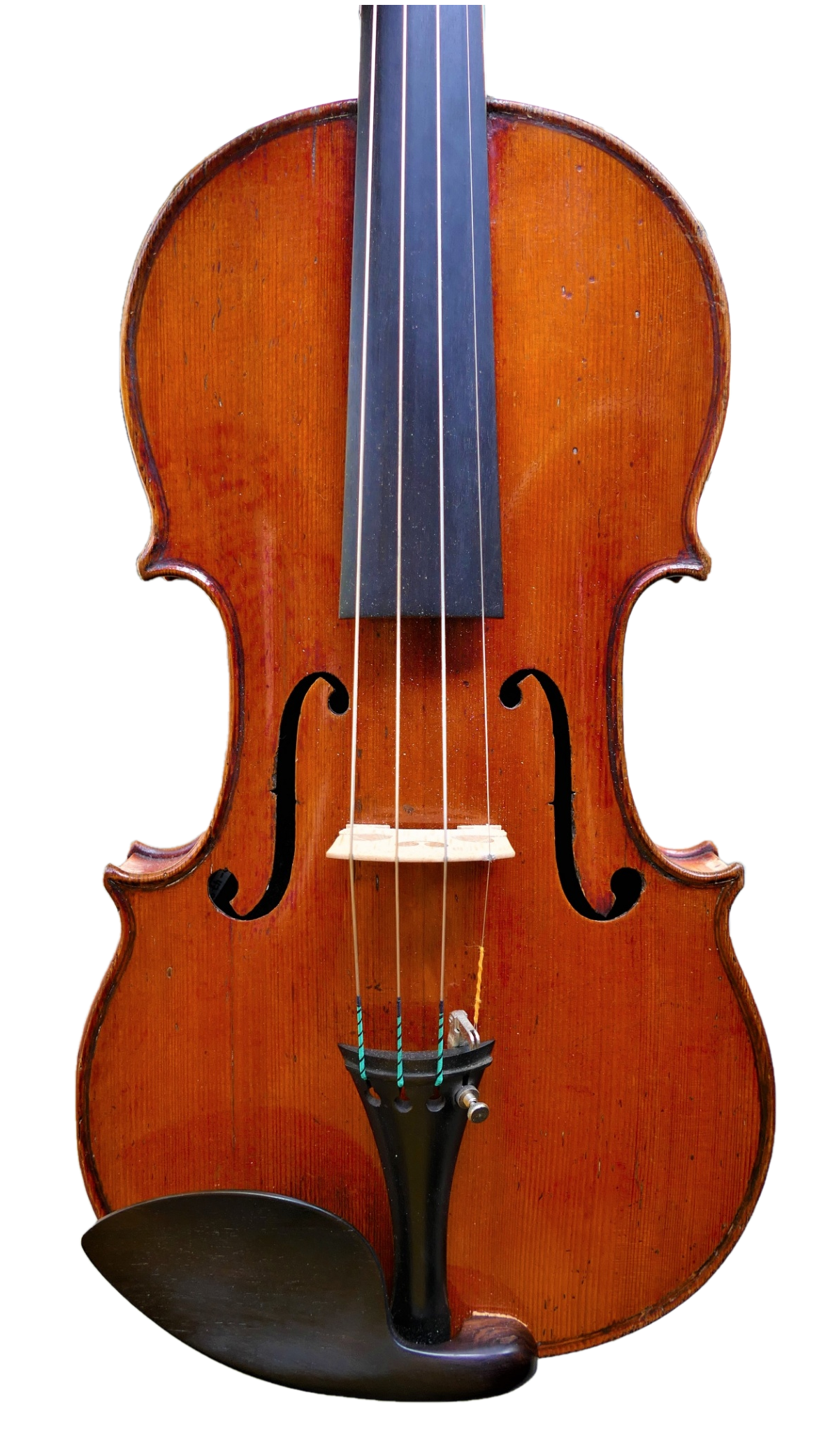
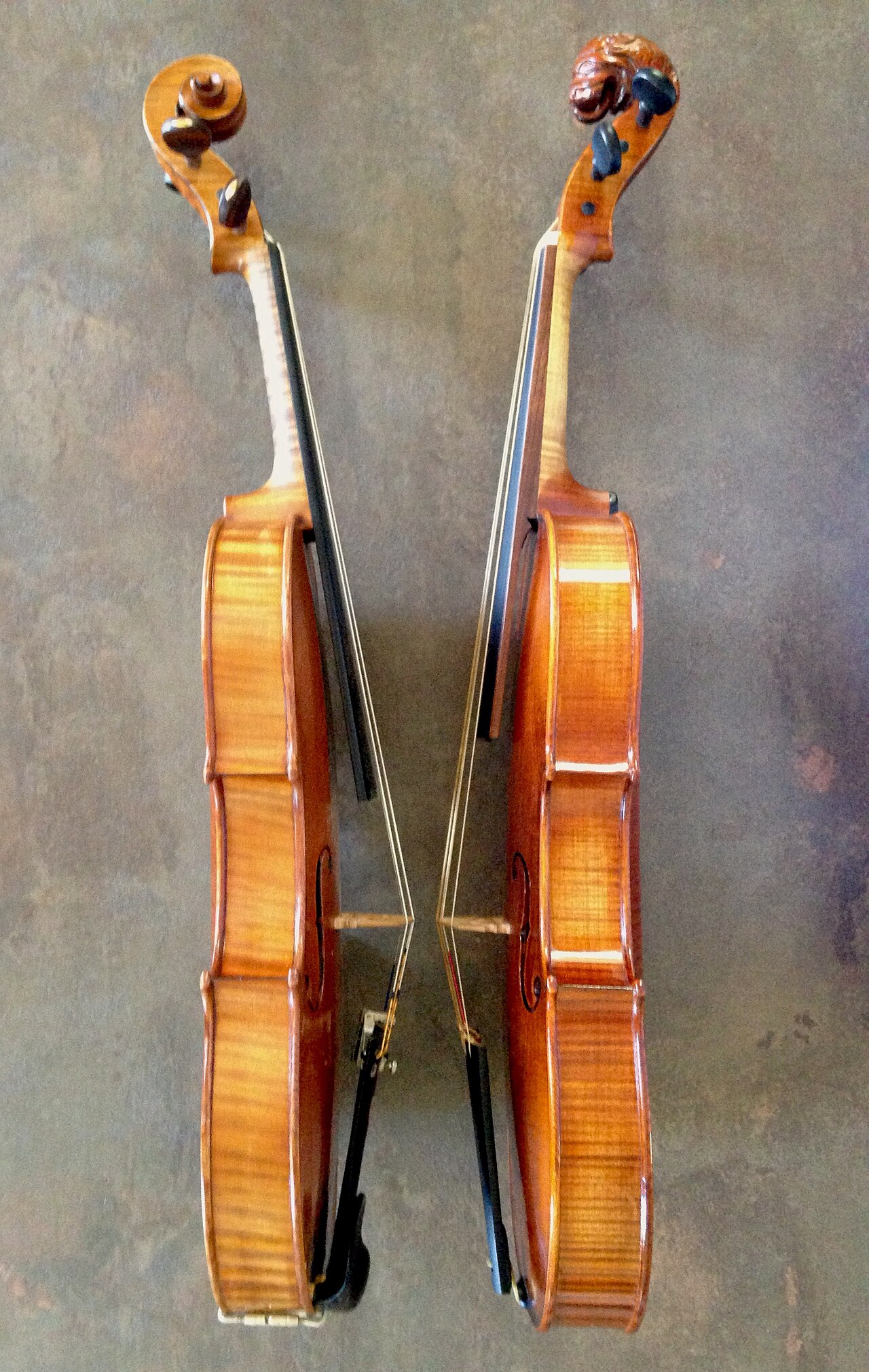
The components of a violin are usually made from different types of wood.
Lore & Background
The violin is a wooden chordophone and the smallest, highest-pitched soprano instrument in the violin family. Its hollow wooden body typically holds four strings, tuned in perfect fifths to G3, D4, A4, and E5, though five-string variants exist. While smaller types like the violino piccolo and pochette have been made, they are virtually unused.
The violin is most commonly played by drawing a bow across the strings, but it can also be plucked (pizzicato) or, in specialized cases, struck with the wooden side of the bow (col legno). Its components are usually made from different types of wood, and strings may be gut, Perlon or other synthetic, or steel. A maker or repairer is called a luthier or violinmaker; a bow maker is an archetier or bowmaker.
The instrument emerged in its present form in early 16th-century northern Italy, with further modifications in the 18th and 19th centuries to enhance power and projection. It served as the basis for other Western classical stringed instruments like the viola. Historically prized instruments come from the Stradivari, Guarneri, Guadagnini, and Amati families of 16th–18th century Brescia and Cremona, and from Jacob Stainer in Austria. Many mass-produced trade violins also originated from cottage industries in Saxony, Bohemia, and Mirecourt.
The violin is prominent across many musical genres: central to Western classical tradition in ensembles and as a solo instrument, and important in folk music such as country and bluegrass, as well as jazz. Electric violins with solid bodies and piezoelectric pickups are used in rock and jazz fusion. The instrument has also been incorporated into non-Western music cultures, including Indian and Iranian music. The term "fiddle" is used informally or in folk contexts regardless of musical style.
Origins & the Language of Names
The violin family traces its development to sixteenth-century Italy, where luthiers crafted a set of instruments they called viole da braccio — a label that set them apart from the separate viol family, known as viole da gamba. Some scholars suggest these Italian instruments drew partial inspiration from the lira da braccio and the older medieval Byzantine lira, though the exact lineage remains debated.
Every name in the family descends from the root word viola, itself a descendant of the Medieval Latin vitula, a general term for any stringed instrument. The naming logic is almost playful: a violin is simply a "little viola," a violone a "big viola," and the violoncello — the word most people shorten to "cello" — literally means a "small big viola." The violone, despite its evocative name, does not belong to the modern family; the double bass has occupied that lowest register instead, carrying a blend of both violin and viol design traits. This etymological thread ties every member of the family to a single ancient concept of strung sound.
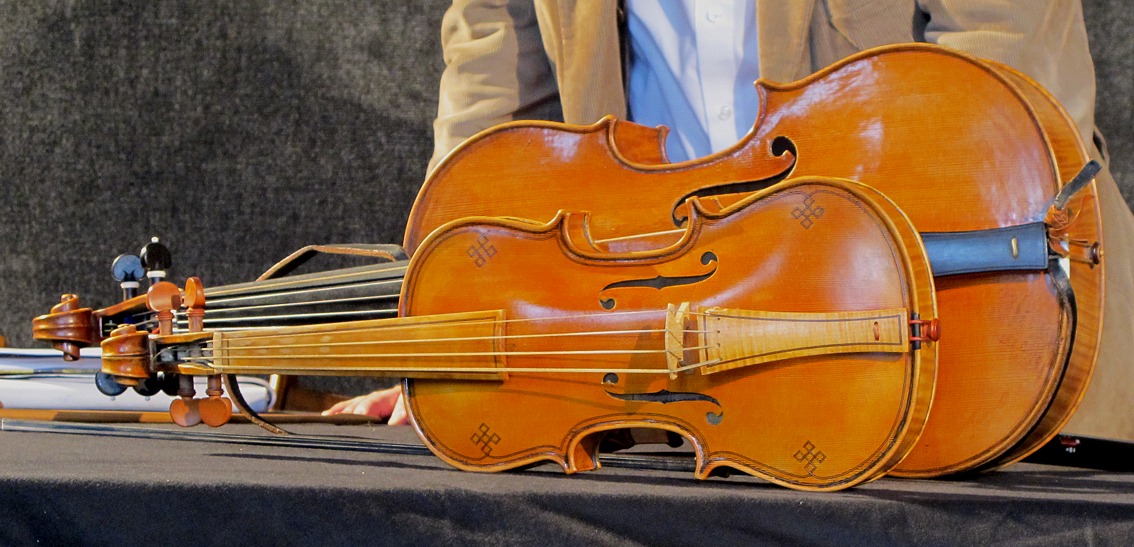
Craft, Materials & the Question of the Double Bass
Each instrument in the violin family is built around a consistent internal architecture: a sound post and a bass bar work together inside the body to project and shape the sound. The top plate is carved from spruce and made thinner toward the edges than at the center, while the back is most often fashioned from maple, though some baroque-era examples used poplar or willow. The neck, bridge, and ribs are typically maple, and the nut is frequently ebony.
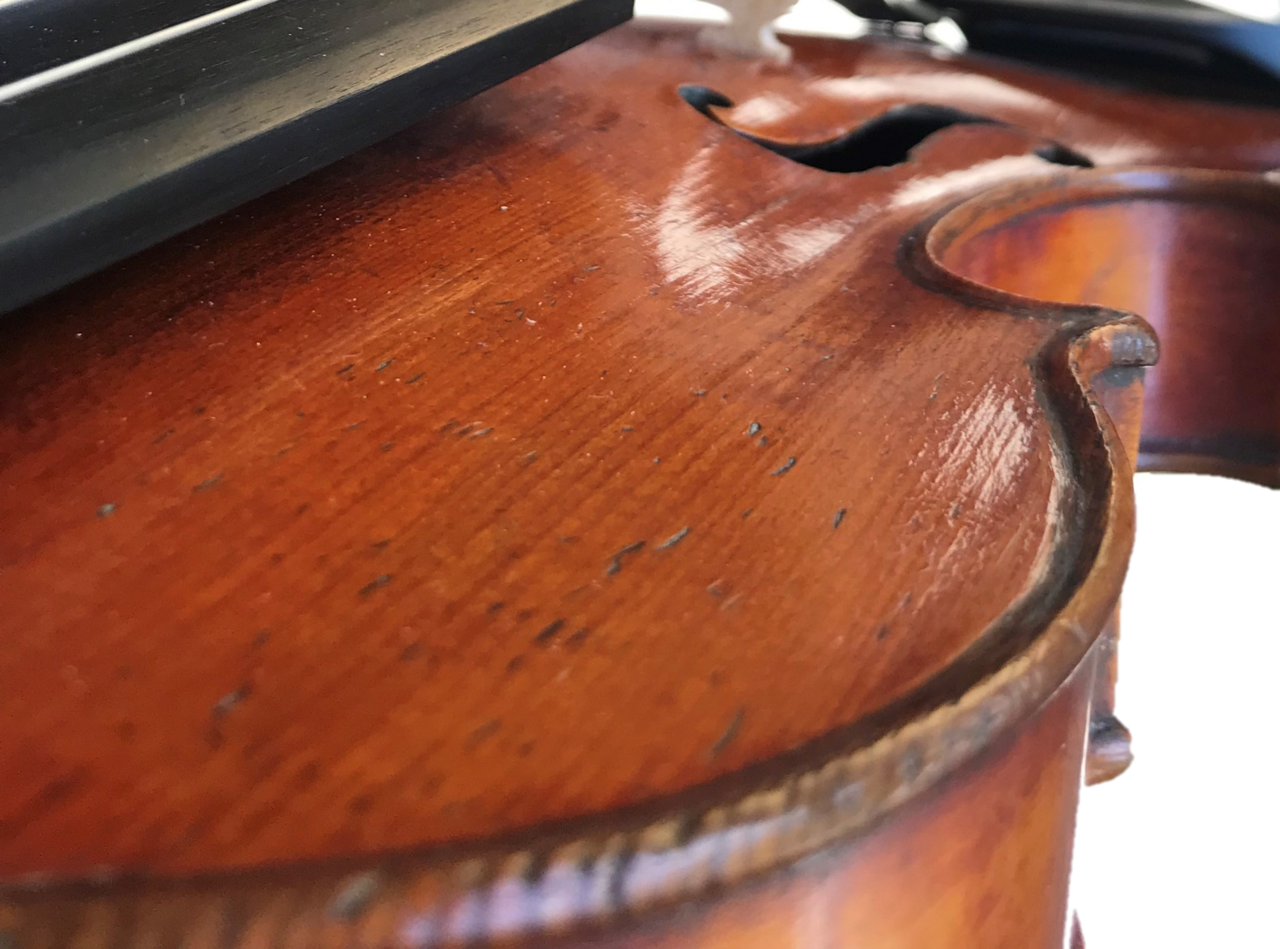
Externally, family members share four rounded bouts, unfretted fingerboards, and four strings tuned in fifths — with the double bass as the exception, tuned in fourths. These traits clearly separate them from the viol family, whose instruments usually carry five or six strings, feature fretted fingerboards, are tuned in fourths and thirds, and often display sloping shoulders without a sound post or bass bar. The double bass's ancestry is the family's most contested question: its sloping shoulders, occasional extra strings, and sometimes flat back echo viol design, yet its internal construction aligns it firmly with the violin lineage.
Ranges, Posture & the Physical Ladder
The four members of the violin family occupy overlapping pitch territories, yet each is set apart by its size and the character of its tone. The violin's practical range stretches from G3 up to E7, with notes as high as A7 possible under skilled hands. The viola, slightly larger and held under the jaw just like the violin, reaches a perfect fifth lower, covering C3 to A6. The cello sits between the player's knees while seated, extending an octave below the viola to a conservative C2–A5 span.
The double bass, played standing or on a stool, descends a minor sixth, an octave, or even a ninth below the cello, typically spanning E1 to C5. For players who need even deeper territory, the double bass can be fitted with a mechanical extension or a fifth string, pushing the lower limit down to C1 or B0. This physical ladder — from the chin-rested violin to the towering bass — creates a seamless continuum of sound where each instrument hands its voice to the next without a gap.
The String Quartet & Beyond the Classical Stage
Today the violin family dominates the world of bowed strings, appearing in classical ensembles, jazz combos, rock bands, electronic productions, and folk traditions. The violin in particular finds a home in fiddle, country, and folk music, while the double bass remains indispensable in both classical and jazz settings. In popular genres, family members are often amplified or built as electric instruments to cut through louder mixes. Perhaps the most celebrated application is the string quartet — two violins, one viola, and one cello — a grouping so standardized in chamber music that it has become a benchmark for tonal unity.
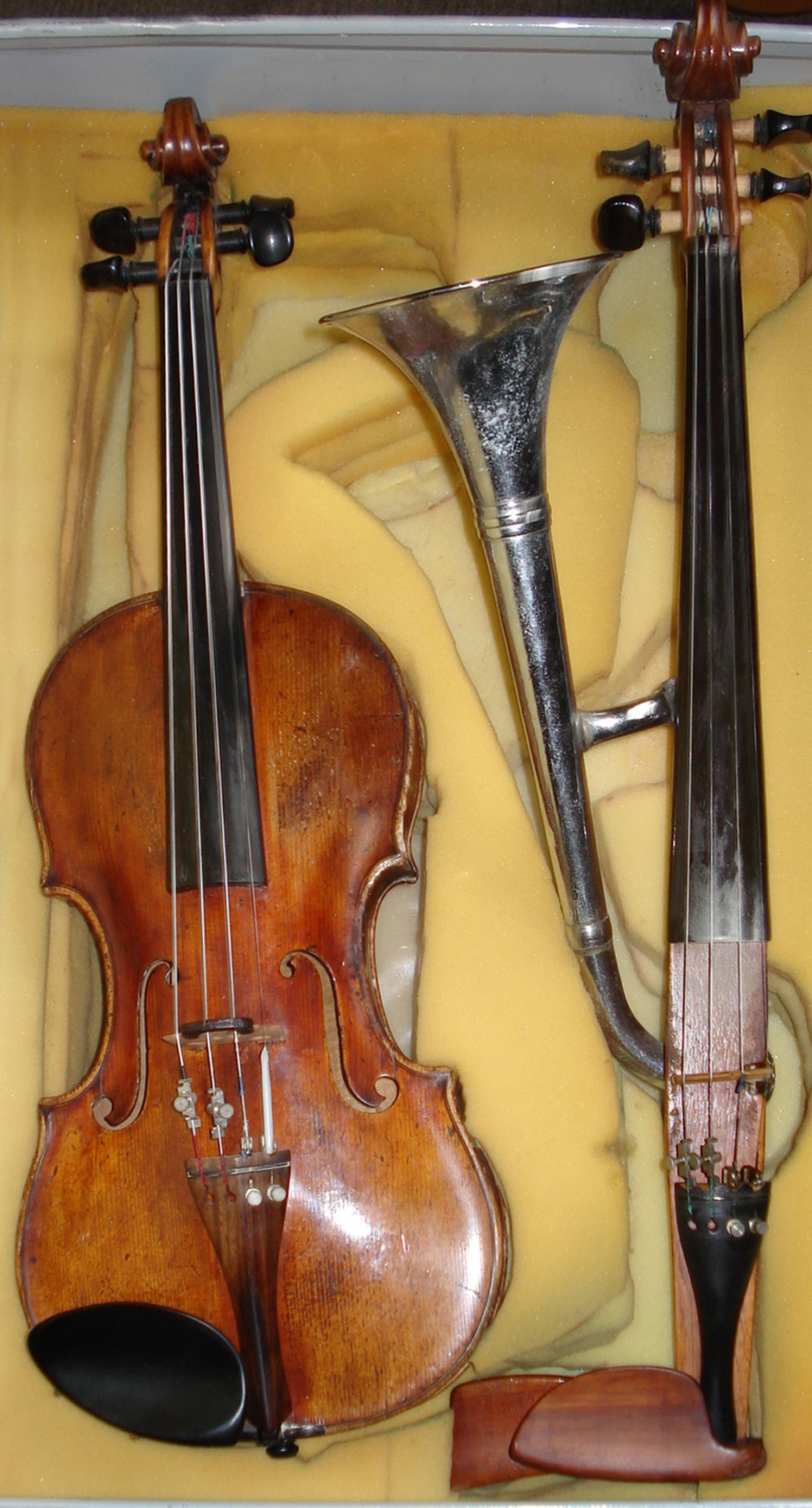
Because all four instruments share the same method of sound production, their timbres blend with a naturalness that mixed-instrument ensembles struggle to match. A wind quintet, for instance, unites four fundamentally different ways of generating pitch, making seamless blending far more challenging. Even the octobass, a rarely played nineteenth-century giant of the double bass that requires a system of levers to reach its strings, has appeared in Romantic-era scores, reminding us that the family's reach extends beyond the familiar quartet.
Common Misconceptions (Editorial)
Some people mistakenly believe the violin has five strings as standard; however, the facts confirm it commonly has four strings (though sometimes five). Others may think it emerged much earlier or in a different region, but the recorded facts state it appeared in its present form in early 16th-century northern Italy.
Why It Matters (Editorial)
The violin endures because it bridges centuries of classical tradition with the raw energy of folk and global music, remaining both a pinnacle of technical mastery and a tool for personal expression. Its capacity for intimacy and power—whether through a bow, a pluck, or a percussive strike—keeps it relevant across genres and cultures, proving that an instrument from 16th-century Italy can still sound utterly contemporary.
Reader's Guide
The violin is a wooden chordophone and the smallest, highest-pitched soprano instrument in the violin family, though smaller types like the violino piccolo and pochette exist but are rarely used. It typically has four strings tuned in perfect fifths to G3, D4, A4, and E5, and is most often played with a bow, though pizzicato (plucking) and col legno (striking with the bow’s wood) are also employed. The instrument is central to Western classical music, appearing in chamber ensembles and orchestras as well as solo performances, and is also vital in folk genres such as country, bluegrass, and jazz. The violin has been adopted into non-Western traditions, including Indian and Iranian music, and is often called a fiddle regardless of musical style.
Etymology
Originating in 16th-century Italy, it underwent modifications in the 18th and 19th centuries to enhance power and projection, and served as the basis for other Western classical string instruments like the viola. Historically prized instruments come from makers such as the Stradivari, Guarneri, Guadagnini, and Amati families of 16th–18th-century Italy, and Jacob Stainer of Austria, though many mass-produced trade violins were made in Saxony, Bohemia, and Mirecourt. The violin’s components are usually made from different woods, and strings can be gut, synthetic, or steel. The word “violin” entered English in the 1570s from Italian, a diminutive of viola, which traces to Medieval Latin, possibly from the Roman goddess Vitula or a verb meaning to cry out in joy.
“Fiddle” appeared in English in the late 14th century, likely from Medieval Latin. The violin’s earliest ancestors include the rebec, fiddle, and lira da braccio, with influences from the Byzantine lyra and Central Asian bowed instruments. The modern form emerged in early 16th-century northern Italy, with the earliest three-string depictions around 1530 and the first explicit description and tuning in a 1556 French publication. The instrument quickly became popular among street musicians and nobility; the French king Charles IX ordered 24 violins from Andrea Amati in 1560, and the oldest surviving violin, the Charles IX, is held in Oxford’s Ashmolean Museum.
Did You Know?
- The film was screened in the Un Certain Regard section at the 2006 Cannes Film Festival.
- Ángel Tavira won the award for Best Male Performance at the 2006 Cannes Film Festival.
- The film won the Grand Prize in 2007 at the Miami International Film Festival.
Frequently Asked Questions
What are The Violin's standard tuning and string count?
Its four strings are tuned to G3, D4, A4, and E5, each interval a perfect fifth apart. A minority of players add a fifth string to extend the instrument's range beyond the standard setup.
How is The Violin actually played?
The dominant technique is drawing a bow across the strings, but performers also pluck the strings by hand (pizzicato) or strike them with the wooden back of the bow (col legno) to produce contrasting timbres.
Who are the most celebrated luthiers in The Violin's history?
Stradivari, Guarneri, Guadagnini, Amati, and Jacob Stainer are the names most associated with the instrument's finest craftsmanship. Instruments from these workshops remain extremely prized by both performers and collectors.
Where and when did The Violin first emerge?
The instrument took on its recognizable modern shape in early 16th-century northern Italy. From that origin it spread throughout Europe and eventually became a cornerstone of musical culture around the world.
More in Musical Instruments
Sources
Compiled from Wikipedia and the sources listed below. Text from Wikipedia is available under CC BY-SA 4.0; this entry is adapted from it.
- Wikipedia: Violin (CC BY-SA 4.0).
Spotted an error? Know more?
Reader corrections go straight into our review queue. Suggest an edit · How this site is sourced