The Saxophone
Last updated

Amati Kraslice · CC BY-SA 4.0
The saxophone is a single-reed woodwind instrument with a conical brass body, and sound is produced by a vibrating reed on a mouthpiece.[1] The player alters the pitch by using keys to press leather pads against holes, which changes the tube's effective length.[1]
How it changed
Interest in the saxophone as a classical instrument waned in the late nineteenth century after an early period of support.[2] Selmer revolutionized the left hand table mechanics with their Balanced Action instruments in 1936.[3] Adolphe Sax, a Belgian who made instruments, created the saxophone and received a patent for it on June 28, 1846, after initial work in the early 1840s.[4] The instrument Sax devised featured a conical brass body and a single-reed mouthpiece.[2]
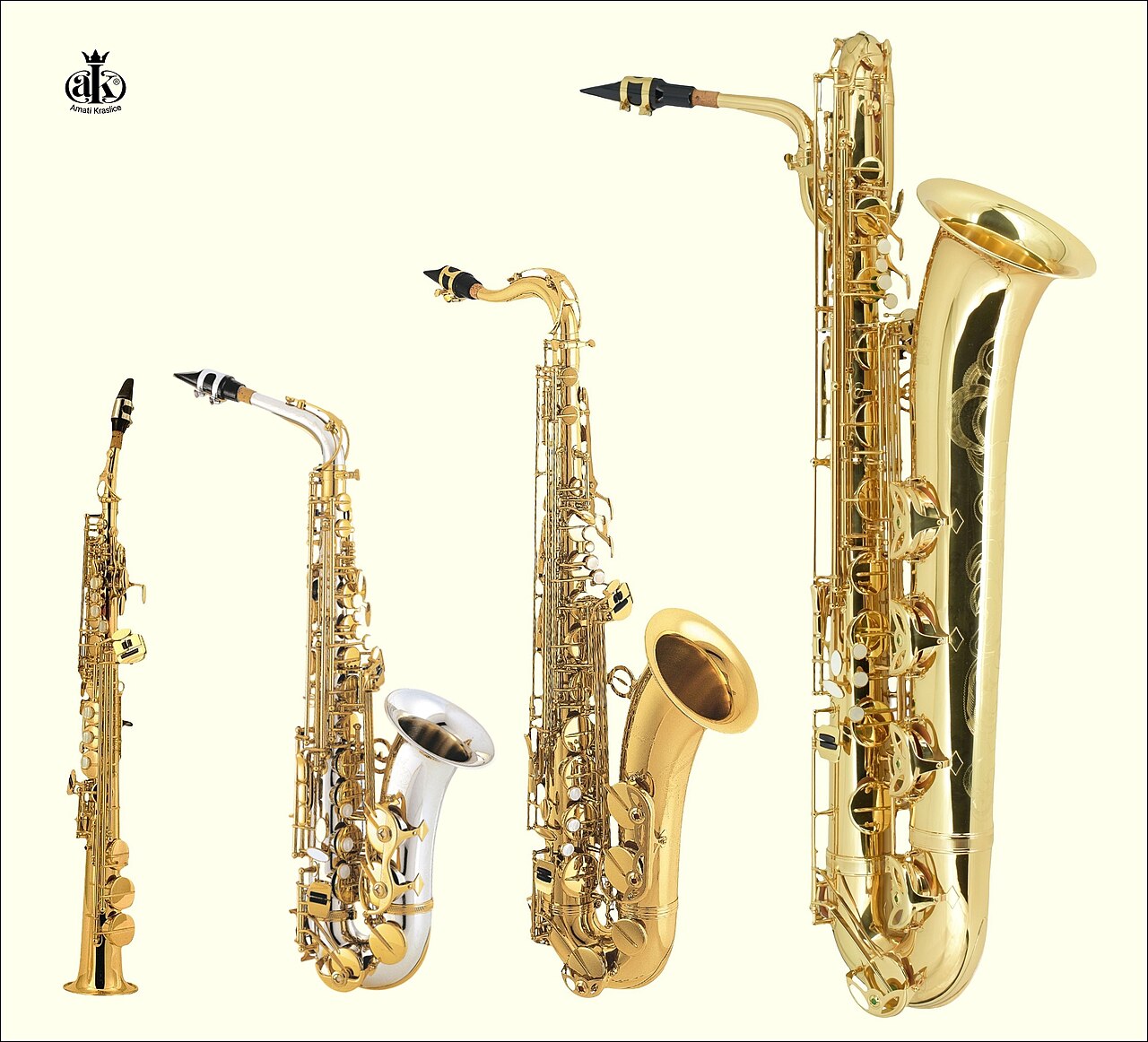
Sax's 1846 patent covered 14 different versions of his basic design, which spanned from sopranino to contrabass sizes.[2] From 1870 to 1900, the Paris Conservatory stopped teaching saxophone, leading to a period of stagnation for classical saxophone repertoire.[2] During the 1930s and 1940s, the saxophone's modern key layout developed, starting with C. G. Conn placing bell keys on the right side of baritones, followed by King doing the same for altos and tenors.[3]
What the maker and period sources say
In the 1980s, Yanagisawa brought back the use of sterling silver and later created instruments made completely from that material.[6] To produce a "darker", more "vintage" sound, Yanagisawa used phosphor bronze, a high copper alloy, in its 902 and 992 series saxophones.[7]
References
- Wikipedia, "Saxophone" (CC BY-SA 4.0), which cites: Cottrell, "The Saxophone (Yale Musical Instrument Series)", Yale Musical Instrument Series, 2013 (original not read by us) en.wikipedia.org
- Wikipedia, "Saxophone" (CC BY-SA 4.0), which cites: "Adolphe Sax", BassSax.com (original not read by us) en.wikipedia.org
- Wikipedia, "Saxophone" (CC BY-SA 4.0), which cites: "History Notes #09: The Super Action", Henri Selmer Paris (we also read that source) en.wikipedia.org
- Wikipedia, "Saxophone" (CC BY-SA 4.0), which cites: Raumberger, Ventzke, "Archived copy", 2001 (we also read that source) en.wikipedia.org
- Wikipedia, "Saxophone" (CC BY-SA 4.0), which cites: "T9937", Yanagisawa website; "PMST-60NS", Paul Mauriat website (original not read by us) en.wikipedia.org
- Wikipedia, "Saxophone" (CC BY-SA 4.0), which cites: "Yanagisawa Saxophones" (original not read by us) en.wikipedia.org
Each numbered sentence above was checked against the source it cites before publication. Sentences citing Wikipedia adapt text from the English Wikipedia article Saxophone (contributors), used under CC BY-SA 4.0; this entry is available under the same licence. Other sources were used for facts only.
More in Musical Instruments
Sources
Compiled from Wikipedia and the sources listed below. Text from Wikipedia is available under CC BY-SA 4.0; this entry is adapted from it.
- Wikipedia: Saxophone (CC BY-SA 4.0).
Spotted an error? Know more?
Reader corrections go straight into our review queue. Suggest an edit · How this site is sourced