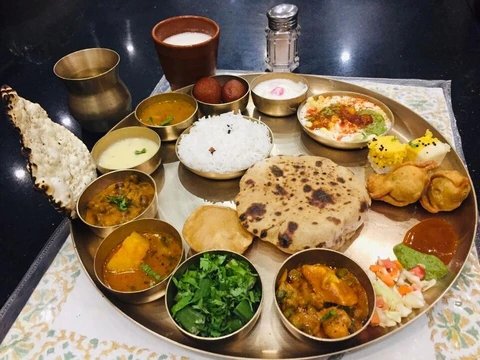
Boka Chaul
A soft-textured rice from Assam, soaked not cooked.

Boka Chaul is a short-grained rice variety primarily cultivated in the Indian state of Assam, particularly across the Lower Brahmaputra Valley Zone. This region includes the districts of Dhubri, Kokrajhar, Chirang, Bongaigaon, Goalpara, Barpeta, Nalbari, Baksa, Kamrup Rural, Kamrup Metropolitan, Darrang, and Udalguri. The term "Boka Chaul" refers to a specific type of parboiled rice, made by parboiling whole grains of a winter rice variety known as Boka dhan. To prepare it for eating, simply soaking the kernels in cold water at room temperature is enough.
The name "Boka Chaul" comes from the Assamese language, where "Boka" means "mud" and "Chaul" means "rice," literally translating to "soft rice" and reflecting its tender texture. Sometimes called "Magic Rice," it develops a soft, cooked-like consistency after just a few minutes of soaking in tepid water, thanks to its low amylose content—the starch that usually makes rice grains firm. This rice is widely grown in the Lower Brahmaputra Valley Zone, an area rich in sediment deposits. Historically, during the 17th century, Ahom soldiers ate it for sustenance while fighting the invading Mughal army. Today, it is commonly prepared as a breakfast dish called Boka chaular Jalpan, often served with curd, jaggery, or other sides.
Boka Chaul received a Geographical Indication (GI) tag from the Geographical Indications Registry under the Union Government of India on 31 July 2018, valid until 31 July 2028. The application for this GI status was filed in July 2018 by Lotus Progressive Centre (LPC) and the Centre for Environment Education (CEE), both based in Guwahati, and the tag was granted in 2023 by the Geographical Indications Registry in Chennai. This designation makes the name "Boka Chaul" exclusive to rice grown in that region. It is one of several Assam rice varieties to earn a GI tag, alongside others like Joha rice, Komal Saul, and Chokuwa. The GI tag safeguards the rice from illegal selling and marketing, providing it with legal protection and a distinct identity.
Quick Facts
- Description
- Boka Chaul is a rice variety cultivated in Assam
- Area
- Assam
- Country
- India
- Registered
- 30 July 2018
- Official Website
- https: · search.ipindia.gov.in/GirPublic/Application/Details/558 · ipindia.gov.in
Facts from the source article.
Lore & Background
Boka Chaul, literally translated as 'soft rice' in Assamese, derives its name from the word 'Boka' meaning 'mud' – reflecting the soft texture of the rice, while 'Chaul' means rice. It is sometimes described as the 'Magic Rice', which gains a soft, cooked rice-like texture when soaked in tepid water for a few minutes. This is the product of its low amylose content, the starch responsible for the firmness of rice grains. Boka Chaul is widely cultivated in the Lower Brahmaputra Valley Zone, which has high amounts of sediments.
Reader's Guide
Boka Chaul holds significance as a traditional rice variety of Assam, noted for its unique property of becoming soft and edible simply by soaking in cold or tepid water, without cooking. This characteristic, due to its low amylose content, made it a convenient sustenance food for Ahom soldiers fighting the invading Mughal army in the 17th century. Today, it is made into a breakfast called Boka chaular Jalpan, eaten with curd, jaggery, or other accompaniments. Its legacy was formally recognized when it was awarded the Geographical Indication (GI) status tag from the Geographical Indications Registry, under the Union Government of India, on 30 July 2018, valid until 24 July 2026. The GI tag protects the rice from illegal selling and marketing, giving it legal protection and a unique identity. It became the second rice variety from Assam after Joha rice and the seventh type of goods from Assam to earn the GI tag.
Did You Know?
- Boka Chaul is produced by parboiling whole grains of a winter rice variety called Boka dhan.
- In the 17th century, it was eaten for sustenance by Ahom soldiers while fighting the invading Mughal army.
More in Indian cuisine 1-24
Spotted an error? Know more?
Reader corrections go straight into our review queue. Suggest an edit · How this site is sourced