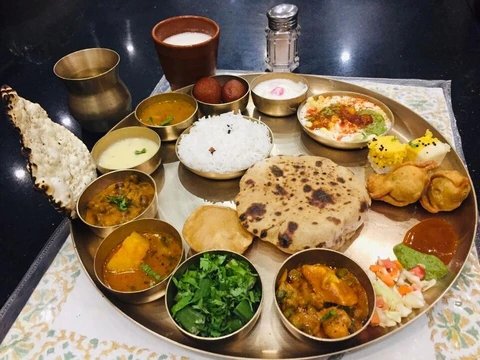
Ajara Ghansal rice
Aromatic non-Basmati rice from Maharashtra's Ajara taluka.

Ajara Ghansal rice is a traditional, aromatic, non-Basmati rice variety mainly grown in the Indian state of Maharashtra, specifically in Ajara taluka of Kolhapur district. It is named after the Ajara region, with 'Ghan' meaning aroma and 'Sal' meaning elegantly thin in the local language. This rice is prized for its distinct aroma, taste, and nutritional value, and is a common and widely cultivated crop in the area.
Quick Facts
- Description
- Ajara Ghansal is an aromatic rice cultivated in Maharashtra
- Area
- Ajara taluka, Kolhapur
- Country
- India
- Registered
- 31 March 2016
- Official Website
- https: · search.ipindia.gov.in/GirPublic/Application/Details/470 · ipindia.gov.in
Facts from the source article.
Lore & Background
Ajara Ghansal rice is a traditional indigenous variety from Maharashtra, known for its distinctive aroma and creamy white, short bold grains. The rice is cultivated in Ajara Taluka, which is nestled amidst hills and relies on rainwater coming down from hill slopes. The nearby Hiranyakeshi river, just 5 km away, helps maintain optimal soil moisture for ideal growing conditions. Its aroma is attributed to a complex blend of compounds including alcohols, aldehydes, and esters. The rice has a firm, tender, and non-sticky texture with no chalkiness, and its elongation ratio is around 1.2–1.5, which is lower than that of Basmati rice.
Reader's Guide
Ajara Ghansal rice holds significance as a prized local crop of Ajara taluka in Maharashtra, India. It is widely cultivated and used in traditional Maharashtrian dishes, especially during special occasions such as marriage ceremonies and festivals. Industrially, it is suitable for making puffed rice (Murmure), edible oil extraction from rice bran, and utilizing paddy straw in mushroom cultivation. The rice was awarded a Geographical Indication (GI) tag on 31 March 2016, valid until 25 March 2034, making it the first rice variety from Maharashtra to receive this status before Ambemohar, and the 11th type of goods from the state to earn the GI tag. The GI registration was proposed by Ajara Taluka Shetkari Vikas Mandal from Ajara, with the application filed in March 2014. This recognition ensures that the name 'Ajara Ghansal rice' is exclusive to rice grown in the region, protecting its unique identity and supporting local farmers.
Did You Know?
- Ajara Ghansal rice is a non-Basmati aromatic rice variety mainly grown in Ajara taluka of Kolhapur district, Maharashtra.
- It received a Geographical Indication tag on 25 March 2021, with Ambemohar rice being the first from Maharashtra to earn that distinction.
- The rice has an elongation ratio of around 1.2–1.5, which is lower than Basmati rice's typical elongation ratio of 2.0 or more.
Origins & The Story Behind the Name
Ajara Ghansal rice is a non-Basmati aromatic variety with deep roots in the Indian state of Maharashtra, where it is a common and widely cultivated crop in the Ajara taluka of Kolhapur district. The variety takes its identity directly from this region, reflecting how closely the grain is tied to the land that produces it. In the local language, the name carries two meaningful descriptors: "Ghan" conveys the idea of aroma, while "Sal" refers to an elegantly thin quality, together painting a picture of a fragrant, slender-grained rice. Among local farmers and households, the crop is most often called Ajara Ghansal Tandul, or simply Ghansal Tandul. The word "Tandul" is the Marathi term for rice itself, underscoring that this is a grain rooted in the linguistic and agricultural heritage of the state. Far from being a commercial import or a laboratory creation, Ajara Ghansal is an indigenous variety nurtured across generations in the hilly terrain of western Maharashtra, where the rhythms of monsoon and soil have shaped its character.
Grain Profile & The Science of Aroma
Physically, Ajara Ghansal presents as a short, bold grain with a creamy white appearance and a distinctive 3.61-to-5.5 millimetre length-to-width ratio. What sets it apart in the bowl is its texture: firm yet tender, with a notably non-sticky quality and an absence of the chalkiness that plagues many other rice varieties. Its elongation ratio after cooking is actually significantly higher than that of Basmati rice, a surprising trait for a non-Basmati grain. The variety's celebrated fragrance is not a single compound but a complex interplay of alcohols, aldehydes, and esters working together to create a layered aroma that distinguishes it on the plate. The growing environment also plays a vital role. Ajara taluka sits nestled among hills, and the rainwater cascading down the slopes feeds the paddies. Just five kilometres away, the Hiranyakeshi river helps maintain the optimal soil moisture levels the crop needs to thrive, giving the grain its characteristic flavour and nutritional profile.
From the Kitchen to the Factory Floor
Ajara Ghansal rice occupies a special place in Maharashtrian culinary tradition. It is the preferred grain for classic regional dishes and is typically served during significant life events such as marriage ceremonies and festivals, where its aroma and texture elevate the meal beyond the everyday. Beyond the home kitchen, the variety has practical industrial applications that extend the value of every part of the paddy. The rice is well suited to producing Murmure, the puffed rice snack familiar across India. The rice bran can be processed for edible oil extraction, adding an economic layer to the crop. Even the paddy straw, often a by-product, finds purpose in mushroom cultivation, where it serves as a growing medium. This versatility means a single harvest from the hills of Ajara taluka can feed a family's celebration, supply a snack industry, contribute to the edible oil market, and support a mushroom farm. The rice is thus not merely a food ingredient but a multi-purpose agricultural product woven into both household ritual and small-scale industry.
Earning the Geographical Indication
In March 2014, the Ajara Taluka Shetkari Vikas Mandal, a local farmers' development body, filed an application to secure formal recognition for the rice that had been a local staple for generations. Two years later, on 31 March 2016, the Geographical Indications Registry under India's Union Government, operating out of Chennai, granted the GI tag to Ajara Ghansal rice, with the registration valid until 25 March 2034. This milestone made Ajara Ghansal the first rice variety from Maharashtra to receive such protection, preceding the well-known Ambemohar. It also marked the eleventh category of goods from the state to earn a GI designation. The practical effect of the tag is that the name "Ajara Ghansal rice" is now legally exclusive to grain grown in that specific region of Kolhapur district. For the farming community of Ajara taluka, the recognition validates centuries of traditional cultivation, protects the variety from being diluted or mislabelled elsewhere, and anchors the crop's identity to the hills, the river, and the rain-fed paddies that make it what it is.
Frequently Asked Questions
What is Ajara Ghansal rice?
It is a traditional, short-grain, non-Basmati rice from Maharashtra, India, celebrated for its strong natural aroma and firm, non-sticky bite. The grains are creamy white and noticeably bold, measuring roughly a 3.61-to-5.5 mm ratio.
Where is Ajara Ghansal rice actually grown?
It is cultivated in the Ajara taluka within Kolhapur district in the state of Maharashtra. The variety takes its name directly from that specific local region.
What do the words 'Ghansal' mean in the name?
In the local language, 'Ghan' points to the rice's distinctive aroma and 'Sal' describes its elegantly thin grain shape. The name essentially bakes the variety's two most prized qualities into a single word.
How does Ajara Ghansal differ from Basmati rice?
Unlike Basmati's long, slender grains, Ajara Ghansal is short and bold with a tender, firm texture and zero chalkiness. Its fragrance comes from a specific blend of alcohols, aldehydes, and esters rather than the aromatic compounds typical of Basmati.
Does Ajara Ghansal rice carry any official certification?
Yes, it was granted a Geographical Indication tag on 31 March 2016, valid through 25 March 2034. This GI registration legally anchors the name to rice produced specifically in the Ajara taluka area of Kolhapur.
More in Indian cuisine 1-24
Spotted an error? Know more?
Reader corrections go straight into our review queue. Suggest an edit · How this site is sourced