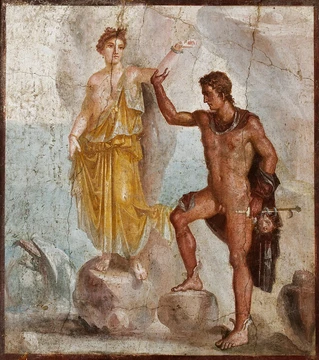
Macaria (daughter of Heracles)
Daughter of Heracles who sacrificed herself for Athens.
Macaria is a daughter of the divine hero Heracles in Greek mythology. She is notable for voluntarily offering herself as a human sacrifice to save her family and the city of Athens from King Eurystheus.
Quick Facts
- Father
- Heracles
- Spring named after her
- Macaria
- Died
- Sacrificed in Athens
- Field
- Greek mythology
Facts from the source article.
Mythology
In the play Children of Heracles by Euripides, Macaria flees with her siblings Alcmene and Iolaus from King Eurystheus, who seeks to kill all of Heracles' children. They find shelter in Athens at the court of King Demophon. Eurystheus demands their surrender, but Demophon refuses, even under threat of war. An oracle foretells that the Athenians will only be victorious if a maiden of noble birth is sacrificed to Persephone, queen of the Underworld. Macaria learns of this from Iolaus and willingly volunteers, reasoning that dying on the altar is more noble than living as a coward who doomed a city. Iolaus suggests drawing lots, but Macaria insists she should die. Demophon leads her away to be sacrificed as she says her final farewells. In other authors, Heracles moved with his family to Trachis under King Ceyx, who advised them to flee to Athens, where Theseus offered shelter. After her death, the Athenians honored Macaria with expensive funeral rites, and a spring in Marathon was named after her.
Culture
The earliest known account of Macaria comes from Euripides, who may have drawn on an older Athenian story or the playwright Aeschylus. A proverb linked to her appears in the 10th-century Byzantine lexicon Suda: "be gone in blessedness," a euphemism for those whose bravery put them in danger. The Greek sophist Zenobius noted this phrase originally honored valiant self-sacrificers like Macaria.
More in Human Sacrifice in Folklore and Mythology
Spotted an error? Know more?
Reader corrections go straight into our review queue. Suggest an edit · How this site is sourced