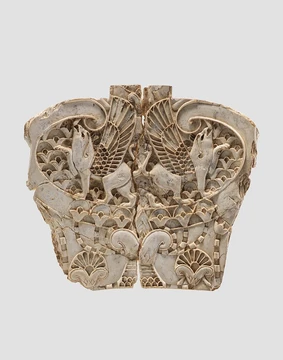
Pillow
A soft cushion for head or body support.

A pillow is a soft fabric cushion used to support the head or body, primarily as a form of bedding. In contemporary Western culture, pillows are encased in a plain or patterned fabric envelope known as a pillowcase, with a soft stuffing made from synthetic or natural materials. The word "pillow" derives from Middle English *pilwe*, Old English *pyle*, and ultimately from Latin *pulvinus*, with its first known use occurring before the 12th century.
The use of pillows has deep evolutionary roots. Reptiles and mammals have long used their own bodies or those of others to support the head and neck. Arboreal mammals, particularly members of *Panthera* and *Hominoidea*, select specific tree branches for this purpose. Natural resting postures, such as using a laterally rotated arm or leg, may reduce stiffness and pain while allowing animals to stay alert. Pillow-making is not exclusive to humans; nest-building primates create pillow-like structures, with tree-dwelling orangutans using twigs and chimpanzees using leaves on the ground. Asian elephants in captivity have been observed making pillows from straw.
Between 5 and 23 million years ago, tree-dwelling great apes began building sleeping platforms with wooden pillows, improving sleep and enabling escape from predators. This likely coincided with the evolution of large, energy-consuming brains and may have extended REM sleep, boosting cognitive capacity. Humans started making beds from ash and grass in Africa 227,000 years ago, with Neanderthals doing similar 185,000 years ago at Misliya Cave. Later, separate stone and wood pillows were crafted for comfort.
The earliest recorded use of the modern human pillow dates to Mesopotamia around 7,000 BC, where only the wealthy used them, and the number symbolized status. Pillows also kept bugs out of hair and face while sleeping. In ancient Egypt, wooden or stone headrests were placed under the heads of the deceased, as the head was considered sacred. Romans and Greeks mastered softer pillows stuffed with reeds, feathers, and straw, used by upper classes for sleeping and sitting, and also placed under the deceased. In ancient China, pillows were traditionally solid, made from bamboo, jade, porcelain, wood, or bronze, with ceramic pillows becoming popular from the Sui dynasty onward, often decorated with painted animals, humans, or plants. Pillows consist of a filler m
- first_known_use_of_word
- before the 12th century
- earliest_recorded_human_use
- Mesopotamia around 7,000 BC
- common_synthetic_fillers
- polyester, memory foam
- common_natural_fillers
- feathers, down, wool, latex, cotton, buckwheat
- typical_lifespan
- two to four years
Lore & Background
Pillows are soft fabric cushions used to support the head or body, primarily as a form of bedding for the head and neck, though some are purely decorative. In contemporary Western culture, pillows are encased in a plain or patterned fabric envelope known as a pillowcase, with a soft stuffing made from synthetic or natural materials. The word "pillow" derives from Middle English *pilwe*, Old English *pyle*, and ultimately from Latin *pulvinus*, with its first known use occurring before the 12th century. The use of pillows for support has deep evolutionary roots: reptiles and mammals use their own bodies or each other as pillows, and arboreal mammals, particularly members of *Panthera* and *Hominoidea*, select specific tree branches for this purpose. Nest-building primates, such as orangutans and chimpanzees, create pillow-like structures from twigs or leaves. Great apes began building sleeping platforms with wooden pillows between 5 and 23 million years ago, a development linked to escaping predators and supporting larger brains. Humans later crafted pillows from stone and wood, with the earliest recorded use of the modern device in Mesopotamia around 7,000 BC, where pillows symbolized wealth. Ancient Egyptians used wooden or stone headrests, often placing them under the heads of the deceased. Ancient Romans and Greeks created softer pillows stuffed with reeds, feathers, and straw, used by all classes for support and in church. Traditional Chinese pillows were solid, made from materials like bamboo, jade, porcelain, wood, and bronze, with ceramic pillows mass-produced from the Tang dynasty onward and reaching peak production during the Song, Jin, and Yuan dynasties. Pillow construction consists of a filler material enclosed in a fabric cover, sometimes with a decorative sham closed on all sides.
Reader's Guide
The pillow has a long history across civilizations. In Mesopotamia around 7,000 BC, only the wealthy used pillows, and the number of pillows symbolized status. Ancient Egyptian pillows were wooden or stone headrests, often placed under the heads of the deceased. The Romans and Greeks mastered softer pillows stuffed with reeds, feathers, and straw, though only upper-class people typically owned them. Chinese pillows were traditionally solid, made from bamboo, jade, porcelain, wood, and bronze, with ceramic pillows becoming most popular from the Sui dynasty onward. Today, pillows consist of a filler material enclosed in a fabric cover, with synthetic and natural fillers chosen for comfort, resilience, and cost. Pillows accumulate dust and microbes, and most end up in landfills due to recycling difficulties. Their design varies by sleeping position, with manufacturers recommending different firmness for face-down, back, and side sleepers.
Did You Know?
- The word pillow comes from Middle English pilwe, from Old English pyle, and from Latin pulvinus.
- Asian elephants in captivity have been observed creating pillows from straw, though not in the wild.
- Ancient Egyptian pillows were wooden or stone headrests used for the deceased because the head was considered sacred.
Frequently Asked Questions
What is a Pillow?
A Pillow is a soft fabric cushion designed to cradle the head or body while you rest. It serves as a foundational piece of bedding, helping keep the head and neck properly aligned during sleep.
What are Pillow's core functions?
Its main job is to provide cushioning and support for the head and neck, though some variants exist purely as decorative accents. In modern Western homes it typically consists of a stuffed interior wrapped in a removable fabric envelope called a pillowcase.
How long does a Pillow last?
A typical Pillow has a functional lifespan of roughly two to four years before its support and comfort noticeably degrade. Past that window, the stuffing tends to flatten and lose its ability to properly cradle the head.
What materials make up a Pillow?
Common synthetic fillers include polyester and memory foam, while natural options range from feathers and down to wool, latex, cotton, and buckwheat. The chosen filler largely determines the firmness and overall feel of the cushion.
How old is the Pillow?
The earliest recorded human use of a Pillow dates to Mesopotamia around 7,000 BC, making it one of the oldest forms of bedding. The word itself has been in documented use since before the 12th century.
More in Home And Furniture 1-23
Spotted an error? Know more?
This is a living reference — every entry is fact-audited, and reader corrections feed straight into our audit queue. Suggest an edit · See this site's audit record