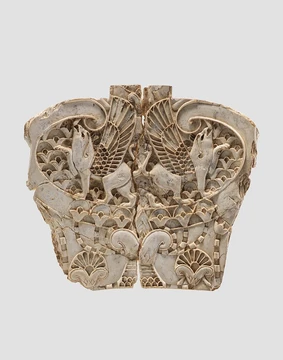
Cabinetry
Cabinetry encompasses the design and construction of storage furniture.

Cabinetry encompasses the design, construction, and installation of cabinets, which are defined as cases or cupboards fitted with shelves or drawers for storage or display. These units may stand alone, be built into a wall, or be attached to it, as with a medicine cabinet. Traditional materials include solid wood, wood veneers, or artificial surfaces; coated steel is common for medicine cabinets, while commercial-grade cabinets often use a melamine-particleboard core covered with a high-pressure decorative laminate. Cabinets typically feature one or more doors mounted with hardware, sometimes including a lock, and may incorporate drawers or shelves. Short cabinets often have a finished top suitable for display or as a working countertop. Specific types include the dresser or chest of drawers for bedroom storage, the nightstand for bedside use, and the wardrobe or armoire for hanging clothes, with built-in versions sometimes called closets.
Historically, before industrial design, cabinet makers conceived and produced all furniture. In the late 18th century, figures like Thomas Sheraton, Thomas Chippendale, and George Hepplewhite published books of their furniture designs. The most renowned pre-industrial cabinetmaker is André-Charles Boulle, whose legacy includes "Boulle work" and the École Boulle in Paris. The Industrial Revolution introduced steam power to cabinet-making tools, enabling mass production and diminishing the traditional cabinet shop as the primary furniture source. However, a rising middle class in industrialized nations increased demand for finely made furniture, expanding the number of traditional cabinet makers. Before 1650, fine furniture was rare in Western Europe and North America, with most people using simple pieces. The Arts and Crafts movement, originating in mid-19th-century Britain, revived interest in handcrafted cabinetry, spreading to the United States and the British Empire as a reaction against Victorian historicism and machine-made goods. After World War II, woodworking became a popular middle-class hobby, with skilled amateurs now producing work rivaling professionals, though their output remains a small fraction of total furniture production.
- field
- Furniture making and design
- known_for
- Production of cabinets, including built-in and free-standing types, and various design styles such as Glamour, Scandinavian, French Provincial, Early American Colonial, Rustic, Mission, Oriental, and
Lore & Background
Before the advent of industrial design, cabinet makers were responsible for the conception and the production of any piece of furniture. In the last half of the 18th century, cabinet makers such as Thomas Sheraton, Thomas Chippendale, Shaver and Wormley Brothers Cabinet Constructors, and George Hepplewhite published books of furniture forms, which were compendiums of their designs and those of other cabinet makers. The most famous cabinetmaker before the advent of industrial design is probably André-Charles Boulle, whose legacy is known as 'Boulle work' and the École Boulle, a college of fine arts and crafts and applied arts in Paris, today bears testimony to his art. With the Industrial Revolution and the application of steam power to cabinet making tools, mass production techniques were gradually applied to nearly all aspects of cabinet making, and the traditional cabinet shop ceased to be the main source of furniture. In parallel, a growing demand by the rising middle class for finely made furniture eventually grew the total number of traditional cabinet makers. The Arts and Crafts movement, which started in the United Kingdom in the middle of the 19th century, spurred a market for traditional cabinet making and other craft goods, rapidly spreading to the United States and all countries in the British Empire. This movement exemplified a reaction to the eclectic historicism of the Victorian era and to 'soulless' machine-made production. During this time, cabinetry was said to be one of the most noble and admirable skills by nearly one fourth of the population of the United Kingdom, and 31% of those who believed this strived for their children to learn the art of cabinetry.
Reader's Guide
Cabinetry holds significance as a craft that transitioned from individual artistry to mass production, reflecting broader industrial and social changes. Before industrial design, cabinet makers were the sole creators of furniture, and their published design books influenced generations. The Industrial Revolution shifted production to factories, yet the Arts and Crafts movement revived interest in handcrafted pieces, emphasizing skill and nobility in the trade. After World War II, woodworking became a popular hobby among the middle classes, with serious amateurs producing work rivaling professionals, though their output remains a small percentage of furniture production. The legacy of cabinetry includes diverse design styles—from Glamour's metallic frames and dark finishes to Shaker's focus on function and symmetry—and technical distinctions such as face frame versus frameless construction. Modern cabinetry often uses man-made sheet materials like plywood or chipboard, and types range from built-in kitchen cabinets to free-standing wardrobes and dressers.
Did You Know?
- Cabinets may have a face frame or be of frameless construction, also known as European or euro-style.
- The most famous cabinetmaker before industrial design is probably André-Charles Boulle, whose legacy includes the École Boulle in Paris.
- During the Arts and Crafts movement, cabinetry was said to be one of the most noble and admirable skills by nearly one fourth of the population of the United Kingdom.
- A tall cabinet intended for clothing storage including hanging of clothes is called a wardrobe or an armoire, or in some countries a closet if built-in.
Frequently Asked Questions
What is Cabinetry in the context of home and furniture?
Cabinetry is the craft and production of cabinets—cases or cupboards fitted with shelves or drawers for storing and displaying items. It covers both the design and the physical construction of that storage furniture.
What design styles are commonly associated with Cabinetry?
Cabinetry spans a wide range of aesthetic traditions, including Glamour, Scandinavian, French Provincial, Early American Colonial, Rustic, Mission, and Oriental styles. Each style shapes the look, joinery, and finish of the finished cabinet.
How did Cabinetry change after the Industrial Revolution?
Before industrial design, cabinet makers handled everything from concept to handcrafted production. The Industrial Revolution shifted the field toward mass-produced cabinets, moving the craft away from purely hand-finished pieces.
What are the main categories of cabinets within Cabinetry?
Cabinets are generally divided into built-in types, which are fixed into a room's structure, and free-standing types that can be moved. Both categories appear across the various design styles the field encompasses.
Why is Cabinetry considered a distinct area of furniture making?
Cabinetry focuses specifically on storage furniture rather than seating or tables, giving it its own set of construction techniques and design considerations. Historically, cabinet makers were responsible for the full conception-to-production pipeline before the field split into specialized roles.
Spotted an error? Know more?
This is a living reference — every entry is fact-audited, and reader corrections feed straight into our audit queue. Suggest an edit · See this site's audit record