Chair
A seat for one, with back and legs.

A chair is a seat built for one person, with at least one leg, a flat or slightly tilted seat, and a backrest. It can be crafted from wood, metal, or synthetic materials, and may include padding or upholstery in different colors and fabrics. Designs vary widely: an armchair includes fixed armrests; a recliner has upholstery and a mechanism that tilts the back and raises a footrest; a rocking chair has legs attached to two long curved slats; and a wheelchair has wheels mounted on an axle beneath the seat.
The word "chair" comes from the early 13th-century English *chaere*, derived from Old French *chaiere* ("chair, seat, throne"), Latin *cathedra*, and ultimately Greek *καθέδρα* (*kathedra*, meaning "seat, throne").
Chairs have been used since ancient times, but for many centuries they were symbols of authority and dignity rather than everyday items. "The chair" remains an emblem of power in the UK House of Commons, the Canadian House of Commons, and many other settings. This historical link persists in terms like "chairman" or "chair" for committee leaders, board directors, and academic department heads, as well as "chair" for endowed professorships. Chairs only became common in the 16th century; before that, people typically sat on chests, benches, and stools. Surviving chairs from earlier periods are rare, mostly from ecclesiastical, seigneurial, or feudal contexts.
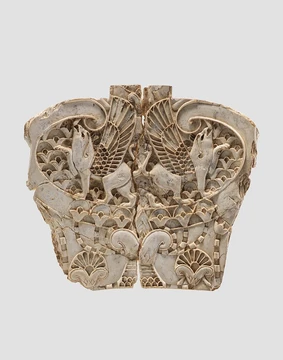
Chairs existed at least as early as the Early Dynastic Period of Egypt (around 3100 BC). Egyptian chairs were covered with cloth or leather, carved from wood, and much lower than modern ones—seat heights sometimes only 10 inches (25 cm). In ancient Egypt, chairs were often richly decorated, made from ebony, ivory, or carved and gilded wood, and supported by legs shaped like animal limbs or captive figures. Higher-ranking individuals had taller, more ornate chairs. The pharaoh used a throne on state occasions, often with a footstool. Average Egyptian families rarely owned chairs; if they did, only the head of the household used one. Among the better-off, chairs might be painted to imitate expensive inlaid and carved versions, though craftsmanship was often poor.
The earliest images of chairs in China appear in 6th-century Buddhist murals and stele, but sitting in chairs was rare then. Chairs became widespread in China only by the 12th century. Scholars disagree on why chairs were adopted—theories include an indigenous development from Chinese furniture, evolution from a Central Asian camp stool, introduction by 7th-century Christian missionaries, or arrival from India as Buddhist monastic furniture. In modern China, unlike Korea or Japan, sitting at floor level is no longer common.
In Europe, the Renaissance largely ended the chair's status as a privilege of state, making it a standard household item for those who could afford it. Once that privilege faded, chairs quickly came into general use and began changing style every few years to reflect fashion. In 1819, Thomas Edward Bowdich visited the Ashanti Empire's main palace and observed chairs covered with gold. By the 1800s, chairs were common in American households, with one provided for each family member at dinner. In the 1830s, factory-made "fancy chairs" from companies like Sears, Roebuck, and Co. allowed families to buy machined sets. The Industrial Revolution made chairs much more available.
The 20th century brought technology into chair construction: all-metal folding chairs, metal-legged chairs, the Slumber Chair, molded plastic chairs, and ergonomic chairs. The recliner became popular, partly due to radio and television. In the 1930s, stair lifts became commercially available for people with polio and other diseases. The modern movement of the 1960s produced new forms like the butterfly chair (originally the Hardoy chair), bean bags, and the egg-shaped pod chair that turns. It also introduced the first mass-produced plastic chairs, such as the Bofinger chair in 1966. Technological advances led to molded plywood and wood laminate chairs, as well as chairs made of leather or polymers. Mechanical technology allowed adjustable chairs, especially for offices, and motors embedded in chairs created massage chairs.
Chairs can be made from wood, metal, or other strong materials like stone or acrylic. Sometimes multiple materials are used—for example, metal legs and frame with a plastic seat and back. Surfaces may be hard (wood, metal, plastic) or covered with upholstery or padding. Designs may use porous materials or drilled holes for decoration; a low back or gaps provide ventilation. The back can extend above the occupant's head and may include a headrest. Chairs can also be made from creative materials like recycled cutlery, wooden play bricks, pencils, plumbing tubes, rope, or corrugated cardboard.
- earliest known use
- c. 3100 BC (Early Dynastic Period of Egypt)
- etymology
- from Greek καθέδρα kathedra ('seat, throne')
- common materials
- wood, metal, synthetic materials, stone, acrylic
- typical seat height
- 17 inches (43 cm) for mass-produced chairs
- common features
- legs, seat, back-rest; optional armrests, padding, upholstery
Lore & Background
The chair is a seat designed for a single person, typically featuring one or more legs, a flat or slightly angled seat, and a back-rest. It can be constructed from wood, metal, or synthetic materials, and may be padded or upholstered in various fabrics and colors. Variations include the armchair, with fixed armrests; the recliner, which has a mechanism to lower the back and raise a footrest; the rocking chair, with legs attached to curved slats; and the wheelchair, which has wheels fixed to an axle under the seat. Chairs have existed since at least the Early Dynastic Period of Egypt, where they were often low, carved from wood, and covered with cloth or leather. Egyptian chairs for the elite were made of ebony, ivory, or gilded wood, supported by legs shaped like animal limbs or captive figures, and the pharaoh’s throne was tall and sumptuous, sometimes accompanied by a footstool. In ancient China, the earliest images of chairs appear in 6th-century Buddhist murals, but widespread use did not occur until the 12th century. In Europe, the Renaissance transformed the chair from a privilege of state into a common household item for those who could afford it, after which chair designs began to change frequently with fashion. The 19th century saw factory-manufactured chairs become available in America, and the 20th century introduced all-metal folding chairs, molded plastic chairs, ergonomic designs, and the recliner. Materials range from wood and metal to stone and acrylic, often combined, and surfaces may be left hard or covered with upholstery.
Reader's Guide
Chairs have existed since at least the Early Dynastic Period of Egypt (c. 3100 BC). In ancient Egypt, chairs were often of great richness and splendor, fashioned of ebony and ivory or carved and gilded wood, and covered with costly materials. The higher ranked an individual, the taller and more sumptuous the chair. The average Egyptian family seldom had chairs. In China, the earliest images of chairs are from 6th-century Buddhist murals and stele, but chairs did not become widespread there until the 12th century. In Europe, the Renaissance caused the chair to cease being a privilege of state and become a standard item of furniture. The Industrial Revolution made chairs much more available. The 20th century saw increasing use of technology in chair construction, including all-metal folding chairs, moulded plastic chairs, and ergonomic chairs. The modern movement of the 1960s produced new forms such as the butterfly chair, bean bags, and the egg-shaped pod chair. Chair design considers intended usage, ergonomics, size, stacking ability, folding ability, weight, durability, stain resistance, and artistic design.
Did You Know?
- The word 'chair' comes from the early 13th-century English word chaere, from Old French chaiere, from Latin cathedra, and ultimately Greek καθέδρα kathedra.
- In ancient Egypt, chair seats were sometimes only 10 inches (25 cm) high.
- A Latvian interior designer created a volcanic hanging chair handmade out of volcanic rock.
Historical Roots & Early Pioneers
The concept of furniture designed for easy disassembly stretches back centuries, as cabinetmakers long crafted pieces that could be taken apart for transport. A more concrete early example is the Thonet No. The enterprise proved short-lived, and the total number of kits ever sold remains unknown.
Mid-Century Experiments & the Scandinavian Breakthrough
The 1940s and 1950s saw a new wave of entrepreneurs testing the flat-pack model. In Australia, Frederick Charles Ward, troubled by the scarcity of affordable furniture for working-class households, founded a mail-order ready-to-assemble business in the late 1940s. Across the Atlantic, Ohio cabinetmaker Erie J. Sauder earned the first U.S. Perhaps the most famous origin story belongs to Swedish technician Gillis Lundgren, who reportedly had to saw the legs off a table just to fit it in his car.
Economics & the Assembly Ecosystem
The flat-pack model creates a straightforward economic advantage for both seller and buyer. Once assembled, furniture becomes bulky, which drives up the costs of warehousing and last-mile delivery. By shifting the final assembly step onto the consumer, manufacturers can offer a lower retail price. The typical kit arrives in a flat carton containing the component parts, printed instructions, and often the necessary hardware such as hex keys. For shoppers who prefer not to take on the task themselves, an entire furniture assembly service industry has grown up, providing trained professionals who will put the pieces together for a fee. This division of labor—factory produces, consumer assembles or hires someone to—keeps the overall cost well below that of pre-built, ready-to-use furniture. The result is a product category that appeals to budget-conscious buyers who are willing to trade a small amount of time and effort for meaningful savings.
Materials, Manufacturing & Product Range
Most ready-to-assemble furniture is manufactured from particle board or medium-density fibreboard rather than solid wood, a choice that significantly reduces production costs. The lower-grade timber is then coated with a polymer laminate that mimics the grain and color of various hardwoods, yielding a finished surface that looks far more premium than the raw material would suggest. This combination of economical substrate and decorative veneer is what allows the category to deliver a high-quality appearance at a fraction of the price of solid-wood pieces. The product range spans an impressive breadth of household needs: living-room seating, office desks, bookcases, dining and side tables, beds, lounge-ware, outdoor and patio sets, swingsets, kitchen cabinets, CD and DVD storage racks, wardrobes, and closets. Whether a consumer is furnishing a single bedroom or outfitting an entire home, the flat-pack format makes a wide array of furniture accessible without the premium attached to pre-assembled, bulky goods.
Frequently Asked Questions
What is Chair?
Chair is a single-person seat built around a flat or gently angled sitting surface, a back-rest, and one or more supporting legs. It can be fashioned from wood, metal, or synthetic materials, and often comes with padding or fabric upholstery.
What are Chair's standard specs?
A mass-produced Chair typically sits at a seat height of roughly 17 inches (43 cm). Its core structure consists of legs, a seat, and a back-rest, with armrests and upholstery being optional extras.
When did Chair first appear in the historical record?
The earliest known example of a Chair dates to around 3100 BC, during Egypt's Early Dynastic Period.
What materials make up Chair?
Common construction materials include wood, metal, synthetic materials, stone, and acrylic. The finish may be plain or padded and upholstered in a range of colors and fabrics.
What is the origin of the name 'Chair'?
The word traces back to the Greek kathēdra (kathedra), which meant a seat or throne.
More in Home And Furniture 1-23
Spotted an error? Know more?
This is a living reference — every entry is fact-audited, and reader corrections feed straight into our audit queue. Suggest an edit · See this site's audit record