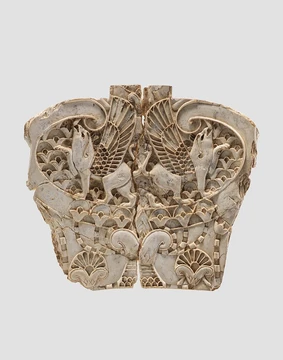
Door
A movable barrier for ingress and egress, with security as primary purpose.

A door is a movable barrier, often attached by hinges, that controls entry to or exit from an enclosed space through an opening called a doorway or portal. Its main job is security—managing who can go through that opening. Typically a panel that fits into a doorway in a building, room, or vehicle, doors are made from materials chosen for their specific task. Besides hinges, they can move by sliding, folding, counterbalancing, or spinning on a central axis. Usually the interior and exterior sides match, but in some cases, like vehicle doors, they look completely different. Many doors have locks to restrict access, and they may include knockers or doorbells for visitors to announce themselves. Beyond providing passage, doors also serve secondary roles: ensuring privacy, separating spaces with different functions, letting light through, controlling airflow to help with heating or cooling, reducing noise, and stopping fire from spreading. Doors can carry aesthetic, symbolic, or ritual meaning—for instance, receiving a key to a door often marks a shift from outsider to insider. In literature and art, doors and doorways frequently appear as metaphors for change.
The earliest known doors appear in Egyptian tomb paintings, shown as single or double doors made from a single piece of wood. Tombs sometimes included false doors, believed to be passages to the afterlife. In Egypt’s dry climate, doors didn’t need framing to prevent warping, but in other regions, framed doors were necessary. According to Vitruvius, these were built with vertical stiles and horizontal rails, with panels set into grooves. The stiles included a hanging stile (attached to hinges or tenons) and a meeting stile (where the doors meet). The rails were the top, bottom, and intermediate pieces. The oldest doors were timber—olive wood, elm, cedar, oak, and cypress—like those described in the Bible for King Solomon’s temple, which were carved and gold-plated. Homer’s doors were said to be covered in silver or brass. Archaeologists near Zürich, Switzerland, have found doors over 5,000 years old.
Ancient doors were hung on pintles at the top and bottom of the hanging stile, fitting into sockets in the lintel and sill, often made of hard stone like basalt or granite. Those found at Nippur, dating to 2000 BC, were dolerite. The gates at Balawat had bronze-sheathed tenons (now in the British Museum). These doors had two leaves, each about 2.54 meters wide and 8.2 meters high, encased in bronze bands with repoussé decoration. The wood was about 7.62 cm thick, but the hanging stile was over 360 mm in diameter. Bronze sheathing was a common method to protect wooden pivots. In Syria’s Hauran, where timber was scarce, doors were made of stone—one in the British Museum measures 1.63 by 0.79 meters and was part of a double door. At Kuffeir, Burckhardt found stone town entrance doors 2.74 to 3.048 meters high. In Etruria, Dennis mentions many stone doors.
Ancient Greek and Roman doors came as single, double, triple, sliding, or folding types. In folding doors, the leaves were hinged and folded back. The tomb of Theron at Agrigentum has a single four-panel stone door. A bas-relief in the Blundell collection shows a temple with double doors, each leaf having five panels. Notable Roman examples include the bronze doors of SS. Cosmas and Damiano in Rome—two leaves, each with two panels, framed in bronze. The Pantheon’s doors are similar but with narrow horizontal panels at top, bottom, and middle. Two other Roman bronze doors are in the Lateran Basilica. The first known automatic door was created by the Greek scholar Heron of Alexandria in the first century AD, during Roman Egypt. The first foot-sensor-activated automatic door was built in China under Emperor Yang of Sui (r. 604–618) for his royal library. Water-powered gates appear in illustrations of Arab inventor Al-Jazari’s automatons. Copper and its alloys were key in medieval architecture. The doors of the Church of the Nativity in Bethlehem (6th century) are covered with cut-out bronze plates. Those of Hagia Sophia in Constantinople (8th–9th century) are wrought bronze, and the west doors of Aachen Cathedral (9th century), made similarly, were likely brought from Constantinople, as were some in St. Mark’s, Venice.
- field
- Architecture and construction
- known_for
- Controlling access to doorways, with historical examples from ancient Egypt to medieval Europe
Lore & Background
A door is a movable barrier, typically hinged, that controls entry to and exit from an enclosure such as a building, room, or vehicle. The opening it fits into is called a doorway or portal. Its primary purpose is security, regulating access. Doors are generally made of materials suited to their task and are commonly attached by hinges, though they may also slide, fold, or rotate on a central axis. While the interior and exterior sides of a door often match, vehicle doors are a notable exception where the two sides differ radically. Many doors incorporate locking mechanisms, and devices like knockers or doorbells allow outsiders to announce their presence. Beyond access, doors serve secondary functions: ensuring privacy, separating areas with different uses, admitting light, controlling ventilation and drafts, dampening noise, and blocking fire spread. They also carry aesthetic, symbolic, or ritualistic weight; receiving a key can signify a change in status. The earliest recorded doors appear in Egyptian tomb paintings as single or double pieces of wood. Tombs sometimes included false doors, believed to be passages to the afterlife. In Egypt’s dry climate, doors were not framed against warping, but elsewhere framed doors with vertical stiles and horizontal rails became necessary. Ancient timber doors were made from olive wood, elm, cedar, oak, and cypress. Archaeologists have found doors over 5,000 years old near Zürich, Switzerland.
Reader's Guide
Doors have been integral to human architecture for millennia, evolving from simple wooden panels to complex metal and stone constructions. The earliest recorded doors appear in Egyptian tomb paintings, and ancient examples include bronze-sheathed gates from Balawat and stone doors from Syria. Greek and Roman doors included single, double, triple, sliding, and folding types. The first known automatic door was created by Heron of Alexandria in the first century AD, and a foot-sensor-activated automatic door was installed in China during the Sui dynasty. Medieval bronze doors, such as those at Hildesheim and the Cathedral of Florence, demonstrate advanced metalworking. Doors also carry symbolic weight, as receiving a key can signify a change in status, and they appear in literature and the arts as metaphors for change.
Did You Know?
- The earliest recorded doors appear in paintings of Egyptian tombs.
- Two doors over 5,000 years old have been found near Zürich, Switzerland.
- The Greek scholar Heron of Alexandria created the earliest known automatic door in the first century AD.
- The first foot-sensor-activated automatic door was made in China during the reign of Emperor Yang of Sui.
From Firefighter to Founder: The Birth of Murphy Door
Jeremy Barker was a firefighter before he ever considered building a company. What began as a DIY solution for his own living space quickly evolved into a commercial venture. Barker launched the business part-time, initially reaching customers through online sales channels rather than a traditional retail presence. The core idea was deceptively simple yet transformative: take a plain passageway or wall and turn it into something that doubles as a bookshelf, a cabinet, a mirror, or even a piece of decorative art, while still concealing a functional door behind it. This marriage of utility and aesthetic disguised entryways became the company's signature.
A Steep Financial Ascent
The revenue curve for Murphy Door reads almost like a case study in rapid scaling. The company then navigated the global pandemic, a period during which its revenues roughly tripled from around seven million to twenty million dollars as homeowners sought creative ways to maximize limited square footage. That momentum never stalled. The trajectory underscores a company that moved from a side project to a major player in the concealed-furniture space in roughly a decade.
Craftsmanship and the Made-to-Order Model
Murphy Door's product philosophy centers on the idea that a doorway does not have to look like a doorway. The company's primary offering is a custom hidden door system that embeds a passageway into what appears to be a bookshelf, a cabinet, a mirror, a wall panel, or another decorative architectural element. Beyond concealed entryways, the catalog extends to Murphy beds, hidden compartments, and reinforced door systems, all designed to blend function with the surrounding interior. Operationally, the company takes a distinctly American manufacturing stance: production is carried out domestically at facilities in both Utah and Kentucky, rather than being outsourced overseas. Every unit is built to order, meaning each installation is tailored to the specific dimensions and design preferences of the customer's space. Sales flow primarily through a direct-to-consumer model, cutting out middlemen and allowing Barker's team to maintain close relationships with the homeowners and designers who commission their work. This combination of domestic, made-to-order production and a direct sales channel gives Murphy Door a level of control over quality and customer experience that mass-produced furniture competitors simply cannot match.
Recognition and Pop-Culture Crossovers
Industry validation has kept pace with Murphy Door's financial growth. Beyond trade awards, Murphy Door has crossed into mainstream pop culture through a collaboration with Lionsgate and Hulu on the hit series Only Murders in the Building. The partnership involved the development of custom hidden door installations for the show, effectively turning the company's signature product into a narrative device on a widely watched streaming platform. This kind of visibility does more than generate brand awareness; it demonstrates that the concept of a door hiding behind a bookshelf or a mirror resonates with a broad audience, not just architects and interior designers. For a company that began as a single hinge mechanism in a Utah home, the leap to television set design is a fitting testament to how universal the appeal of cleverly concealed spaces truly is.
Frequently Asked Questions
What exactly is a door in the context of home and furniture?
A door is a movable panel, usually attached by hinges, that swings or slides to open and close a doorway. It serves as the physical barrier between an enclosed room or building and the outside or adjacent space.
What is the primary purpose of a door?
The core function of a door is security: it regulates who or what can pass through an opening, keeping a space protected from unauthorized entry. This access-control role has made doors a fundamental element of architecture since their earliest known use.
What materials and mechanisms can a door use?
Doors come in a wide range of materials—wood, metal, glass, composite panels—and can operate via hinges, sliding tracks, folding sections, or revolving frames. The choice of material and mechanism depends on the desired balance of durability, aesthetics, and ease of use.
Besides security, what other jobs does a door perform in a home?
A well-designed door also helps dampen noise between rooms, manage airflow and ventilation, provide a sense of privacy, and act as a fire barrier to slow the spread of flames. These secondary functions make the door a multi-purpose component rather than just a simple barrier.
How far back does the history of doors go?
Doors have been a defining feature of human architecture for thousands of years, with examples documented from ancient Egyptian structures all the way through medieval European castles. Their basic concept—controlling passage through an opening—has remained constant even as materials and styles evolved.
More in Home And Furniture 1-23
Spotted an error? Know more?
This is a living reference — every entry is fact-audited, and reader corrections feed straight into our audit queue. Suggest an edit · See this site's audit record