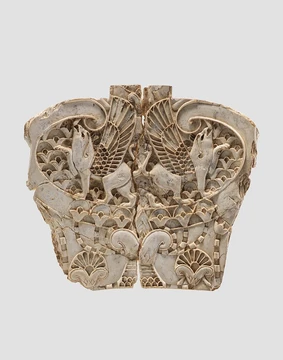
Furniture
Objects supporting human activities, from prehistory to modern design.

Furniture encompasses movable objects designed to support human activities such as sitting, eating, working, storing possessions, and sleeping. Beyond its practical roles, furniture can serve symbolic or religious functions and is often considered a form of decorative art. It is crafted from a wide array of materials, including wood, metal, and plastic, and the joinery techniques used frequently reflect the local culture. The use of natural objects like tree stumps, rocks, and moss as rudimentary furniture dates to the earliest human civilizations and persists in some modern households and campsites. Archaeological evidence indicates that around 30,000 years ago, people began constructing and carving furniture from wood, stone, and animal bones. Early depictions, such as a Venus figurine from Russia showing a goddess seated on a throne, suggest such items were already common. The oldest surviving furniture comes from the Neolithic village of Skara Brae in Scotland, where stone was used due to a lack of wood; these homes contained cupboards, dressers, and beds. Complex joinery emerged in ancient Egypt during the early dynastic period, producing wooden stools and tables often adorned with valuable metals or ivory. Ancient Greece and Rome featured thrones and multipurpose couches called klinai. Medieval furniture was typically heavy and made of ornamented oak, while the Italian Renaissance spurred design expansion. The seventeenth century saw opulent, gilded Baroque styles in Europe, and the nineteenth century was defined by revival styles. The early twentieth century moved toward Modernism, with later postmodern design returning to natural shapes and textures.
- earliest_known_constructed_furniture
- c. 30,000 years ago
- earliest_surviving_extant_furniture
- c. 3100–2500 BCE (Skara Brae, Scotland)
- materials_used
- wood, stone, animal bones, metal, plastic, leather, ivory, ebony, gold, silver
- key_historical_periods
- Prehistory, Ancient Egypt, Ancient Greece, Ancient Rome, Middle Ages, Renaissance, Baroque, 19th-century revival styles, Modernism, Post-modern
- etymology
- From French 'fourniture' (supplies/provisions); English usage specific to household objects
Lore & Background
Furniture encompasses a wide array of objects designed to support human activities, including seating like stools, chairs, and sofas; surfaces for eating and working, such as tables and desks; storage solutions like cupboards, shelves, and drawers; and sleeping platforms like beds and hammocks. Beyond its functional role, furniture can serve symbolic or religious purposes and is considered a form of decorative art. It is crafted from a vast range of materials, including metal, plastic, and wood, with construction often employing various woodworking joints that reflect local culture. The use of natural objects as rudimentary furniture—tree stumps for seats, rocks for tables, and moss for sleeping—dates to the dawn of human civilization and persists in some households and campsites today. Around 30,000 years ago, people began constructing furniture from wood, stone, and animal bones, as evidenced by a Venus figurine from Russia depicting a goddess on a throne. The earliest surviving extant furniture comes from the Neolithic village of Skara Brae in Scotland (3100–2500 BCE), where a lack of wood led to the creation of stone cupboards, dressers, beds, shelves, and seats. Complex joinery techniques emerged in ancient Egypt’s early dynastic period, producing wooden stools and tables often decorated with valuable metals or ivory. Ancient Greece and Rome featured thrones and the *klinai*, multipurpose couches for relaxing, eating, and sleeping. Medieval furniture was typically heavy, oak, and ornamented, while the Italian Renaissance spurred design expansion. The Baroque era of the 17th century favored opulent, gilded styles, and the 19th century was defined by revival styles. The 20th century’s first three-quarters moved toward Modernism, with postmodern design later returning to natural shapes and textures.
Reader's Guide
Furniture design evolved significantly across cultures and eras. In ancient Egypt, complex joinery techniques began during the early dynastic period, with wooden stools and tables decorated with valuable metals or ivory. Ancient Greece and Rome saw thrones and multipurpose couches (klinai). Medieval furniture was heavy, oak, and ornamented. The Italian Renaissance expanded design, while the 17th century featured opulent Baroque styles. The 19th century was defined by revival styles, and the first three-quarters of the 20th century marched toward Modernism. Post-modern furniture saw a return to natural shapes and textures. The English word 'furniture' derives from French 'fourniture,' meaning supplies or provisions, while other Romance languages and German use variants of 'meubles' from Latin 'mobilia' (moveable goods).
Did You Know?
- The earliest evidence of constructed furniture is a Venus figurine from Russia, dating to around 30,000 years ago, depicting a goddess seated on a throne.
- The first surviving extant furniture is from Skara Brae in Scotland (3100–2500 BCE), made of stone due to a shortage of wood.
- Ancient Egyptian furniture used scarf joints and veneers to compensate for scarce local wood, which had to be imported from Phoenicia.
- The modern word 'throne' derives from the ancient Greek 'thronos,' a seat for deities or high-status individuals.
Frequently Asked Questions
What is Furniture in the Home And Furniture series?
Furniture refers to any object designed to support everyday human activities such as sitting, sleeping, eating, or storing belongings. Beyond pure utility, it also functions as a form of decorative art and can carry symbolic or religious meaning.
How old is the earliest known Furniture?
The oldest constructed furniture dates back roughly 30,000 years, though the earliest surviving physical examples come from the Skara Brae settlement in Scotland, built around 3100–2500 BCE.
What materials has Furniture been crafted from across its history?
Across the ages, Furniture has been made from wood, stone, animal bones, metal, leather, ivory, ebony, gold, silver, and more recently plastic. The choice of material often mirrors the construction techniques and cultural traditions of a given region.
What is the origin of the word 'Furniture'?
The term traces back to the French word 'fourniture,' which originally meant supplies or provisions. In English, the usage narrowed to refer specifically to household objects that support daily living.
What major design eras does the Furniture storyline cover?
The narrative spans from Prehistory through Ancient Egypt, Greece, and Rome, then moves into the Middle Ages, Renaissance, and Baroque periods. It continues through 19th-century revival styles into Modernism and Post-modern design.
More in Home And Furniture 1-23
Spotted an error? Know more?
This is a living reference — every entry is fact-audited, and reader corrections feed straight into our audit queue. Suggest an edit · See this site's audit record