
Mehen (game)
Ancient Egyptian board game named after a snake deity.

War Department. The Adjutant General's Office. 3/4/1907-9/18/1947 · Public domain
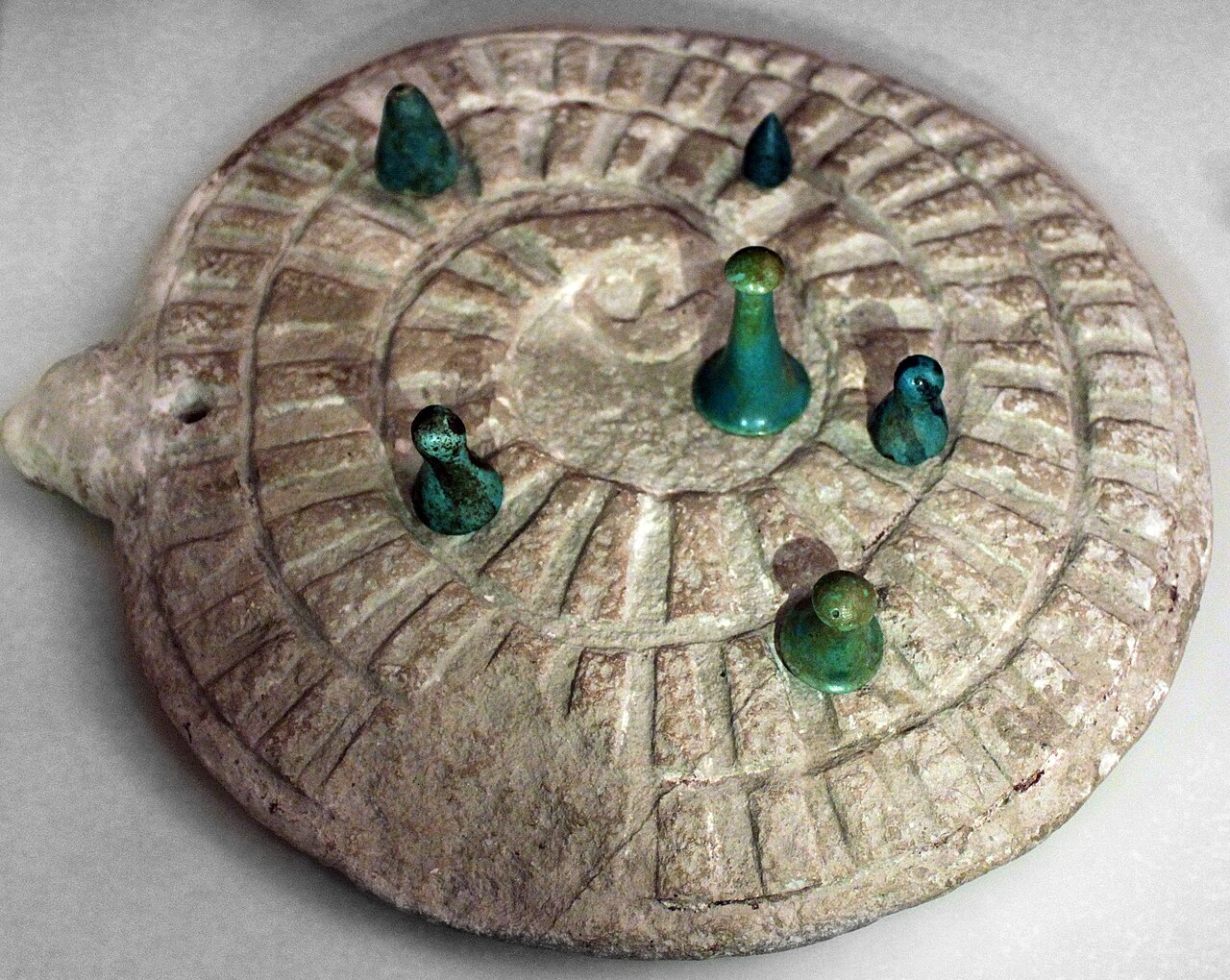
Mehen is a board game played in ancient Egypt, named after the snake deity Mehen. Evidence of the game dates from the late Predynastic or early Archaic period (around 3100 BC) until the end of the Old Kingdom, around 2300 BC, and it also appears to have been played outside Egypt, notably in Cyprus.
Quick Facts
- Title
- Mehen
- Years
- dating from approximately 3000 BC and continues until the end of the Old Kingdom, around 2300 BC
- Genre
- Board game
- Players
- unknown
Facts from the source article.
Lore & Background
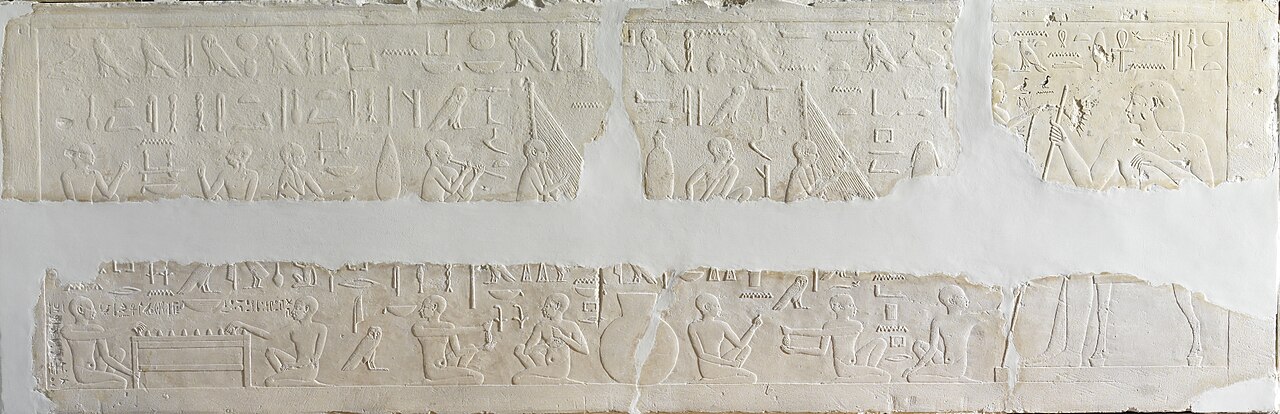
The game of Mehen is named after the snake deity Mehen in ancient Egyptian religion. Evidence of the game is found from the late Predynastic or early Archaic period (around 3100 BC) and continues until the end of the Old Kingdom, around 2300 BC. Physical boards mostly date to the Predynastic and Archaic periods, and the earliest named appearance of Mehen is in the tomb of Rahotep (Fourth Dynasty). Scenes that may show people playing the game are rare and not definitively identified as Mehen; most known depictions are of the board itself. No scenes or boards date to the Middle or New Kingdoms, suggesting the game was no longer played in Egypt after the Old Kingdom. Claims of Mehen appearing in Late Period tombs are speculative and not widely accepted.
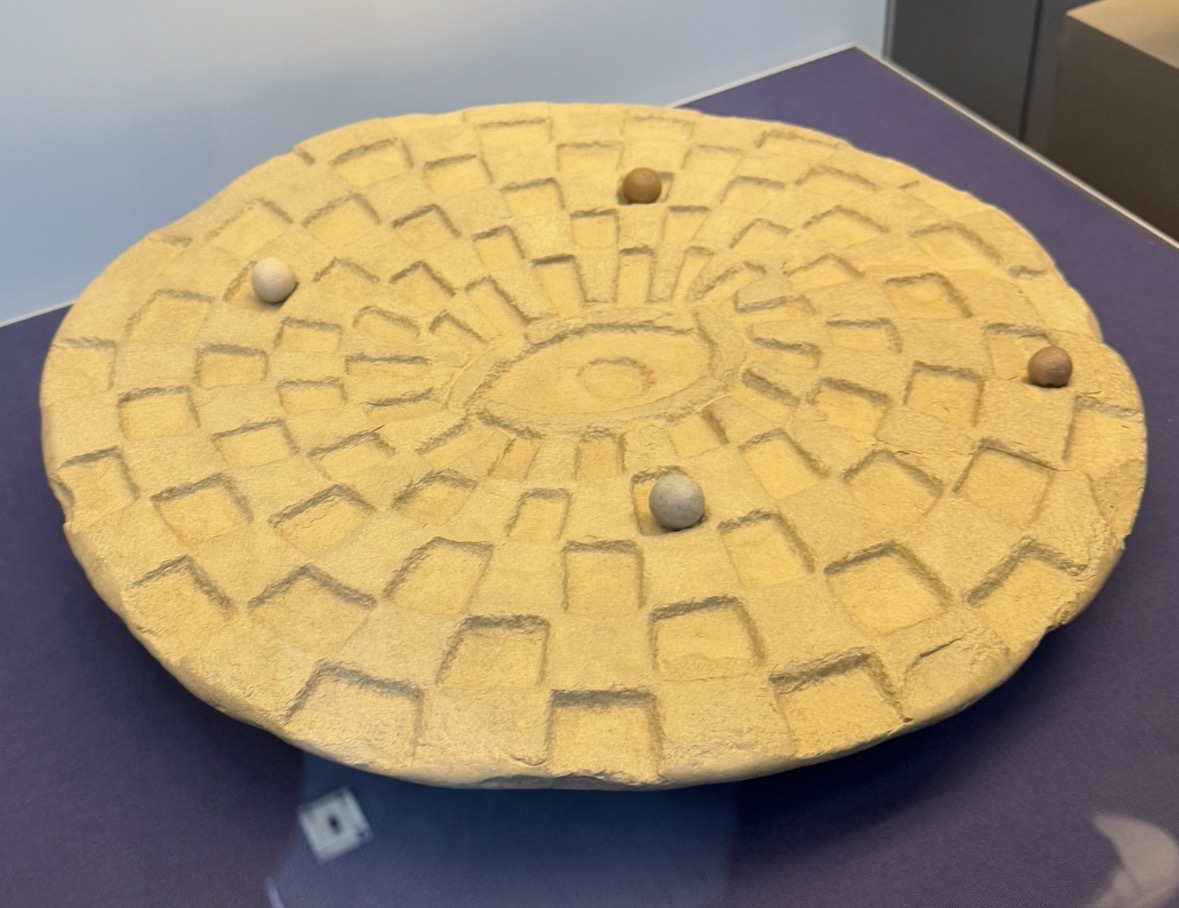
Mehen also appears to have been played outside Egypt, notably in Cyprus. In Cyprus, it sometimes appears on the opposite side of the same stone as senet, and those from Sotira Kaminoudhia, dating to approximately 2250 BC, are the oldest surviving double-sided boards known. Mehen survived in Cyprus longer than in Egypt, indicating the game was indigenized upon its adoption into the island's culture. A fringe hypothesis by Helène Whittaker suggests that the Phaistos Disc may be a miniaturised version of a Mehen gameboard, but this is not part of established board game history canon.
The rules and gameplay of Mehen are not recorded, but it seems likely that it was a race game with the objective to move pieces along the snake track from the tail to the head. Within Egypt, evidence for Mehen has only been found in funerary contexts, and it is likely that the game symbolized the movement of the 'Ba' or soul of the deceased person through the underworld via the body of Mehen to be reborn into the afterlife from the serpent's head. A 2024 study analyzed possibilities for gameplay and showed that the mechanism for moving pieces was probably 'marble guessing,' where one player puts marbles in their fist and the other guesses how many are hidden, determining the number of spaces moved. Lion and lioness pieces are too big to have been moved along the track, so it seems likely that marbles were raced along the track and the lion figurines held some other function.
Reader's Guide
Mehen is significant as one of the earliest known board games, with evidence spanning from the Predynastic period (c. 3000 BC) to the end of the Old Kingdom (c. 2300 BC). Its association with the snake deity Mehen and its funerary context suggest it held symbolic meaning related to the afterlife and the journey of the soul. The game's spread to Cyprus and the Levant, where it survived longer than in Egypt, demonstrates cultural exchange and adaptation. The variability in the number of playing spaces on boards indicates that the exact number of segments was not crucial to gameplay. The 2024 study proposing a marble-guessing mechanism offers a plausible reconstruction of how the game was played, though the rules remain unrecorded. The presence of lion and lioness pieces, too large for the track, suggests they had a different function, possibly as markers or in a separate aspect of the game. Mehen's legacy lies in its role as an early example of a race game and its connection to religious beliefs, as well as its evidence of cross-cultural interaction in the ancient world.
Did You Know?
- Mehen is named after a snake deity in ancient Egyptian religion.
- The game appears to have been played in Cyprus, surviving longer there than in Egypt.
- A 2024 study suggested that movement on the board was determined by a marble-guessing mechanism.
- Lion and lioness pieces found with the game are too large to have been moved along the snake track, so they likely had a different function.
Gallery



Frequently Asked Questions
What is Mehen?
Mehen is one of the oldest known board games, originating in ancient Egypt. It features a distinctive coiled-snake track on which players advance small lion or lioness figurines, using marbles as a randomizing mechanism similar to modern dice.
How old is the game Mehen?
Archaeological evidence places Mehen's use from roughly 3100 BC in the late Predynastic or early Archaic period through the end of the Old Kingdom around 2300 BC. That gives it a documented Egyptian lifespan of at least eight centuries.
Why does the Mehen board look like a coiled snake?
The game takes its name from Mehen, a serpent deity in the Egyptian pantheon, and the spiral track directly mirrors that snake's coiled form. Players' lion and lioness pieces race along the winding path, evoking a contest between predator and the divine serpent.
Did Mehen spread outside Egypt?
Yes—evidence shows the game reached Cyprus, where it apparently outlived its Egyptian popularity and continued to be played after it had faded from use in Egypt proper. This makes Mehen one of the few ancient board games with confirmed cross-cultural transmission.
What pieces and equipment did Mehen require?
Players used small carved lion and lioness figurines as their game tokens, moving them step by step along the serpentine track. A set of marbles served the role of dice, determining how far each piece advanced on a given turn.
More in History of board games 1-21
Spotted an error? Know more?
Reader corrections go straight into our review queue. Suggest an edit · How this site is sourced