
Hounds and jackals
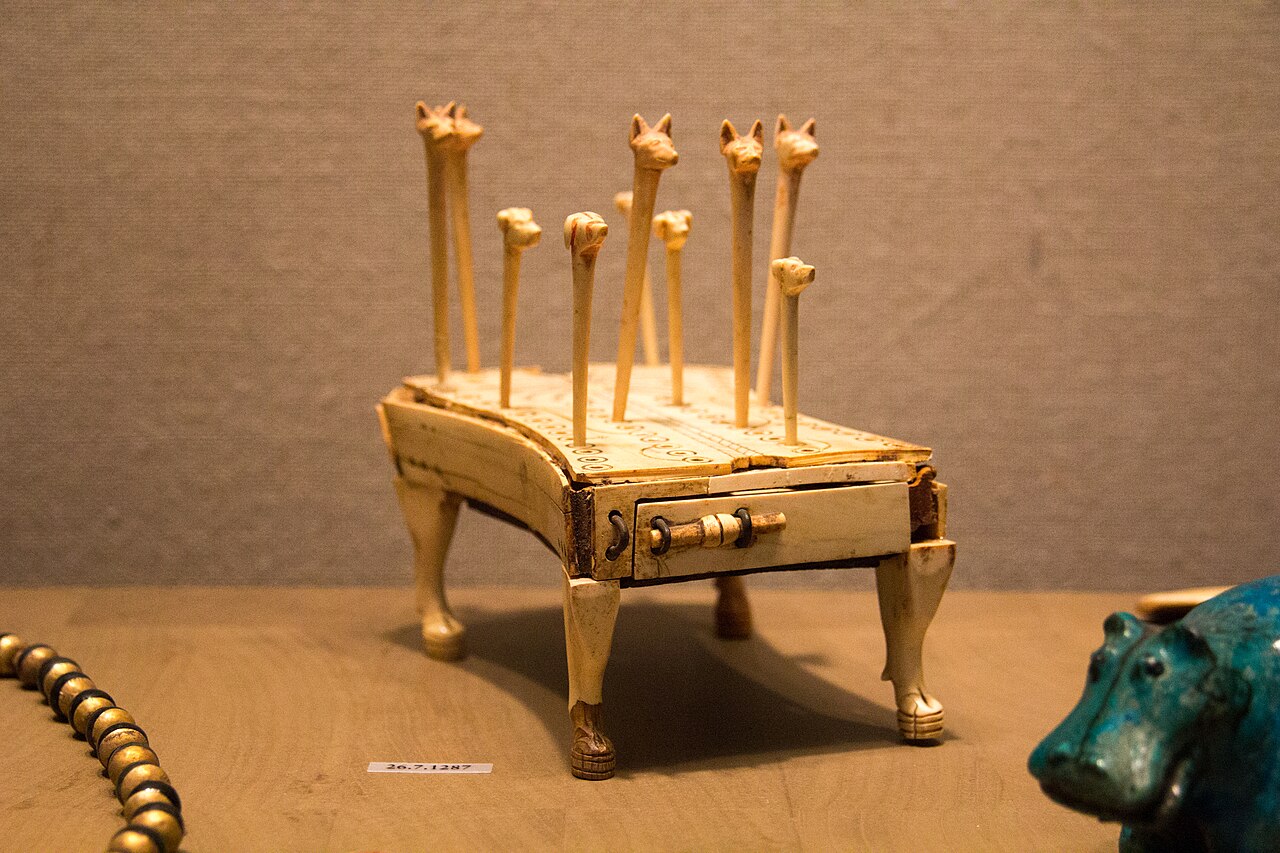
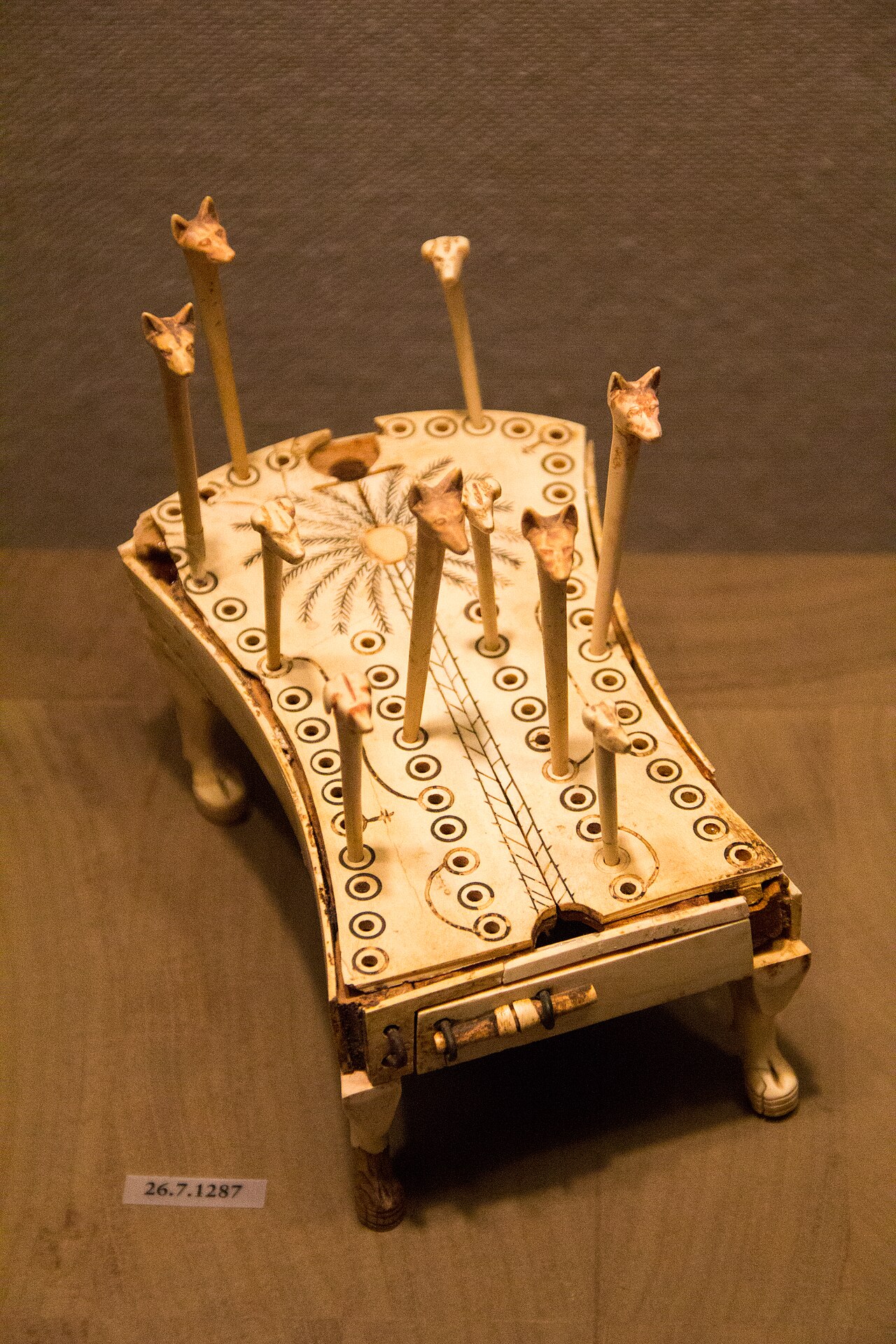
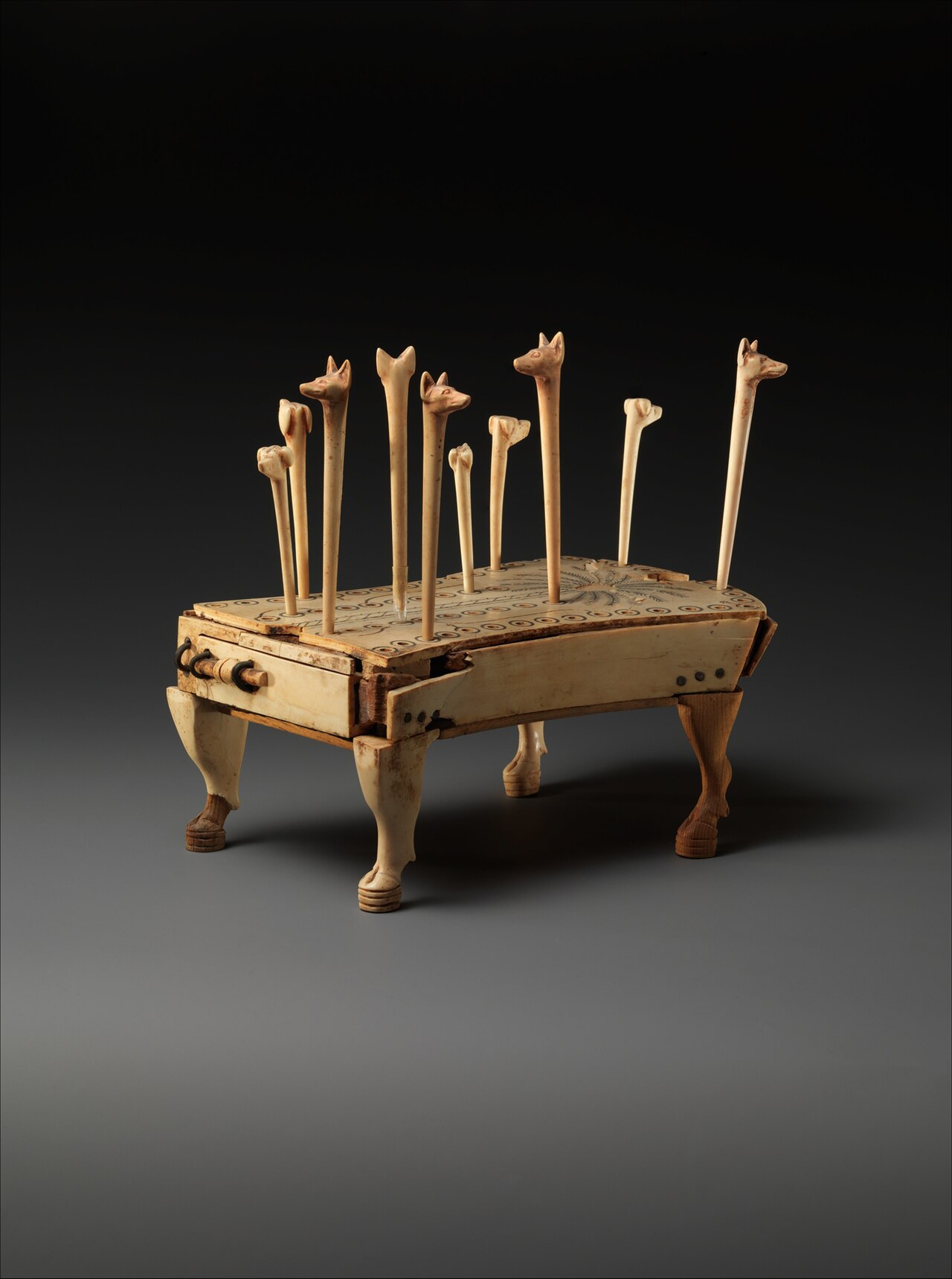
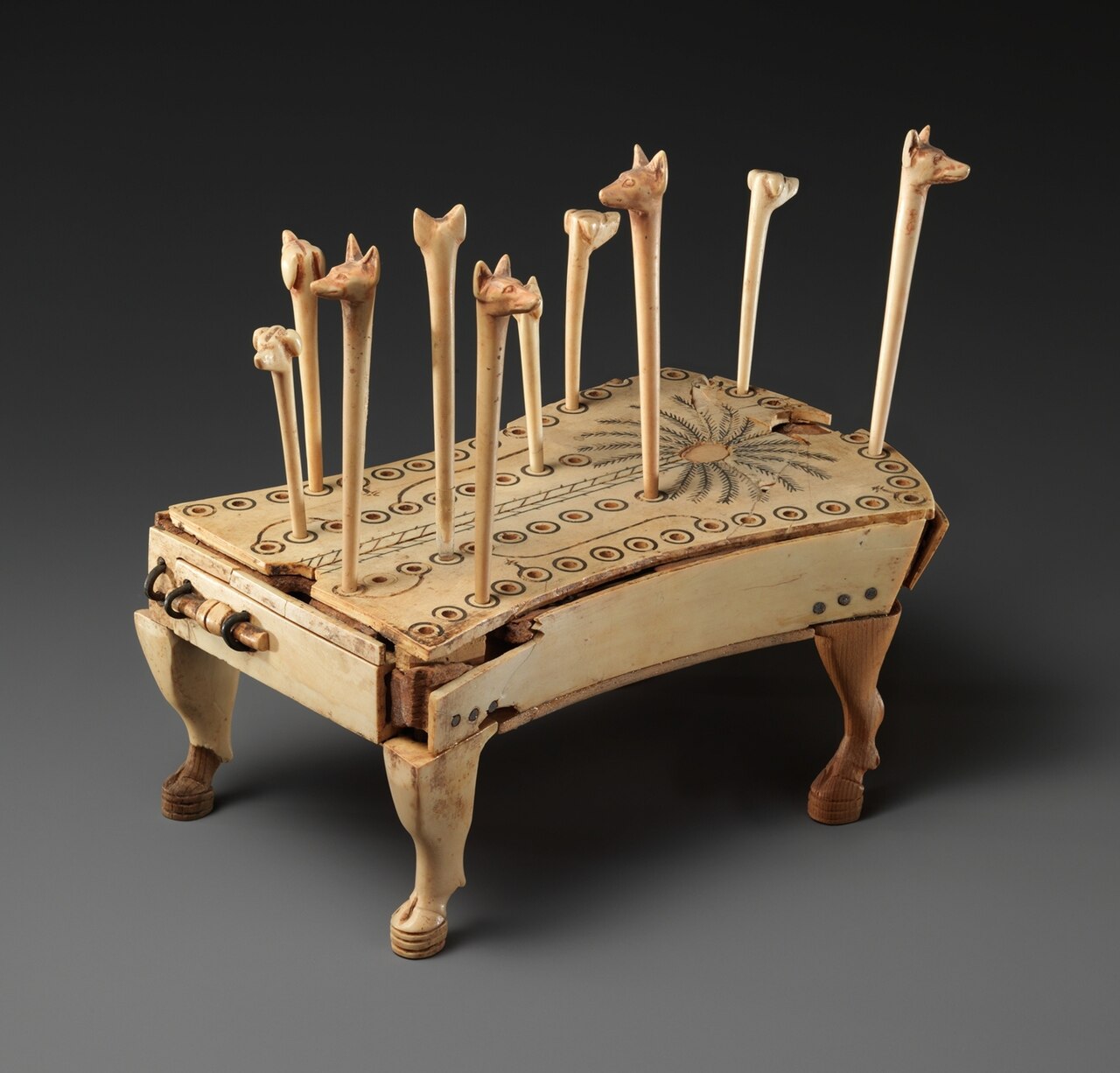
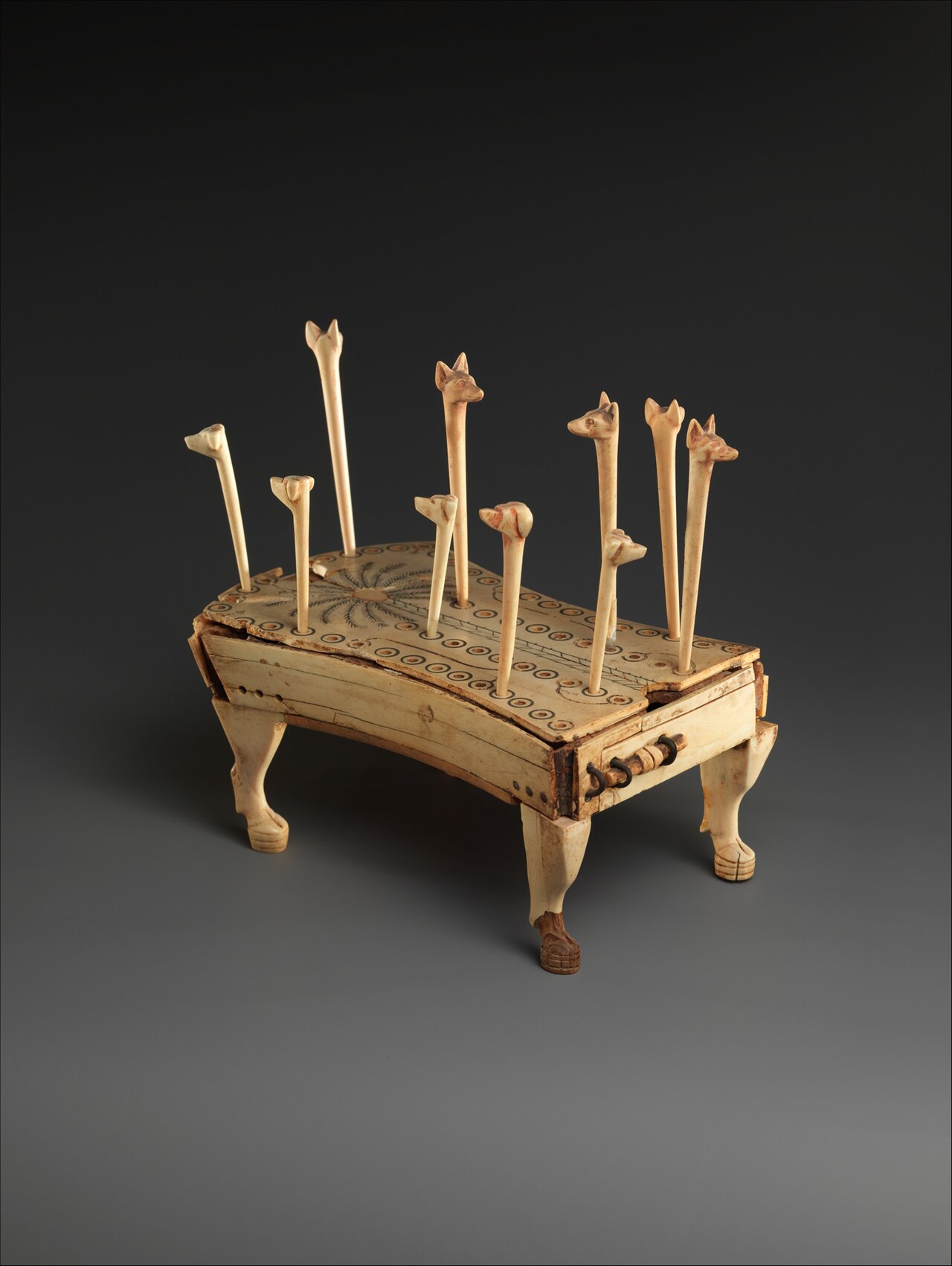
Ancient Egyptian board game played with jackal and dog-headed sticks.

Photograph by Mike Peel ( www.mikepeel.net ). · CC BY-SA 4.0
Hounds and jackals, also known as 58 holes, is a modern name for an ancient Egyptian board game that dates to around 2000 BC. The game is known from numerous excavated gaming boards and pieces, with a complete set discovered by Howard Carter in a Theban tomb from the reign of Pharaoh Amenemhat IV of the 12th Dynasty. It was mainly popular in the Middle Kingdom and later spread across the Near East.
- Also known as
- 58 holes, Palm tree game
Lore & Background
The game was named 'Hounds and jackals' by Howard Carter, who found a complete set in a Theban tomb from the reign of Amenemhat IV. He described it as 'the game of Hounds and Jackals' in his published writings. Game historians prefer the name 'fifty-eight holes'. The original Egyptian name is unknown, though it is also called the 'Palm tree game' due to tree figures replacing some holes.
Reader's Guide
Hounds and jackals is significant as one of the earliest known board games, with over 68 examples found across Egypt, Mesopotamia, the Levant, Anatolia, Iran, and Azerbaijan. A 2013 study of 68 boards suggests the game spread via trade from Egypt to Central Anatolia around 1950 BC and later to Mesopotamia, while it reached Nubia by conquest around 1980 BC. The game's enduring popularity is evidenced by its presence in Assyrian merchant colonies and its mention in the 1956 film The Ten Commandments. The rules are not fully known, but the aim was likely to move all pieces from a start point to a larger hole at the top of the board. The game shares similarities with other ancient race games like Senet and the Royal Game of Ur. Its discovery in diverse regions highlights its role as a cultural connector in the Bronze Age.
Did You Know?
- The game board has 58 holes, 29 for each player.
- More than 68 gameboards have been found across Egypt, Mesopotamia, Israel, Iran, Turkey, and Azerbaijan.
- In the 1956 movie The Ten Commandments, Pharaoh Seti and Nefretiri are shown playing a different game (senet), not Hounds and Jackals.
Discovery and the Tangle of Names
The true name of this ancient pastime is lost, and every label we use today is really just an archaeologist's guess. William Mathew Flinders Petrie first published a description of the game in 1890 and simply called it "58 Holes," a nod to the two parallel rows of twenty-nine pits on each side. Decades later, Howard Carter pulled a remarkably intact set from a Theban tomb dating to the reign of Amenemhat IV, a 12th-Dynasty pharaoh. Impressed by the carved animal heads on the playing pegs, he dubbed it "Hounds contra Jackals." Other names have crept in over the years: "Shen," a word scratched in hieroglyphs near the larger central hole on certain boards, and "Palm tree game," a reference to boards where some pits were replaced by stylized tree figures. Game historians generally prefer Petrie's plain "fifty-eight holes," yet none of these is the original. Carter's 1910 find, the best-preserved example known, now lives in the Metropolitan Museum of Art in New York, where the two rows of pits and ten small pegs can still be traced.
How the Game Was Played
Two players sat across a board of fifty-eight pits—twenty-nine on each side—and each received five of the ten small sticks that served as playing pieces. One set of sticks was carved with jackal heads; the other with dog heads. The precise rules are no longer documented, but the most likely objective was a race: each player started at one end of the board and tried to move all five of their pieces to the opposite end. The pit at the top of the board was carved slightly larger than the rest, and scholars accept it as the finish line. The sticks themselves were made from a range of materials depending on the player's wealth. Excavations have turned up pegs of ivory, silver, and gold, while ordinary wooden sticks, far less durable, almost certainly existed but have not survived. At some sites, such as Ur, the pieces were plain undecorated sticks. At Megiddo, ivory tokens with a small notch at the top have been linked to the same game, alongside pins topped with dog or jackal heads.
A Game That Traveled the Ancient World
What began as a Middle Kingdom Egyptian pastime around 2000 BC ended up scattered across the entire Near East. A 2013 study examining sixty-eight boards found across the region suggests the game moved from Egypt into Central Anatolia by trade around 1950 BC, and from there onward into Mesopotamia. A different route carried it south into Nubia, likely through military conquest around 1980 BC, while its arrival in the Levant remains undated. By the late third millennium BC the game had reached Mesopotamia proper, and it stayed popular there all the way into the first millennium BC, spreading into Assyria, Israel, Anatolia, Babylon, and Persia. Boards have been pulled from sites in Syria, Israel, Iraq, Iran, Turkey, Azerbaijan, and Egypt itself—more than sixty-eight in total. In April 2018, Walter Crist of the American Museum of Natural History identified carved dot patterns in rock shelters at Gobustan, Azerbaijan, as another example of the game. He argued that Bronze Age herders in that region must have had contact with the wider Near Eastern world, and that ancient games like this one crossed cultural borders and served as a kind of social glue.
Echoes in Other Games and Modern Culture
Hounds and Jackals is not an isolated curiosity; it belongs to a family of ancient two-player race games that share a common logic. The Royal Game of Ur, Senet, and Twenty Squares all follow the same basic structure: players move pieces along a track, and whoever reaches the endpoint first wins. Like Senet, Hounds and Jackals has been recovered from Egyptian tombs and dates to the third millennium BC, and both used stick-like pieces rather than flat tokens. Twenty Squares, in particular, spread across Palestine, Iraq, Iran, Turkey, Syria, and Cyprus with rules closely mirroring those of the fifty-eight-hole game. Even the method of deciding who moves first—rolling dice, tossing stones, or using other simple implements—echoes across all of them. The game's afterlife extends into modern entertainment as well: in the 1956 film The Ten Commandments, Pharaoh Seti, played by Cedric Hardwicke, and Nefretiri, played by Anne Baxter, are shown seated over a board, sliding animal-headed pegs in a quiet moment of leisure. And the board layout of Hounds and Jackals bears a recognizable resemblance to the pegboard used in the modern card game Cribbage.
Gallery

Frequently Asked Questions
What is Hounds and Jackals?
Hounds and Jackals is the modern name given to an ancient Egyptian board game that also goes by '58 holes' or 'Palm tree game.' It dates to roughly 2000 BC and was played using jackal-headed and dog-headed sticks as pieces.
When and where was Hounds and Jackals most popular?
The game was a staple pastime during Egypt's Middle Kingdom period, though its reach eventually extended across the wider Near East region.
Who discovered a complete Hounds and Jackals set?
Howard Carter unearthed a full gaming set inside a Theban tomb associated with Pharaoh Amenemhat IV of the 12th Dynasty.
What do the game pieces look like?
Players move jackal-headed and dog-headed sticks across the board, which is why the game carries its 'Hounds and Jackals' title.
Why is Hounds and Jackals important in board game history?
It is one of the oldest confirmed board games in the record, with numerous excavated boards and pieces attesting to its existence around 2000 BC. Its spread beyond Egypt into the broader Near East makes it an early example of cross-cultural gaming traditions.
More in History of board games 1-21
Spotted an error? Know more?
Reader corrections go straight into our review queue. Suggest an edit · How this site is sourced