
Alluvial fan
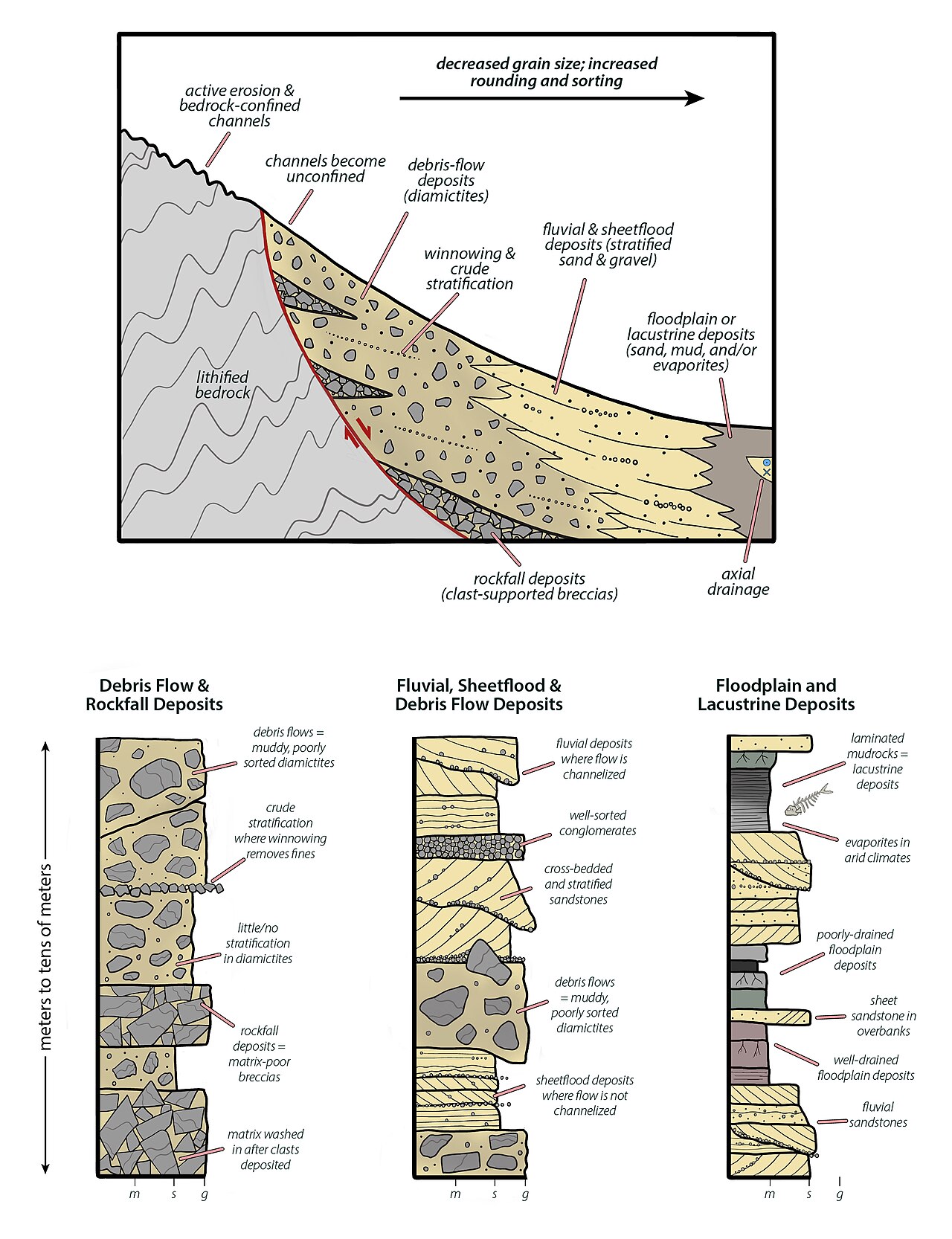
Fan-shaped sediment deposits formed where confined channels widen.

Page Quinton · CC BY-SA 4.0
An alluvial fan is a cone-shaped deposit of sediment that spreads outward from a narrow source, like a canyon mouth at the base of a cliff. These features are typical of dry mountain regions but can also appear in wetter areas with heavy rain or near modern glaciers. Their size varies dramatically, from less than a square kilometer to nearly 20,000 square kilometers.
The fan forms when a flow of sediment or rock leaves a confined channel and suddenly has room to spread. This often happens where a steep mountain valley opens onto a flat plain. The loss of confinement reduces the flow’s ability to carry material, so sediment drops out. The flow may be a rare debris flow, like a landslide, or an intermittent stream. If a river exits a valley without losing much carrying power, it tends to create an alluvial plain instead of a fan. The steepness of the fan depends on how much the flow slows; higher flow deposits sediment farther from the source.
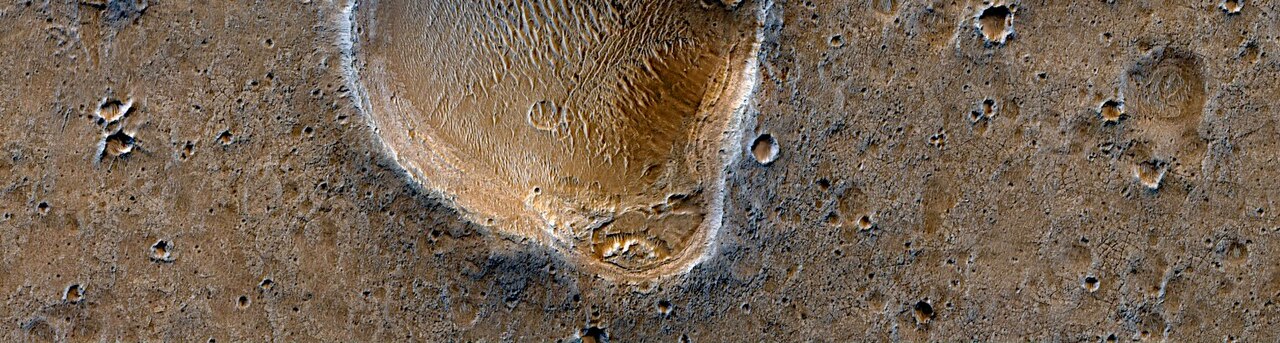
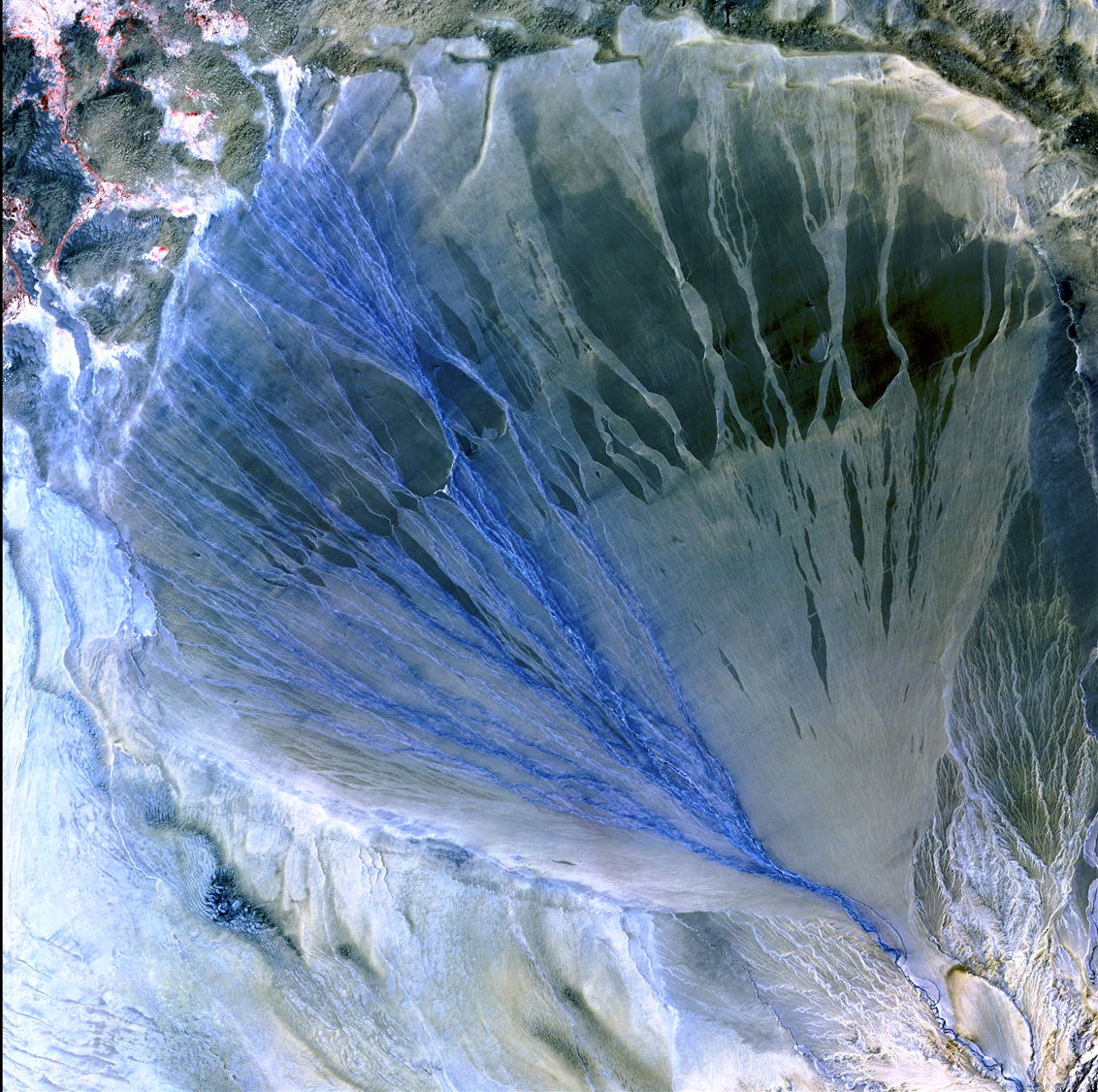
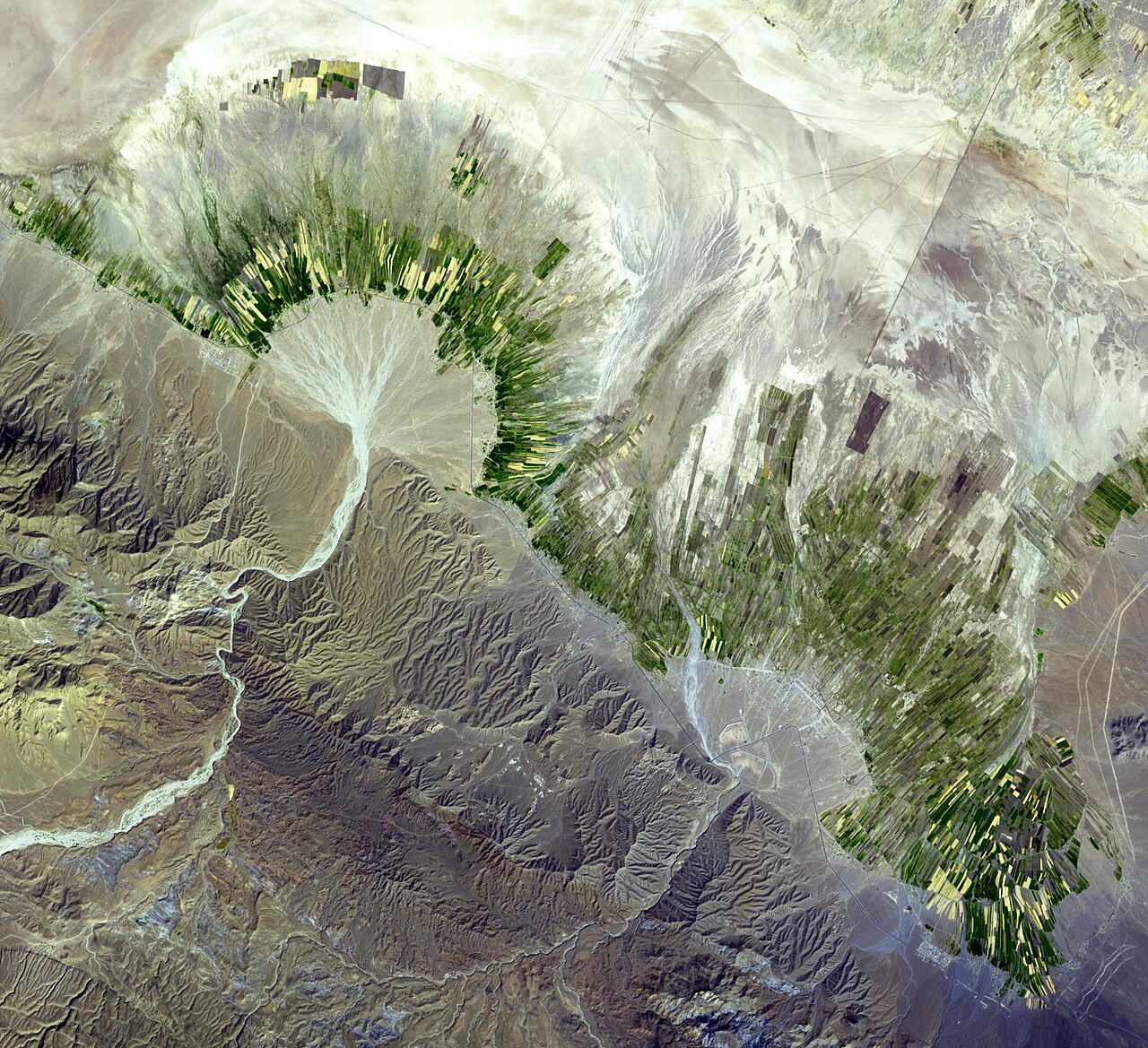
Common locations include the foot of desert mountains in North America’s Great Basin, the New Red Sandstone of south Devon, and the populated areas of Xinjiang in China’s Taklamakan Desert and Junggar Basin. Alluvial fans also exist on Mars and Titan, showing that similar fluvial processes happen elsewhere in the solar system. Some of the largest fans lie along the Himalaya front on the Indo-Gangetic Plain. A shift in the main channel, called a nodal avulsion, can cause severe flooding, as seen on the Kosi River fan in 2008.
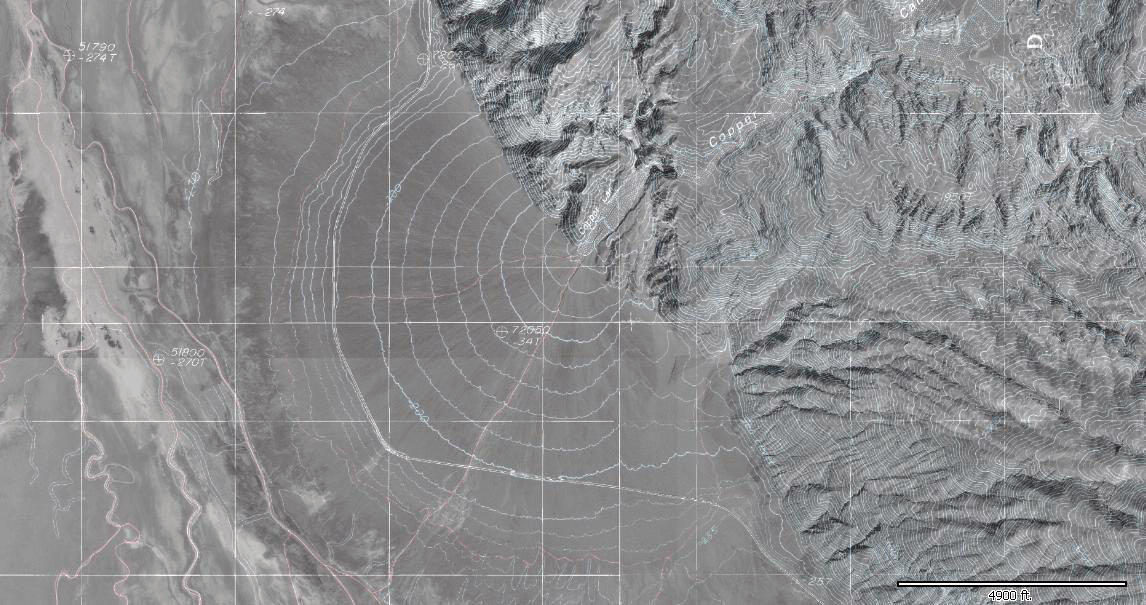
The fan’s shape is like a shallow cone section, with the apex at the sediment source. Fans range from a few meters across at the base to 150 kilometers, with slopes of 1.5 to 25 degrees. The slope is steepest near the apex (proximal fan or fanhead) and gradually flattens through the medial fan (midfan) to the distal fan (outer fan). Coarse, poorly sorted sediment dominates, with the largest material near the apex. Sieve deposits—lobes of coarse gravel—can appear on the proximal fan.
When there is ample space for the fan to spread without hitting valley walls or other rivers, an unconfined fan forms. If the plain is more restricted, the fan contacts topographic barriers, creating a confined fan. Lateral erosion by waves or channels can produce a toe-trimmed fan, where the edge has a small escarpment. These trimmed fans may record climate or tectonic changes and can improve aquifer or petroleum potential. On Mars, they provide evidence of ancient rivers. When many streams exit a mountain front, their fans can merge into a continuous apron called a bajada or piedmont alluvial plain.
Formation begins when a confined feeder channel leaves a mountain front or glacier margin. As the flow spreads into wide, shallow channels or soaks into the ground, its carrying power drops, and sediment is deposited. In the steep proximal fan, flow is usually confined to a single fanhead trench, up to 30 meters deep. This trench can be blocked by sediment or debris, causing the flow to shift to a steeper part of the fan (nodal avulsion). Only part of the fan is active at any time; inactive areas may develop soil or erode. Fans can be dominated by debris flows (debris flow fans) or stream flow (fluvial fans), depending on climate, tectonics, and bedrock type.
Debris flow fans get most of their sediment from debris flows—slurry-like mixtures of water and particles from clay to boulders, similar to wet concrete. These flows have a yield strength, meaning they are very viscous at low speeds but become less viscous as they speed up. They can stop on moderately tilted ground and then consolidate under their own weight. Debris flow fans occur in all climates but are more common where the source rock is mudstone or matrix-rich saprolite, as fine-grained sediment encourages hillslope failure and cohesive flow.
- field
- Geomorphology, Sedimentology
- known_for
- Fan-shaped sediment deposits at mountain fronts
- slope_range
- 1.5 to 25 degrees
- common_locations
- Great Basin of western North America, New Red Sandstone of south Devon, Taklamakan Desert and Junggar Basin in Xinjiang, Himalaya mountain front on the Indo-Gangetic Plain
Lore & Background
Alluvial fans typically form where a flow of sediment or rocks emerges from a confined channel and is suddenly free to spread out. The transition from a narrow channel to a wide open area reduces the carrying capacity of flow, resulting in deposition. The flow can be infrequent debris flows or carried by intermittent streams. The reduction of flow is key; if a river exits without reduction, an alluvial plain is more common. The steepness of the fan depends on how much flow decreases when entering flat ground.
Reader's Guide
Alluvial fans are significant as records of past and present fluvial processes, both on Earth and on other planets. The sediments are usually coarse and poorly sorted, with coarsest material near the apex. Fans can be unconfined or confined by topography. Toe-trimmed fans, formed by lateral erosion, may record climate changes or tectonic processes and enhance aquifer or petroleum reservoir potential. On Mars, such fans provide evidence of past river systems. Debris flow fans and fluvial fans are distinguished by the dominant sediment transport mechanism, controlled by climate, tectonics, and bedrock type.
Did You Know?
- Alluvial fans have been found on Mars, showing fluvial processes on other worlds.
- Debris flow fans are more common where the source rock is mudstone or matrix-rich saprolite.
The Physics of Flow Release
Alluvial fans emerge from a fundamental shift in hydraulic energy. When a confined feeder channel—often a steep mountain valley or canyon cutting through an escarpment—suddenly opens onto a broad, flat plain, the water or debris it carries loses its constraint. The flow, no longer channeled, spreads laterally into wide, shallow paths or sinks into the ground through infiltration. This rapid expansion dramatically reduces the stream's carrying capacity, forcing it to dump its sediment load almost immediately. The result is a deposit that radiates outward from the point of release, building the characteristic fan shape over time. The degree of flow reduction is the critical variable: if a river exits its valley with little loss of momentum, it tends to form a long alluvial plain rather than a fan. The steeper the resulting fan, the more abruptly the flow has been checked; gentler slopes indicate a more gradual transition. Whether the feeder is a brief, violent debris flow or a seasonal creek, the underlying principle remains the same—confinement ends, velocity drops, and sediment settles.
Architecture of the Fan
The finished landform reads as a section of a shallow cone with its tip anchored at the source canyon. Slopes typically range from 1.5 to 25 degrees and follow a concave profile: the steepest gradient sits at the fanhead, where the first sediments drop out, then eases progressively through the midfan and flattens to a gentle apron at the outermost edge. Sediment texture mirrors this geometry—coarse, poorly sorted gravel dominates the proximal zone, while finer material is carried further downslope. In the upper fan, a single entrenched channel called a fanhead trench can cut as deep as 30 meters, funneling flow until accumulated debris or a sudden debris event blocks it. Once blocked, the water abandons that path and re-routes across a steeper sector of the fan in a process known as nodal avulsion, leaving the old channel to weather or develop soil. Because only a fraction of the fan surface is active at any given moment, inactive lobes can accumulate desert varnish or undergo slow erosion. Overall dimensions vary enormously: bases can span just a few meters or stretch to 150 kilometers, and the largest examples cover nearly 20,000 square kilometers.
Debris-Flow Fans and Climate Controls
Not all fans are built by running water. Debris-flow fans receive their bulk sediment as cohesive, slurry-like surges—mixtures of water, clay, sand, and boulders that behave almost like wet concrete. These flows possess a yield strength: at low speeds they are highly viscous and can come to rest on moderately tilted ground, then consolidate under their own weight. This property means debris-flow fans can develop in virtually any climate, though they are especially common where the source bedrock is mudstone or matrix-rich saprolite rather than coarse, permeable regolith. Fine-grained material encourages initial hillslope failure, and saturation of clay-rich colluvium by intense thunderstorms often triggers the catastrophic slide that sends the flow racing down the feeder channel and onto the fan surface. The resulting fan displays a network of mostly inactive distributary channels in the upper zone, giving way to broad lobes at mid and lower elevations. Which type of fan dominates a given landscape—debris-flow or fluvial—depends on the interplay of local climate, tectonic setting, and the lithology of the mountains feeding the system.
Fans Across Worlds and Human Consequences
Alluvial fans are not exclusive to Earth. Because they are a straightforward product of gravity acting on unconfined flow, analogous deposits have been identified abundantly on Mars and Titan, offering evidence that fluvial processes once operated on those bodies. On Mars, toe-trimmed fans—where lateral erosion has sliced a small escarpment into the fan's outer edge—serve as geological records of ancient river systems. On our own planet, the largest fans line the Himalayan front where they spill onto the Indo-Gangetic Plain, while classic examples populate the Great Basin of western North America, the New Red Sandstone formations of south Devon, and the major population centers of Xinjiang nestled within the Taklamakan Desert and Junggar Basin. The human stakes can be severe: a nodal avulsion that shifts a feeder channel across a densely settled fan can unleash catastrophic flooding, as happened on the Kosi River fan in 2008. Conversely, the lateral erosion that trims fan edges can enhance the aquifer or petroleum-reservoir potential of the deposits, giving these landforms practical economic significance beyond their geological interest.
Gallery
Frequently Asked Questions
What exactly is an Alluvial fan?
An Alluvial fan is a fan-shaped deposit of loose sediment that spreads outward from a single narrow point, such as the mouth of a canyon at a mountain front. It forms when a confined water channel suddenly opens up, loses energy, and drops its load of sand, gravel, and silt in a broad triangular pattern.
Where are Alluvial fans most commonly found?
They thrive in dry, mountainous regions such as the Great Basin in western North America, the Taklamakan Desert and Junggar Basin in Xinjiang, and the Himalayan foothills along the Indo-Gangetic Plain. They also appear in wetter climates that experience heavy downpours and in areas shaped by recent glacial activity.
What slope does an Alluvial fan typically have?
The surface of a fan generally tilts between roughly 1.5 and 25 degrees, steepest near the apex where the channel exits and gentlest at the distal edge. This gradient is what allows water and sediment to spread across the fan face before dissipating.
Do Alluvial fans exist anywhere besides Earth?
Yes—similar fan-shaped deposits have been identified on Mars, providing strong evidence that flowing water once shaped the Martian surface. Their presence on another planet shows that the basic physics of channel spreading and sediment deposition are not unique to our world.
More in Geology And Landforms 1-17
Spotted an error? Know more?
This is a living reference — every entry is fact-audited, and reader corrections feed straight into our audit queue. Suggest an edit · See this site's audit record