
Aeolian processes
Wind-driven processes shaping Earth's surface, especially in deserts.

Laurent Deschodt · CC BY 2.5
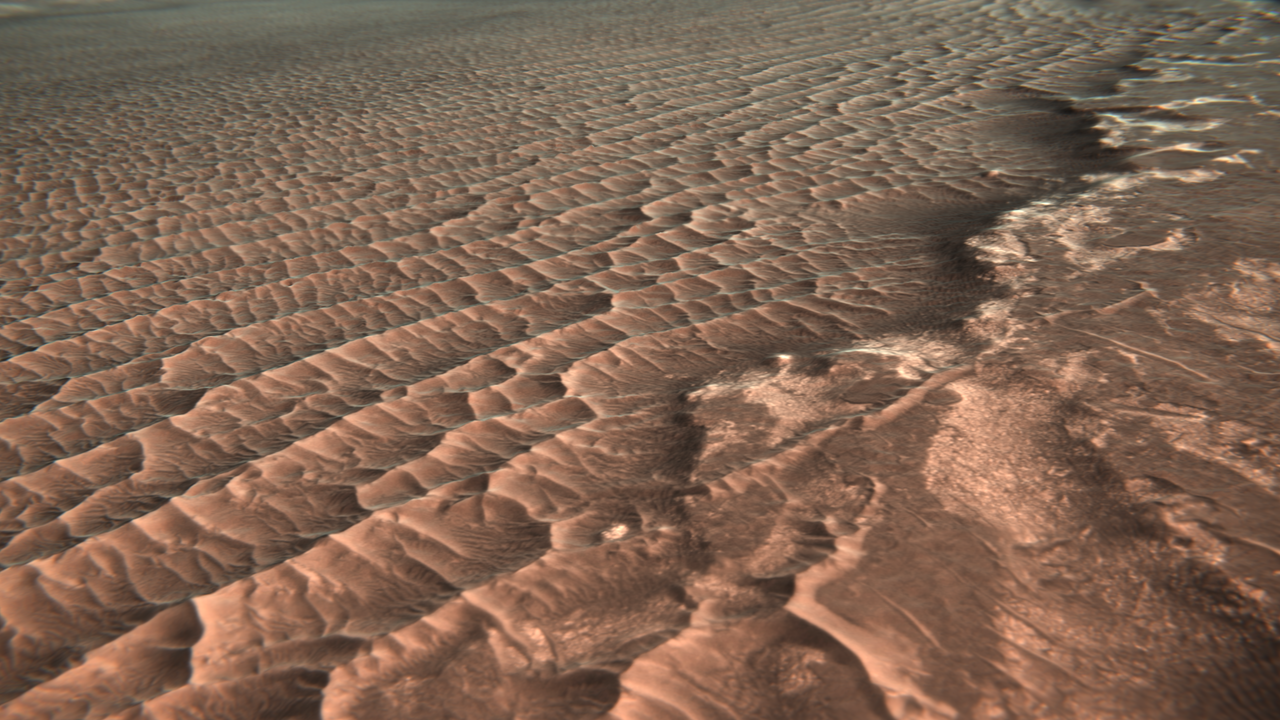
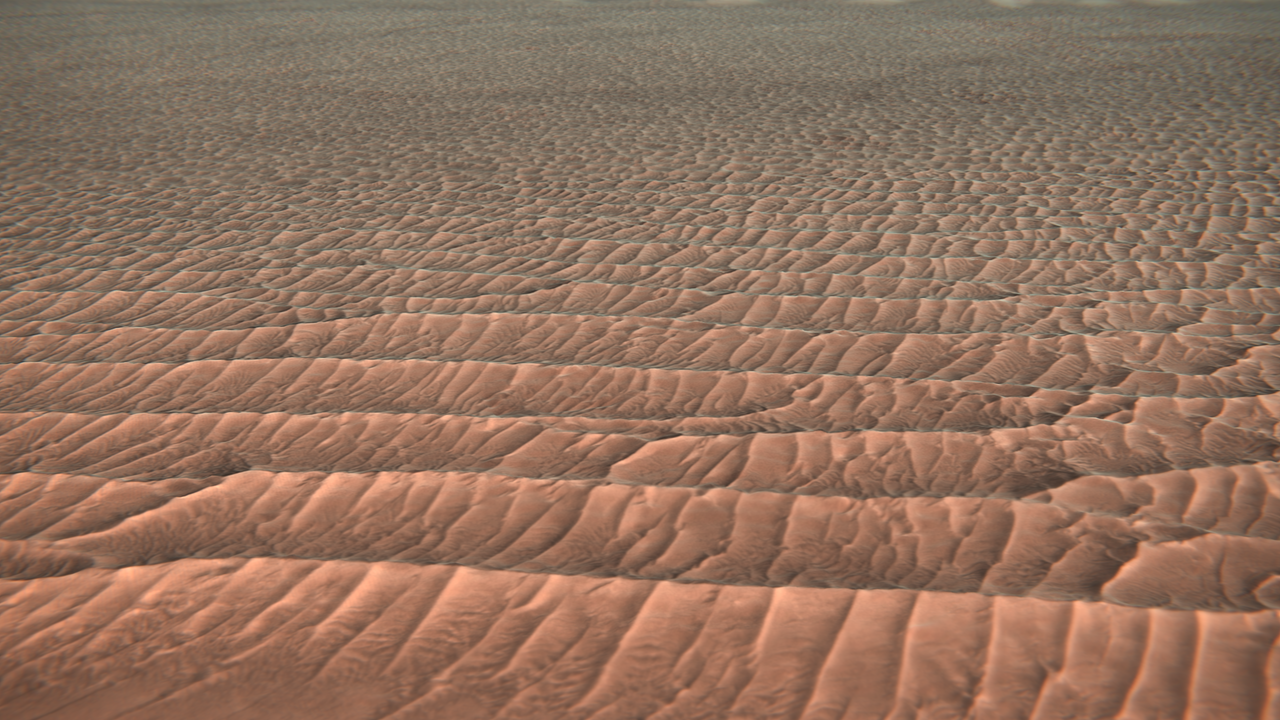
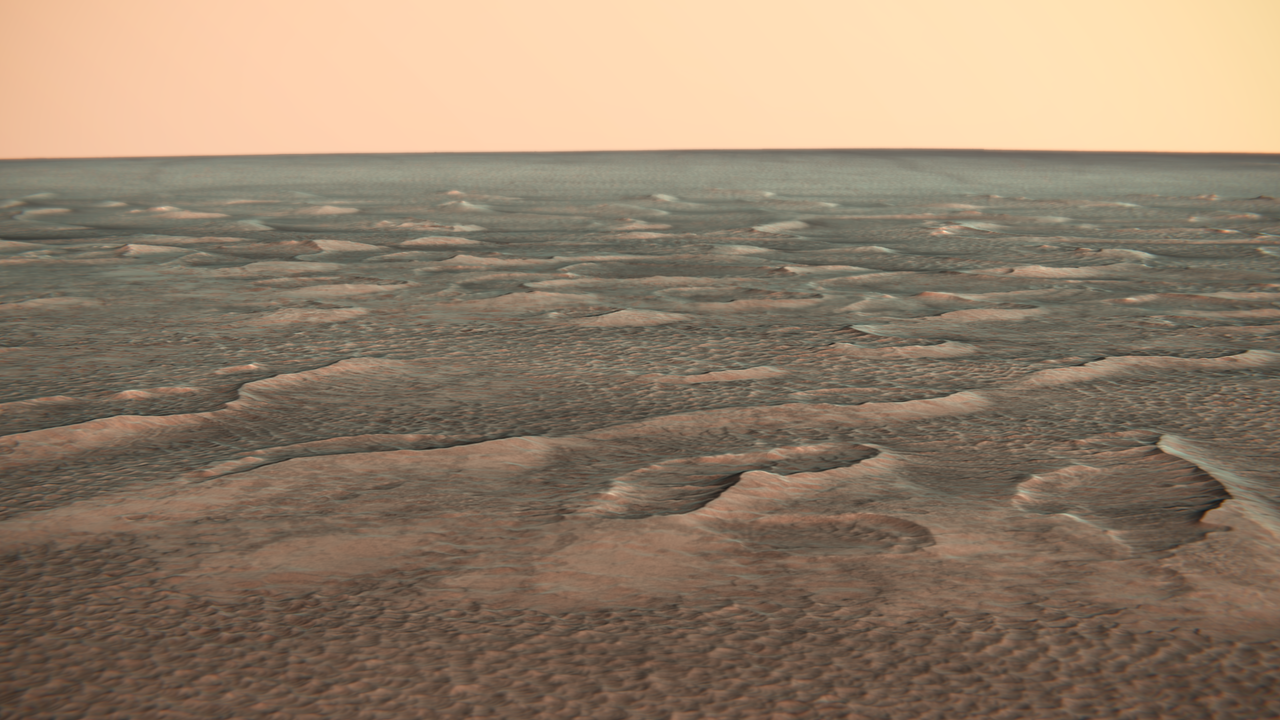
Aeolian (or eolian) processes describe how wind shapes the surface of Earth and other planets, covering erosion, transport, and deposition of material. These processes are most active where vegetation is sparse, soil is dry, and loose sediment is abundant. While water is a stronger erosive force overall, wind plays a key role in arid places like deserts. The name comes from Aeolus, the Greek god of the winds.
These processes involve the erosion, movement, and settling of sediment by wind near the ground. Deposits and sedimentary structures formed by wind are also called aeolian. Though most important in barren areas, aeolian deposits are not limited to deserts. They also occur along coastlines, beside streams in semiarid regions, in areas with soft sandstone outcrops, and in glacial outwash zones. Loess—wind-deposited silt—is common in humid to subhumid climates. Much of North America and Europe sits on sand and loess from Pleistocene glacial outwash. In semiarid regions, the downwind sides of river valleys, such as those of the Platte, Arkansas, and Missouri Rivers in North America, are often covered with sand and dunes.
Wind erodes the surface through deflation—the lifting of loose fine particles by turbulent wind—and abrasion, which is the grinding and sandblasting of surfaces by windborne particles. Once particles are airborne, collisions break them further, a process called attrition. Water erosion is globally more significant, but wind erosion matters in semiarid and arid areas. Human activities, like driving off-road vehicles, can increase wind erosion.
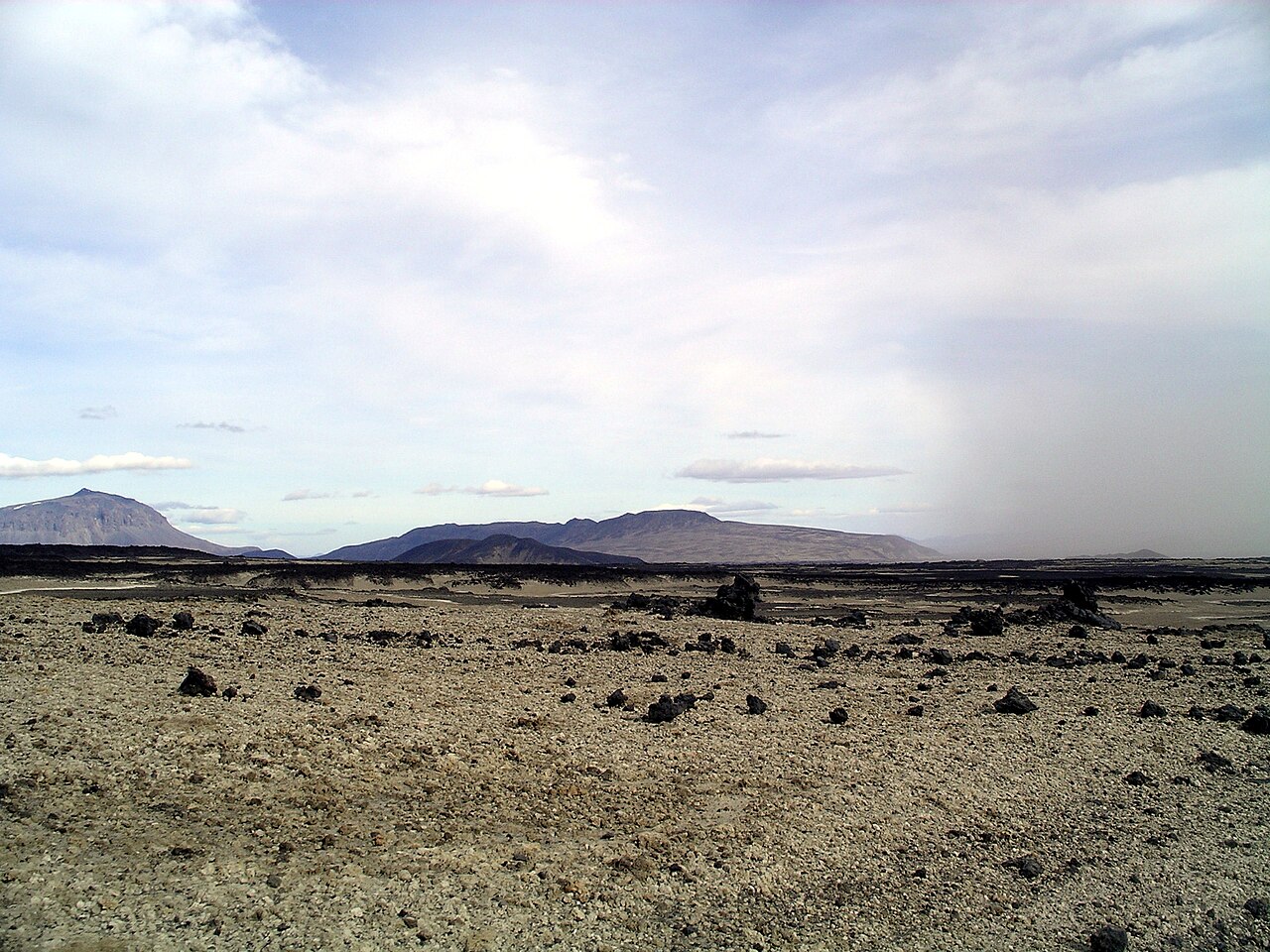
Deflation removes loose material via three mechanisms: traction (or surface creep), where larger grains slide or roll; saltation, where particles bounce short distances; and suspension, where fine particles are carried far. Saltation accounts for 50–70% of deflation, suspension for 30–40%, and surface creep for 5–25%. Intensely eroded areas are deflation zones, often forming desert pavement—a sheet of rock fragments left after fine particles are removed. This pavement protects underlying material. Such stony deserts, called regs in the Sahara, include rocky hamadas and gravelly serirs. Blowouts are hollows formed by deflation, ranging from small dimples 0.3 meters deep and 3 meters wide to large ones in Mongolia up to 8 kilometers across and 60–100 meters deep. Big Hollow in Wyoming measures 14 by 9.7 kilometers and is up to 90 meters deep.
Abrasion, also called corrasion, involves wind-driven grains knocking material off landforms. Once seen as a major desert erosion process, it is now considered less important. Most windborne sand stays within 50 centimeters of the surface, rarely above 2 meters. Features once blamed on abrasion—like wind caves, mushroom rocks, and tafoni—are now attributed to differential weathering, rainwash, or deflation. Yardangs, however, are widely linked to wind abrasion. These streamlined rock ridges, up to tens of meters high and kilometers long, have grooves aligned with prevailing winds and form mostly in soft materials like silts. Abrasion also polishes, pits, grooves, and facets surfaces, producing ventifacts, which are rare and require abundant sand, strong winds, and no vegetation. In parts of Antarctica, windblown snowflakes can abrade exposed rocks.
Attrition is the wearing down of particles as they collide in moving air. It rounds sand grains and gives them a frosted texture. Collisions between windborne particles produce much of the dust in the 2–5 micron size range, mainly by removing weathered clay coatings.
Wind dominates the transport of sand and finer sediment in arid environments, and is also important in periglacial areas, river floodplains, and coasts. Coastal winds move large amounts of siliciclastic and carbonate sediments.
- field
- Geology and weather
- known_for
- Wind erosion, transport, and deposition of sediments
- key_processes
- Deflation, abrasion, attrition, suspension, saltation, surface creep
- primary_environment
- Arid and semiarid regions, also shorelines and glacial outwash areas
- derived_from
- Greek god Aeolus
Lore & Background
Aeolian processes are those processes of erosion, transport, and deposition of sediments caused by wind at or near the surface of the earth. Sediment deposits produced by the action of wind and the sedimentary structures characteristic of these deposits are also described as aeolian. These processes are most important in areas with little or no vegetation, but aeolian deposits are not restricted to arid climates; they are also seen along shorelines, stream courses in semiarid climates, areas of ample sand weathered from weakly cemented sandstone outcrops, and areas of glacial outwash. Loess, silt deposited by wind, is common in humid to subhumid climates, and much of North America and Europe are underlain by sand and loess of Pleistocene age originating from glacial outwash.
Reader's Guide
Wind erodes the Earth's surface by deflation (removal of loose fine-grained particles by turbulent wind) and by abrasion (wearing down by windborne particles). Deflation occurs through traction/surface creep, saltation, and suspension, with saltation accounting for 50–70% of deflation. Abrasion produces features such as yardangs—streamlined rock ridges up to tens of meters high—and ventifacts, though many desert features once attributed to abrasion are now attributed to other processes. Wind transport dominates in arid environments and is also important in periglacial areas, flood plains, and coastal areas. Dust storms can carry silt-size particles across oceans, forming loess deposits. Aeolian transport from deserts plays an important role in ecosystems globally, such as transporting minerals from the Sahara to the Amazon basin. Vegetation cover of as little as 15% is sufficient to eliminate most sand transport.
Did You Know?
- Saltation is the dominant wind transport mechanism, typically accounting for 50–70% of total sediment transport by wind.
- Suspension usually accounts for less than 10% of total sediment transport by wind, while surface creep makes up around 1–5%.
- Big Hollow in Wyoming, US, extends 14 by 9.7 kilometers and is up to 90 meters deep.
- Most windborne sand remains within 50 centimeters of the surface, and practically none is normally carried above 2 meters.
Naming the Wind's Handiwork
The term aeolian, sometimes spelled eolian, traces back to Aeolus, the Greek deity who served as guardian of the winds. In geological and meteorological study, the word captures everything wind does to sculpt a planetary surface—eroding, hauling, and settling material across the landscape. While water remains the dominant erosive force on Earth, wind takes center stage wherever vegetation is scarce, soil moisture is low, and loose sediment lies in abundance. Crucially, aeolian activity is not confined to deserts. Wind-blown deposits appear along coastlines, on the downwind sides of river valleys in semiarid zones (the Platte, Arkansas, and Missouri Rivers in North America offer classic examples), around weakly cemented sandstone outcrops, and across glacial outwash plains. In fact, vast swaths of North America and Europe rest atop Pleistocene-age sand and loess—fine silt carried by ancient winds from glacial meltwater deposits. Even in humid and subhumid climates, loess blankets the ground, reminding us that the wind's sculpting hand reaches far beyond the arid regions where it is most dramatic.
Three Engines of Wind Erosion
Wind attacks the ground through three distinct mechanisms. Deflation lifts and strips loose, fine-grained particles via turbulent airflow, operating through sub-processes of surface creep (larger grains sliding or rolling, contributing 5–25 percent of total deflation), saltation (particles bouncing short distances, responsible for roughly 50–70 percent), and suspension (fully airborne grains carried long distances, accounting for 30–40 percent). Abrasion, sometimes called corrasion, grinds and sandblasts exposed rock faces with windborne grains. Once regarded as a principal desert-erosion agent, abrasion was downgraded by mid-twentieth-century research; most windborne sand stays within fifty centimeters of the ground, and virtually none rises above two meters. Features long blamed on abrasion—wind caves, mushroom rocks, honeycomb tafoni—are now credited to differential weathering, rainwash, or deflation. Attrition, the third engine, occurs when airborne particles collide mid-flight, rounding grains, imparting a frosted surface texture, and chipping off weathered clay coatings to generate much of the 2–5 micron dust that hangs in arid atmospheres.
The Wind as a Global Conveyor
In arid landscapes, wind is the principal mover of sand and finer particles, and its reach extends well beyond deserts. Periglacial zones, river flood plains, and coastlines all depend heavily on aeolian transport. Along shorelines, steady coastal breezes push siliciclastic and carbonate sediments inland, while episodic dust storms loft clay and silt across vast distances. A striking consequence is that wind delivers a substantial share of the sediment that eventually settles in deep ocean basins. Within ergs—the great desert sand seas—wind proves exceptionally efficient at shuffling grains of sand size and smaller across the surface. Particles travel in three modes: suspended aloft in the air, bouncing in saltation, or creeping by rolling and sliding along the ground. The minimum wind speed needed to set a grain in motion is known as the threshold velocity, and once exceeded, the interplay of these three transport modes determines how far and how fast material migrates, shaping dunes, loess sheets, and the broader architecture of wind-dominated landscapes.
Sculpted Landscapes and Human Footprints
The cumulative work of wind produces some of the most striking landforms on Earth. Deflation zones—areas of intense, sustained erosion—often end as desert pavement, a sheet of rock fragments left behind after fine particles are stripped away. In the Sahara these stony surfaces form regs, subdivided into hamadas (boulder-strewn rocky ground) and serirs (gravel and small-rock fields). Blowouts, hollows carved by deflation, range from tiny 0.3-meter dimples to the Mongolian hollows spanning eight kilometers and plunging sixty to one hundred meters, and Big Hollow in Wyoming, stretching fourteen by nine and a half kilometers and reaching ninety meters deep. Yardangs—streamlined rock ridges up to tens of meters high and kilometers long, carved with wind-aligned furrows—form primarily in soft silts. Ventifacts, polished and faceted stones, are rare, demanding abundant sand, fierce winds, and bare ground. Even in Antarctica, wind-driven snowflakes abrade exposed rock. Meanwhile, human activities such as off-road vehicle traffic can accelerate wind erosion, reminding us that the wind's sculpting work is not entirely natural.
Gallery
Frequently Asked Questions
What are Aeolian processes?
Aeolian processes (also spelled eolian) refer to the ways wind erodes, transports, and deposits sediment to reshape Earth's surface. They are a core topic in geology and weather science, especially when studying dry, sparsely vegetated terrain.
What are Aeolian processes's key mechanisms?
The principal actions include deflation, abrasion, attrition, suspension, saltation, and surface creep. Together these describe how wind picks up, tumbles, carries, and finally drops loose particles.
Where do Aeolian processes have the biggest impact?
Arid and semiarid deserts are the primary stage, but wind shaping also plays a notable role along shorelines and in glacial outwash plains. The key ingredients are little vegetation, low soil moisture, and plenty of unconsolidated sediment available to move.
Why is the term 'Aeolian' used?
The name is drawn from Aeolus, the Greek god who served as keeper of the winds. Geologists adopted the reference to signal that wind, rather than water, is the agent doing the geological work.
How do Aeolian processes compare to water erosion?
Water is a far more powerful eroding force overall, but in dry environments where moisture and plant cover are scarce, wind becomes the dominant shaper of the landscape. That is why aeolian activity is most visible in deserts despite being a secondary agent globally.
More in Geology And Landforms 1-17
Spotted an error? Know more?
This is a living reference — every entry is fact-audited, and reader corrections feed straight into our audit queue. Suggest an edit · See this site's audit record