Aplasia cutis congenita
Rare congenital absence of skin, often on scalp.

Liwen Xu, Kevin X. Liu, Maryanne M. Senna · CC BY 4.0
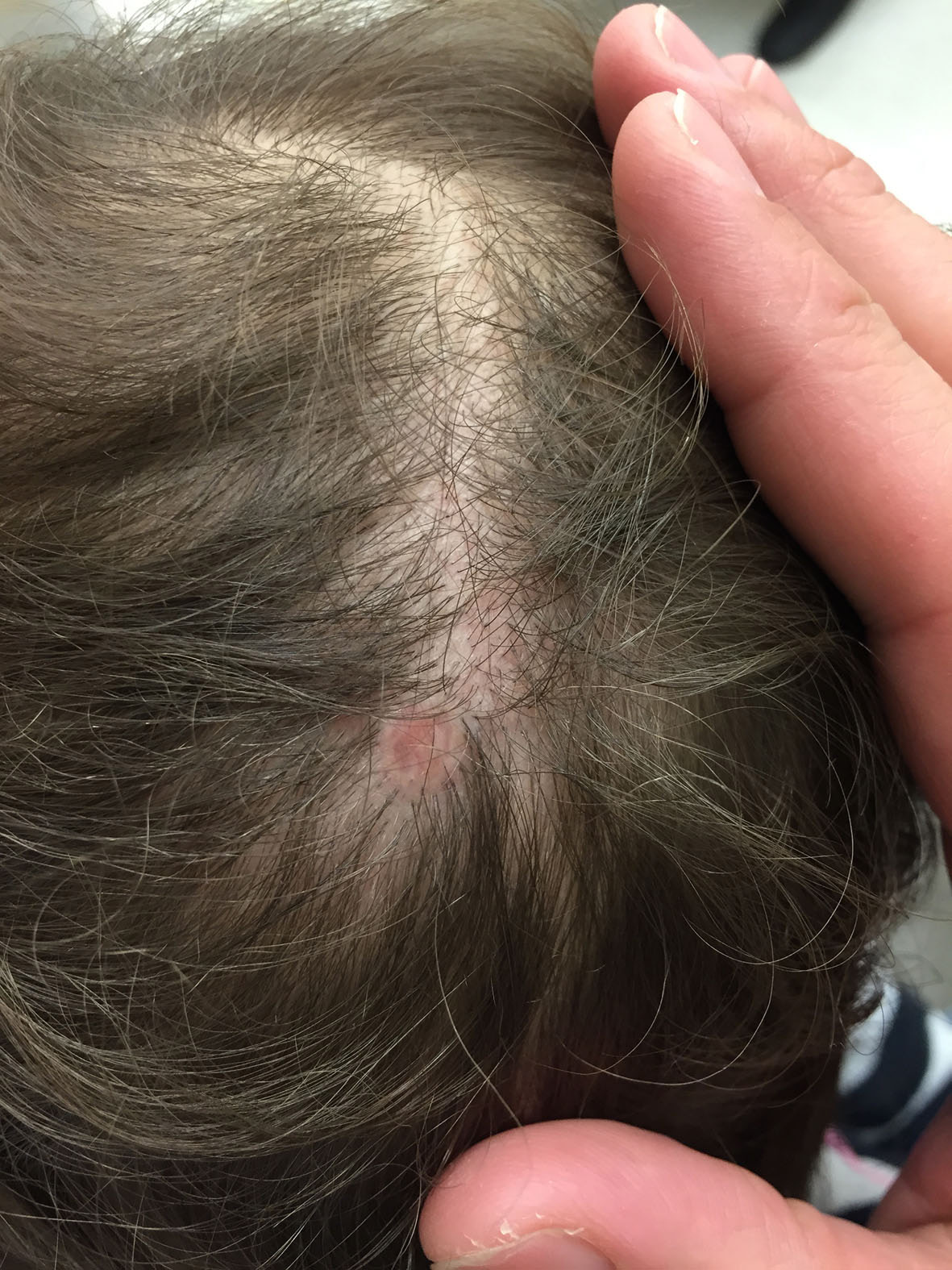
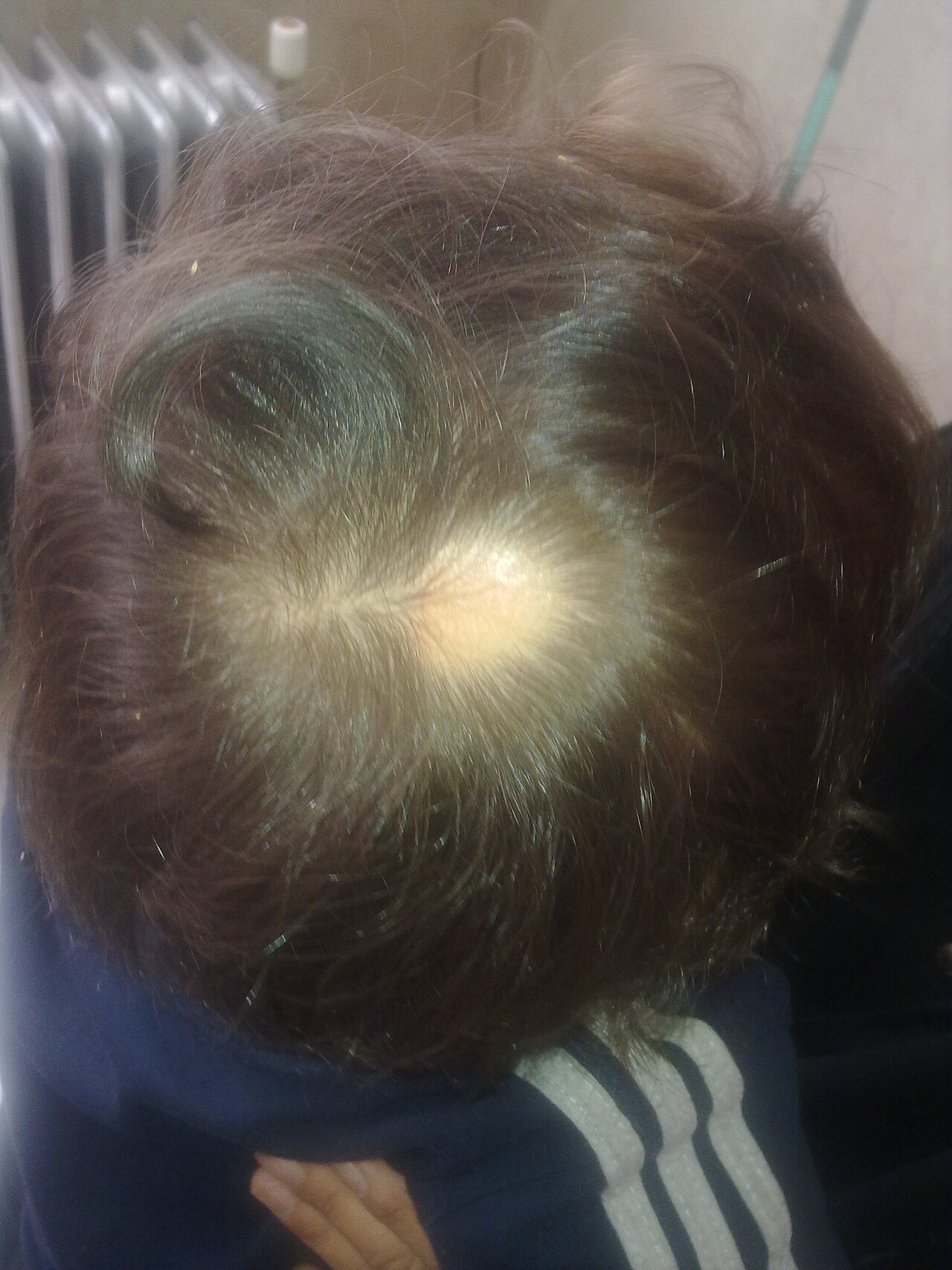
Aplasia cutis congenita (ACC) is a rare disorder characterized by congenital absence of skin. It is classified into 9 groups on the basis of location of the lesions and associated congenital anomalies, with the scalp being the most commonly involved area. The condition can present as truncal ACC with symmetrical absence of skin in a stellate or butterfly pattern, and is the most common congenital cicatricial alopecia.
Quick Facts
- Risks
- Vanishing twin (Type V)
Facts from the source article.
Lore & Background
Aplasia cutis congenita (ACC) is a rare disorder characterized by congenital absence of skin. Ilona J. Frieden classified ACC in 1986 into 9 groups on the basis of location of the lesions and associated congenital anomalies. The scalp is the most commonly involved area with lesser involvement of trunk and extremities. Frieden classified ACC with fetus papyraceus as type 5, which presents as truncal ACC with symmetrical absence of skin in stellate or butterfly pattern with or without involvement of proximal limbs. It is the most common congenital cicatricial alopecia, and is a congenital focal absence of epidermis with or without evidence of other layers of the skin.
Reader's Guide
The exact etiology of ACC is still unclear but intrauterine infection by varicella or herpes virus, drugs such as methimazole, misoprostol, valproate, cocaine, marijuana, fetus papyraceus, feto-fetal transfusion, vascular coagulation defects, amniotic membrane adherence, abnormal elastic fiber biomechanical forces and trauma are implicated. It can be associated with Johanson–Blizzard syndrome, Adams–Oliver syndrome, trisomy 13, and Wolf–Hirschhorn syndrome. It can also be seen with exposure to methimazole and carbimazole in utero. This dermatological manifestation has been linked to Peptidase D haploinsufficiency and a deletion in Chromosome 19. Genetics: This condition has been linked to mutations in the ribosomal GTPase BMS1 gene. Treatment: Skin grafting is a solution to fix aplasia cutis congenita.
Did You Know?
- Aplasia cutis congenita is classified into 9 groups by Ilona J. Frieden.
- Type 5 ACC is associated with fetus papyraceus and presents as truncal stellate or butterfly-shaped skin absence.
- Exposure to methimazole or carbimazole in utero can be associated with ACC.
Classification and Clinical Presentation
Aplasia cutis congenita was systematically organized by Ilona J. Frieden in 1986, who divided the condition into nine distinct groups based on where the lesions appear and what other congenital anomalies accompany them. The scalp represents the most frequently affected region, though the trunk and extremities can also be involved to a lesser degree. One particularly notable subgroup is type 5, which Frieden linked to fetus papyraceus. This presentation involves truncal ACC where skin is absent in a symmetrical pattern resembling a star or butterfly shape, sometimes extending to the proximal limbs. ACC holds the distinction of being the most common form of congenital cicatricial alopecia. At its core, the condition represents a congenital focal absence of the epidermis, which may or may not involve deeper layers of the skin. This classification framework has provided clinicians with a structured way to understand the wide spectrum of presentations that fall under the ACC umbrella, from isolated scalp defects to more complex multi-region involvement.
Etiology and Contributing Factors
The precise cause of aplasia cutis congenita remains elusive, and researchers have identified a broad array of potential contributing factors. Intrauterine infections with varicella or herpes virus have been implicated, as have exposures to certain medications including methimazole, misoprostol, and valproate. Illicit substance use such as cocaine and marijuana during pregnancy has also been associated with the condition. Other proposed mechanisms include fetus papyraceus, feto-fetal transfusion syndromes, vascular coagulation defects, abnormal adherence of the amniotic membrane, and unusual biomechanical forces related to elastic fibers. Trauma during development is another factor that has been considered. The multiplicity of these potential triggers underscores the complexity of the condition and suggests that ACC may represent a final common pathway reached through several different developmental disruptions rather than a single unified mechanism, making definitive causal attribution in any individual case particularly challenging.
Genetic Links and Syndromic Associations
Beyond its standalone presentation, aplasia cutis congenita frequently appears as part of broader genetic syndromes. The condition has been documented in association with Johanson-Blizzard syndrome, Adams-Oliver syndrome, trisomy 13, and Wolf-Hirschhorn syndrome, each of which carries its own constellation of developmental abnormalities. At the molecular level, researchers have connected ACC to Peptidase D haploinsufficiency and a deletion on Chromosome 19. Additionally, mutations in the ribosomal GTPase BMS1 gene have been linked to the condition, pointing toward a potential role in cellular protein synthesis during early skin development. The in-utero exposure to methimazole and carbimazole has also been specifically noted as a dermatological manifestation pathway. These genetic and chromosomal findings suggest that ACC is not merely a random developmental accident but can be embedded within identifiable hereditary frameworks, offering families and clinicians important context for prognosis and genetic counseling.
Treatment and Clinical Approach
The primary therapeutic intervention for aplasia cutis congenita is skin grafting, which serves as the main solution to address the congenital absence of skin. This surgical approach aims to restore the protective barrier function of the skin in areas where the epidermis—and potentially deeper dermal and subcutaneous layers—failed to develop in utero. Because the condition can present with varying degrees of depth, from a focal absence of epidermis alone to more extensive loss involving multiple skin layers, the grafting strategy must be tailored to the specific presentation. The stellate or butterfly patterns seen in truncal cases, particularly type 5 associated with fetus papyraceus, may present unique reconstructive challenges due to their symmetrical distribution across the body. The relatively straightforward nature of skin grafting as the identified treatment reflects the condition's fundamentally structural deficit: the absence of tissue that must be replaced rather than a functional disorder requiring pharmacological intervention.
Gallery
Frequently Asked Questions
What is Aplasia cutis congenita?
It is a rare birth condition in which a baby is missing patches of skin entirely. The scalp is the most frequently affected site, though other body areas can also be involved.
How is Aplasia cutis congenita categorized?
Researchers sort it into nine groups based on where the skin defects appear and whether other birth anomalies are present alongside them. One notable presentation is truncal ACC, where symmetrical skin loss forms a star or butterfly shape on the torso.
What is the genetic link behind Aplasia cutis congenita?
Although it carries an OMIM entry, no single definitive gene has been locked in as the sole cause. Mutations in BMS1 and chromosomal regions at 1q21, 2q, and 3q have been associated with the condition.
Why does Aplasia cutis congenita matter in the world of hair-loss disorders?
It holds the distinction of being the most common form of congenital cicatricial alopecia, making it the leading inherited cause of permanent scalp scarring and hair loss present from birth.
How do the nine ACC groups differ from one another?
They are distinguished by the anatomical location of the missing skin and the presence or absence of accompanying congenital anomalies elsewhere in the body. The scalp remains the most commonly involved area across the entire spectrum.
More in Genetic disorders with OMIM but no gene 1-24
Spotted an error? Know more?
Reader corrections go straight into our review queue. Suggest an edit · How this site is sourced