Ruby
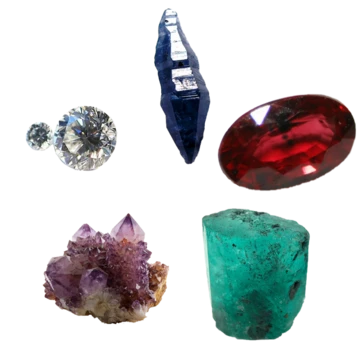
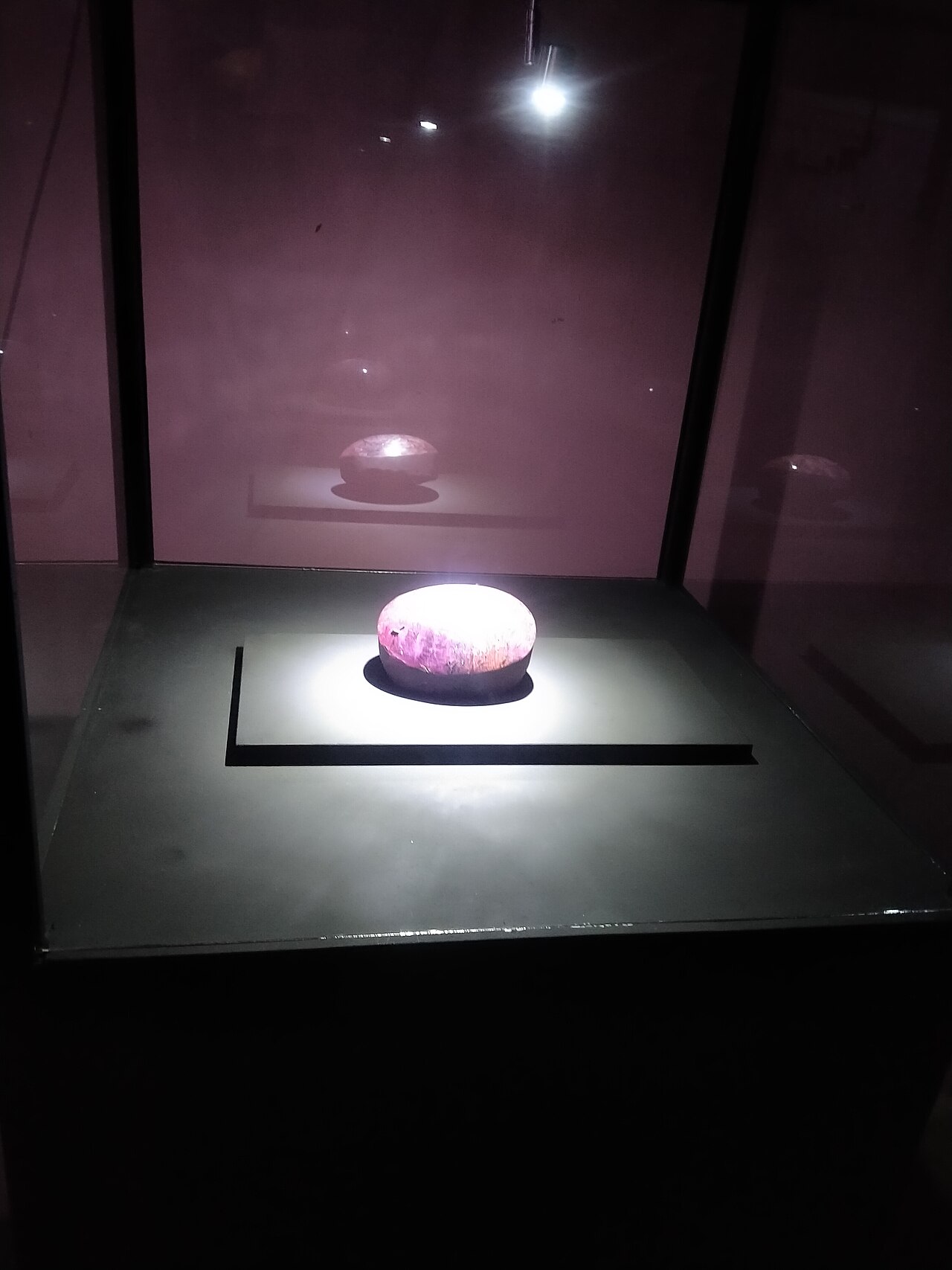
A durable red corundum gem, cardinal among traditional jewelry stones.

TheMaharlikan · CC0
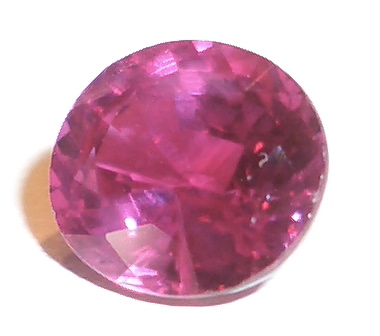
Ruby is a gemstone ranging from pinkish-red to deep blood-red, belonging to the mineral corundum, which is composed of aluminium oxide (α-Al2O3). It ranks among the most popular and durable gems for traditional jewelry. Alongside amethyst, sapphire, emerald, and diamond, it is considered one of the classic cardinal gems. The name derives from the Latin *ruber*, meaning red, and its color comes from the presence of chromium.
Some stones historically called rubies—like the Black Prince's Ruby in the British Imperial State Crown—are actually spinels, once referred to as "Balas rubies." A ruby's value depends on its color, cut, clarity, and carat weight. The most prized shade is a vivid blood-red or "pigeon blood," which commands a significant premium. After color, clarity matters: a clear stone is more valuable, but a ruby completely free of needle-like rutile inclusions may indicate treatment. Ruby is the traditional birthstone for July and is generally pinker than garnet, though some rhodolite garnets can appear similar.
On the Mohs scale, rubies have a hardness of 9.0, surpassed only by moissanite and diamond. Pure corundum is colorless and transparent; when chromium atoms replace some aluminium atoms in the crystal structure, the resulting distortion absorbs ultraviolet, violet, and yellow-green light. If about one percent of aluminium ions are replaced, the gem appears red. This absorption also triggers fluorescence at 694 nanometers, enhancing the red color and luster. In synthetic rubies, chromium levels can be ten to twenty times lower than in natural ones, producing a lighter red often called "pink ruby." After absorbing short-wavelength light, the crystal briefly enters an excited state; if 694-nanometer photons pass through during that time, they can stimulate more in-phase fluorescent photons, enabling ruby lasers to emit intense, coherent red light.
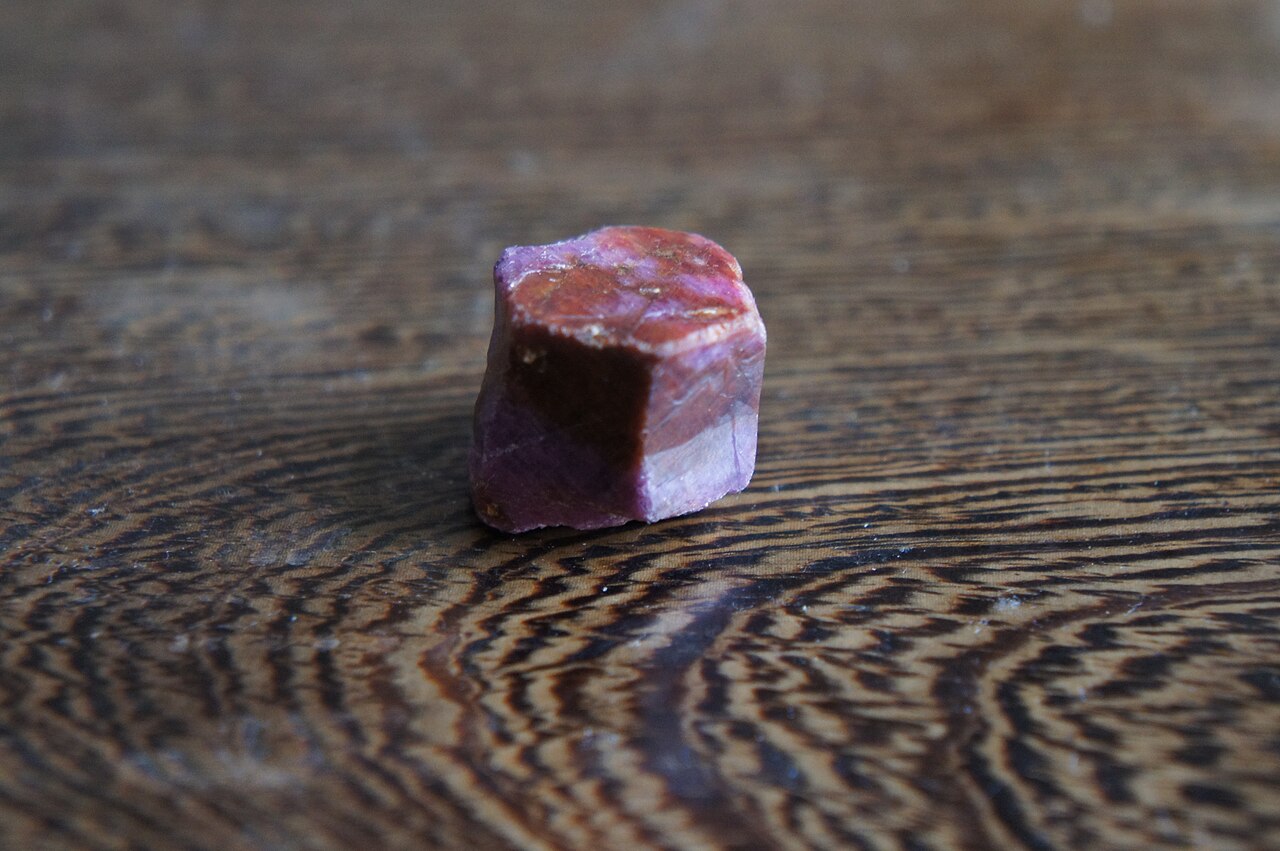
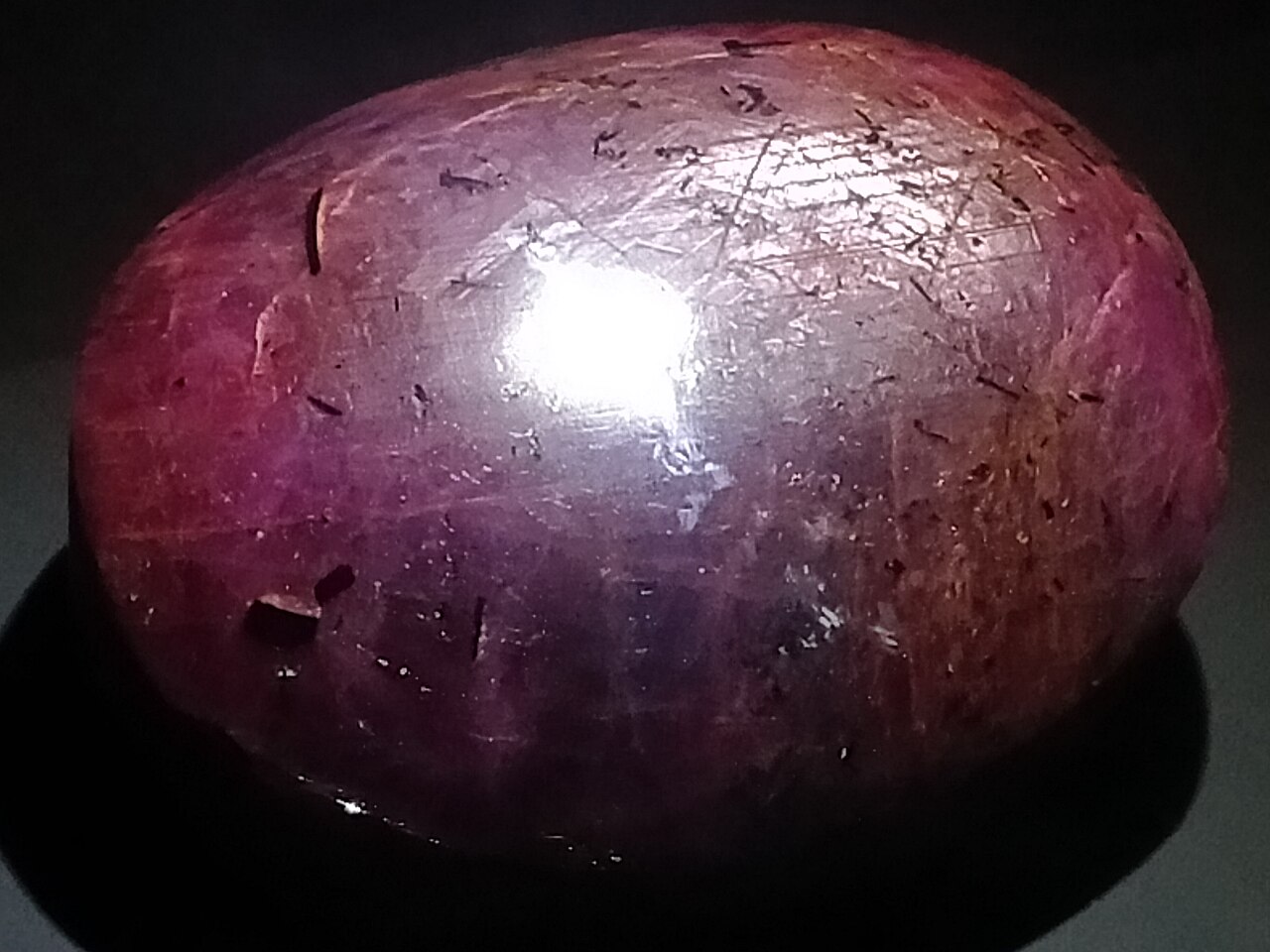
All natural rubies contain imperfections, such as color impurities and rutile needle inclusions known as "silk." Gemologists use these needles to distinguish natural rubies from synthetics or simulants. Rough stones are usually heated before cutting, and today nearly all rubies undergo some form of treatment, with heat treatment being most common. Untreated, high-quality rubies are especially valuable. Some rubies display a three-point or six-point star effect (asterism), best seen under a single light source and cut into cabochons. This effect arises from light reflecting off the silk inclusions, and in such cases, inclusions actually increase the stone's value. Rarely, rubies may also show color changes or a cat's eye effect.
In general, all shades of red corundum—including pink—are called rubies. However, in the United States, a minimum color saturation is required; otherwise, the stone is termed a pink sapphire. This distinction is relatively recent, dating to the 20th century, and can be subjective. Trade organizations like the International Colored Gemstone Association (ICGA) therefore adopt the broader definition, including lighter pink shades.
Historically, rubies have been mined in Thailand, Cambodia (Pailin and Samlout District), Afghanistan, Australia, Brazil, Colombia, India, Namibia, Japan, and Scotland. After World War II, deposits were also found in Madagascar, Mozambique, Nepal, Pakistan, Tajikistan, Tanzania, and Vietnam. The most valuable ruby ever sold at auction is the Estrela de Fura, which fetched US$34.8 million.
- hardness
- 9.0 on Mohs scale
- chemical_formula
- α-Al2O3 with chromium impurities
- traditional_birthstone
- July
- most_valuable_auction_sale
- Sunrise Ruby, US$30.42 million
- primary_modern_source
- Mozambique (Montepuez mine)
Lore & Background
Ruby’s defining red color is produced when chromium atoms replace a small fraction of the aluminium ions within the corundum crystal structure. This substitution distorts the regular octahedral arrangement of oxygen ions around the metal ions, causing the crystal to absorb light in the ultraviolet, violet, and yellow-green parts of the spectrum. When roughly one percent of the aluminium sites are occupied by chromium, the absorption of yellow-green light leaves a transmitted red hue. Additionally, the absorbed energy stimulates fluorescence that emits a deep red light at 694 nanometers, enhancing the gem’s luster and color intensity. All natural rubies contain imperfections, such as color impurities and needle-like inclusions of rutile known as “silk.” These silk inclusions are a key identifying feature; gemologists use them to distinguish natural stones from synthetic or imitation gems. Some rubies display a six-pointed or three-pointed star effect, called asterism, which is best seen under a single light source and becomes more visible when the stone is rotated. Such star rubies are typically cut into cabochons to show the effect. Although inclusions usually lower a gem’s value, asterism is a rare case where they can increase it. Rubies can also exhibit color changes or a cat’s-eye chatoyancy, though these occurrences are very uncommon. The distinction between ruby and pink sapphire is a modern one, arising in the 20th century, and remains subjective; in the United States, a minimum color saturation is required for a corundum to be called ruby, otherwise it is termed pink sapphire.
Reader's Guide
Ruby's significance stems from its historical status as a cardinal gem and its enduring popularity in jewelry. Its value is determined by the four Cs—color, cut, clarity, and carat weight—with color being the most important factor. The brightest and most valuable shade, called blood-red or pigeon blood, commands a large premium. Clarity is also critical: a clear stone commands a premium, but a ruby without needle-like rutile inclusions may indicate treatment. Almost all rubies today are heat-treated, and untreated high-quality rubies command a large premium. Rubies can display asterism (a star effect) when cut as cabochons, and such inclusions can increase value. The distinction between ruby and pink sapphire is relatively new and can be debated, with some trade organizations adopting a broader definition that includes lighter shades.
Did You Know?
- Some gemstones historically called rubies, such as the Black Prince's Ruby, are actually spinels.
- Rubies have a hardness of 9.0 on the Mohs scale; diamond is the only common natural gem harder than ruby.
- The world's most valuable ruby sold at auction is the Sunrise Ruby, which sold for US$30.42 million.
Common Misconceptions (Editorial)
Some gemstones historically called rubies, such as the Black Prince's Ruby, are actually spinels. Another common misconception is that rubies are flawless; in fact, all natural rubies have imperfections, including color impurities and inclusions of rutile needles known as "silk."
Why It Matters (Editorial)
Ruby endures as one of the traditional cardinal gems, prized not only for its striking red color but also for its remarkable hardness—9.0 on the Mohs scale, second only to diamond. Its rarity and durability have made it a symbol of passion and power for centuries, while modern sources like the Montepuez mine in Mozambique continue to supply this coveted stone to the global market.
Gallery


More in Gemstones 1-22
Spotted an error? Know more?
This is a living reference — every entry is fact-audited, and reader corrections feed straight into our audit queue. Suggest an edit · See this site's audit record