Game engine
Software framework for developing and publishing video games across platforms.
Last updated

Nicolas.le-guen · CC BY-SA 4.0
A game engine is a software framework primarily designed for the development of video games, including relevant libraries and support programs. It may also refer to the integrated development environment that provides visual development tools and features for creating video games. Game engines allow developers to create and publish games across platforms such as desktops, mobile devices, and video game consoles, and their core functionalities typically include rendering, physics, audio, scripting, animation, artificial intelligence, networking, and more.

Last updated 2026-10-05 from the source article.
Quick Facts
- Field
- Software development, video game development
Facts from the source article.
Lore & Background
Before game engines, games were typically written as singular entities, with little reuse between titles. The rapid advance of arcade hardware meant most code had to be discarded for later generations.
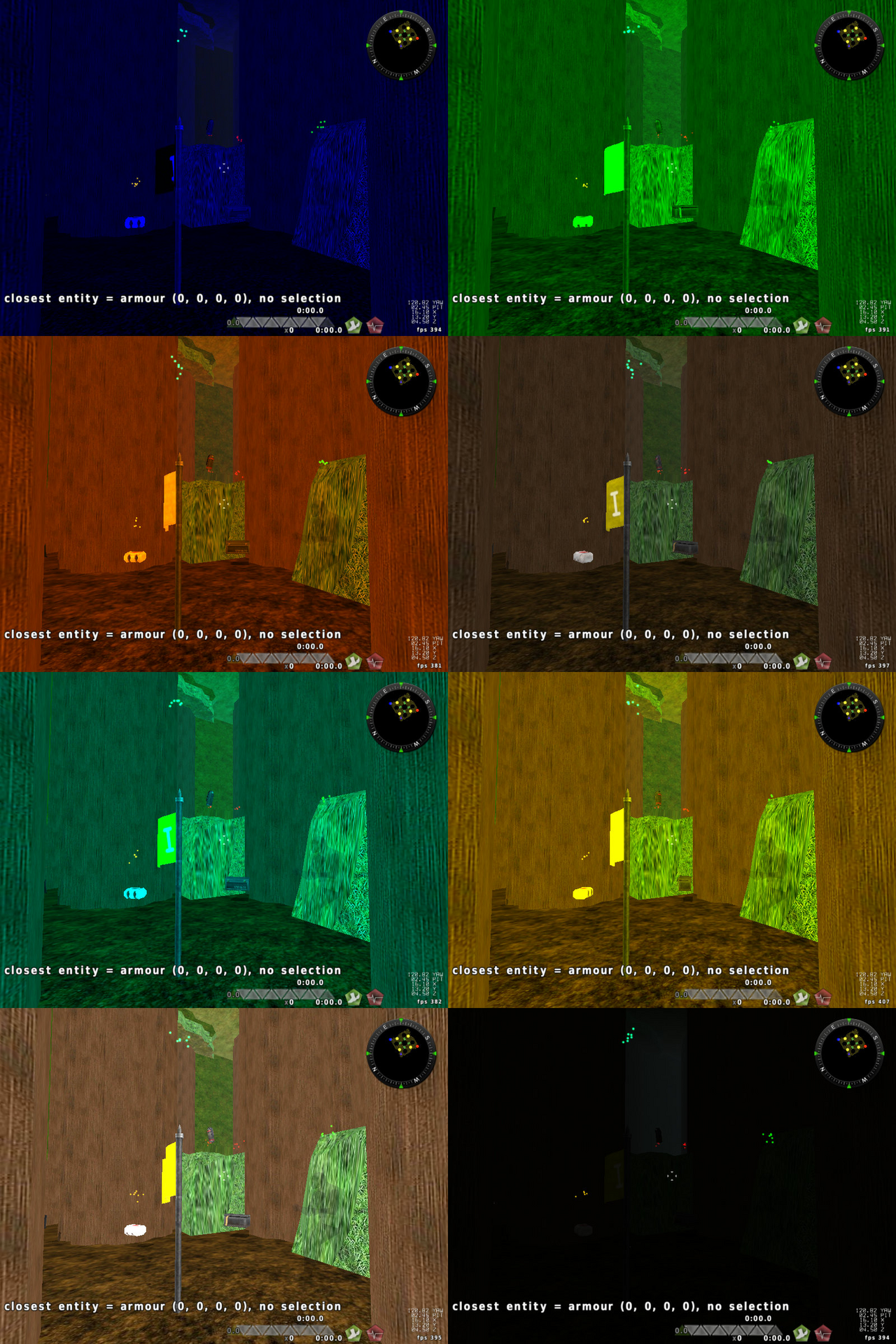
Through the 1980s, game designs were often hard-coded with small levels and graphics data. A notable early in-house engine was the smooth side-scrolling engine developed by Shigeru Miyamoto's team at Nintendo for the NES, first used in Excitebike (1984) and later reused and adapted for Super Mario Bros. (1985). While third-party engines were uncommon until the 1990s, several 2D game creation systems appeared in the 1980s, including Pinball Construction Set (1983) and the RPG Maker engines from 1992 onward.

Did You Know?
- Game engines are sometimes called 'middleware' because they provide a flexible, reusable software platform with core functionality needed to develop a game application.
- Game engines have found uses in scientific fields because they are optimized for consumer-grade computing equipment and simplify graphics, networking, and interactivity.
History
Before game engines, games were typically written as singular entities with hard-coded rules, especially on platforms like the Atari 2600 where the core display routine (called the kernel) had to be designed from the bottom up. Memory constraints and the rapid advance of arcade hardware made reuse difficult, so most games through the 1980s were built with limited levels and graphics.

In-house engines began to appear, such as Nintendo's side-scrolling engine used in Excitebike (1984) and later Super Mario Bros. (1985). Third-party engines became common in the 1990s with the rise of 3D graphics, though 2D creation systems like Pinball Construction Set (1983) and RPG Maker (1998) existed earlier. The term "game engine" emerged in the mid-1990s, notably with Epic Games' Unreal Engine (1998) and id Software's Doom and Quake, which separated core engine code from game-specific content, allowing licensing and specialization.

Game engines as an industry
Game engine producers decide how users can access their products, with pricing ranging from subscription fees to license payments. Unity and Unreal Engine are currently the two most popular choices for developers. Although differences between engines blur as tools are built on top of them, developers may stick with a familiar system or be attracted by the benefits regardless of cost. Free and open-source engines like Godot have gained popularity, especially after the 2023 Unity pricing controversy, which drove developers and studios to seek engines with permissive licenses.

Game middleware
Game engines themselves can be described as middleware, but in video games the term often refers to subsystems within an engine. Some middleware does only one thing but does it more convincingly or efficiently than general-purpose middleware.
Widely used middleware packages include RAD Game Tools' Bink (video rendering), Miles (audio), and Granny (3D rendering); Firelight FMOD (audio library); Havok (physics simulation, animation, and behavior); and Scaleform GFx (Flash UI and video playback, with an IME addon for Asian chat). Other middleware like Simplygon optimizes level of detail meshes, and Umbra adds occlusion culling. Some middleware provides full source code or an API reference, and licensing options vary.
Frequently Asked Questions
What is a game engine?
A game engine is a software framework that bundles reusable libraries and support tools built specifically for creating video games. It can also refer to the visual development environment that gives creators structured tools for assembling game content without writing every line of code by hand.
What core systems does a game engine typically handle?
Common engines cover rendering, physics simulation, audio, scripting, animation, AI, and networking in a single package. This all-in-one approach means developers never have to build each subsystem from scratch for every new project.
What platforms can a game engine publish to?
Modern engines target desktop computers, mobile devices, and dedicated video game consoles all from a single project. This cross-platform capability is one of the primary reasons studios adopt them over custom in-house solutions.
What is the main purpose of a game engine in the industry?
Its core goal is to economize game production by providing pre-built, reusable software components and visual authoring tools. Rather than reinventing rendering or physics for every title, developers build on a shared, tested foundation.
More in Gaming Mechanics & Design
Sources
Compiled from Wikipedia and the sources listed below. Text from Wikipedia is available under CC BY-SA 4.0; this entry is adapted from it.
- Wikipedia: Game engine (CC BY-SA 4.0).
Spotted an error? Know more?
Reader corrections go straight into our review queue. Suggest an edit · How this site is sourced