Striated frogfish
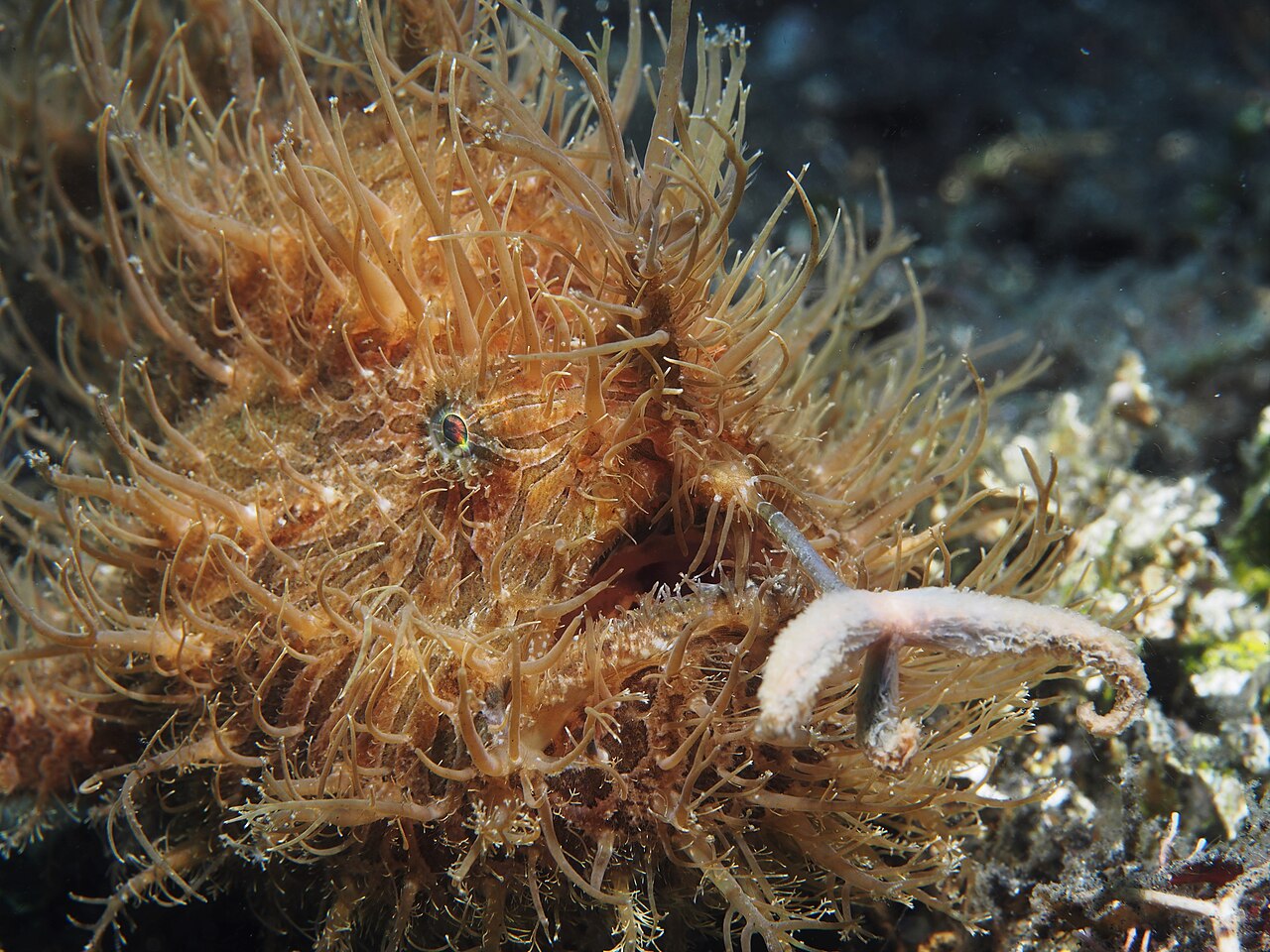
A camouflaged anglerfish that lures prey with a worm-like appendage.

Rickard Zerpe · CC BY-SA 2.0
The striated frogfish, also known as the hairy frogfish (*Antennarius striatus*), is a type of marine ray-finned fish in the frogfish family Antennariidae. It lives in the Indo-Pacific and eastern Atlantic Ocean.
The fish was first scientifically described in 1794 by English biologist George Shaw, who named it *Lophius striatus* based on a specimen from Tahiti. Within its genus, it belongs to the *striatus* species group. Its genus name, *Antennarius*, refers to the first dorsal spine, which is modified into a tentacle on the snout used as a lure. The species name *striatus* means "striped" or "streaked," describing the many black streaks on its body.
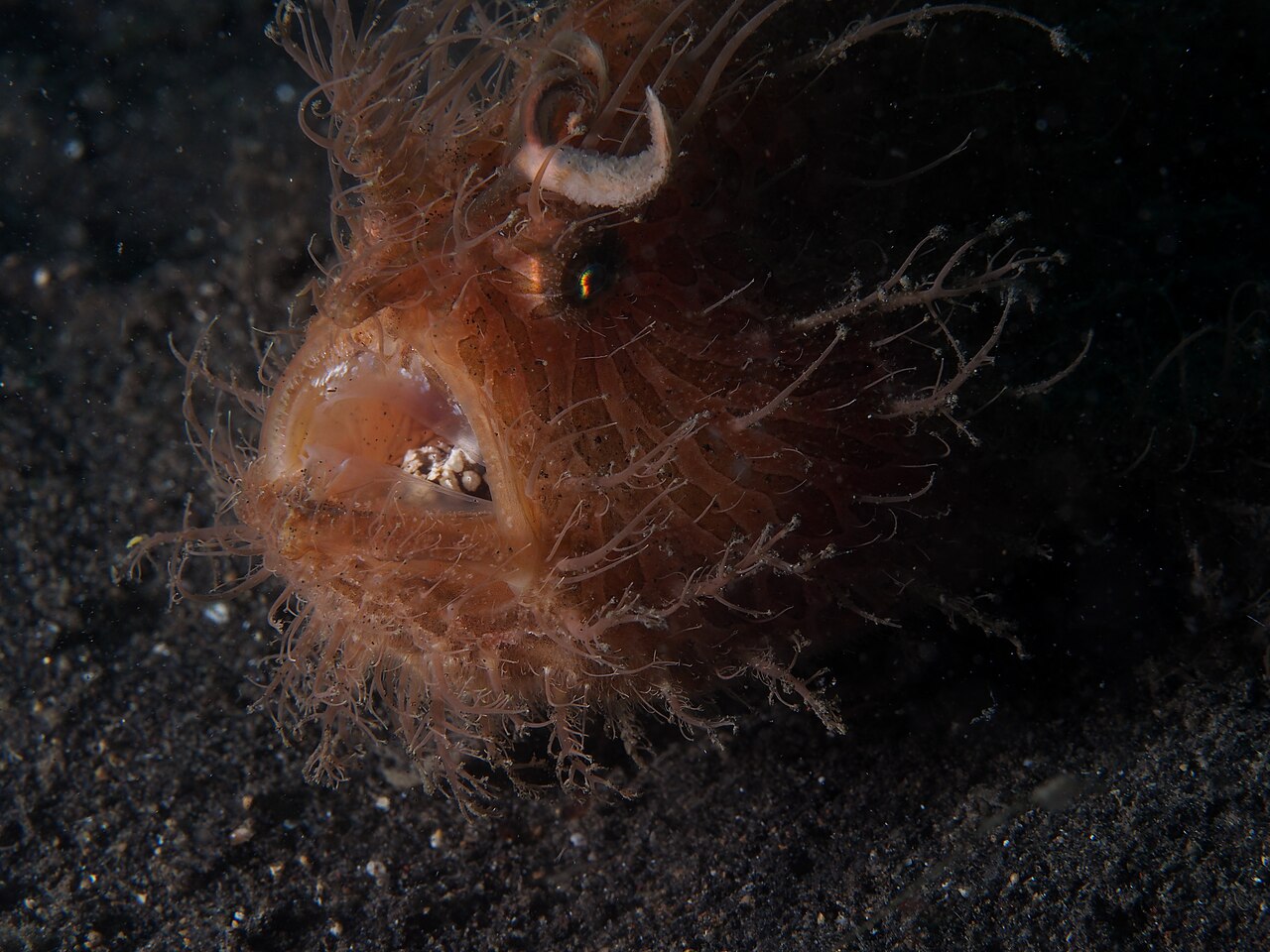
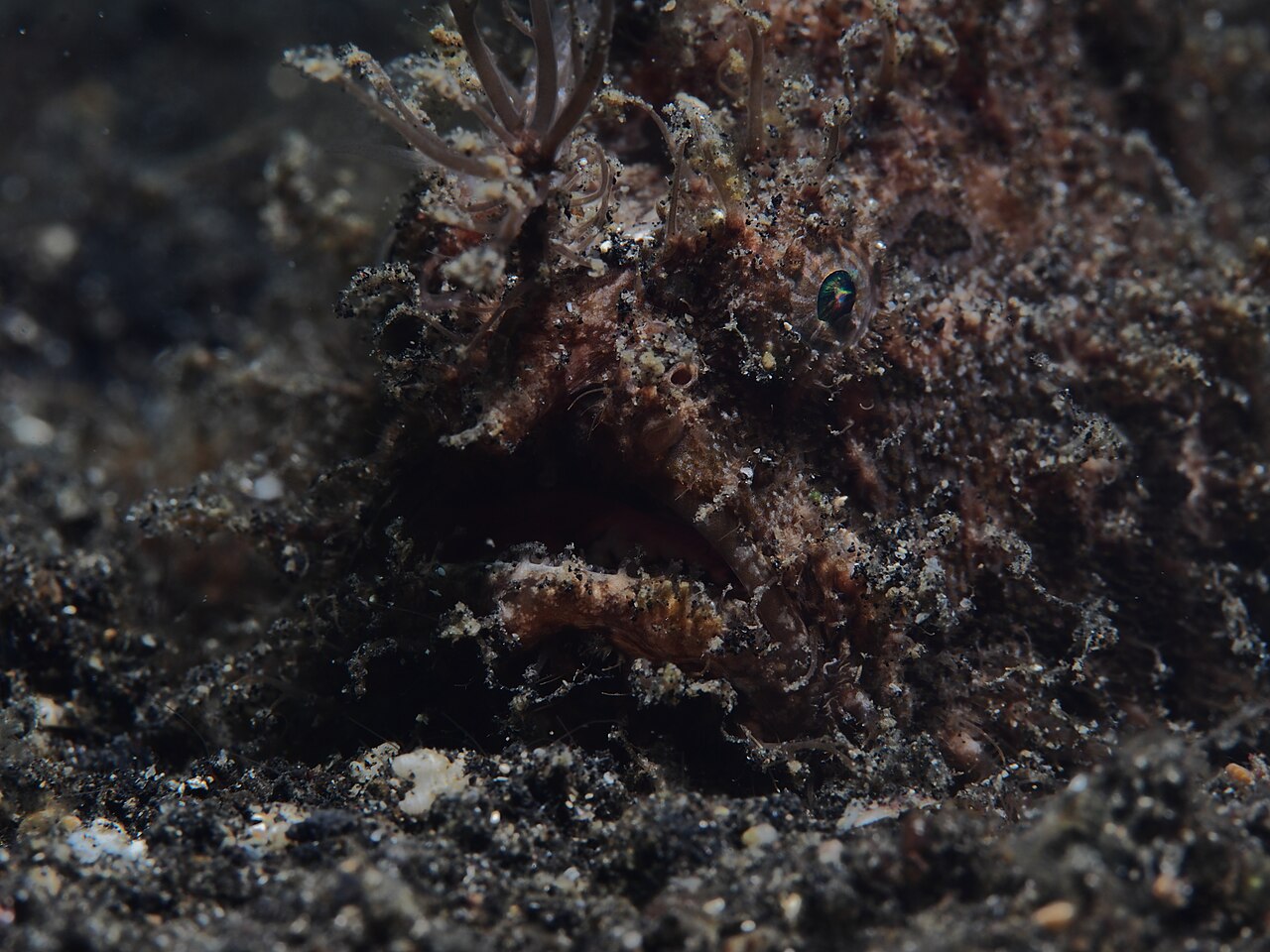
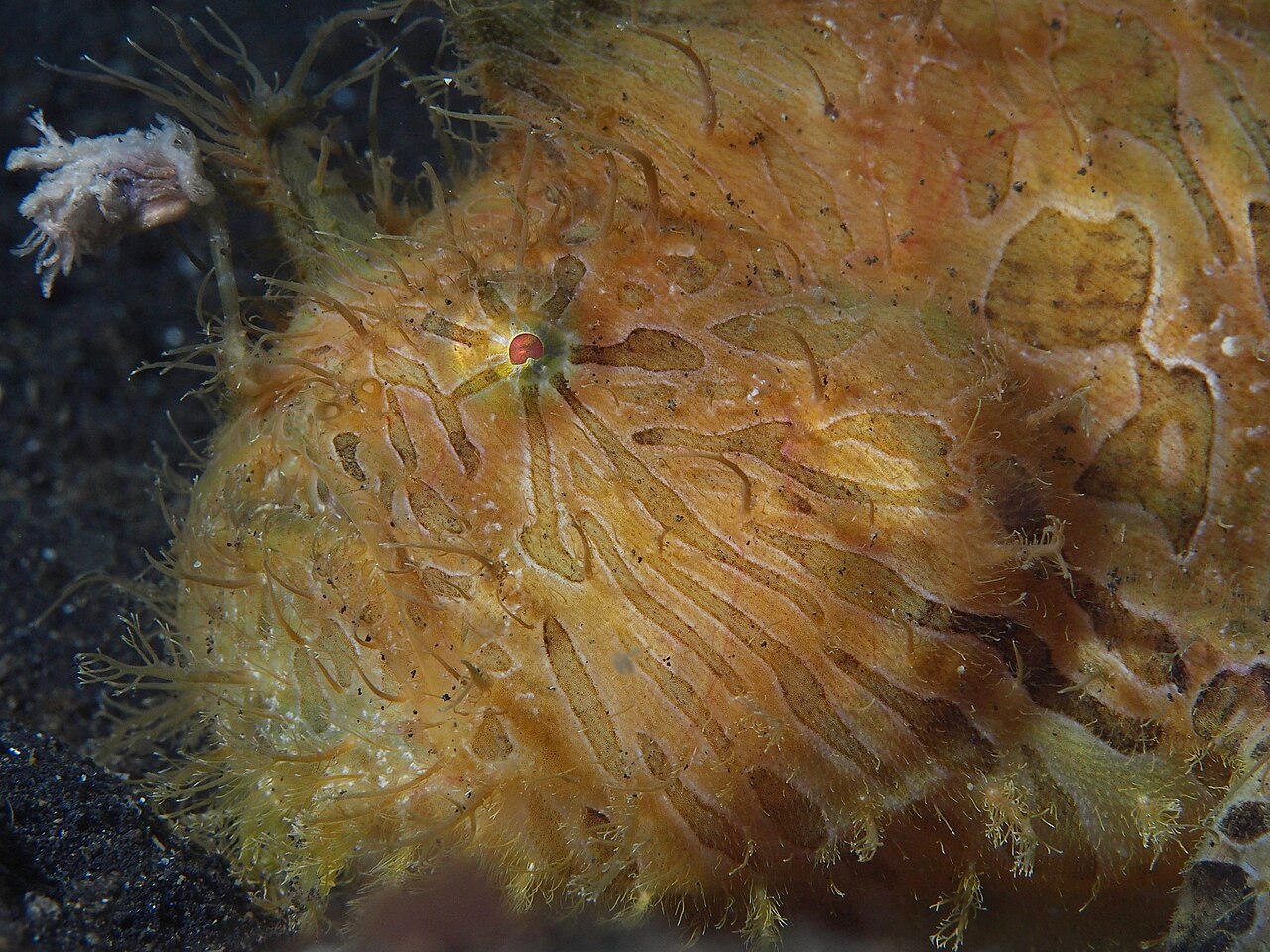
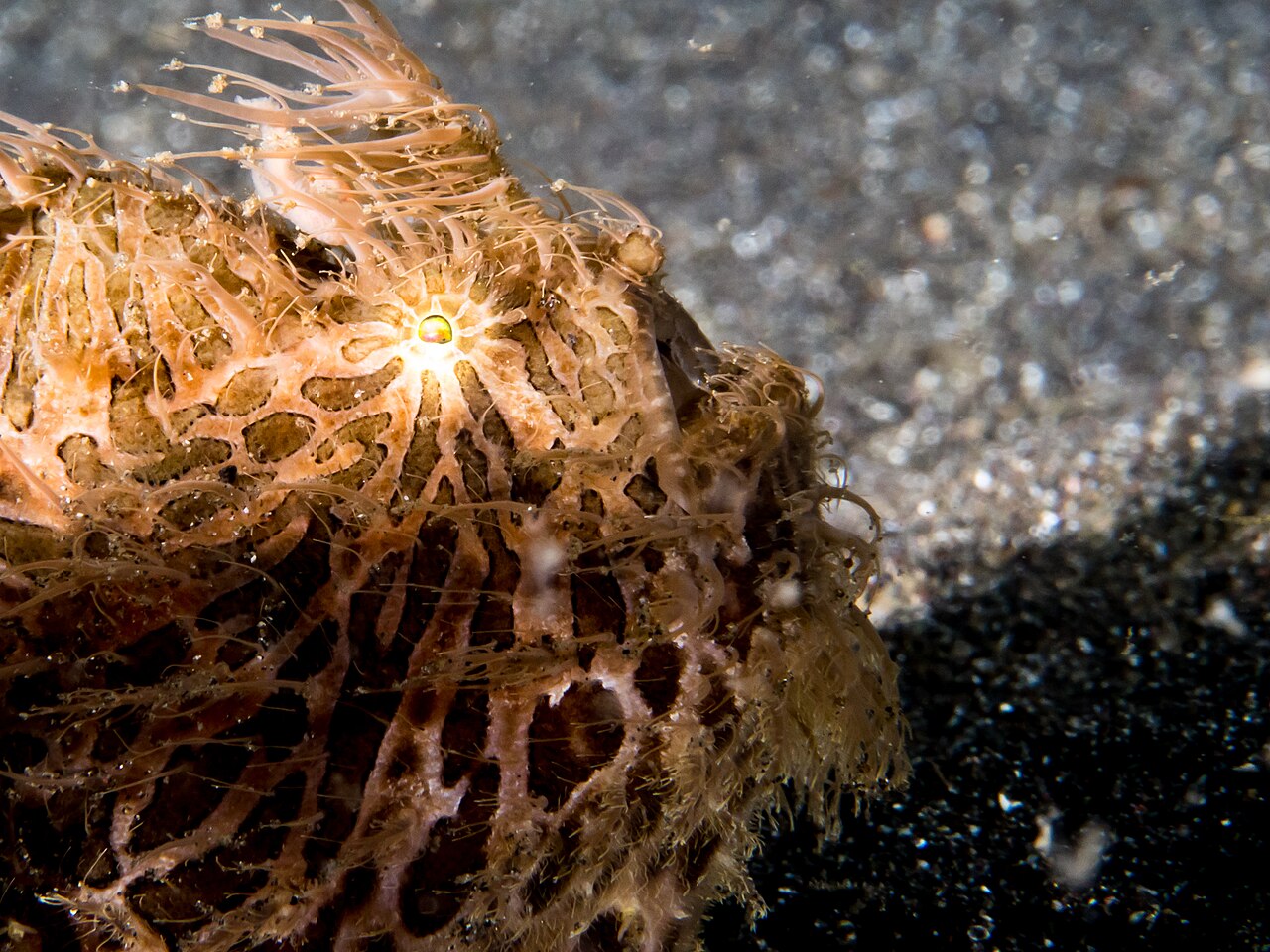
This small fish reaches up to 22 cm (8.7 in) in length. Like other frogfishes, it has a rounded, stretchy body and soft skin covered with irregular, hair-like spinules. Its large mouth can extend forward, allowing it to swallow prey as large as itself. Coloration varies greatly, as individuals match their surroundings. They can change color and pattern over a few weeks. Dominant colors range from yellow to brownish-orange, but can also be green, gray, brown, nearly white, or completely black. The body and fins often have dark stripes or elongated blotches, some with rays radiating from the eye.
The first dorsal spine, called the illicium, points forward and acts like a fishing rod. Its tip has a worm-like lure (esca) that attracts prey. This dorsal spine has two to seven elongated appendages. The lure helps distinguish *A. striatus* from the similar *Antennarius hispidus*. The illicium is about as long as the second dorsal spine and often darkly banded. The second dorsal spine is nearly vertical and movable, while the third bends backward. All three are well separated from each other and from the dorsal fin. The pectoral fins are angled, and together with the pelvic fins, allow the frogfish to "walk" on the seafloor and hold a stable ambush position.
The striated frogfish lives in tropical and subtropical waters from the Indian Ocean to the central Pacific, and in the Atlantic off western Africa, from the New Jersey coast to southern Brazil, including the Gulf of Mexico and the Caribbean. It is absent from the Mediterranean and Arctic. Some researchers consider *A. striatus* a species complex, with the former synonym *Antennarius scaber* now thought to be a separate species.
Quick Facts
- Taxon
- Antennarius striatus
Facts from the source article.
Lore & Background
The striated frogfish was first formally described in 1794 as Lophius striatus by the English biologist George Shaw, with its type locality given as Tahiti in the Society Islands. Within the genus Antennarius, this species belongs to the striatus species group. The genus name Antennarius alludes to its first dorsal spine being adapted into a tentacle on the snout used as a lure, while the specific name striatus refers to the numerous black streaks on its body.
This small fish grows up to 22 cm long. Its soft skin is covered with irregularly-arranged dermal spinules resembling hairs, and its large mouth is forwardly extensible, allowing it to swallow prey as large as itself. The coloring is extremely variable, ranging from yellow to brownish-orange, green, gray, brown, almost white, or completely black. Body and fins can be marked with roughly parallel dark stripes or elongated blotches. The first dorsal spine, the illicium, tips forward and has a worm-like esca (lure) that attracts prey. The illicium has the same length as the second dorsal spine and is often darkly banded. The pectoral fins are angled, and with the pelvic fins, allow the frogfish to 'walk' on the sea bottom.
The striated frogfish is found in tropical and subtropical waters from the Indian Ocean to the center of the Pacific Ocean, and in the Atlantic Ocean on the western coast of Africa and from the New Jersey coast to the southern Brazilian coast including the Gulf of Mexico and the Caribbean. It inhabits shallow, sandy areas or rocky and coral reefs to deep waters, often mimicking coral or sponges through cryptic coloration. Some researchers consider Antennarius striatus a species complex, and the putative synonym Antennarius scaber is apparently a distinct species.
Reader's Guide
The striated frogfish is a significant species within the family Antennariidae due to its distinctive hunting strategy and remarkable camouflage. As a voracious carnivore, it devours all right-sized prey that pass within reach, usually other fish, but sometimes even its own kind. It can swallow prey its own size. The fish uses its illicium and esca as a lure, waving it to attract unsuspecting prey, and can inhale its food in six thousandths of a second. It is one of the rare species of this family that exhibits a chemical attractant when fishing, mainly used at night.
The species has a benthic and solitary lifestyle, gathering only during mating. It uses a unique form of locomotion involving jet-like propulsion from water expelled through tube-like gill openings, as well as walking along the floor using its jointed pectoral and pelvic fins. Its defense mechanism includes swelling its body with water to make swallowing difficult. The frogfish also exhibits Batesian mimicry, mimicking dangerous species such as sea anemones or sea urchins to prevent predator attacks.
Rising ocean temperatures and acidification pose a threat to the frogfish's habitat, as coral bleaching reduces the environments it depends on for camouflage. The species can change coloration over a few weeks to adapt, but the loss of coral color may increase its vulnerability to predators.
Did You Know?
- The striated frogfish can swallow prey as large as itself.
- It can change coloration over a few weeks to match its environment.
- The esca (lure) is worm-like and is rolled up close to the body when not hunting.
- It is one of the rare frogfish species that uses a chemical attractant when fishing at night.
Gallery
Frequently Asked Questions
What is the striated frogfish?
It's a small marine anglerfish in the Antennariidae family, often called the hairy frogfish, that reaches a maximum of about 22 cm. It's a camouflaged ambush predator found in tropical and subtropical waters.
What do the words in its scientific name actually mean?
The species epithet *striatus* is Latin for 'striped,' a nod to the mottled banding across its body. The genus name *Antennarius* refers to the modified first dorsal spine that forms a tentacle-like lure on the snout.
Where in the ocean can you find the striated frogfish?
Its range spans the Indo-Pacific and the eastern Atlantic, though it is notably absent from both the Mediterranean and Arctic seas. It has been recorded from the surface down to roughly 210 m, with most sightings clustering around 40 m.
How does the striated frogfish hunt its prey?
It dangles a worm-like appendage from its snout to draw small fish and crustaceans within striking distance, then swallows them whole. Paired with its mottled, bark-like camouflage, this lets it sit motionless and nearly invisible while waiting for a meal to come to it.
Who first described the striated frogfish and when?
English naturalist George Shaw published the original description in 1794, naming it *Lophius striatus* from a specimen collected in Tahiti, Society Islands. It was later moved into the genus *Antennarius* as taxonomy of the frogfish family was refined.
More in Frogfish and Dragonets, Part 2 1-24
Spotted an error? Know more?
Reader corrections go straight into our review queue. Suggest an edit · How this site is sourced