
Antennarius pauciradiatus
A small western Atlantic frogfish with a tentacle-like lure.

Williams, J. T.; Carpenter, K. E.; Van Tassell, J. L.; Hoetjes, P.; Toller, W.; · CC BY 2.5
Antennarius pauciradiatus, the dwarf frogfish or smallspot frogfish, is a marine ray-finned fish in the family Antennariidae, found in the western Atlantic Ocean.
The species was first described in 1957 by American ichthyologist Leonard Peter Schultz, based on a specimen from Palm Beach, Florida. Within the genus *Antennarius*, it belongs to the *pauciradiatus* species group, which also includes Randall's frogfish (*A. randalli*). According to the 5th edition of *Fishes of the World*, the genus *Antennarius* is placed in the family Antennariidae, suborder Antennarioidei, order Lophiiformes (the anglerfishes).
The genus name *Antennarius* comes from *antenna*, referring to the first dorsal spine, which is modified into a snout tentacle used as a lure to attract prey. The specific name *pauciradiatus* combines *pauci-* (few) and *radiatus* (rayed), alluding to the fewer rays in the pectoral fin compared to *Fowlerichthys* species, which were thought to be its relatives when it was described.
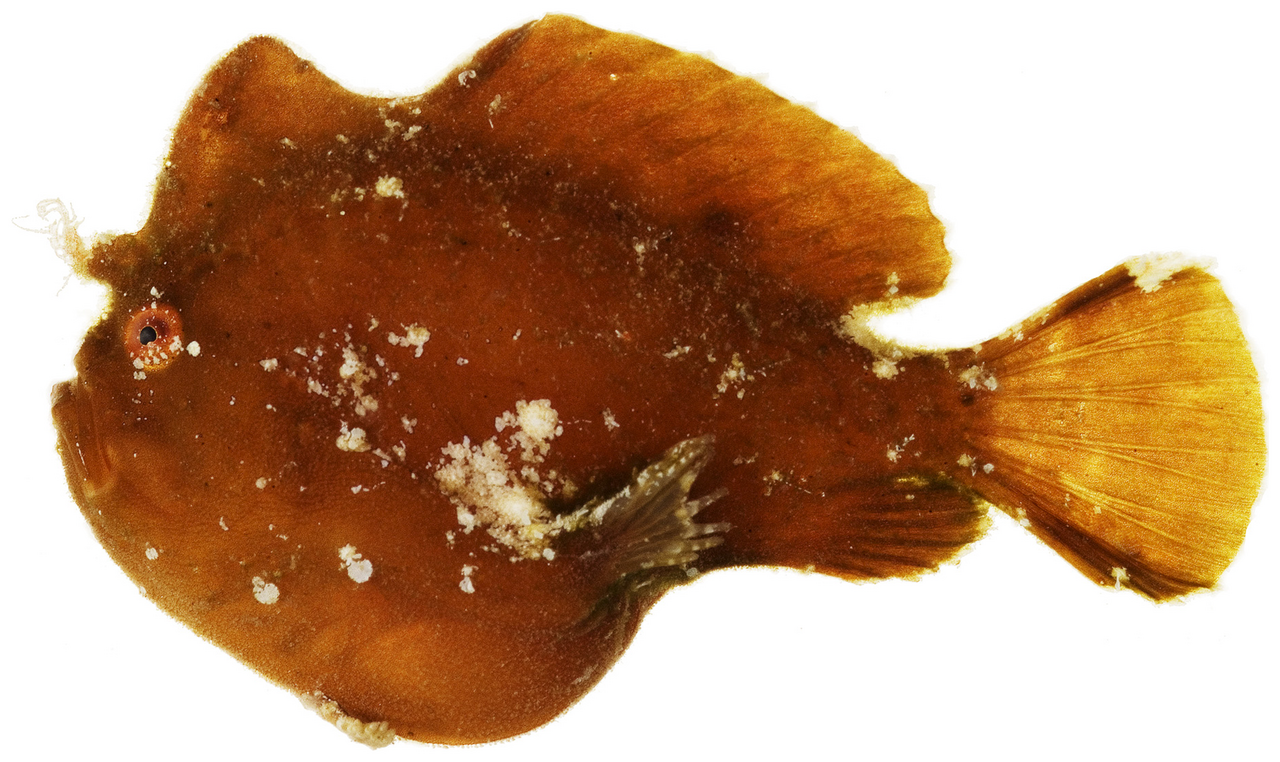
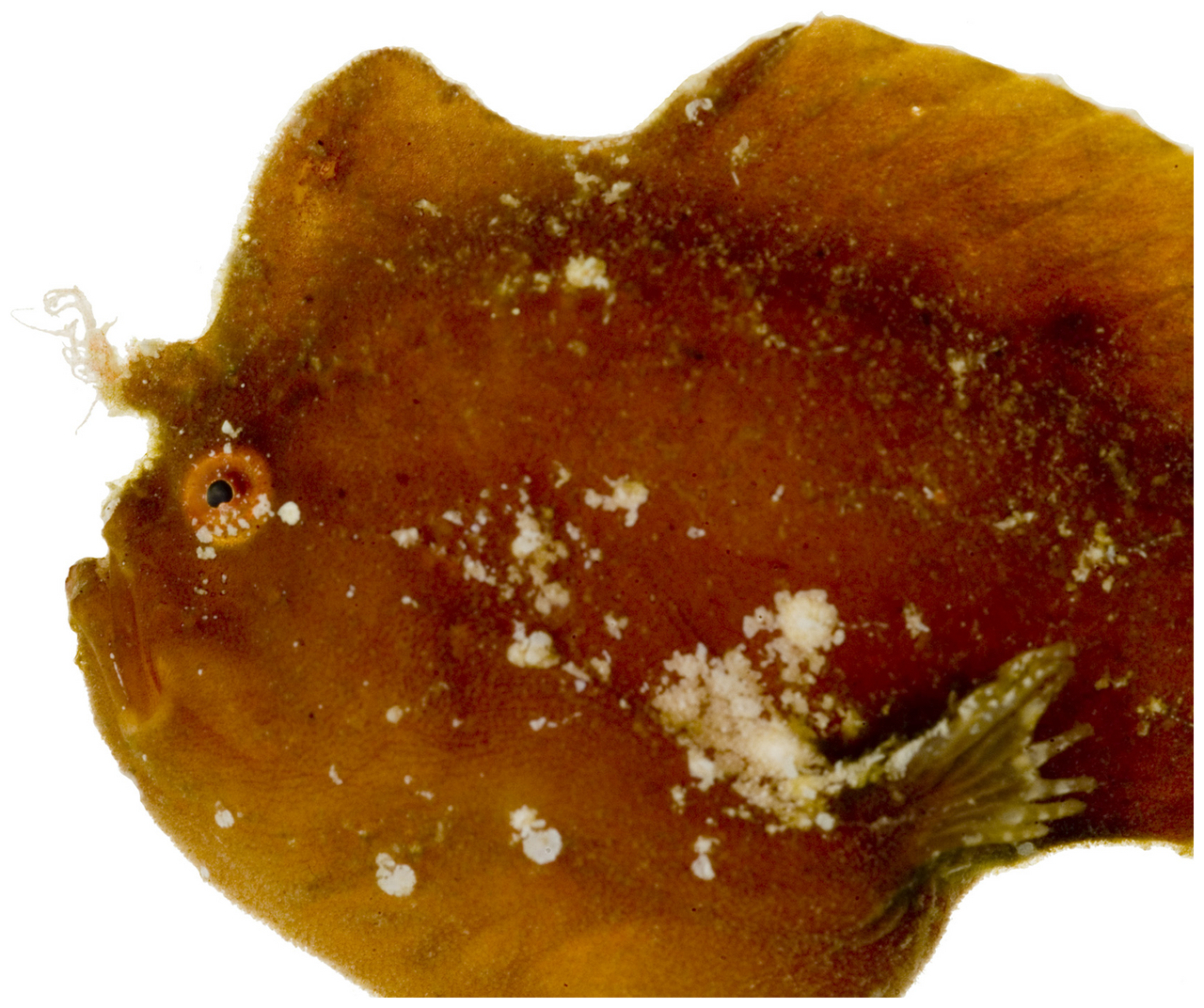
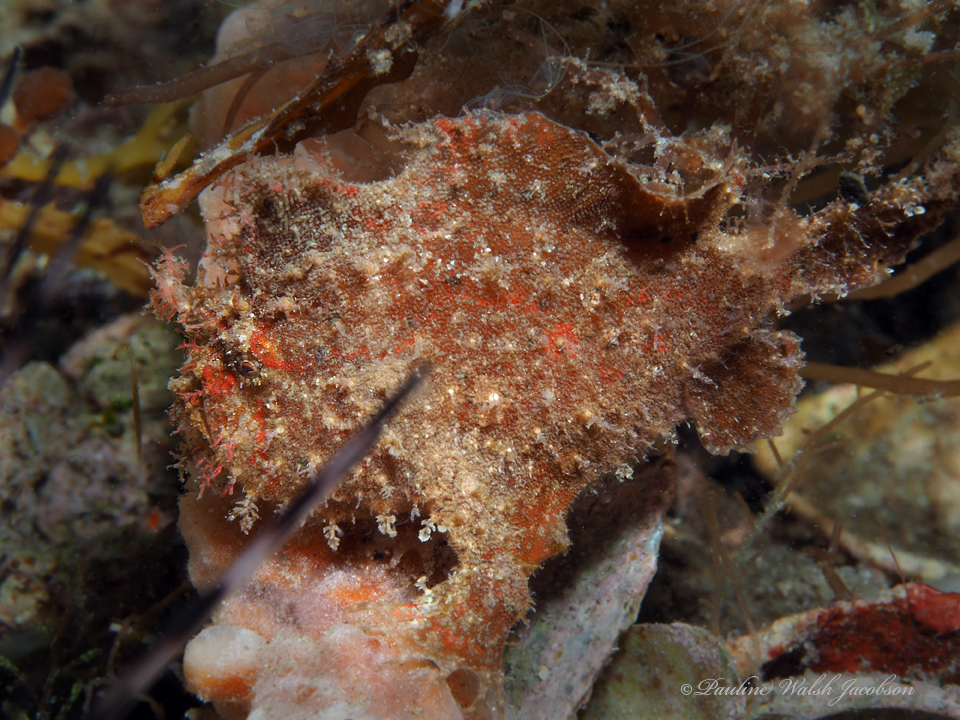
The dwarf frogfish has a globose, slightly compressed body. Its large mouth points upward and contains many small, sharp teeth. The small, round gill opening sits below and behind the pectoral fin. There are three dorsal spines: the first is the "fishing rod," or illicium, much shorter than the second and tipped with an oval lure, or esca, covered in filament-like tentacles. The second spine is connected to the head and part of the third spine by a membrane, which includes a pocket for folding the esca. The long, curved third spine is movable and not connected to the head by a membrane. The pectoral fins are limb-like, with an elbow-like joint, and their lobes are broadly attached to the body. The body is densely covered with bifurcated spinules. Overall color is tan, with two small brown spots on the dorsal fin. Maximum total length is 6.3 cm (2.5 in).
This species occurs in the western Atlantic, from Bermuda, Florida, and the Bahamas south through the Caribbean Sea to Colombia. It lives at depths between 6 and 73 m (20 to 240 ft) on reefs and rocky substrates. It may have been extirpated from Bermuda due to habitat loss.
Quick Facts
- Taxon
- Antennarius pauciradiatus
Facts from the source article.
Lore & Background
Antennarius pauciradiatus was first formally described in 1957 by the American ichthyologist Leonard Peter Schultz, with its type locality given as Palm Beach, Florida. Within the genus Antennarius, the dwarf frogfish belongs to the pauciradiatus species group, along with Randall's frogfish (A. randalli). The 5th edition of Fishes of the World classifies the genus Antennarius in the family Antennariidae within the suborder Antennarioidei within the order Lophiiformes, the anglerfishes.
The genus name Antennarius suffixes -ius to antenna, alluding to the first dorsal spine being adapted into a tentacle on the snout used as a lure to attract prey. The specific name pauciradiatus combines pauci-, meaning few, and radiatus, meaning rayed, an allusion to the fewer rays in the pectoral fin compared to Fowlerichthys species assumed to be its congeners when it was described.
The dwarf frogfish has a globose, slightly compressed body with a large upward-pointing mouth and many small, sharp teeth. The first dorsal spine, or illicium, is markedly shorter than the second and is tipped by an oval esca with many filaments. The second spine is connected to the head and part of the third spine by a membrane that includes a pocket into which the esca can be folded. The long, curved third spine is moveable and not connected to the head by a membrane. The pectoral fins are limb-like with an elbow-like joint, and the body is densely covered in bifurcated spinules. Its overall color is tan with two small brown spots on the dorsal fin.
Reader's Guide
Antennarius pauciradiatus is a small but ecologically significant frogfish species in the western Atlantic. Its notable feature is the first dorsal spine modified into a fishing rod and lure (illicium and esca), used to attract prey. The species is distinguished from related frogfishes by its fewer pectoral fin rays, as reflected in its specific name. It inhabits reefs and rock substrates at depths between 6 and 73 m, ranging from Bermuda, Florida, and the Bahamas south through the Caribbean Sea to Colombia. The article notes that it may have been extirpated from Bermuda due to habitat loss, highlighting a conservation concern. Its small maximum size of 6.3 cm makes it one of the smaller frogfishes. The species belongs to the pauciradiatus species group within the genus Antennarius, alongside Randall's frogfish. The taxonomic placement within the order Lophiiformes (anglerfishes) underscores its evolutionary relationship to other anglerfishes. The description by Schultz in 1957 established its identity, and the etymology of its scientific name provides insight into its morphological characteristics relative to related genera.
Did You Know?
- The dwarf frogfish has a maximum total length of only 6.3 cm (2.5 in).
- Its first dorsal spine is adapted into a tentacle-like lure called the illicium, tipped with an oval esca.
- The specific name pauciradiatus means 'few-rayed,' referring to its fewer pectoral fin rays compared to Fowlerichthys species.
Gallery
Frequently Asked Questions
What is Antennarius pauciradiatus?
Antennarius pauciradiatus, commonly called the dwarf frogfish or smallspot frogfish, is a tiny marine ray-finned fish in the family Antennariidae. It is one of the smallest recognized members of the genus Antennarius, topping out at roughly 6.3 centimeters (2.5 inches) in total length.
Where does Antennarius pauciradiatus live?
This species ranges across the western Atlantic Ocean, occurring in waters from about 6 meters down to 73 meters (20 to 240 feet). Its type locality is Palm Beach, Florida, the site where the original specimen was collected.
Who first described Antennarius pauciradiatus and when?
American ichthyologist Leonard Peter Schultz formally named the species in 1957, basing his description on a single specimen from Palm Beach, Florida. He placed it in the pauciradiatus species group, a small cluster that also includes Randall's frogfish (A. randalli).
What are the key physical features of Antennarius pauciradiatus?
The dwarf frogfish carries three dorsal spines and sports a tentacle-like illicial lure used to attract prey, a signature trait of the order Lophiiformes. Its compact, under-7-centimeter body sets it apart from the much larger congeners elsewhere in the genus.
Why is Antennarius pauciradiatus notable to fish biologists?
As one of the smallest frogfish described to date, it highlights the extraordinary size range within the genus Antennarius. Its grouping with A. randalli in the pauciradiatus species group also serves as a useful reference point for studying diversity among western Atlantic lophiiforms.
More in Frogfish and Dragonets, Part 2 1-24
Spotted an error? Know more?
Reader corrections go straight into our review queue. Suggest an edit · How this site is sourced