Shaggy frogfish
A striped, lure-bearing frogfish of Indo-Pacific reefs and mud habitats.

JIBON · CC BY-SA 4.0
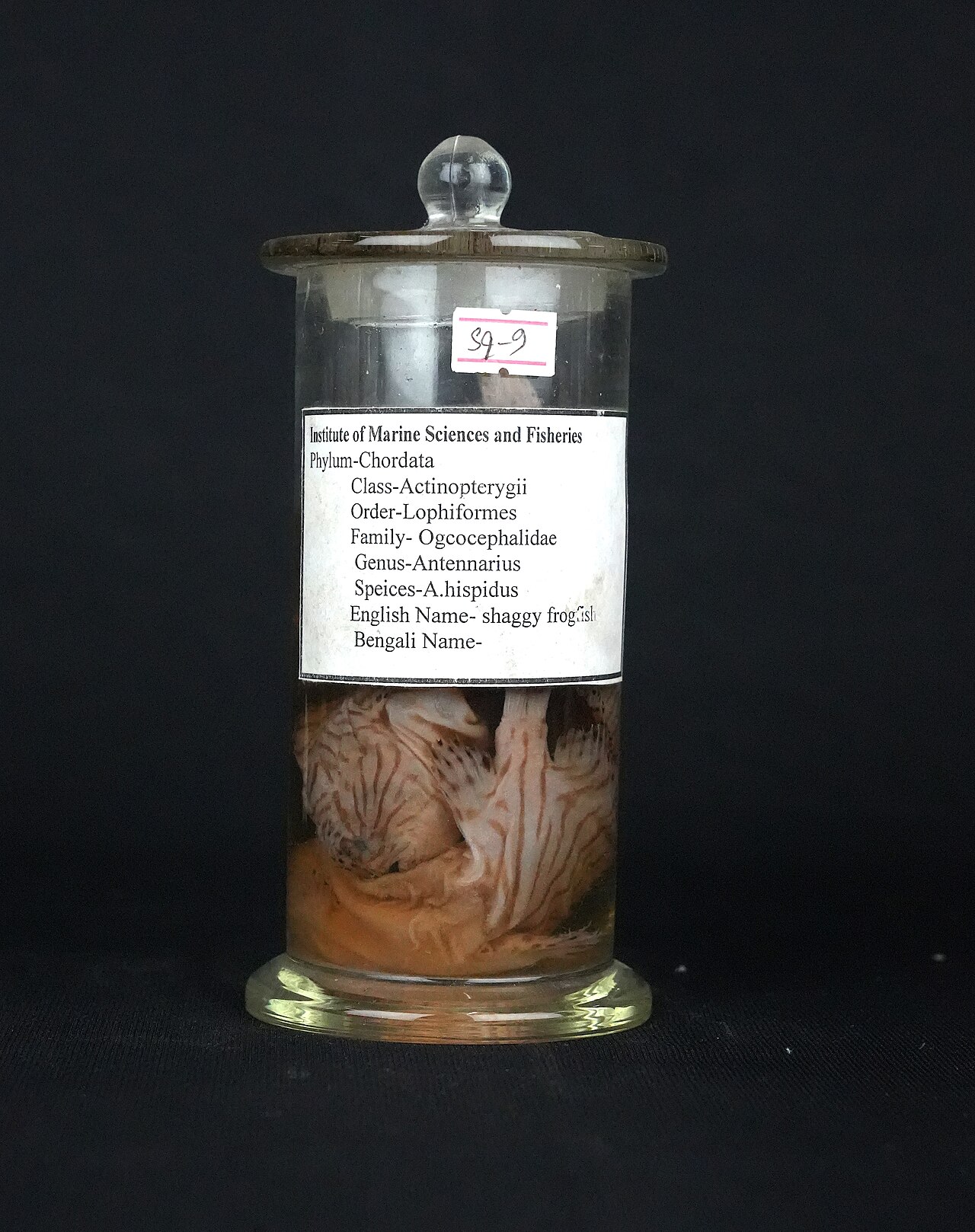
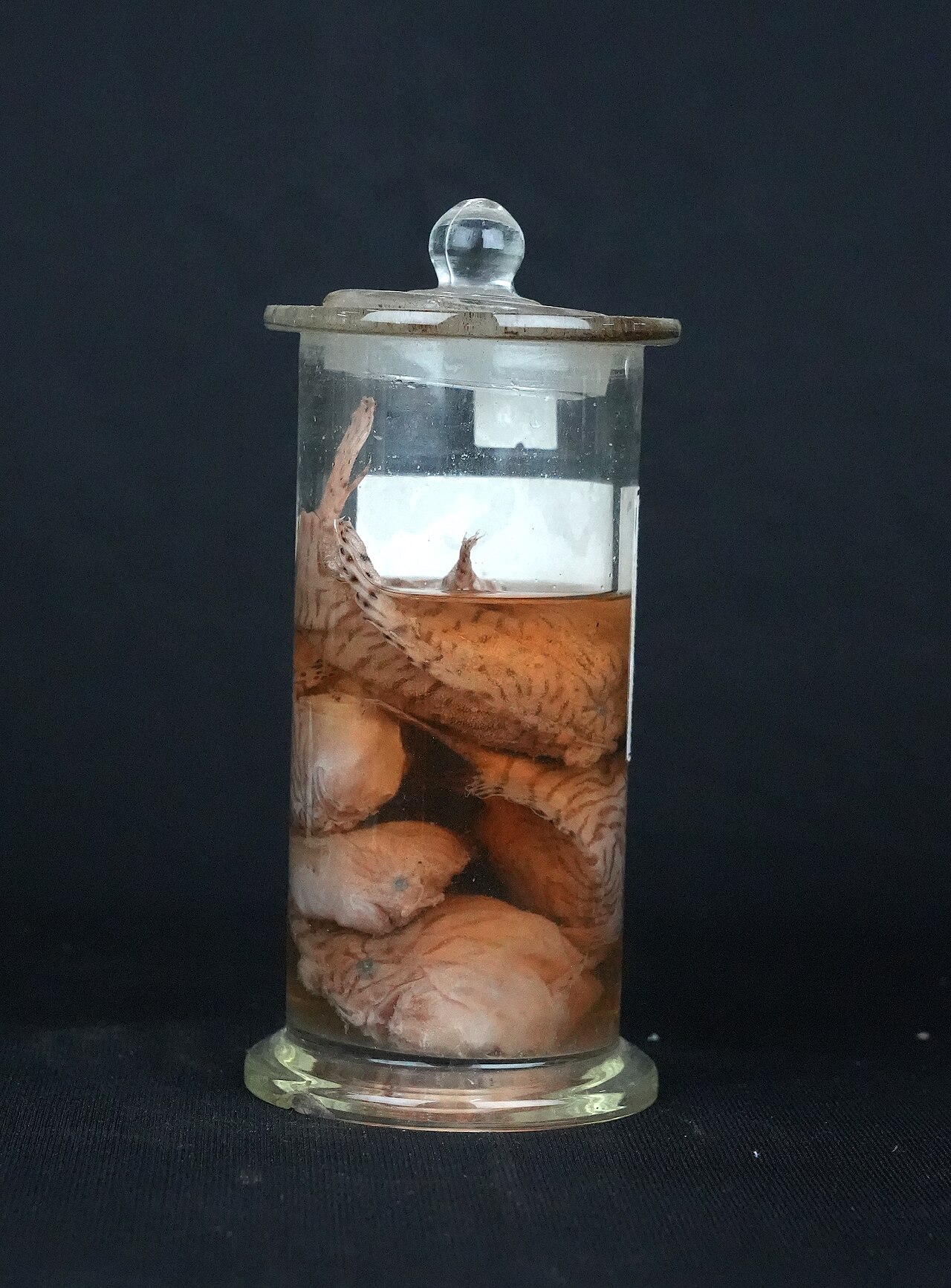
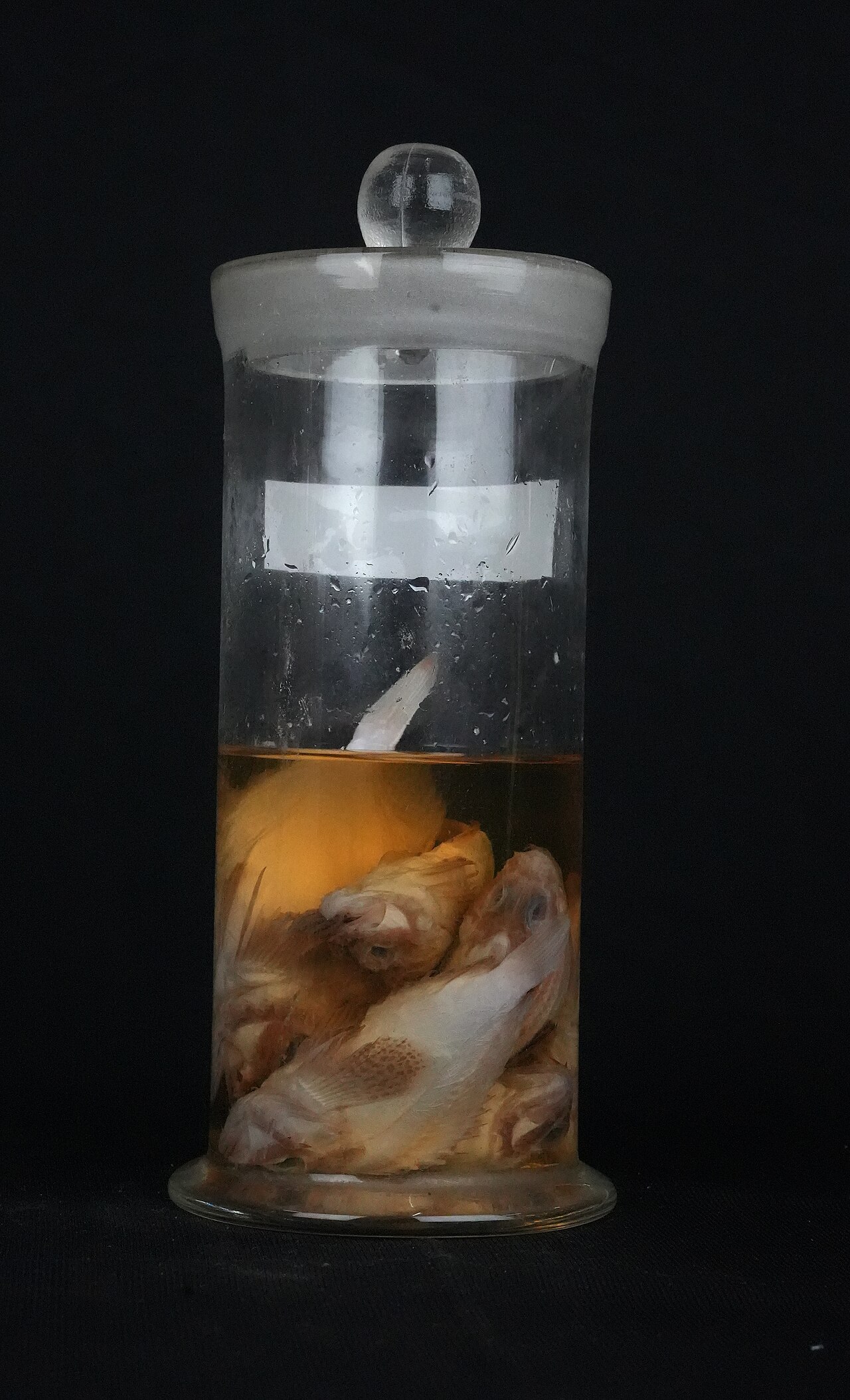
The shaggy frogfish (*Antennarius hispidus*), also called the hispid frogfish, shaggy anglerfish, or zebra anglerfish, is a marine ray-finned fish in the frogfish family Antennariidae. It lives in the Indo-Pacific region. First described in 1801 by German naturalists Marcus Elieser Bloch and Johann Gottlob Theaenus Schneider as *Lophius hispidus*, its type locality is the Coromandel Coast of India. Within the genus *Antennarius*, it belongs to the *striatus* species group. The genus is placed in the family Antennariidae, suborder Antennarioidei, order Lophiiformes (the anglerfishes). The genus name *Antennarius* combines *antenna* with the suffix *-ius*, referring to the first dorsal spine, which is modified into a snout tentacle used as a lure. The species name *hispidus* means "bristly," describing the dense covering of spinules on its skin. This fish grows up to 20 cm (7.9 in) long. Like other frogfishes, it has a globular, expandable body and soft skin covered with tiny dermal spinules. The skin may also have hair-like appendages, though not always. Its large, protruding mouth allows it to swallow prey as large as itself. Coloration is highly variable, as the fish tends to match its surroundings; it can change color and pigment pattern over a few weeks. Dominant colors range from yellow to brownish-orange, with many intermediate shades. The body and fins may have roughly parallel dark stripes, some radiating from the eye, but the belly is unstriped. The first dorsal spine, or illicium, is a fishing lure. Its tip has an oval esca made of a tuft of slender filaments. This lure distinguishes *A. hispidus* from the similar-looking *Antennarius striatus*, which shares stripes, coloration, and skin appendages. The illicium is the same length as the second dorsal spine. The second spine is nearly straight and mobile, while the third bends toward the back. All three spines are well separated from each other and from the dorsal fin. Shaggy frogfish are found in tropical coastal waters from the Indian Ocean through the central Indo-Pacific, but not around oceanic islands. They inhabit shallow rocky and coral reefs down to muddy habitats, from the surface to 90 m deep, typically around 45 m. As a voracious carnivore, *A. hispidus* gulps down any prey that enters its strike zone, mainly fish but sometimes even other frogfishes.
Quick Facts
- Taxon
- Antennarius hispidus
Facts from the source article.
Lore & Background
The shaggy frogfish was first formally described in 1801 as Lophius hispidus by the German naturalists Marcus Elieser Bloch and Johann Gottlob Theaenus Schneider, with its type locality given as the Coromandel Coast of India. Within the genus Antennarius, it belongs to the striatus species group. The 5th edition of Fishes of the World classifies the genus Antennarius in the family Antennariidae within the suborder Antennarioidei within the order Lophiiformes, the anglerfishes. The genus name Antennarius suffixes -ius to antenna, an allusion to the first dorsal spine being adapted into a tentacle on the snout used as a lure to attract prey. The specific name hispida means 'bristly', a reference to the dense covering of spinules on the skin. The shaggy frogfish grows up to 20 cm in length. Like other members of its family, it has a globulous, extensible body, and its soft skin is covered with small dermal spinules. The skin can also be adorned, but not systematically, with cutaneous appendages reminding one of hairs. Its large mouth is prognathous and allows it to gobble up prey as large as itself. The coloring of their bodies is extremely variable because they always tend to match their living environments. Frogfishes have the capacity to change color and pigment pattern in a few weeks. However, the dominant color goes from yellow to brownish-orange, passing through a whole range of related nuances. Their bodies and fins can be endowed with roughly parallel, dark stripes, some radiating outward from the eye. The belly is free from stripes. The first dorsal spine, called illicium, is modified and used as a fishing lure. Its extremity is endowed with a characteristic oval esca composed of a multitude of slender filaments in a tuft. This lure is a way to separate easily A. hispidus from Antennarius striatus, which presents similar physical characteristics (stripes, coloration, cutaneous appendages) and with which it is often confused. The illicium has the same length as the second dorsal spine. The second dorsal spine is practically straight and is mobile, and the third one is bent towards the back of the body. They are well separated from each other and also from the dorsal fin.
Reader's Guide
The shaggy frogfish is significant as a representative of the frogfish family Antennariidae, demonstrating key adaptations such as the modified first dorsal spine (illicium) used as a fishing lure with a distinctive oval esca composed of slender filaments. This lure is a critical diagnostic feature separating it from the similar Antennarius striatus, with which it is often confused. Its taxonomy places it within the striatus species group of the genus Antennarius, and its original description as Lophius hispidus by Bloch and Schneider in 1801 from the Coromandel Coast of India anchors its historical classification. The species exhibits extreme color variability, matching its living environments, and can change color and pigment pattern over a few weeks, with dominant colors ranging from yellow to brownish-orange and often featuring roughly parallel dark stripes. Its benthic and solitary lifestyle, gathering only during mating, and the male's potential to kill or eat the female after fertilization, highlight its aggressive reproductive behavior. As a voracious carnivore, it gulps prey up to its own size, including fish and even congeners. Its distribution across tropical coastal waters of the Indian Ocean and Indo-Pacific, but absence from oceanic islands, and its habitat from shallow reefs to deep muddy habitats down to 90 meters, underscore its ecological adaptability.
Did You Know?
- The shaggy frogfish was first described in 1801 as Lophius hispidus by Bloch and Schneider.
- Its specific name hispida means 'bristly', referring to the dense covering of spinules on its skin.
- The lure (esca) of A. hispidus is oval and composed of a tuft of slender filaments, distinguishing it from Antennarius striatus.
- The male shaggy frogfish can kill or eat the female if she stays close after fertilization.
Gallery
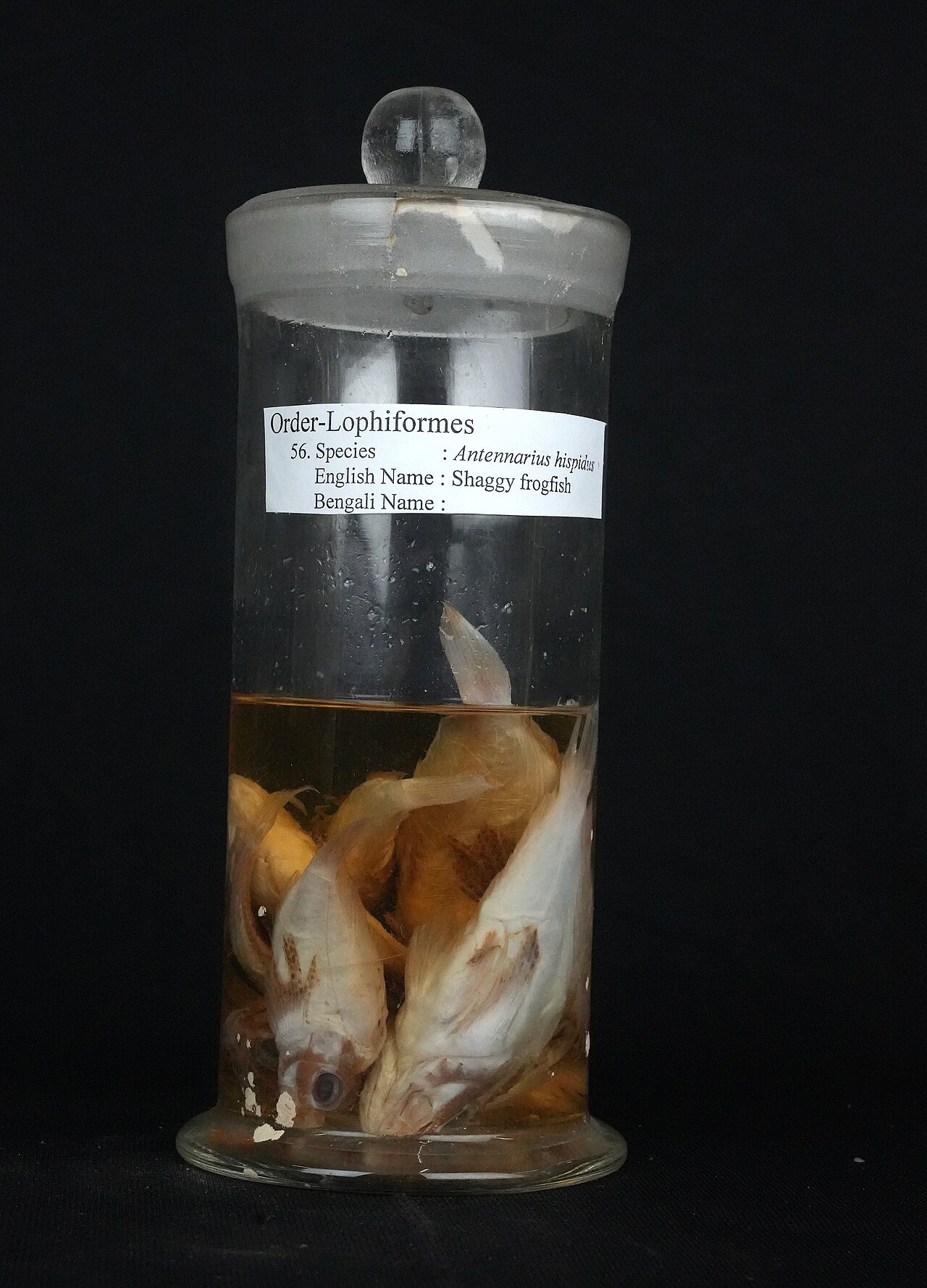
Frequently Asked Questions
What is the shaggy frogfish?
The shaggy frogfish (Antennarius hispidus) is a small, striped, lure-bearing anglerfish native to Indo-Pacific reef and mud habitats. It is also known as the hispid frogfish, shaggy anglerfish, or zebra anglerfish, and it belongs to the frogfish family Antennariidae.
Where does the shaggy frogfish live and how deep can it be found?
It ranges across the Indo-Pacific, occurring from the surface down to roughly 90 meters, with most sightings clustering around 45 meters. Its original type locality is the Coromandel Coast of India.
How big does the shaggy frogfish grow?
It tops out at about 20 centimeters (roughly 8 inches) in total length, making it a modestly sized member of the frogfish family.
Who first described the shaggy frogfish and when?
German naturalists Marcus Elieser Bloch and Johann Gottlob Theaenus Schneider published its original description in 1801 under the name Lophius hispidus. It was subsequently moved into the genus Antennarius, where it falls within the striatus species group.
What makes the shaggy frogfish visually distinct from other frogfishes?
Its bold striped pattern and shaggy, irregular body texture set it apart from smoother-looking relatives in the same genus. Like all Antennariidae, it dangles a modified dorsal-fin spine as a lure to coax prey closer in its reef and muddy-bottom surroundings.
More in Frogfish and Dragonets, Part 2 1-24
Spotted an error? Know more?
Reader corrections go straight into our review queue. Suggest an edit · How this site is sourced